 listicle
5 Best Practices for Water Heater Maintenance
Table of Contents
- 1. Flush Your Tank Annually to Remove Sediment Buildup
- 2. Inspect and Replace the Anode Rod
- 3. Test the Pressure Relief Valve
- How Long Does a Water Heater Last in Your Climate
- Recognize Signs of Water Heater Failure Before Emergency Strikes
- 4. Insulate and Optimize Temperature Settings
- 5. Schedule Professional Inspections
- Frequently Asked Questions
Last Updated: September 21, 2026
1. Flush Your Tank Annually to Remove Sediment Buildup
The single most important maintenance task for any water heater is flushing the tank annually to remove sediment buildup. Sediment accumulation is the leading cause of reduced efficiency, corrosion, and premature failure in water heaters, especially in areas with hard water. Over time, minerals like calcium and magnesium settle at the bottom of your tank, creating a layer that insulates the heating element from the water, forcing it to work harder and wear out faster.
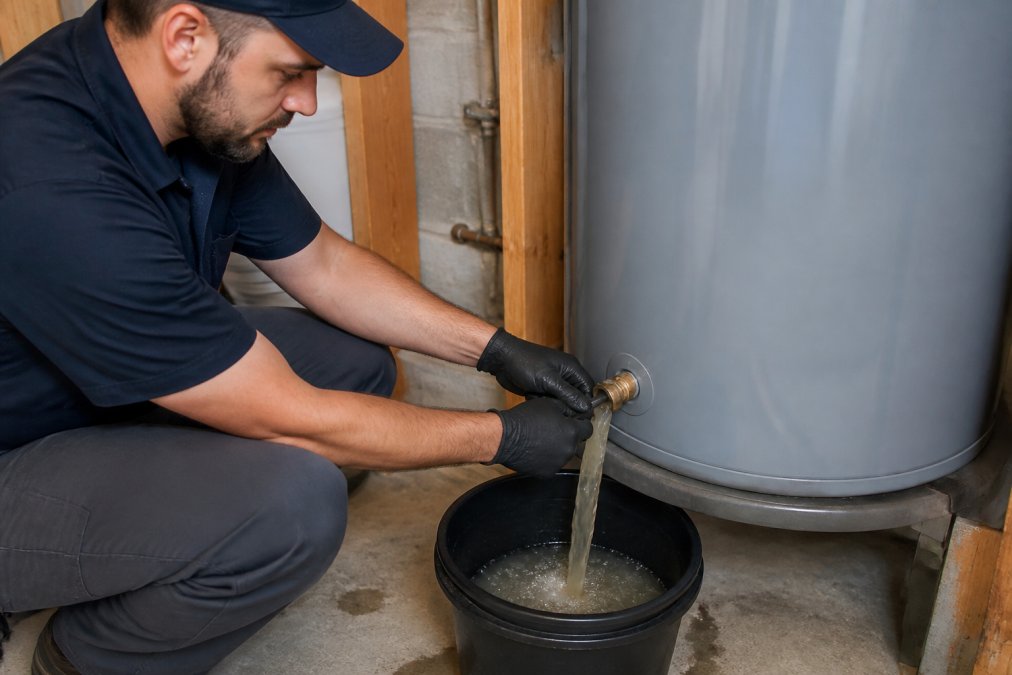
Here's how to flush your tank safely. First, turn off the power (for electric units) or the gas supply (for gas units). Let the water cool for at least 30 minutes. Attach a garden hose to the drain valve at the bottom of the tank and run it to a floor drain or outside. Open the drain valve slowly and let water flow until it runs clear, which typically takes 15 to 30 minutes. Close the valve, disconnect the hose, and restore power or gas.
Many homeowners skip this step because it seems simple, but the consequences are real: scale accumulation thickens over years, making the tank work 20 to 30 percent harder. If you have a tankless water heater, descaling follows a similar principle but requires a special descaling kit and acidic solution to dissolve mineral deposits in the heat exchanger. If you have a tankless water heater, descaling follows a similar principle but requires a special descaling kit and acidic solution to dissolve mineral deposits in the heat exchanger.
2. Inspect and Replace the Anode Rod
The anode rod is a sacrificial metal rod designed to corrode instead of the tank itself. As long as the anode rod is present and intact, it protects the steel tank from rust. Once the anode rod is fully corroded, the tank becomes vulnerable to corrosion, and failure typically follows within months.
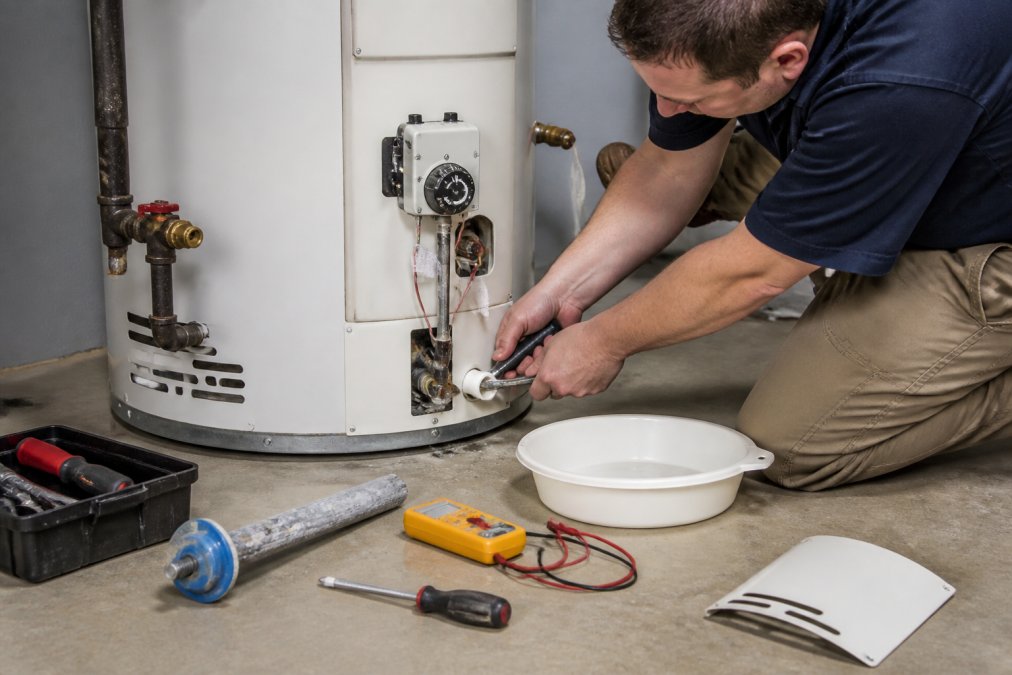
Inspect your anode rod every two years. To do this, turn off the water supply and open the relief valve at the top of the tank to release pressure. Using a socket wrench, unscrew the hex head at the top of the tank where the anode rod connects. Pull the rod out carefully. If the rod is thin, pitted, or mostly disintegrated, it needs replacement. A healthy anode rod should be thick and relatively shiny.
Anode rod replacement is straightforward for gas water heaters but more challenging for electric units, which often require a larger opening at the top. Many homeowners find this task manageable, but if you are uncomfortable working on your water heater, professional inspection is worth the cost. Home Tech's EPA 608-certified technicians can inspect the anode rod as part of routine water heater maintenance.
3. Test the Pressure Relief Valve
The pressure relief valve (also called the temperature and pressure relief valve, or T&P valve) is a critical safety device. It opens automatically if pressure or temperature inside the tank exceeds safe limits, preventing the tank from rupturing. Testing this valve annually ensures it functions when needed.
To test the pressure relief valve, locate the small lever on the side of the valve. Lift the lever briefly and listen for a rush of hot water and steam from the discharge tube below it. If water flows and the valve resets properly when you release the lever, the valve is functioning. If nothing happens, or if the valve continues to drip after testing, it needs replacement.
A faulty pressure relief valve is a serious safety hazard. Pressure can build unchecked inside the tank, potentially causing an explosion. Replacement is inexpensive compared to the risk, and it is one of the few water heater repairs that should never be deferred. If you are uncertain about testing the valve or uncomfortable working near pressurized hot water, professional inspection is the safer choice.
How Long Does a Water Heater Last in Your Climate
The lifespan of a water heater depends heavily on water quality, usage patterns, and climate. In most regions, a well-maintained tank water heater lasts 8 to 12 years. However, local water chemistry plays a decisive role in whether your system reaches that benchmark or fails years earlier.
The region has some of the hardest municipal water in the nation. Total dissolved solids (TDS) in local water supplies typically range from 300 to 500 parts per million, compared to the EPA's recommended maximum of 500 ppm. This means calcium and magnesium minerals are continuously precipitating out of solution as water is heated, creating sediment that accumulates at the bottom of the tank. Without aggressive flushing, this sediment layer thickens over years, insulating the heating element and forcing it to work 20 to 30 percent harder. The result: a water heater that might last 10 to 12 years in a soft-water region often fails at 6 to 8 years here.
Regular flushing and anode rod replacement can extend lifespan by 2 to 4 years, but homeowners with severe hard water (above 400 ppm TDS) face a critical decision: invest in a whole-home water softener, or commit to flushing every 6 months instead of annually. A water softener removes calcium and magnesium before they enter the water heater, virtually eliminating sediment buildup and reducing maintenance frequency to once per year. While a softener requires upfront investment and ongoing salt or potassium costs, it pays dividends in extended water heater life, reduced scale in pipes and fixtures, and lower energy consumption. Homeowners who install a softener often see their water heater last 10 to 12 years even in hard-water climates.
Tankless water heaters typically last 15 to 20 years because they have no tank to corrode. However, they are more vulnerable to scale buildup in the heat exchanger, which reduces flow rate and efficiency. In hard-water areas, tankless systems require descaling every 6 to 12 months, depending on TDS levels. A water softener is particularly valuable for tankless systems, as it eliminates the need for frequent descaling and extends the system's lifespan significantly.
Recognize Signs of Water Heater Failure Before Emergency Strikes
Water heater failure rarely happens without warning. Recognizing early signs gives you time to plan a replacement instead of facing an emergency.
Common warning signs include rusty or discolored water coming from hot taps, which indicates corrosion inside the tank. Rumbling or popping noises during heating mean sediment buildup is interfering with heat transfer. Leaking from the bottom of the tank is a sign of internal corrosion and means replacement is imminent. Reduced hot water supply or longer recovery time between uses suggests sediment is blocking the heating element.
If your water heater is over 10 years old and showing any of these signs, replacement should be your next step.
4. Insulate and Optimize Temperature Settings
Water heater insulation reduces heat loss through the tank walls, lowering energy consumption and extending the lifespan of the heating element. If your water heater is not already insulated, adding an insulation blanket is a simple, low-cost upgrade that pays for itself in energy savings within months.
5. Schedule Professional Inspections
Annual professional inspection catches problems before they become emergencies. A qualified technician checks the anode rod, flushes the tank, tests the pressure relief valve, inspects for leaks, and evaluates the overall condition of the system. This comprehensive approach prevents costly failures and extends water heater lifespan.
| Maintenance Task | Frequency | DIY or Professional | Difficulty Level |
|---|---|---|---|
| Flush the tank | Annually | DIY possible | Moderate |
| Inspect anode rod | Every 2 years | DIY possible | Moderate |
| Test relief valve | Annually | DIY possible | Easy |
| Insulate tank | One-time | DIY | Easy |
| Professional inspection | Annually | Professional | N/A |
| Replace anode rod | Every 3-5 years | Professional recommended | Hard |
| Descale tankless unit | Annually (hard water) | Professional | Hard |
Frequently Asked Questions
What maintenance should I do on my water heater?
Annual flushing to remove sediment buildup is the most critical task. Inspect the anode rod yearly and replace it if corroded. Test your pressure relief valve annually by lifting the lever briefly. Check temperature settings (120°F is standard), and insulate exposed pipes. Professional inspections catch problems early and extend your water heater's lifespan significantly.
How long does a water heater last in areas with hard water?
Tank water heaters typically last 8-12 years, but hard water minerals like calcium and magnesium accelerate corrosion and sediment buildup, potentially shortening lifespan to 6-8 years without regular maintenance. Tankless units last 15-20 years. Annual flushing and anode rod replacement can add years to your system's life by combating mineral accumulation.
Do I really need to flush my water heater every year?
Yes, especially in areas with hard water. Annual flushing removes sediment that reduces efficiency, causes noise, and corrodes the tank interior. Skipping flushes allows mineral deposits to accumulate, forcing your heater to work harder and fail sooner.
What are the most common signs of water heater failure?
Watch for rusty or discolored water, loud banging or popping noises from sediment, leaks around the tank base, no hot water or water that won't get hot enough, and age over 10 years. If you notice any of these, have a professional inspect immediately. Early detection prevents water damage and gives you time to plan replacement rather than face emergency downtime.