 listicle
9 Signs Your Commercial AC Needs Repair Now
Last Updated: October 30, 2026
Quick Summary
Signs your commercial AC needs repair include weak airflow or uneven temperatures, unusual noises, water leaks, short cycling, and burning or electrical smells. Early service costs less than emergency replacement during peak cooling season, and burning smells or arcing require immediate shutdown and emergency service.
- Weak airflow or rooms that never reach the thermostat setpoint point to refrigerant, compressor or ductwork problems.
- Log any noise with its time, location and operating mode before the technician arrives.
- Recurring short cycling calls for a broader system assessment, not just a single repair.
- Shut the system down and call emergency service for burning smells, arcing or electrical clicking.
Table of Contents
- Commercial AC Not Cooling: Airflow, Vents and Temperature Gaps
- Commercial AC Making Strange Noises and What Each Sound Means
- Commercial AC Leaking Water: Drains, Condensation and Moisture Damage
- Commercial HVAC Short Cycling and Thermostat Problems
- Odors, Electrical Smells and Other Warning Signs to Act On Quickly
- Safe Checks You Can Do Before Calling a Technician
- Booking Commercial AC Repair With Home Tech in Phoenix
- Frequently Asked Questions
A commercial air conditioner that underperforms is rarely just an inconvenience. When a store, restaurant or office loses cooling, customers leave, staff slow down and equipment strains. A small airflow problem left alone can become an emergency call during the hottest week of the year. Knowing the signs your commercial AC needs repair early is the cheapest repair decision a facility manager can make.
Commercial systems generally run longer hours and carry larger loads than residential units, so small faults can compound quickly. A failing capacitor or a clogged condensate drain does not stay small for long. Treating any new symptom as a reason to schedule service, rather than waiting for a total breakdown, is generally the safer approach.
The warning signs below are among the most common in commercial buildings. Each one includes a likely cause and a suggested next step.
Commercial AC Not Cooling: Airflow, Vents and Temperature Gaps
Weak airflow and uneven temperatures are usually the first signs a commercial system is struggling. Dirty filters, blocked return grilles and failing blower motors all restrict air movement. Warm air from supply vents, or rooms that never reach the thermostat setpoint, point to a problem with refrigerant charge, the compressor or the ductwork.
Check whether one zone runs warmer than the others. A full-service HVAC inspection and tune-up can catch damper and zoning faults you cannot see yourself. That pattern often points to damper or zoning control issues rather than the core unit. Note the pattern and report it when you call for service.
Commercial AC Making Strange Noises and What Each Sound Means
Noise is one of the most useful diagnostic signals a commercial system gives you, but only if you capture it accurately. Rooftop units, packaged systems, and split systems with air handlers produce different baseline sounds, so the first step is knowing what normal sounds like for your equipment. A technician who arrives with a description of the sound, its location, and when it occurs can often narrow the cause before opening a panel.
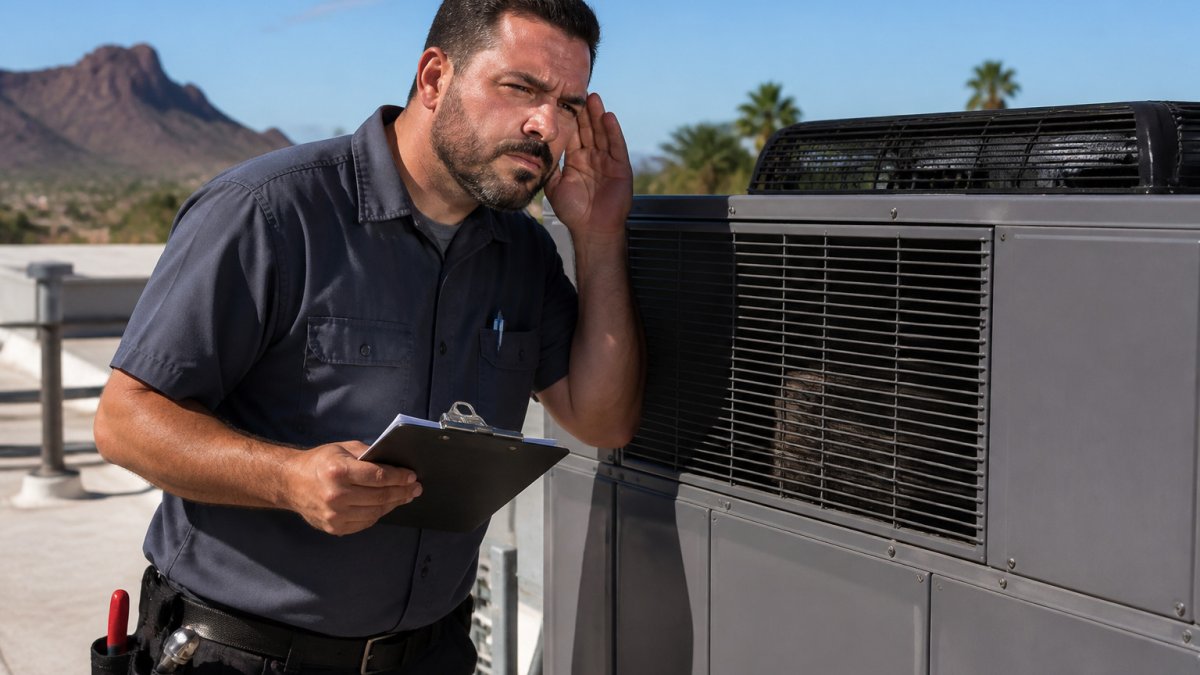
Grinding or squealing. A high-pitched squeal that starts at startup and fades usually points to a worn blower motor bearing or a loose or glazed fan belt. Grinding that persists while the fan runs often means bearing failure is advancing. On belt-driven rooftop units, a slipping belt can also cause a burning rubber smell, which is a separate warning sign covered below. Continued operation with a failing bearing can seize the blower and stop airflow to multiple zones at once.
Rattling or vibration. Loose cabinet panels, degraded isolators, debris drawn into the condenser, or a loose fan blade can all produce rattling. On rooftop units, vibration that transmits into the building structure is worth reporting because it can loosen fasteners and fittings over time. A rattle that appears only at certain fan speeds often points to a balance or mounting issue rather than a motor fault.
Clicking or buzzing. A single click at startup is normal contactor operation. Repeated clicking, chattering, or a persistent buzz can indicate a failing contactor, a loose electrical connection, or a control board issue. Because these are electrical symptoms, treat repeated clicking or buzzing as a prompt-service item rather than something to monitor for weeks.
Banging or clunking at shutdown. A pronounced bang when the compressor stops can signal a compressor or refrigerant-line issue. This is not a sound to defer; repeated banging can precede a compressor failure that takes the whole unit offline.
Hissing or whistling. Hissing can indicate a refrigerant leak or a duct static-pressure problem. Whistling at supply diffusers often means ductwork or damper restrictions are forcing air through a narrow opening. Both patterns are worth reporting with the location of the sound.
For facility staff, the practical move is to log the sound, the time, the operating mode (cooling, fan-only, startup, shutdown), and whether it changes with weather or load. Do not remove service panels or attempt to lubricate bearings or adjust belts on live equipment. Escalating noise over several weeks can indicate that a component is nearing failure, and early service is generally less costly than an emergency replacement during peak cooling season.
Commercial AC Leaking Water: Drains, Condensation and Moisture Damage
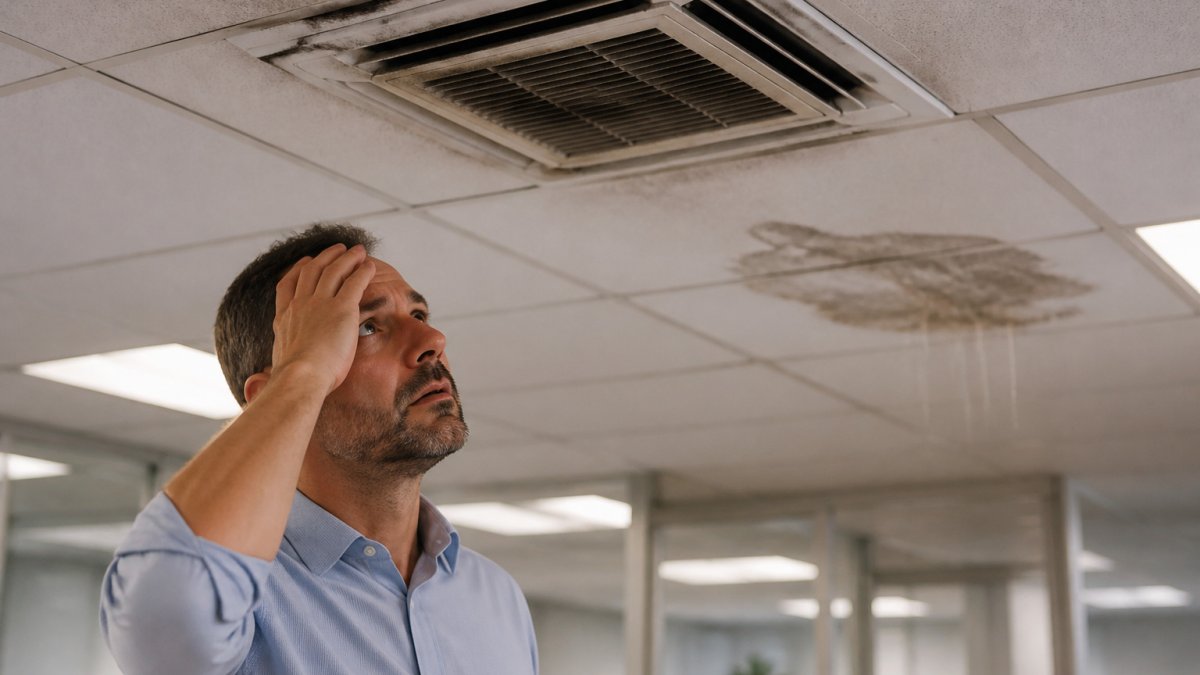
Water around air handlers or rooftop units is more than a mess. A clogged condensate drain line causes overflow, which can damage ceilings, flooring and electrical components. Ice on the evaporator coil, which can form when airflow is restricted or refrigerant is low, will melt and leak as the system cycles.
Standing water, drips from ceiling tiles and musty smells near supply vents warrant prompt service.
Commercial HVAC Short Cycling and Thermostat Problems
Short cycling means the system starts and stops repeatedly without completing a full cooling cycle. In a commercial building, the consequences go beyond comfort: frequent starts draw high inrush current, accelerate compressor and contactor wear, and can leave zones swinging between overcooled and warm. Over a season, short cycling is one of the most common precursors to compressor failure and to premature equipment replacement.
Common causes in commercial systems. An oversized unit relative to the load is a frequent culprit, especially in buildings that have added insulation, changed occupancy, or reduced internal heat gains since the equipment was sized. A dirty condenser coil, restricted airflow from filters or ductwork, low refrigerant charge, or a failing thermostat or sensor can all produce the same pattern. In zoned systems, a failed damper actuator or a zone controller that is calling for cooling incorrectly can make the main unit cycle while some zones never satisfy.
Thermostat and controls issues. A thermostat reading that does not match the actual room temperature may need calibration, a sensor replacement, or a check of its placement, a sensor near a supply diffuser, exterior wall, or heat-producing equipment will read inaccurately. In buildings with building automation systems (BAS) or programmable commercial thermostats, short cycling can also come from control schedules, setpoint conflicts between zones, or a sensor that has dropped offline. Reviewing the BAS trend log for start and stop frequency is one of the fastest ways a technician can confirm short cycling and correlate it with outdoor temperature or occupancy.
What facility staff can check safely. Confirm that schedules and setpoints match actual occupancy, verify that filters are clean, and check that return grilles are not blocked by stored materials or furniture. Ongoing preventative HVAC maintenance can keep these issues from returning. Note whether short cycling happens at all times or only during mild weather, mild-weather cycling often points to oversizing or a low-load control issue, while cycling during peak heat more often points to airflow, refrigerant, or condenser problems.
If short cycling repeats after a repair, ask whether the equipment is correctly sized for the current load and whether the controls are configured for the way the building actually operates. That conversation is often the difference between repeated service calls and a system that runs steadily for years.
Odors, Electrical Smells and Other Warning Signs to Act On Quickly
Some signs cannot wait. A burning smell, a scorched odor from electrical components or any visible arcing means you should shut the system down and call for emergency service. Electrical faults create fire risk, and continued operation can turn a repair into a much larger loss.
A musty smell is less urgent but still matters. It often points to moisture and microbial growth in the drain pan or ductwork, which affects indoor air quality for building occupants.
Some warning signs need action right away, and the article groups them by the response they call for.
| Warning sign | Likely meaning | Action |
|---|---|---|
| Burning smell or arcing | Electrical fault and fire risk | Shut down and call emergency service |
| Musty smell | Moisture and microbial growth in drain pan or ducts | Schedule prompt service |
Safe Checks You Can Do Before Calling a Technician
Facility staff can safely perform a few basic checks before a technician arrives. Confirm the thermostat is set correctly and check whether the air filter is dirty or clogged. Look for water around the air handler and note any unusual sounds, the time they occur and whether they change with the system's operating mode.
Do not open electrical panels, remove service covers on live equipment or attempt refrigerant work. Those tasks belong to licensed technicians. Write down what you observe so the service visit starts with useful information.
Booking Commercial AC Repair With Home Tech in Phoenix
If your commercial system shows any of these signs, schedule a service visit before a small fault becomes an outage. Home Tech provides commercial HVAC service across the Phoenix area. Our technicians are licensed, insured and EPA 608 certified, and commercial calls are a priority.
Call (602) 486-1901 or visit hometechappliancerepair.com to book your appointment. Pricing depends on the system type, the repair needed and the site conditions, so request a current quote from Home Tech before work begins. To compare options, read about heating and cooling contractors in Scottsdale, Tempe and Fountain Hills.
Frequently Asked Questions
How can you tell when a commercial AC system needs repair?
The clearest signs are a system that runs but no longer cools to setpoint, uneven temperatures between rooms or zones, new noises such as grinding, squealing or banging, water pooling around the air handler or condensate line, and frequent starts and stops. Any one of these can point to a fault that will worsen over time. Note when each symptom started and how often it happens, since that detail helps a technician diagnose the cause faster when you call for service.
Why is my commercial AC running but not cooling?
A system can run normally while still failing to cool. Common causes include low refrigerant from a leak, a dirty or clogged filter restricting airflow, a failing compressor or condenser fan motor, or a frozen evaporator coil. Check that the filter is clean and that supply vents are not blocked, then call a technician if the air is still warm. Continued operation with low refrigerant or a frozen coil can damage the compressor, so repeated running is not a safe test.
What do unusual noises from a commercial AC system mean?
Rattling often points to loose panels or fan blades, squealing usually signals a worn belt or motor bearing, grinding can mean failing bearings or a compressor problem, and clicking or buzzing may come from electrical contactors. Because each sound suggests a different component, it is worth describing the noise precisely when you schedule service. Loud or grinding noises should be addressed quickly to avoid a full breakdown during peak cooling demand.
How quickly should you address a commercial AC problem?
Treat a total loss of cooling, a burning electrical smell, sparking, or water flowing into electrical components as urgent and shut the system off if it is safe to do so. For less severe symptoms such as weak airflow, minor leaks, or short cycling, schedule a repair within a few days, since small faults often grow into larger failures. You can book service by calling (602) 486-1901 or visiting hometechappliancerepair.com.