 listicle
Top 10 Essential Kitchen Appliance Maintenance Tips
Table of Contents
- Top 10 Essential Kitchen Appliance Maintenance Tips
- 1. Clean Refrigerator Condenser Coils Regularly
- 2. Maintain Your Dishwasher Filter and Spray Arms
- 3. Keep Your Oven and Stovetop Clean to Prevent Grease Buildup
- 4. Inspect and Clean Rubber Door Seals
- 5. Clean Kitchen Exhaust Hood Filters Monthly
- When to Repair vs Replace Appliances
- Create a Preventive Maintenance Schedule for Home Appliances
- Conclusion
- Frequently Asked Questions
Last Updated: September 18, 2026
Top 10 Essential Kitchen Appliance Maintenance Tips
Kitchen appliances are expensive investments that many homeowners neglect. The top 10 essential kitchen appliance maintenance tips extend lifespan by years, prevent costly breakdowns, and maintain optimal performance.
This guide covers the maintenance strategies that matter most, explaining why each works and how often to perform it.
1. Clean Refrigerator Condenser Coils Regularly
Condenser coils remove heat and keep food cold, but dust and debris accumulate over time, forcing the compressor to work harder. Cleaning coils is one of the most impactful maintenance tasks for refrigerator longevity.
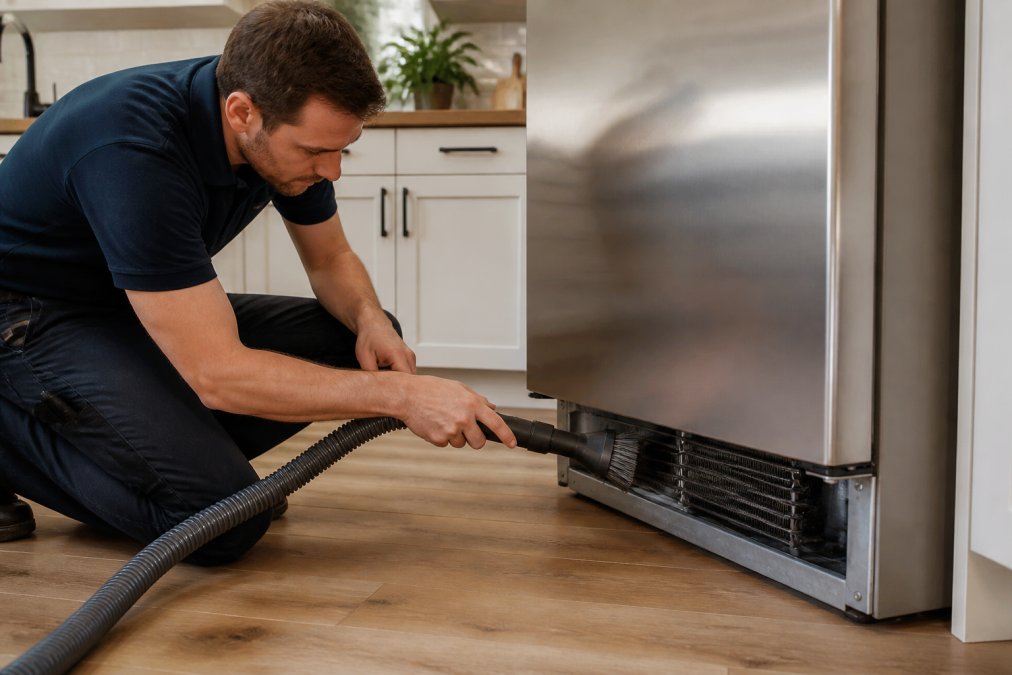
How to clean refrigerator coils:
- Unplug the refrigerator from the electrical outlet
- Locate the coils, typically at the back or bottom front of the unit
- Use a soft brush or coil cleaning brush to gently remove debris
- Vacuum the loosened dust with a soft brush attachment
- Wipe the area with a damp cloth
- Plug the refrigerator back in and check that it runs normally
Perform this maintenance every 6 to 12 months, or more frequently if you have pets or live in a dusty environment. Clean coils reduce energy use and extend appliance lifespan.
2. Maintain Your Dishwasher Filter and Spray Arms
A clogged dishwasher filter traps food particles, reducing cleaning performance and causing standing water, mold, and odors. Dishwasher filter maintenance is quick but critical for peak performance.
Steps to maintain your dishwasher:
- Remove the lower rack to access the filter at the bottom of the tub
- Twist and lift the filter basket out of its housing
- Rinse the filter under warm running water and use a soft brush to remove trapped debris
- Check the spray arms above for clogs, small holes can become blocked by mineral deposits or food particles
- Use a toothpick or small brush to clear any obstructed holes
- Reinstall the filter and run a short empty cycle with the door closed
Clean your dishwasher filter weekly with daily use, or every 2-3 weeks with lighter use. Clear spray arms ensure water reaches all dishes and prevent breakdown.
3. Keep Your Oven and Stovetop Clean to Prevent Grease Buildup
Grease and food residue on your oven and stovetop are fire hazards that damage internal components. Regular cleaning prevents buildup and maintains safety and performance.
Oven maintenance routine:
- Wipe spills immediately after cooling to prevent baked-on residue
- Use mild cleanser and soft cloth; avoid abrasive scrubbers
- For stubborn buildup, apply baking soda paste, let sit 15 minutes, then wipe clean
- Clean interior glass monthly
Stovetop maintenance:
- Wipe down the surface after each use with a damp cloth
- For glass or ceramic cooktops, use a specialized cooktop cleaner to avoid scratches
- Remove and clean burner grates weekly to prevent grease accumulation
- Check that burners heat evenly; uneven heating signals a clogged burner that needs cleaning
A clean oven and stovetop maintain optimal performance, reduce fire risk, and look better. Monthly deep cleaning combined with weekly wipe-downs keeps grease from becoming a problem.
4. Inspect and Clean Rubber Door Seals
Rubber gasket seals on refrigerators and ovens prevent cold air from escaping or heat from leaking. When seals accumulate mold, debris, or food particles, they lose effectiveness and force the appliance to work harder.
How to clean door seals:
- Inspect the entire gasket for visible mold, cracks, or separation from the frame
- Mix warm water with a mild cleanser or equal parts vinegar and water
- Use a soft cloth or old toothbrush to scrub the seal thoroughly, paying attention to crevices where debris collects
- Wipe with a clean, damp cloth to remove cleanser residue
- Dry completely with a soft cloth
Check refrigerator seals monthly and clean every 2-3 months. For ovens, inspect quarterly and clean as needed. Clean seals reduce energy consumption and extend lifespan.
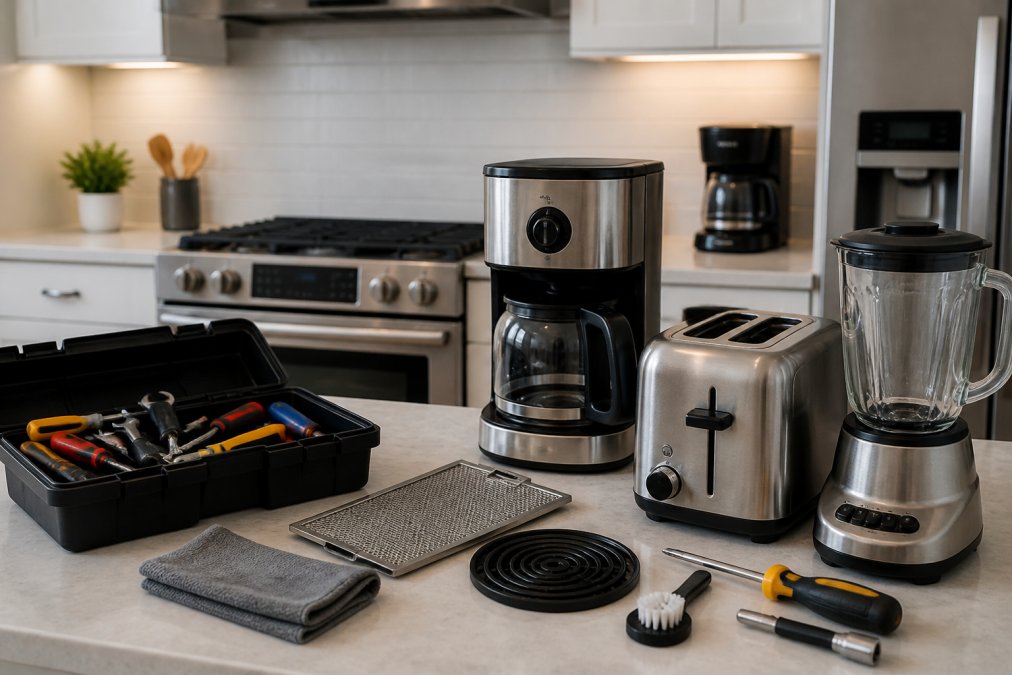
5. Clean Kitchen Exhaust Hood Filters Monthly
Your kitchen exhaust hood captures cooking vapors, smoke, and grease. When the filter clogs, airflow obstruction occurs and the hood loses suction, forcing the system to work harder and waste energy.
Filter cleaning process:
- Turn off the exhaust hood at the power switch
- Remove the filter by unclipping or unscrewing it from the hood housing
- Soak the filter in hot water with a degreasing dish soap for 15-20 minutes
- Use a soft brush or cloth to scrub away trapped grease
- Rinse thoroughly under warm running water until water runs clear
- Allow the filter to dry completely before reinstalling
- Secure the filter back into the hood
Clean your exhaust hood filter monthly, or every 2 weeks with frequent or high-heat cooking. A clean filter maintains ventilation, improves air quality, and prevents motor damage.
When to Repair vs Replace Appliances
Deciding whether to repair or replace an appliance depends on age, repair cost, and remaining useful life. Understanding this decision saves money and prevents investing in appliances nearing end-of-life.
Use the 50% rule as a general guide:
- If the repair cost is less than 50% of the replacement cost and the appliance is less than halfway through its typical lifespan, repair it
- If the repair cost exceeds 50% of replacement cost and the appliance is more than halfway through its typical lifespan, replacement is usually the better choice
- For appliances over 10-12 years old, even smaller repairs often signal that replacement is coming soon
Additional factors to consider:
- Repair frequency in the past year
- Warranty status
- Replacement part availability and cost
- Energy efficiency gains with a new appliance
Preventive maintenance extends the decision timeline by several years. At Home Tech, we help customers understand whether repair or replacement is the smarter choice, with transparent costs and no unnecessary recommendations.
Create a Preventive Maintenance Schedule for Home Appliances
A preventive maintenance schedule keeps you on track. The best schedule is one you'll follow, so tie tasks to existing routines or seasonal changes.
Sample preventive maintenance schedule:
| Task | Frequency | Appliance | Why It Matters |
|---|---|---|---|
| Clean condenser coils | Every 6-12 months | Refrigerator | Reduces energy use, extends lifespan |
| Clean dishwasher filter | Weekly to bi-weekly | Dishwasher | Prevents clogs and odors |
| Wipe oven interior | Monthly | Oven | Prevents grease buildup and fire hazard |
| Clean stovetop burners | Weekly | Stovetop | Maintains even heating |
| Inspect door seals | Monthly | Refrigerator/Oven | Prevents energy loss |
| Clean exhaust hood filter | Monthly | Exhaust hood | Maintains airflow and ventilation |
| Check for leaks or unusual sounds | Monthly | All appliances | Catches problems early |
| Deep clean all appliances | Quarterly | All | Prevents debris accumulation |
How to implement your schedule:
- Set phone reminders for monthly tasks
- Post a checklist on your refrigerator
- Use a home maintenance app to track tasks
- Schedule seasonal deep cleaning in spring and fall
- Keep records of repairs to spot patterns and plan for replacement
A written schedule transforms maintenance from an afterthought into a habit. Homeowners who maintain a regular schedule report fewer unexpected breakdowns and longer appliance lifespans.
Conclusion
Kitchen appliance maintenance requires only consistency and attention. The essential tips address the most common causes of failure: dust accumulation, grease buildup, clogged filters, and worn seals. A simple preventive schedule extends lifespan and avoids unexpected breakdowns.
When repair is necessary, Home Tech provides fast, reliable service with EPA 608-certified technicians for all major brands. We offer same-day appointments, transparent pricing, and a 100% satisfaction guarantee.
If your appliance needs attention beyond basic maintenance, call (602) 486-1901 or visit hometechappliancerepair.com to book your appointment. Let us help you keep your kitchen running smoothly.
Frequently Asked Questions
What is the 50/50 rule for appliance repair?
The 50/50 rule suggests that if the cost of repair exceeds 50% of the appliance's replacement cost, you should replace it instead. For example, if your refrigerator costs $1,500 new and the repair estimate is $800 or more, replacement may be the better choice. However, this is a guideline, not a hard rule, consider the appliance's age, frequency of repairs, and your budget before deciding.
How often should you clean refrigerator condenser coils?
Most manufacturers recommend cleaning refrigerator condenser coils every 6 months, though monthly cleaning is ideal if you have pets or a dusty home. Dirty coils force the compressor to work harder, reducing energy efficiency and shortening the appliance's lifespan. A simple vacuum with a soft brush attachment removes dust and debris without damaging the coils.
What preventive maintenance schedule should homeowners follow?
A basic preventive maintenance schedule includes: monthly cleaning of exhaust hood filters, quarterly dishwasher filter checks, semi-annual refrigerator coil cleaning, and annual inspections of door seals and gaskets. For oven and stovetop surfaces, wipe down spills immediately and deep clean monthly. Keeping a simple checklist helps you stay on track and catch small issues before they become expensive repairs.
What are the signs that a kitchen appliance needs professional service?
Watch for unusual noises, leaks, temperature inconsistencies, error codes, or a burning smell. If your refrigerator isn't cooling, your dishwasher leaves food residue, or your oven heats unevenly, call a professional. Many issues caught early cost less to repair than waiting for complete failure. EPA 608-certified technicians can diagnose sealed-system problems safely and accurately.