 blog
Signs Your Commercial Freezer Is Failing: A Diagnostic Guide
Table of Contents
- Signs Your Commercial Freezer Is Failing: What to Watch For
- Commercial Freezer Troubleshooting: Identifying the Root Cause
- When Your Commercial Freezer Is Not Freezing: Common Causes
- Preventative Maintenance for Commercial Freezers: Avoid Failure Before It Starts
- Commercial Freezer Repair Cost and DIY vs. Professional Thresholds
- Food Safety and Health Compliance Implications of a Failing Freezer
- Frequently Asked Questions
Last Updated: July 27, 2026
When your commercial freezer stops performing, you're losing revenue, risking food spoilage, and facing potential health code violations. At Home Tech, we've helped restaurants, grocery stores, and food service operations across the Phoenix metro area diagnose freezer problems before they become catastrophic failures. Recognizing early warning signs can mean the difference between a quick repair and a complete system replacement costing thousands of dollars.
Signs Your Commercial Freezer Is Failing: What to Watch For
The most reliable way to catch a failing freezer is knowing what normal operation sounds and feels like.
Unusual or Strange Noises
A commercial freezer should hum quietly and consistently. Hissing or whistling indicates a refrigerant leak, the system cannot maintain temperature without it and requires professional service. Rattling or clanking points to loose internal components that can cause additional damage. Grinding or squealing suggests mechanical wear inside the compressor or motor, indicating imminent failure.
Temperature Fluctuations and Inconsistency
Your freezer should maintain steady temperature between -10°F and 0°F. Climbing and falling temperatures signal thermostat or control system failure. A faulty thermostat causes the compressor to cycle more frequently, stressing the system and wasting energy.
Uneven temperature distribution, where top shelves are colder than bottom, usually means the evaporator fan is failing or ice has accumulated around coils, blocking airflow. Check your freezer's temperature display at the same time daily for a week. If you see variation of more than 3-5 degrees, call a technician.
Excessive Ice or Frost Buildup
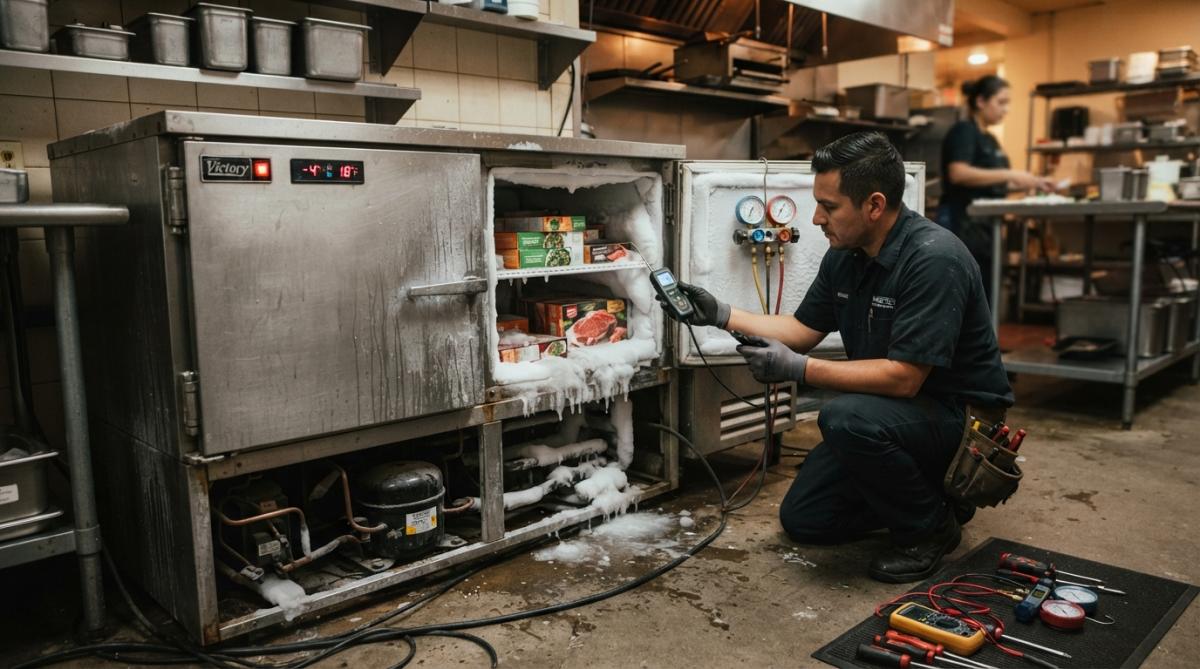
A thin frost layer on evaporator coils is normal. Thick ice accumulation blocks airflow and signals the defrost cycle isn't working. Frost also builds when the door seal is damaged, allowing warm air to leak in, or when refrigerant levels drop, causing coils to become colder than normal. Check the interior weekly. If you see ice buildup more than 1/4 inch thick, address it immediately.
Water Leaks or Puddling
Water pooling inside or beneath your freezer indicates the defrost cycle is not working. During defrost, melted ice should drain through a defrost drain line. If the line is blocked by ice or debris, water backs up and refreezes, accelerating failure. Standing water inside a freezer is also a food safety hazard. If you see pooling water, remove perishables immediately and call for service.
Damaged Door Seals or Gaskets
The rubber gasket around the freezer door creates an airtight seal. Over time, gaskets crack, harden, or warp. A damaged gasket is easy to spot: open the door and inspect the rubber seal. It should be smooth and pliable. Test by closing the door on a dollar bill, if you can pull it out easily, the gasket isn't sealing.
A bad door seal forces your compressor to work constantly because warm air leaks in every time someone opens the door. Replacing a gasket is one of the most affordable repairs.
Increased Energy Consumption and Rising Bills
Your electric bill is one of the most honest indicators of freezer health. Compare your current bill to the same month last year. If freezer usage has increased 20-30% without any change in stored food volume, something is wrong. The compressor is likely running longer cycles because it's struggling to maintain temperature.
Longer Compressor Run Times
The compressor should cycle on and off throughout the day in a regular pattern. If it's running almost continuously with only brief shutoff periods, it's struggling to maintain temperature. Monitor run times by listening periodically throughout the day. If cycles are getting longer, document them and call for service.
Commercial Freezer Troubleshooting: Identifying the Root Cause
Once you've identified something is wrong, narrow down what's actually failing.
Checking Condenser Coils and Airflow
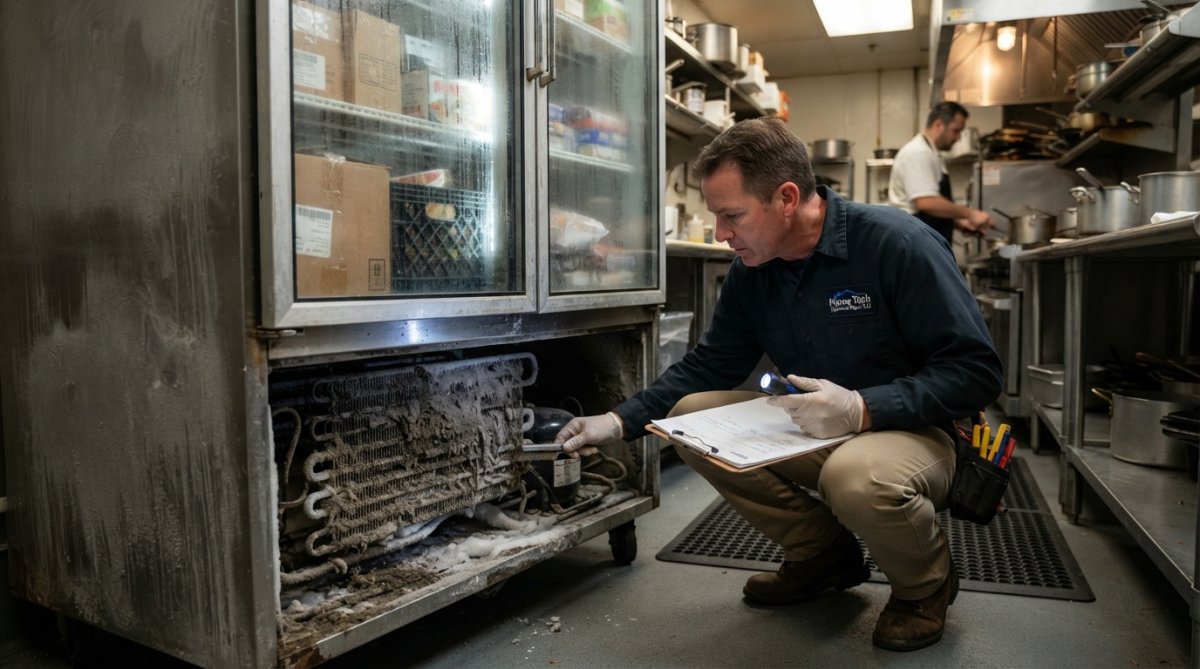
The condenser coils, located on the back or bottom of your freezer, reject heat from the refrigerant. If clogged with dust, grease, or debris, the condenser cannot reject heat efficiently, forcing the compressor to work harder.
Unplug the freezer, locate the coils, and visually inspect them. If you see thick dust or grease buildup, use a soft brush to gently remove it. Do NOT use a pressure washer, you can damage delicate fins. Maintain at least 6 inches of clearance on all sides for proper ventilation.
Testing the Thermostat and Temperature Control
The thermostat measures internal temperature and tells the compressor when to turn on or off. A faulty thermostat sends wrong signals, causing temperature fluctuations. Check that the thermostat setting matches your desired temperature. Place a reliable thermometer inside the freezer for 30 minutes. If the reading differs from the freezer's display by more than 5 degrees, the thermostat needs replacement.
Inspecting for Refrigerant Leaks
A refrigerant leak is serious because you cannot simply add more refrigerant without finding and sealing the leak first. Signs include hissing sounds, frost or ice buildup on refrigerant lines, and reduced cooling capacity. Do NOT attempt to locate or repair a refrigerant leak yourself. Refrigerant handling requires EPA 608 certification. Home Tech's EPA 608-certified technicians handle refrigerant work on all commercial systems.
When Your Commercial Freezer Is Not Freezing: Common Causes
If your freezer has stopped cooling entirely or is only partially cold, a critical component has failed.
Evaporator Fan Motor Failure
The evaporator fan circulates cold air from the coils throughout the cabinet. If this motor fails, cold air sits in one spot and never reaches the rest of the freezer. You'll notice one area stays very cold while others warm up quickly. A failed evaporator fan motor affects food safety immediately. Replacement is necessary and costs significantly less than a full compressor replacement.
Compressor Issues and Mechanical Breakdown
The compressor is the most expensive and critical component. If it fails, your entire system stops working. A failing compressor shows several signs: it runs but produces no cold air, makes grinding or squealing noises, or stops running entirely. When a compressor fails completely, you have two options: replace the compressor (several thousand dollars) or replace the entire freezer unit. For older freezers, replacement often makes more financial sense than repair.
| Problem | Symptom | Likely Cause | Urgency |
|---|---|---|---|
| Hissing noise | Refrigerant escaping | Leak in sealed system | High |
| Rattling noise | Loose internal parts | Vibration damage | Medium |
| Temperature fluctuation | Uneven cooling | Thermostat or airflow issue | Medium |
| Frost buildup | Ice on coils | Defrost cycle failure | High |
| Water pooling | Moisture inside cabinet | Blocked drain line | High |
| Damaged gasket | Warm air leaking in | Door seal failure | Medium |
| Rising electric bill | Increased consumption | Compressor working harder | Medium |
| Long run times | Compressor barely shuts off | Refrigeration cycle broken | High |
| Fan not running | No airflow | Evaporator fan motor failure | High |
| No cooling at all | Freezer completely warm | Compressor failure | Critical |
Preventative Maintenance for Commercial Freezers: Avoid Failure Before It Starts
Regular maintenance extends equipment life by years and prevents expensive emergency repairs.
Monthly Maintenance Checklist
Perform these checks monthly:
- Listen for unusual noises: hissing, rattling, grinding, or squealing
- Check temperature display against target setting
- Look inside for excessive frost or ice buildup
- Inspect door gasket for cracks, hardness, or visible damage
- Check for water pooling inside or beneath the freezer
- Feel around compressor and motor for excessive heat
- Visually inspect condenser coils for dust or grease
- Verify freezer is not pushed against walls or blocked
- Note changes in compressor cycling frequency
Document observations in a simple log. Over time, you'll notice trends indicating developing problems.
Seasonal Deep-Cleaning and Professional Service
Schedule professional maintenance twice per year, typically before and after your busy season. A professional service includes thorough condenser coil cleaning, refrigeration cycle inspection for leaks, thermostat testing, defrost drain line cleaning, electrical connection inspection, and sealed system pressure testing.
Commercial Freezer Repair Cost and DIY vs. Professional Thresholds
Not every freezer problem requires professional service.
When to Call a Technician vs. DIY Troubleshooting
You can safely handle:
- Cleaning condenser coils with a soft brush
- Clearing ice from the defrost drain line with warm water
- Replacing a door gasket
- Checking thermostat settings and verifying temperature accuracy
- Ensuring adequate ventilation around the freezer
You MUST call a technician for:
- Refrigerant leaks or low refrigerant charge (requires EPA 608 certification)
- Compressor repair or replacement
- Evaporator fan motor failure
- Thermostat or temperature control replacement
- Sealed system pressure testing or repair
- Electrical issues or motor problems
If the repair involves the sealed refrigeration system, a certified technician must do it.
Cost-Benefit Analysis: Repair vs. Replacement
When your freezer needs major repair, decide: fix it or replace it. A new commercial freezer typically lasts 10-15 years. If your freezer is 8-10 years old and repair costs more than 50% of a replacement unit's price, replacement often makes more sense. If your freezer is 3-5 years old, repair is usually better.
Newer freezers use significantly less electricity than older models. If your freezer is 10+ years old, energy savings from a new unit can offset replacement cost within 3-5 years. When facing a major repair decision, get a professional assessment.
Food Safety and Health Compliance Implications of a Failing Freezer
A failing freezer is not just an equipment problem, it's a food safety and regulatory compliance issue. Food held at improper temperatures becomes unsafe. Bacteria multiply rapidly in the "danger zone" between 40°F and 140°F.
Health inspectors check freezer temperature during routine inspections. If your freezer reads above 0°F, you're out of compliance. A failing freezer also costs money through food spoilage. Preventative maintenance and prompt repairs are trivial compared to food safety incidents or major spoilage losses.
A failing commercial freezer sends clear warning signals: unusual noises, temperature swings, frost buildup, door seal damage, and rising energy bills all demand attention. The key is catching these signs early, before complete system breakdown.
If you operate a restaurant, grocery store, or food service business in the Phoenix area and notice any warning signs, Home Tech provides same-day emergency repair for walk-in coolers and freezers. Our EPA 608-certified technicians diagnose problems, repair sealed systems, and restore proper temperature quickly. We service all major commercial refrigeration systems and stand behind our work with a 100% satisfaction guarantee. Call (602) 486-1901 or visit hometechappliancerepair.com to book your appointment today.
Frequently Asked Questions
What are the most common problems with commercial freezers?
The most common issues include compressor failure, refrigerant leaks, damaged door seals and gaskets, condenser coil buildup, and thermostat malfunctions. Temperature control problems, excessive frost accumulation, and unusual noises from the motor or electrical components are also frequent. Early detection through preventative maintenance can prevent many of these issues from becoming costly breakdowns. If you notice any warning signs, contact a technician promptly to avoid food spoilage and business interruption.
How do I know if my commercial freezer compressor is bad?
Signs of compressor failure include longer run times than normal, grinding or squealing noises, inability to reach or maintain proper temperature, and increased energy bills. The compressor is the heart of the refrigeration cycle, if it's failing, the freezer cannot maintain the cold temperatures needed for food safety. You may also notice the motor running constantly without achieving temperature. A professional technician can diagnose compressor issues and determine whether repair or replacement is more cost-effective for your operation.
How much does commercial freezer repair typically cost?
Commercial freezer repair costs depend on the specific problem, equipment brand, and whether the issue is electrical or mechanical. A simple gasket replacement costs far less than compressor repair or refrigerant recharge. For accurate pricing on your specific situation, contact Home Tech for a free diagnostic, we provide same-day service in the Phoenix metro area with no hidden fees. Our technicians can give you a clear repair estimate and help you evaluate whether replacement makes financial sense.
What is the ideal temperature for a commercial freezer?
Commercial freezers should maintain 0°F (-18°C) or below to ensure food safety and prevent spoilage. Many operations aim for -10°F to -15°F for optimal preservation. If your freezer cannot reach or hold these temperatures, temperature control is failing and food safety is at risk. Health inspections may flag temperature inconsistencies as a violation. Monitor ambient temperature around the unit as well, poor ventilation or high surrounding heat forces the compressor to work harder and can accelerate mechanical failure.
Additional Resources:
[EXTERNAL_LINK: FDA Food Storage Temperature Guidelines | fda.gov]
[EXTERNAL_LINK: EPA 608 Certification Requirements for Refrigerant Handling | epa.gov]
[EXTERNAL_LINK: Commercial Refrigeration Maintenance Best Practices | ashrae.org]