 how-to
Why Refrigerator Cooling Performance Drops Suddenly
Last Updated: November 7, 2026
Quick Summary
Sudden refrigerator cooling loss usually points to a single failed part such as a fan, control board, or power interruption, while gradual decline often means dirty condenser coils or a worn door gasket. First check the power supply and temperature setting, then move to airflow if the interior stays warm.
- A cold freezer with a warm fridge usually means the evaporator fan, duct frost, or defrost drain has failed.
- Read both compartments with a thermometer in a glass of water, leaving it four to six hours with doors closed.
- Never chip frost with a knife, since nicking the evaporator coil turns a cheap fix into a sealed-system repair.
- Treat perishable food above 40°F for more than two hours as no longer safe, and the window is cumulative.
- A full, closed refrigerator holds temperature for roughly four hours in an outage, half that if half empty.
Table of Contents
- Sudden Cooling Loss Versus Gradual Decline
- What Is the First Thing to Check When a Refrigerator Stops Cooling
- Why the Fridge Is Not Cold but the Freezer Is
- Why Is My Fridge Not Cooling and Making Noise
- Refrigerator Temperature Fluctuating: Causes and Fixes
- Coils, Vents, and Door Seals: The Heat Removal Checks
- Food Safety and Time-Sensitive Actions
- Book Same-Day Refrigerator Repair in the Phoenix Metro
- Frequently Asked Questions
Sudden Cooling Loss Versus Gradual Decline
A refrigerator cooling failure that happens overnight is a different problem from one that has been getting warmer for weeks.
That distinction matters because it changes what you check first. Both patterns are common in refrigerator repair, and the fast ones are usually easier to trace.
Sudden failure often follows a power surge, a fan that seized, or a compressor that tripped its overload. Gradual decline builds quietly.
The 5 checks we cover next walk through both patterns in the order that finds the cause fastest. For a deeper walkthrough, see how to troubleshoot refrigerator cooling in Cave Creek.
What Is the First Thing to Check When a Refrigerator Stops Cooling
The first thing to check is the power supply and the temperature setting. Confirm the fridge has power, the breaker is on, and the thermostat has not been bumped or reset to a warm setting.
Start here because it costs nothing and rules out the most common false alarm.
- Confirm the outlet works: plug in a lamp or phone charger
- Check the breaker panel for a tripped switch
- Look for a display or interior light that is off
If the fridge has power and the setting is correct but the interior stays warm, move to airflow. According to the U.S. Department of Agriculture's food safety guidance, a refrigerator should hold at 40°F or below, so a warm box is a clock you are racing.
Why the Fridge Is Not Cold but the Freezer Is
A cold freezer with a warm fridge is the single most useful symptom split in refrigerator diagnosis.
The three usual culprits, in order of how often they turn up:
- Failed evaporator fan. The fan sits behind a panel in the freezer. If the blade is iced in, the motor has seized, or the blade has cracked, no air crosses into the fridge. You will often hear nothing when the door is closed, or a faint hum with no airflow.
- Frost or ice blocking the duct. A partial defrost failure lets frost build on the evaporator until it bridges the vent opening. The freezer still reads cold because the ice is cold, but the passage is sealed.
- Ice dam at the defrost drain. Meltwater that cannot drain refreezes at the bottom of the freezer and can block the air path or trip the defrost cycle.
Run this sequence before you call anyone. It takes about ten minutes and separates a homeowner fix from a technician job.
- Read both compartments with a thermometer, not the display. Put a fridge thermometer in a glass of water in the middle of the fresh-food section and another between frozen packages in the freezer. Leave them four to six hours with the doors closed. A freezer holding near 0°F with a fridge at 45°F or above is the classic airflow signature.
- Listen for the fan with the door closed. Open the freezer, press the door switch with a finger, and listen. If you hear the compressor but no fan, the evaporator fan is the suspect. If you hear grinding or rattling, the blade is hitting ice or a failing motor.
- Look at the frost pattern. Open the freezer and inspect the back wall. A light, even film is normal. A thick, solid block of frost, or frost concentrated in one corner, points to a defrost problem or a sealed air path.
- Check the vents on both sides. In the freezer, make sure frozen food is not packed against the vent. In the fridge, confirm no shelf, bin, or tall container is sitting in front of the cold-air outlet. A single bag of frozen vegetables against the vent can warm the whole fridge.
- Confirm the fridge vent is not iced over. If you see ice at the fridge-side outlet, the duct is freezing shut and the defrost system needs attention.
Watch out: do not chip at frost with a knife or screwdriver.
For a fridge that is not cooling and needs hands-on help, you can get affordable refrigerator not cooling repair in Phoenix from our team.
Why Is My Fridge Not Cooling and Making Noise
Noise plus no cooling usually means a fan failure or a compressor straining to start. A grinding or buzzing sound points to a fan blade hitting ice or a failing motor.
Fan noise is the easier fix. Compressor noise is the one to take seriously.
- Grinding or rattling: evaporator or condenser fan
- Clicking on repeat: compressor start circuit
- Loud hum with no cooling: compressor or relay
If the fridge is warm and the noise is coming from the back or bottom, shut it off and call a technician. Our refrigerator noise diagnosis and fix service covers exactly this symptom.
Refrigerator Temperature Fluctuating: Causes and Fixes
Temperature fluctuation means the fridge cools, warms, cools again. The most common cause is a door seal that no longer seals, letting warm room air in.
Other causes include a fridge that is overpacked, blocking airflow, or one set too close to a heat source.
- Test the door seal with a dollar bill: close the door on it and pull
- If the bill slides out easily, the gasket is weak
- Leave space around shelves for air to move
A weak door gasket is cheap to replace and often fixes the swing. As ENERGY STAR's appliance guidance notes, a tight seal is one of the biggest factors in how hard a fridge has to work.
Coils, Vents, and Door Seals: The Heat Removal Checks
Refrigerator cooling is really about heat removal, that is the whole job. It pulls heat out of the food and dumps it through the condenser coils at the back or bottom.
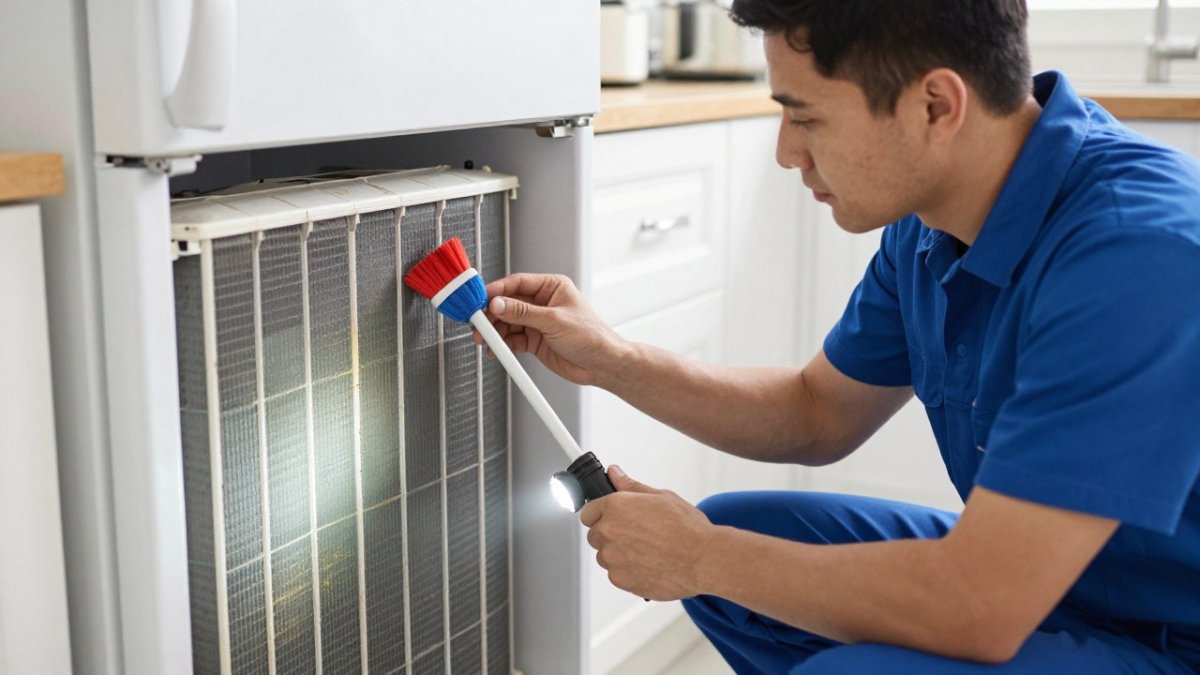
Here is the order we check them in.
- Condenser coils: pull the fridge out and vacuum the dust and pet hair
- Air vents: clear anything blocking the freezer and fridge vents
- Door seal: run the dollar-bill test on all four sides
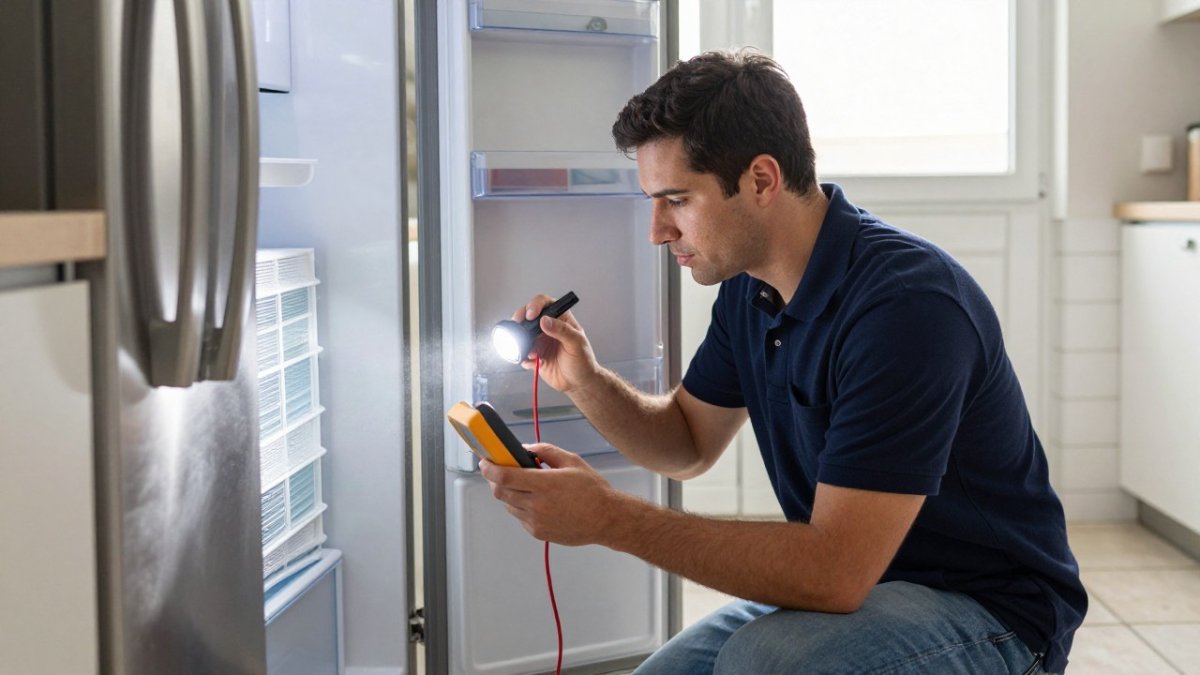
If the coils are clean and the seal is tight but the fridge still runs warm, the problem may be inside the sealed system. You can review local fridge compressor repair cost details before you book.
Food Safety and Time-Sensitive Actions
Food safety is the part most guides skip, and it is the part that costs you money.
The practical problem is that most people guess at temperature from the feel of the milk. Do not.
Act in this order, and act fast.
- Keep the door closed. Every opening dumps cold air and pulls warm room air in. Decide what you need before you open it, take it out in one pass, and close the door.
- Move high-risk food first. Meat, poultry, fish, dairy, eggs, cut fruit, cooked leftovers, and anything with a mayo or cream base are the priority. A cooler with ice or frozen gel packs buys you hours.
- Measure the food, not the air. Stick an instant-read thermometer into the thickest part of a package. Food at 40°F or below is fine; food that has been above 40°F for under two hours can generally be kept if you move it to a cold cooler now.
- Discard anything over the two-hour mark. When in doubt, throw it out, the cost of replacing groceries is almost always less than the cost of a foodborne illness. Do not taste-test to decide.
- Do not refreeze thawed meat. If meat thawed during the warm period, cook it now or discard it. Refreezing does not undo the time it spent warm.
Watch out: the two-hour rule is about the food's temperature history, not the fridge's display.
A warm freezer is a separate call.
If the power is out rather than the fridge broken, a full, closed refrigerator holds temperature for roughly four hours and a full freezer for about 48 hours, half that if either is half empty. Keep the doors shut and add ice or frozen gel packs to the fridge side to stretch the window.
Here are the temperature limits and time windows the article says to act on when a fridge drifts warm.
| Item | Value | Note |
|---|---|---|
| Refrigerator safe temperature | 40°F or below | A warm box starts the clock |
| Freezer safe temperature | 0°F or below | Separate call if only fridge drifted |
| Perishable food above 40°F | More than two hours | Treat as no longer safe |
| Two-hour window | Cumulative, not per episode | Every warm stretch counts |
| Full, closed refrigerator in outage | Roughly four hours | Half that if half empty |
| Full freezer in outage | About 48 hours | Half that if half empty |
| Full defrost with doors open | Can take 24 hours | For a solid block of frost |
Book Same-Day Refrigerator Repair in the Phoenix Metro
Some cooling problems are a five-minute fix. Others need a certified technician and a sealed-system repair.
Home Tech is a family-owned, Google Guaranteed company with over 10 years serving the Phoenix metro. Our EPA 608-certified technicians handle sealed-system and refrigerant work, including Samsung Bespoke refrigerator and LG compressor and ice maker repairs. We offer same-day and next-day appointments with no hidden fees and a 100% satisfaction guarantee on every repair.
Robert A. from Scottsdale put it this way: "I was impressed by how careful these guys were when they arrived to fix my refrigerator."
Do not wait for the food to spoil. Book fast, reliable fridge repair in Phoenix and get your kitchen back to normal.
A warm fridge is a race against time, and the right diagnosis saves both food and money.
Frequently Asked Questions
What are the signs of a dying refrigerator?
Watch for a refrigerator that runs constantly but never gets cold, food spoiling faster than usual, frost buildup in the freezer, water pooling under the drawers, and a compressor that clicks on and off. Loud grinding or humming from the back panel often points to a failing condenser or evaporator fan. If cooling performance drops suddenly after years of steady service, the compressor or sealed system may be the cause, and an EPA 608-certified technician should test refrigerant pressure before you spend money on parts.
Why does my refrigerator get warm and then cold again?
A refrigerator temperature fluctuating between warm and cold usually means the cooling cycle is being interrupted. Common causes include a thermostat that reads the wrong temperature, a dirty condenser coil that cannot shed heat, a door gasket that seals only part of the time, or a condenser fan that stalls. Check that vents inside the fridge are not blocked by food containers and confirm the door closes fully. If the swing continues after cleaning the coils and clearing vents, the thermostat or fan motor likely needs replacement.
Why is my fridge not cooling even though the lights are on?
Lights working means power is reaching the refrigerator, so the problem sits inside the cooling system. The first thing to check is the temperature setting and whether the fridge was recently moved or overloaded. Next, listen for the evaporator fan in the freezer; if it is silent, air is not moving into the fridge compartment. Dirty condenser coils, a failed condenser fan, or a sealed-system refrigerant leak can also stop cooling while the interior lights stay on. A technician can confirm which component failed with a pressure and amp draw test.
How can I improve refrigerator cooling without a repair call?
Start with the simple heat removal steps: vacuum the condenser coils every six to twelve months, keep at least two inches of clearance around the back and sides, and clear blocked air vents inside both compartments. Set the fridge to 37°F and the freezer to 0°F, and verify with a thermometer placed in a glass of water overnight. Inspect the door gasket by closing a dollar bill in the door; if it slides out easily, the seal needs cleaning or replacement. If temperatures still climb, schedule a diagnostic before food loss adds up.