 how-to
Why Does My Dishwasher Leave White Residue on Plastic?
Quick Summary
White residue on plastic is usually detergent residue or mineral buildup from hard water, and both are harmless and fixable. A dry-wipe test and a vinegar soak can help you tell which one you have. Mineral scale dissolves in vinegar, while detergent film turns sudsy with soap.
- Run a dry-wipe test first: white powder or grit suggests mineral scale or dried detergent.
- Soak the container in equal parts white vinegar and water for 15 minutes to test for mineral buildup.
- Reduce detergent by about one-quarter and change one setting at a time.
- Raise the rinse aid one level for hard water, and lower it if you see a greasy, rainbow film.
- Etching is permanent, so replace the container if it stays cloudy after soaking.
Table of Contents
- Quick Test: Detergent Residue or Mineral Buildup?
- How to Remove White Residue from Plastic Containers
- How to Get Rid of White Residue in Dishwasher
- Loading Plastic So It Rinses and Dries Properly
- Is White Residue on Dishes Harmful?
- When Dishwasher Residue Means a Repair Call
- Frequently Asked Questions
What White Residue on Plastic Usually Means
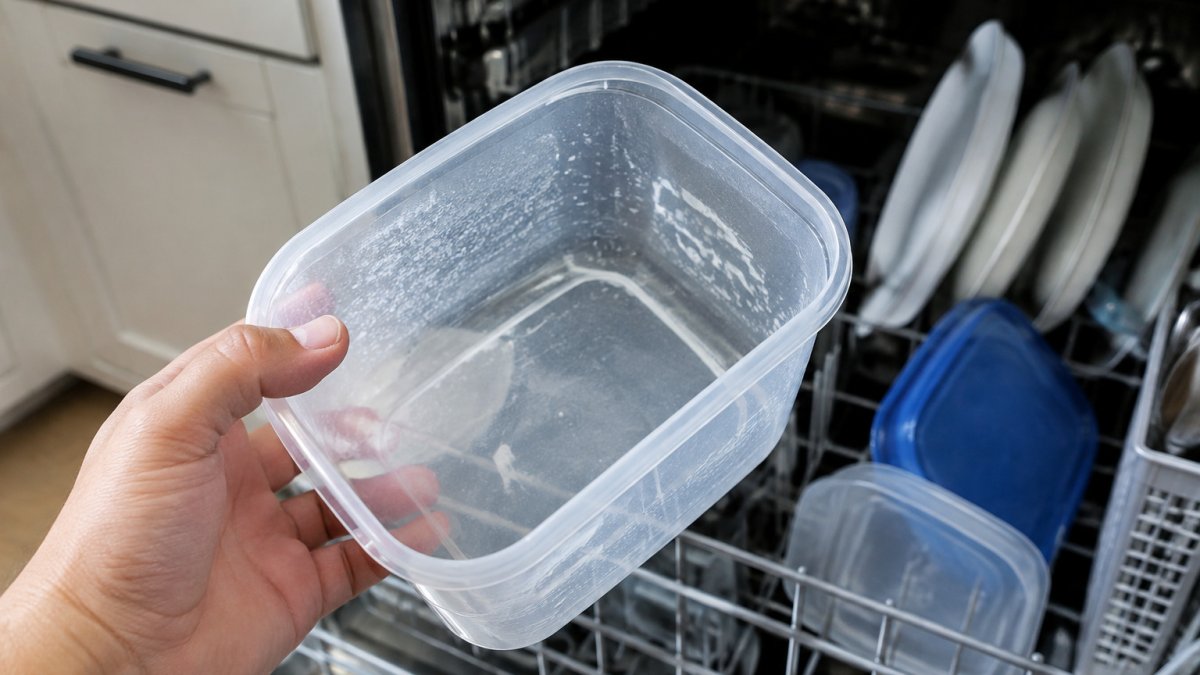
Plastic dishes come out of the dishwasher with a white, chalky film more often than most people expect. Usually it is detergent residue or mineral buildup from hard water. Both are harmless, and both can be fixed. The first step is working out which one you have. EPA WaterSense guidance on household water use
Here is what each one tends to look like:
- Detergent residue: A thin, filmy haze that feels slightly slick or sticky. It often shows up on plastic lids and containers after a full cycle.
- Mineral buildup: A chalky, gritty coating that can feel rough. It is common when your home has hard water.
- Rinse water left behind: Small white spots where droplets dried on plastic that does not hold heat well.
Plastic is the usual culprit because it is lightweight and holds water droplets. Those droplets dry and leave minerals or soap behind. Glass and ceramic show the same problem, but the film is easier to see on plastic.
Quick Test: Detergent Residue or Mineral Buildup?
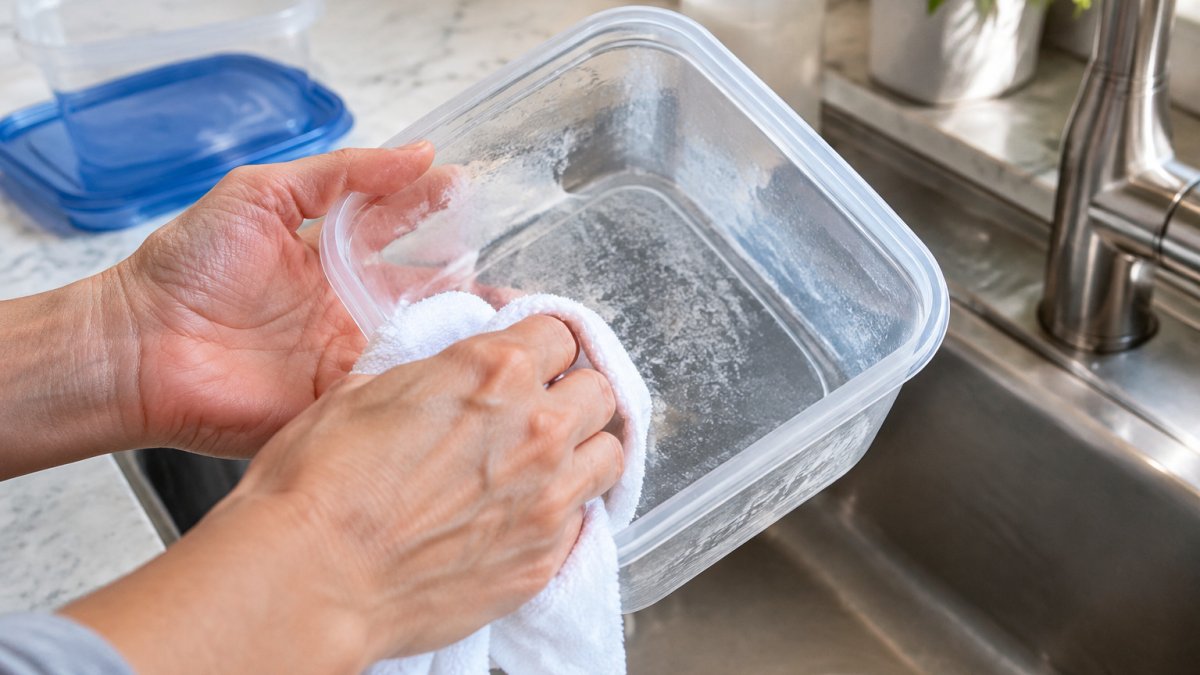
Wipe one affected container with a damp white cloth and look at the cloth. A clear result tells you what you are dealing with.
!Close-up of a hand wiping a clear plastic food container with a damp white cloth at a kitchen sink
Run the tests in this order and write down what you see. Changing one variable at a time is what makes the result readable.
- Dry-wipe test first. Rub the film with a dry finger or a dry paper towel. If white powder or grit comes off, you are looking at mineral scale or dried detergent solids sitting on the surface. If the film smears but does not lift, it is more likely a baked-on detergent film or etching.
- Vinegar test. Soak the container in equal parts white vinegar and water for 15 minutes, then rinse and dry. Mineral scale (calcium and magnesium carbonate) dissolves in mild acid, so a film that clears or softens is mineral buildup. A film that is unchanged after vinegar is not scale.
- Soap test. Put a drop of liquid dish soap on the spot and rub it with a wet finger. Detergent residue re-wets and turns sudsy or slippery; mineral scale does not react to soap and stays chalky.
- Cloth check. Gritty white particles on the cloth point to minerals. A slick, greasy film points to detergent. A cloudy haze that will not wipe off at all points to etching.
Interpret the combination, not a single result:
- Dissolves in vinegar, gritty when dry: mineral buildup from hard water. Go to the rinse-aid and water-hardness steps.
- Sudsy with soap, slick when wet, no grit: detergent residue. Go to the detergent-reduction steps.
- Wipes off as powder but returns every cycle: usually a mix of both, treat detergent first, then minerals.
- Does not dissolve in vinegar, does not react to soap, stays cloudy after drying: likely etching or heat damage to the plastic itself. No cleaner will remove it; see the removal section for how to confirm.
If both tests give mixed results, you may have both problems at once. Start with the detergent steps below, then address the water. A common pattern is soft water plus too much detergent, which leaves a slick film that looks like hard-water scale but behaves differently under vinegar.
Watch out: Do not test on a hot container straight out of the cycle. Let it cool and dry first, because rinse water still evaporating will read as residue and send you toward the wrong fix.
Use these four checks to sort the film into the right category before you pick a fix.
| Test | What it shows | Result points to |
|---|---|---|
| Dry-wipe | White powder or grit comes off | Mineral scale or dried detergent solids |
| Vinegar soak (15 min) | Film clears or softens | Mineral buildup |
| Liquid dish soap | Sudsy, slick when wet | Detergent residue |
| Cloth check | Cloudy haze won't wipe off | Etching |
How to Remove White Residue from Plastic Containers
You can clean most plastic containers at home without special products. Work gently so you do not scratch the surface.
- Mix equal parts white vinegar and warm water.
- Soak the containers for 15 to 30 minutes.
- Scrub with a soft sponge, not steel wool.
- Rinse well with warm water and dry with a clean towel.
Avoid harsh abrasives. Scratches make future residue harder to clean because the film sticks to rough surfaces. If a container stays cloudy after soaking, it may be etched. Etching is permanent, so replace the container if the look bothers you.
How to Get Rid of White Residue in Dishwasher
Fix the cause, not just the dishes. Residue comes from one of four inputs: too much or the wrong detergent, too little rinse aid, water that is too hard or too soft, or a machine that is not spraying and draining correctly. Work through them in that order, because detergent and rinse aid are free to adjust and the machine checks come last.
Start by establishing a baseline. Run one normal cycle with your current detergent, rinse-aid setting, and load, and photograph the plastic afterward. Every change below is measured against that photo.
- Check water hardness. Use a test strip from a hardware store or check your municipal water-quality report. Check your water's hardness with a test strip or your municipal water-quality report, and adjust your settings to match.
- Match detergent to hardness and load size. Soft water and small loads need less detergent; hard water and heavily soiled loads need more, but only up to the dose on the label. More detergent does not clean better, extra soap leaves more film.
- Set rinse aid to the water, not the default. Rinse aid helps water sheet off plastic instead of beading and drying into spots. Raise the dispenser one level at a time for hard water; lower it if you see a greasy, rainbow-sheen film that points to too much rinse aid.
- Run a maintenance cycle monthly. Use a dishwasher cleaner or a cup of white vinegar in an empty hot cycle to help dissolve scale inside the tub.
- Check the filter and spray arms. Pull the filter and rinse it under the tap; clear the spray-arm holes with a toothpick. Clogged arms leave detergent and minerals on the load instead of rinsing them away.
Watch out: Do not change detergent, rinse aid, and water softening all in the same week. If the film clears, you will not know which change did it, and you will over-correct the next time the problem returns.
Adjusting Detergent and Rinse Aid Step by Step
Make one change at a time so you know what works. This is the part most people skip, and it is the reason residue keeps coming back.
- Run a normal cycle with your current settings and note the results against your baseline photo.
- Cut the detergent by about one-quarter and run another load with the same load size and soil level.
- If the film is still there, raise the rinse aid setting one level and run one more load.
- If film persists, switch detergent format once, powder, gel, or pod, because formats dissolve differently and some leave more film on plastic than others.
- Compare all three loads side by side and keep the settings that give clean, dry plastic.
Most homes need a combination of these changes. Hard water needs more rinse aid, while soft water often needs less detergent. If you have very hard water, a whole-house softener or a rinse-aid boost is more effective than adding detergent, because adding soap to hard water just adds more film.
If the film returns after you have tuned detergent and rinse aid, move to the machine itself: confirm the water entering the tub is hot enough (most dishwashers rely on a hot fill and an internal heater), check that the drain is clear and no water stands in the tub after a cycle, and verify the spray arms spin freely. Persistent residue after those checks is the point to consult your owner's manual for model-specific settings or bring in a technician.
Loading Plastic So It Rinses and Dries Properly
How you load plastic matters as much as the detergent you use. Water that pools in a container dries as a spot.
- Place containers at an angle so water runs off.
- Keep lids on the bottom rack, where water flows freely.
- Do not stack plastic items so they nest together.
- Make sure spray arms can turn freely.
- Use the top rack for lightweight plastic, which dries better there.
Flip cups and containers so the open side faces down. This lets rinse water drain instead of sitting inside.
Is White Residue on Dishes Harmful?
For most households, white residue is a cleaning problem, not a health risk. Detergent film and mineral deposits are generally harmless when rinsed off. The bigger issue is damage: etching and cloudiness can weaken the look of plastic over time.
If you notice residue on glassware or metal parts, check that the dishwasher is not leaving detergent behind in large amounts. If the film keeps coming back after the fixes above, the problem may lie with the machine itself.
When Dishwasher Residue Means a Repair Call
Most residue is solved with the steps above. Call a technician if:
- The film returns after you have adjusted detergent and rinse aid.
- Dishes come out wet or do not dry at all.
- Water sits in the bottom of the tub after a cycle.
- The spray arms do not spin or the filter keeps clogging.
If the problem persists, a qualified appliance technician can check the drain, filter, spray arms and heating element. Call (602) 486-1901 or visit hometechappliancerepair.com to book an appointment. Residents in West Phoenix can also find pro appliance repair for West Phoenix kitchens.
Frequently Asked Questions
Why does my dishwasher leave a white residue on plastic?
The most common causes are hard water minerals, which leave a chalky film when the water evaporates, and too much dishwasher detergent that does not fully rinse away. Plastic makes the problem more visible because it holds water droplets and dries slowly. Low rinse aid levels and water that stays on the surface during drying also contribute. Checking your water hardness and adjusting detergent and rinse aid usually identifies the cause within a few wash cycles.
Is the white residue from the dishwasher harmful?
In most homes, white residue left by hard water minerals or detergent is not harmful to eat off of. It is mostly a cosmetic problem that can make dishes look dull or feel gritty. However, residue that builds up on plastic can trap food particles and bacteria, so it should be removed. If the film does not wipe off or the plastic looks cloudy, the container may be etched and should be replaced. Rinsing thoroughly after cleaning is the safest approach.
How can I tell whether the white film is detergent or mineral buildup?
Wipe the affected plastic with a cloth dampened with white vinegar. If the film dissolves or wipes away easily, it is most likely mineral buildup from hard water. If it stays, feels slightly soapy or gritty and improves when you use less detergent, the cause is probably detergent residue. Running an empty cycle with a cup of white vinegar on the top rack also helps clarify the cause.
How can I prevent white residue from forming on plastic containers?
Use the minimum detergent amount recommended for your water hardness, keep the rinse aid dispenser filled, and run a rinse cycle with vinegar once a month. Load plastic containers at an angle so water runs off instead of pooling in the bottom. Make sure the filter is clean and the spray arms turn freely. Running hot water at the sink before starting the dishwasher can also improve rinsing.