 blog
Signs Your AC Needs Refrigerant: 7 Warning Signs
Table of Contents
- Understanding AC Refrigerant and Why It Matters
- 7 Signs Your AC Needs Refrigerant (And How to Spot Them)
- Sign 1: AC blowing warm air instead of cool
- Sign 2: Ice buildup on evaporator coils and copper lines
- Sign 3: AC unit running constantly with long cooling cycles
- Sign 4: Higher than normal electric bills
- Sign 5: AC making hissing or bubbling noises
- Sign 6: Water pooling around the indoor unit or air handler
- Sign 7: Weak or warm airflow from vents
- Refrigerant Types: R-22, R-410A, and Modern Alternatives
- AC Refrigerant Leak Repair Cost: Repair vs. Recharge
- Safety Risks of DIY Refrigerant Kits and Why Professional Service Matters
- How to Prevent Refrigerant Leaks: Preventative Maintenance Tips
- What to Expect When You Call an HVAC Technician
- Conclusion: Don't Ignore the Signs Your AC Needs Refrigerant
- Frequently Asked Questions
Last Updated: July 21, 2026
Understanding AC Refrigerant and Why It Matters
Your air conditioning system relies on refrigerant to transfer heat from inside your home to the outdoor environment. Without adequate refrigerant, your AC cannot cool effectively. Detecting early signs your ac needs refrigerant can save you from expensive repairs and uncomfortable summer days.
How refrigerant works in your cooling cycle
Refrigerant operates in a continuous closed loop: it evaporates inside your home's evaporator coil, absorbs heat from indoor air, then travels to the outdoor compressor where it condenses and releases that heat outside. The compressor pressurizes the refrigerant gas, pushing it through the system at high pressure. As it moves through the evaporator coil, the refrigerant expands and cools dramatically, dropping to temperatures well below freezing. This cold surface absorbs heat from the air passing over it, and a blower fan distributes that cooled air throughout your home. When refrigerant leaks develop, pressure drops, the cooling cycle fails, and your AC blows warm air instead of cold.
Why refrigerant doesn't get 'used up', and what that means for leaks
Many homeowners assume refrigerant depletes like gasoline in a car. This is a critical misunderstanding. Refrigerant in a properly sealed system never gets "used up", it recirculates indefinitely in the same closed loop. If your AC needs a refrigerant recharge, the only reason is a leak somewhere in the system. A leak in copper lines, the compressor seal, the condenser, or the air handler allows refrigerant to escape. This distinction matters for repair decisions: recharging alone without fixing the leak is temporary. The refrigerant will escape again within weeks or months. Professional HVAC technicians use gauges and diagnostic equipment to locate the leak source before recharging.
7 Signs Your AC Needs Refrigerant (And How to Spot Them)
The following warning signs indicate your AC system is running low on refrigerant due to a leak.
Sign 1: AC blowing warm air instead of cool
The most obvious sign your ac needs refrigerant is warm or room-temperature air flowing from your vents when the system is running. Low refrigerant pressure prevents the evaporator coil from reaching freezing temperatures. Without that cold surface, air passing over the coil doesn't cool. If your AC blows warm air on a hot day, check your thermostat first to confirm it's set to cool mode and below room temperature. If the setting is correct but air remains warm, refrigerant loss is the likely culprit. Call an HVAC technician immediately.
Sign 2: Ice buildup on evaporator coils and copper lines
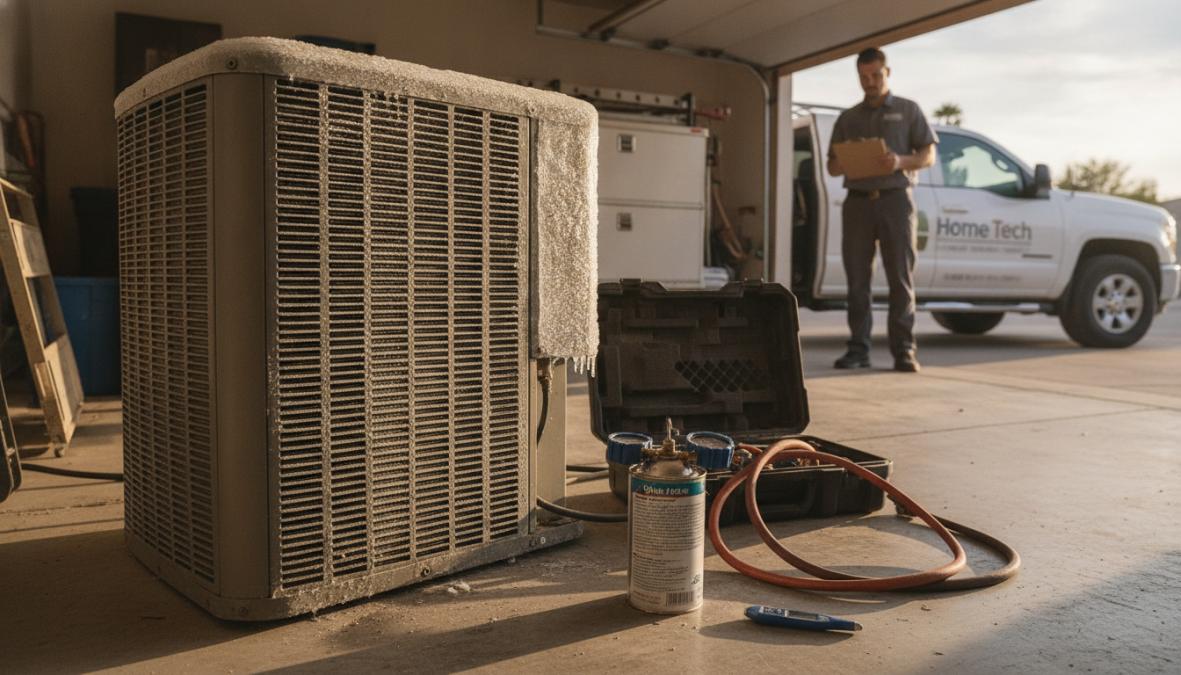
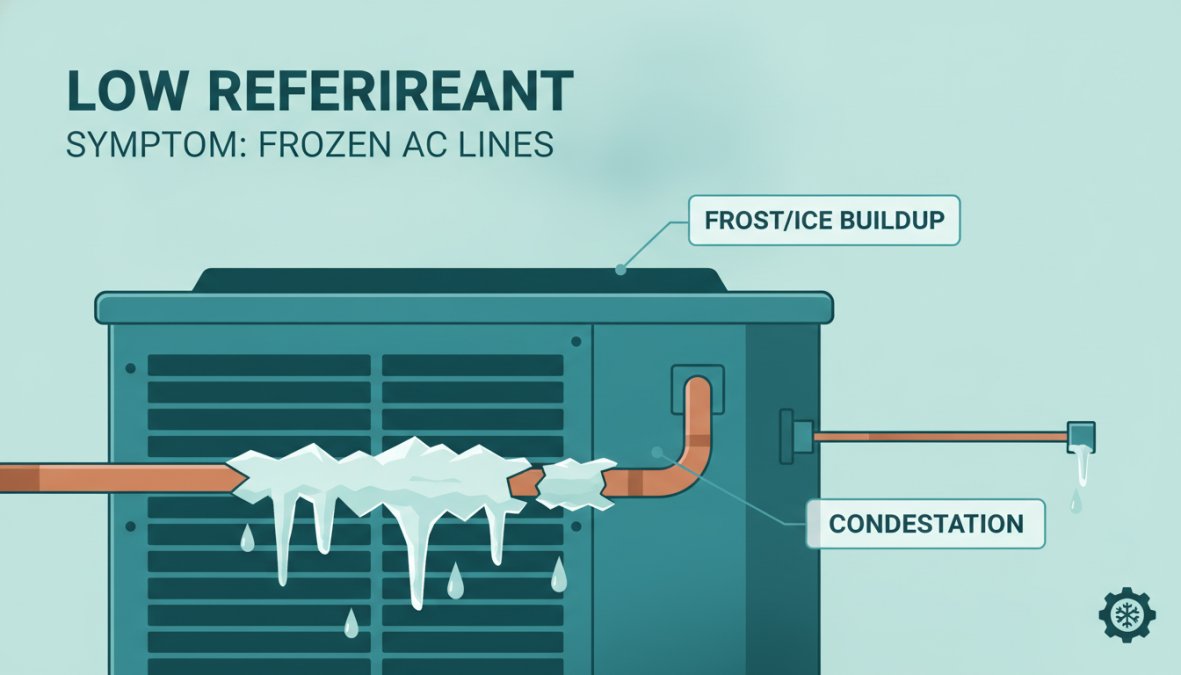
Low refrigerant pressure causes the evaporator coil to drop below freezing even while the system struggles to cool. Moisture in the air condenses on the frozen coil surface, then freezes into ice. You may notice ice on the visible copper lines running from your indoor air handler to the outdoor unit. This ice buildup is deceptive, it looks like the system is working hard, but it's actually a sign of refrigerant failure. Never attempt to chip away ice manually, this damages the coil and copper lines. Instead, shut off your AC and call a professional.
Sign 3: AC unit running constantly with long cooling cycles
A low-refrigerant AC system runs nearly continuously without reaching your thermostat's set temperature. The compressor cycles on and stays on for hours, struggling to build enough cooling capacity. This constant runtime accelerates compressor wear, increases energy consumption dramatically, and stresses the entire unit. If your AC runs all day without satisfying the thermostat, don't ignore it.
Sign 4: Higher than normal electric bills
Air conditioning accounts for roughly 15-20% of residential electricity use in Phoenix during summer months. A refrigerant leak forces the compressor to work harder and longer to achieve minimal cooling, sometimes doubling or tripling energy consumption. Over a month, this adds up to noticeable bill increases, sometimes $100-300 more per month. Compare your current summer bill to the same month last year. A significant jump with no change in thermostat settings suggests an AC efficiency problem.
Sign 5: AC making hissing or bubbling noises
A refrigerant leak produces distinctive sounds as gas escapes under pressure. Hissing comes from refrigerant leaking through a small hole in copper lines or connections. Bubbling sounds occur when liquid refrigerant boils inside the evaporator coil due to low pressure. These noises indicate active refrigerant escape. Within days or weeks of hearing hissing or bubbling, your AC will stop cooling effectively.
Sign 6: Water pooling around the indoor unit or air handler
Low refrigerant causes the evaporator coil to freeze solid. When the system cycles off and the ice melts, water drains through the condensate drain line. However, if the coil is severely iced, the drain line may freeze or become blocked by ice chunks, causing water to back up. Water pooling around your indoor air handler indicates a drainage problem tied to refrigerant loss. Address the underlying refrigerant leak immediately to prevent secondary water damage.
Sign 7: Weak or warm airflow from vents
Even if your AC isn't blowing completely warm air, you may notice weak airflow or air that's cool but not cold. The system produces some cooling but far below normal capacity. Weak airflow combined with cool (but not cold) air suggests moderate refrigerant loss.
| Sign | What You'll Notice | Severity | Action Required |
|---|---|---|---|
| Warm air from vents | AC running but air is 75°F+ | Critical | Call technician immediately |
| Ice on coils/lines | Visible frost or ice buildup | Critical | Shut off AC, call technician |
| Constant running | System cycles all day, never cools | Critical | Call technician same day |
| High electric bill | $100-300+ increase month-over-month | High | Compare to last year, call technician |
| Hissing/bubbling sounds | Audible gas escape or boiling sounds | High | Call technician within 24 hours |
| Water pooling | Moisture around indoor unit | High | Call technician to prevent water damage |
| Weak airflow | Cool but not cold, poor volume | Moderate | Schedule technician appointment |
Refrigerant Types: R-22, R-410A, and Modern Alternatives
Not all refrigerants are the same. Your AC system was charged with a specific type during manufacturing, and mixing refrigerants or using the wrong type damages the compressor and voids warranties.
Legacy R-22 (Freon) and EPA phase-out regulations
R-22, commonly called Freon, was the standard refrigerant for air conditioning systems built before 2010. It contributes to ozone depletion, so the EPA began phasing out R-22 production in 2010, with a complete ban on new R-22 production as of January 1, 2020. If your AC system is older than 15 years, it almost certainly uses R-22. Recharging an R-22 system today requires recovering refrigerant from recycled or existing stockpiles, making it significantly more expensive than modern alternatives. A single R-22 recharge can cost $300-600 or more. Many homeowners find that replacing the entire system with a modern R-410A or R-454B unit makes more financial sense than repairing an old R-22 system repeatedly.
R-410A and why older systems can't switch
R-410A became the EPA-approved replacement for R-22 starting in 2010. However, you cannot simply drain R-22 from an old system and refill it with R-410A. R-410A operates at higher pressures than R-22, and components in R-22 systems are rated for lower pressure and will fail if exposed to R-410A. Additionally, the oils used in R-22 and R-410A systems are incompatible. Switching from R-22 to R-410A requires replacing the entire AC unit with a system designed for R-410A.
Newer low-GWP refrigerants (R-454B, R-32A)
Newer refrigerants like R-454B and R-32A have lower global warming potential (GWP) than R-410A, making them more environmentally sustainable. Many manufacturers now use these refrigerants in new AC systems and heat pumps. If your AC system is less than 5 years old, it likely uses R-410A or a low-GWP alternative. Confirm by checking the nameplate on your outdoor condenser unit. When you need a recharge, use the exact refrigerant specified.
AC Refrigerant Leak Repair Cost: Repair vs. Recharge
When your AC needs refrigerant, you face a decision: repair the leak and recharge, or replace the entire system. The answer depends on your system's age, the leak location, and the refrigerant type.
Why recharging alone won't fix a leak
Recharging adds refrigerant to your system, restoring cooling temporarily. However, if a leak exists, the refrigerant escapes again. Professional technicians use pressure gauges and sometimes dye injections to locate leaks before recharging. Once the leak is identified and sealed, the system is recharged. Some homeowners attempt quick fixes using over-the-counter refrigerant kits, but these provide only temporary relief and don't identify or seal leaks.
What factors affect repair pricing
Refrigerant leak repair costs depend on leak location, refrigerant type, system age, and accessibility. A small leak in copper lines on a newer R-410A system might cost $300-500 to diagnose, repair, and recharge. The same leak on an older R-22 system could cost $600-1000 due to refrigerant scarcity. A compressor seal leak requiring compressor replacement can exceed $2000.
When replacement makes more financial sense
If your AC system is older than 12-15 years and develops a significant refrigerant leak, replacement often makes more sense than repair. Older systems become less efficient over time, and a leak repair buys you only 1-3 years before another leak develops. New AC systems are 15-30% more efficient than units from 10+ years ago. The energy savings on your electric bill offset replacement costs within 5-10 years. Additionally, new systems come with warranties (typically 5-10 years), while repair work carries limited warranties. If your system uses R-22, the decision tilts toward replacement.
Safety Risks of DIY Refrigerant Kits and Why Professional Service Matters
Over-the-counter refrigerant kits tempt homeowners with the promise of quick, cheap fixes. These kits are dangerous for you and your system.
Legal and safety concerns with over-the-counter refrigerant
Handling refrigerant requires EPA Section 608 certification. Only certified technicians can legally purchase and charge refrigerant into AC systems. Using DIY kits on your AC system violates EPA regulations and can result in fines. Beyond legality, DIY refrigerant work is physically hazardous. Refrigerant at high pressure can cause frostbite if it contacts skin. Inhaling refrigerant vapors damages lungs. Mixing refrigerants or using the wrong type creates chemical reactions that damage compressors.
Why HVAC technicians use gauges and diagnostics you can't
Professional technicians arrive with manifold gauges that measure system pressure on both the high and low sides. These gauges reveal total refrigerant charge level, system pressure balance, compressor operation status, and evaporator coil temperature. A homeowner with a DIY kit has no way to measure these values. Technicians also use electronic leak detectors that identify even small leaks invisible to the human eye. They perform vacuum tests to confirm system integrity before recharging. Without these diagnostics, DIY refrigerant work is guesswork.
How to Prevent Refrigerant Leaks: Preventative Maintenance Tips
The best way to deal with refrigerant leaks is to prevent them. Schedule annual AC inspections before summer. A technician will check refrigerant pressure, inspect copper lines for corrosion or damage, test system performance, and clean coils. Keep the outdoor condenser clear of vegetation, debris, and dirt. Reduced airflow causes the condenser to overheat, stressing seals and connections. Maintain proper indoor humidity and ensure your AC's condensate drain line stays clear. Replace air filters monthly during cooling season, a clogged filter restricts airflow and causes the evaporator coil to freeze. Avoid short-cycling by setting your thermostat to a stable temperature. Regular preventative maintenance reduces repair costs by 30-50% and extends system life by 5+ years compared to neglected systems.
What to Expect When You Call an HVAC Technician
When you contact a professional HVAC service for suspected refrigerant issues, the technician will inspect your outdoor condenser and indoor air handler, checking for visible ice, listening for unusual sounds, and feeling airflow from vents. Using manifold gauges, the technician measures system pressure on both high and low sides and compares readings to manufacturer specifications. Low pressure confirms refrigerant loss. If low pressure is confirmed, the technician uses an electronic leak detector to locate the leak source. Based on findings, the technician recommends repair (seal the leak and recharge) or replacement (if the system is old or the leak is in a critical component). All refrigerant work must be performed by certified technicians using proper recovery equipment.
Conclusion: Don't Ignore the Signs Your AC Needs Refrigerant
Air conditioning failures during Phoenix summers create real hardship. Recognizing early signs your ac needs refrigerant gives you time to address the problem before your home becomes uncomfortably hot and your system suffers permanent damage. Warm air, ice buildup, constant running, high electric bills, and unusual noises are all clear indicators that refrigerant levels have dropped due to a leak. These warning signs deserve immediate professional attention. Don't attempt DIY refrigerant kits or temporary fixes. Professional diagnosis identifies the leak source, ensures proper repair, and restores your system to full cooling capacity safely and legally.
Contact Home Tech today for expert AC refrigerant diagnosis and repair. Our EPA 608-certified technicians arrive with proper diagnostic equipment, perform accurate pressure testing, and provide honest repair or replacement recommendations. We service all refrigerant types and handle sealed-system diagnostics for residential and commercial AC units. Call (602) 486-1901 or visit hometechappliancerepair.com to book same-day or next-day service throughout the Phoenix area. 100% satisfaction guarantee on every repair.
Frequently Asked Questions
What are the most common signs your AC needs refrigerant?
The primary signs your AC needs refrigerant include warm air blowing from vents instead of cool air, ice buildup on evaporator coils or copper lines, the compressor running constantly without reaching the desired temperature, higher electric bills than normal, hissing or bubbling sounds from the system, water pooling around the indoor unit, and weak airflow overall. Any combination of these suggests a refrigerant issue requiring professional diagnosis.
Why does my AC keep losing refrigerant if it's a sealed system?
Refrigerant doesn't get 'used up' in normal operation, it circulates continuously through the cooling cycle. If your system is losing refrigerant, there is almost certainly a leak in the evaporator coil, copper lines, compressor, or connections. Small leaks can develop from age, vibration, or corrosion. A professional HVAC technician uses gauges and leak detection tools to locate the source before recharging, because simply adding refrigerant without fixing the leak is a temporary fix.
What's the difference between R-22, R-410A, and newer refrigerants?
R-22 (Freon) is a legacy refrigerant being phased out by the EPA due to ozone depletion concerns. R-410A became the standard replacement for residential systems and is still widely used, but systems designed for R-22 cannot be converted to R-410A without major modifications. Newer low-GWP refrigerants like R-454B and R-32A offer better environmental performance and energy efficiency. Your system's design determines which refrigerant type is compatible, mixing or switching types is not an option.
Should I try a DIY refrigerant recharge kit, or call a professional?
DIY refrigerant kits carry significant safety and legal risks. Refrigerant handling requires EPA 608 certification, proper gauges to measure system pressure accurately, and diagnostic tools to identify whether the real problem is a leak or low charge. Overcharging or undercharging can damage the compressor, void warranties, and reduce efficiency. A certified HVAC technician will diagnose the root cause, locate leaks if present, and recharge to the exact specification for your system, ensuring the repair lasts.