 comparison
Is It Worth Repairing an Old Commercial Freezer?
Table of Contents
- Repair vs. Replace: The Decision Matrix
- Average Lifespan of Commercial Refrigeration Equipment
- Impact of Equipment Age on Energy Efficiency
- What Is EPA 608 Certified Repair and Why It Matters
- Commercial Freezer Repair Cost Estimate: Labor and Parts
- Downtime Cost and Food Safety Risks
- ROI Calculation for Commercial Freezer Replacement
- Signs Your Commercial Freezer Should Be Replaced
- Frequently Asked Questions
Last Updated: August 31, 2026
Repair vs. Replace: The Decision Matrix
When your commercial freezer breaks down, the first question is whether fixing it makes financial sense. The answer depends on three variables: equipment age, repair cost, and replacement cost.
The 50% rule is the industry standard: if repair cost exceeds 50% of replacement cost, replace the unit. A $3,000 repair on a $6,000 freezer is a gamble, the next failure could come within months. However, the 50% rule is just a starting point. What actually matters is whether the repair buys you enough runway. A 12-year-old freezer with a failed compressor might need replacement even if the repair is below 50%, because you're extending the life of aging equipment that's burning through energy and eating into margins.
Here's the decision matrix in practice:
| Scenario | Repair Cost | Equipment Age | Recommendation | Why |
|---|---|---|---|---|
| Compressor failure on 5-year-old unit | $2,500 | 5 years | Repair | Equipment has 8-10 years remaining; single point of failure |
| Evaporator coil leak on 12-year-old unit | $1,800 | 12 years | Replace | Unit near end of service life; next failure likely within 18 months |
| Thermostat malfunction on 8-year-old unit | $600 | 8 years | Repair | Low cost; extends life of otherwise functional equipment |
| Condenser failure on 14-year-old unit | $3,200 | 14 years | Replace | Exceeds 50% threshold; unit past typical service life |
| Door gasket and hardware on 6-year-old unit | $400 | 6 years | Repair | Routine maintenance; minimal cost relative to replacement |
The 50% Rule for Commercial Freezer Repairs
The 50% rule works because a freezer that's already failed is statistically more likely to fail again. When repair cost hits or exceeds half the replacement price, you're deciding whether to extend the life of a depreciating asset about to demand another expensive fix. The math almost always favors replacement.
One caveat: the 50% rule assumes you're comparing repair cost to an equivalent new unit. For specialized equipment, low-temperature units, custom reach-in models, or walk-in coolers with specific dimensions, replacement cost could be significantly higher, pushing the repair threshold closer to 60%.
Equipment Age and Service Life
Most commercial refrigeration equipment is engineered for a 10- to 15-year service life (ashrae.org). A freezer at year 8 is still in its prime; parts are available and repairs are predictable. A freezer at year 13 is approaching the end of useful life, and the same repair that cost $1,500 at year 8 might cost $2,500 at year 13 due to parts scarcity and compatibility issues with newer refrigerants.
The EPA is phasing out older refrigerants like R22 and R404a in favor of lower-GWP alternatives like R290a and R454B. If your freezer was designed for R404a and that refrigerant is becoming harder to source, you face a choice: retrofit the system (expensive) or replace it with a unit designed for current refrigerants (compliant with future regulations).
Age also affects energy efficiency. A 15-year-old freezer uses roughly 30-40% more energy than a modern ENERGY STAR unit with electronically commutated motors and variable-speed controls. Over five years, that efficiency gap translates into thousands of dollars in utility costs.
Average Lifespan of Commercial Refrigeration Equipment
The typical commercial freezer lasts 10 to 15 years with proper preventative maintenance. Walk-in coolers often last 15 to 20 years due to heavier components and fewer door cycles. These numbers assume regular service. A freezer that's never had preventative maintenance will fail earlier and more expensively.
The compressor is the heart of the system and the most expensive component to replace, typically costing $1,500 to $3,000 in parts and labor. If your compressor is original equipment at year 12, you're looking at a replacement decision, not a repair decision. Door gaskets, thermostats, and hardware fail more frequently and cost less to replace, these are routine maintenance repairs that make sense at any age.
Impact of Equipment Age on Energy Efficiency
Energy efficiency deteriorates as equipment ages. A freezer in year 5 operates at roughly 90-95% of nameplate efficiency. By year 12, that drops to 70-75%. By year 15, it's often below 65%.
The decline is driven by refrigerant leaks, coil fouling, compressor wear, and thermostat drift. Older freezers also lack modern controls. A 2010-era unit has a basic thermostat and fixed-speed compressor. A 2026 unit has a digital controller, variable-speed compressor, and adaptive defrost logic, running only as hard as needed.
Utility Bills and Operating Costs Over Time
A 15-year-old, unserviced commercial freezer can cost 40-50% more to operate than a modern equivalent. If your freezer draws 3 kilowatts and runs 16 hours daily, that's roughly $2,100 per year in electricity at $0.12 per kilowatt-hour. A modern ENERGY STAR freezer of the same capacity might draw 2 kilowatts, costing roughly $1,400 per year. Over five years, the difference is $3,500 in energy costs alone.
Energy efficiency is one of the strongest financial arguments for replacement, especially if your freezer is more than 12 years old. The payback period on a new unit is often 3 to 5 years when factoring in energy savings, reduced repair costs, and improved reliability.
What Is EPA 608 Certified Repair and Why It Matters
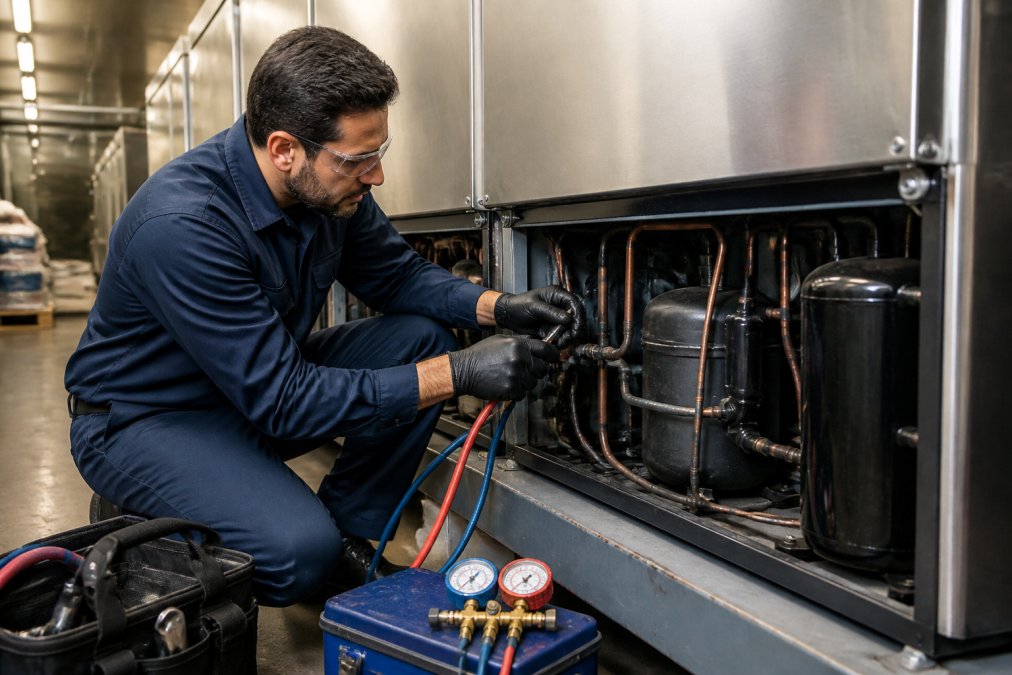
EPA 608 certification is a federal requirement. Any technician who handles refrigerant must be EPA 608 certified. The certification confirms the technician understands regulations, environmental impact of refrigerant leaks, and proper sealed-system procedures.
EPA's Section 608 certification standards establish the legal framework. Without certified technicians, a repair is illegal. A restaurant or grocery store hiring an uncertified technician faces potential EPA fines and liability if the system leaks refrigerant.
EPA 608 comes in four categories: Type I (small appliances), Type II (high-pressure systems), Type III (low-pressure systems), and Type Universal (all types). For commercial freezers, Type II is standard. Home Tech's technicians carry Type Universal certification, covering all refrigerant types and system pressures.
Refrigerant Compatibility and Environmental Regulations
The EPA is phasing out high-GWP (global warming potential) refrigerants. R404a, commonly used in commercial freezers, has a GWP of 3,922. Newer refrigerants like R454B have a GWP of 466, and R290 (propane-based) has a GWP of 3.
The phase-out is gradual, but R404a restrictions are tightening. New equipment must use low-GWP refrigerants. If your freezer uses R404a and needs a significant charge, you can retrofit the system (expensive) or replace it with a unit designed for current refrigerants (compliant with future regulations).
Commercial Freezer Repair Cost Estimate: Labor and Parts
Repair costs depend on what's broken. A thermostat replacement runs $400 to $600. A door gasket replacement runs $300 to $500. A compressor failure, the most expensive repair, typically costs $2,000 to $4,000 depending on unit size and complexity.
Labor rates for EPA 608-certified technicians vary by region and job complexity. A simple repair might take two hours; a compressor replacement on a walk-in cooler might take six to eight hours. The diagnostic fee typically ranges from $100 to $200, separate from repair cost.
Compressor Failure and High-Cost Repairs
A compressor failure is the most expensive failure a commercial freezer can have. An electrical failure sometimes allows motor replacement only, costing $1,200 to $1,800. A mechanical failure requires replacing the entire compressor assembly, costing $2,500 to $4,000 depending on tonnage and refrigerant type.
A compressor that fails at year 12 or later is a replacement trigger. Spending $3,000 on a new compressor is 50-60% of replacement freezer cost, and you're betting the rest of the system will hold up for another three to five years, a risky bet on aging equipment.
Parts Availability for Older Units
Older commercial freezers face parts availability problems. Manufacturers discontinue support after 10-15 years. A 2012 freezer might have compressors and coils no longer in active production. They're available through aftermarket suppliers, but lead times are longer and costs are higher.
Some older equipment uses refrigerants being phased out. Finding R22 or R404a in needed quantities is becoming harder. The parts availability problem reinforces the 50% rule. A repair that's 50% of replacement cost on a current model might be 70-80% on a 14-year-old unit due to parts scarcity and extended lead times.
Downtime Cost and Food Safety Risks
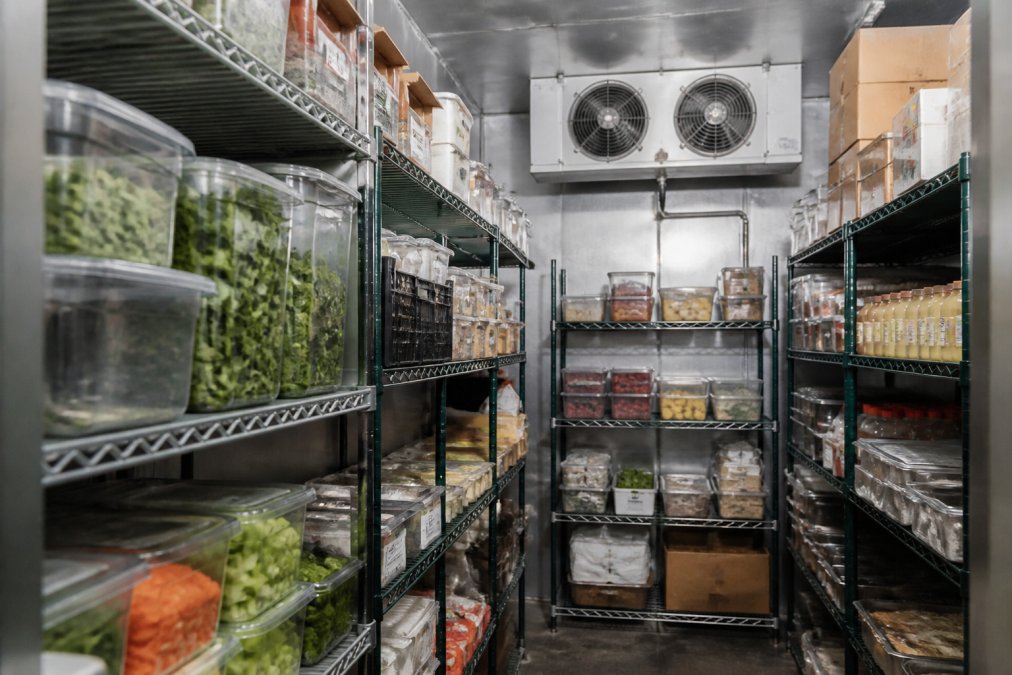
A commercial freezer failure isn't just inconvenient, it's a financial emergency. A restaurant loses inventory. A grocery store loses sales. A food distributor breaks contracts.
For a small restaurant, a full day of freezer downtime might mean $2,000 to $5,000 in lost inventory and sales. For a grocery store, it could be $10,000 or more. The FDA requires frozen food be maintained at 0°F or below. If a freezer fails and temperature rises above 40°F, the food is no longer safe to serve and must be discarded. A failure lasting 12 hours can spoil an entire inventory.
A repair taking a week due to parts backorder is unacceptable for commercial operations. A replacement installed within 48 hours is worth the capital expense.
ROI Calculation for Commercial Freezer Replacement
Calculating ROI requires three numbers: new freezer cost, repair cost avoided, and energy savings over service life.
Start with the repair cost. If repair is $3,000, add the cost of the next likely repair. For a 12-year-old freezer, expect another $1,500 to $2,000 repair within two to three years. That's $4,500 to $5,000 total.
Add energy savings. If the old freezer costs $2,100 per year to operate and a new unit costs $1,400 per year, that's $700 per year in savings. Over five years, that's $3,500. Total financial case: $5,000 in repair costs plus $3,500 in energy savings equals $8,500. If replacement costs $5,500 to $6,500, payback is less than a year.
ENERGY STAR commercial refrigerator and freezer efficiency tools provides calculators to estimate energy costs and compare models.
Signs Your Commercial Freezer Should Be Replaced
Certain warning signs indicate repair isn't worth the investment. Multiple simultaneous signs suggest replacement is the right call.
The compressor cycles constantly. Continuous running indicates refrigerant loss or compressor failure and signals approaching system failure.
The freezer struggles to reach or maintain temperature. If set to 0°F but drifts to 10-15°F, there's a refrigerant leak, thermostat problem, or compressor wear.
The evaporator coil is frosted over or visibly corroded. Frost buildup means the defrost cycle isn't working. Corrosion means the coil is degrading and leaks are likely.
The unit is 12 years old or older and required repairs in the last two years. Once a freezer starts failing, failures accelerate.
Energy bills have spiked. Increased electricity draw indicates the compressor is working harder.
Parts are becoming hard to source. Extended lead times or discontinued components indicate the freezer is approaching end-of-life.
Any one of these signs suggests a repair conversation. Multiple signs suggest replacement.
When your commercial freezer fails, the repair-versus-replace decision comes down to age, cost, and risk. If repair is less than 50% of replacement cost and the freezer is under 10 years old, repair it. If repair exceeds 50%, the freezer is over 12 years old, or you've had multiple failures in the last two years, replace it.
Home Tech specializes in this exact decision point. Our EPA 608-certified technicians can diagnose the problem, provide a repair estimate, and help you understand the long-term financial case for replacement. We handle both emergency repairs and planned replacements for restaurants, grocery stores, and food service operations across the Phoenix metro area. Call (602) 486-1901 to schedule a diagnostic visit, or visit hometechappliancerepair.com to book your appointment.
Frequently Asked Questions
Is it worth repairing a 10-year-old commercial freezer?
At 10 years old, your commercial freezer is in the mid-to-late stage of its service life. Use the 50% rule: if repair costs exceed 50% of replacement cost, replacement is usually more cost-effective. Beyond age 10, factor in declining energy efficiency, rising utility bills, increased downtime risk, and potential food spoilage losses. A professional diagnostic can help determine whether the specific repair justifies keeping an aging unit.
What is EPA 608 certified repair and why does it affect freezer repair costs?
EPA 608 certification means a technician is federally certified to handle refrigerant systems safely and legally. This certification is required for any repair involving refrigerant removal or system opening. Certified technicians follow strict EPA regulations for refrigerant recovery and disposal, which adds labor time and compliance cost. However, non-certified work violates federal law and voids manufacturer warranties, making certified repair the only legal and reliable option for commercial equipment.
How long should a commercial freezer last?
Commercial refrigeration equipment typically lasts 10 to 15 years with proper maintenance. Walk-in coolers and freezers may reach 15 to 20 years if well-maintained. Lifespan depends on usage intensity, ambient temperature, maintenance frequency, and quality of installation. High-use commercial kitchens may see equipment fail sooner due to continuous operation. After 12 years, plan for replacement within 2-3 years and budget for either major repairs or capital expenditure on new equipment.
How much does it cost to repair a commercial freezer?
Commercial freezer repair costs depend on the specific failure. Minor repairs (thermostat or gasket replacement) may be affordable. Compressor failure, the most expensive repair, can approach or exceed replacement cost for older units. Labor rates vary, but EPA 608-certified technicians charge for diagnostic time plus repair work. Contact a licensed technician for an upfront estimate rather than assuming cost. Many operators find that a professional diagnostic fee is worth the clarity it provides for repair-versus-replace decisions.