 comparison
Repair vs Replace Commercial Cooling Units
Table of Contents
- Repair vs Replace: A Decision Framework for Commercial Cooling Units
- The 50% Rule and Other Cost Thresholds
- Commercial HVAC Repair vs Replacement Cost: What Actually Drives the Numbers
- Signs a Commercial Refrigerator Is Failing (And What to Do About It)
- Commercial Refrigeration Unit Lifespan: How Long Should You Expect?
- Commercial Refrigeration Maintenance Checklist to Extend Equipment Life
- When Repair Makes More Sense Than Replacement
- When Replacement Is the Smarter Financial Move
- Making the Call: Repair vs Replace Commercial Cooling Units
- Frequently Asked Questions
Last Updated: October 12, 2026
Repair vs Replace: A Decision Framework for Commercial Cooling Units
Deciding when to repair vs replace commercial cooling units comes down to one question: will the next repair actually hold, or are you paying to postpone the inevitable? At Home Tech, we handle walk-in coolers, freezers, and rooftop units across the Phoenix metro area, and the honest answer usually sits in three numbers: the unit's age, its repair history, and the size of the current quote relative to replacement.
Most operators call us after a second or third breakdown in a single season. That pattern matters more than any single diagnosis.
commercial HVAC repair-or-replace decision guide frames the choice around comparing repair cost with replacement cost, and that is the right starting point. Below, we break down the thresholds, the warning signs, and the maintenance habits that push the decision in your favor.
The 50% Rule and Other Cost Thresholds
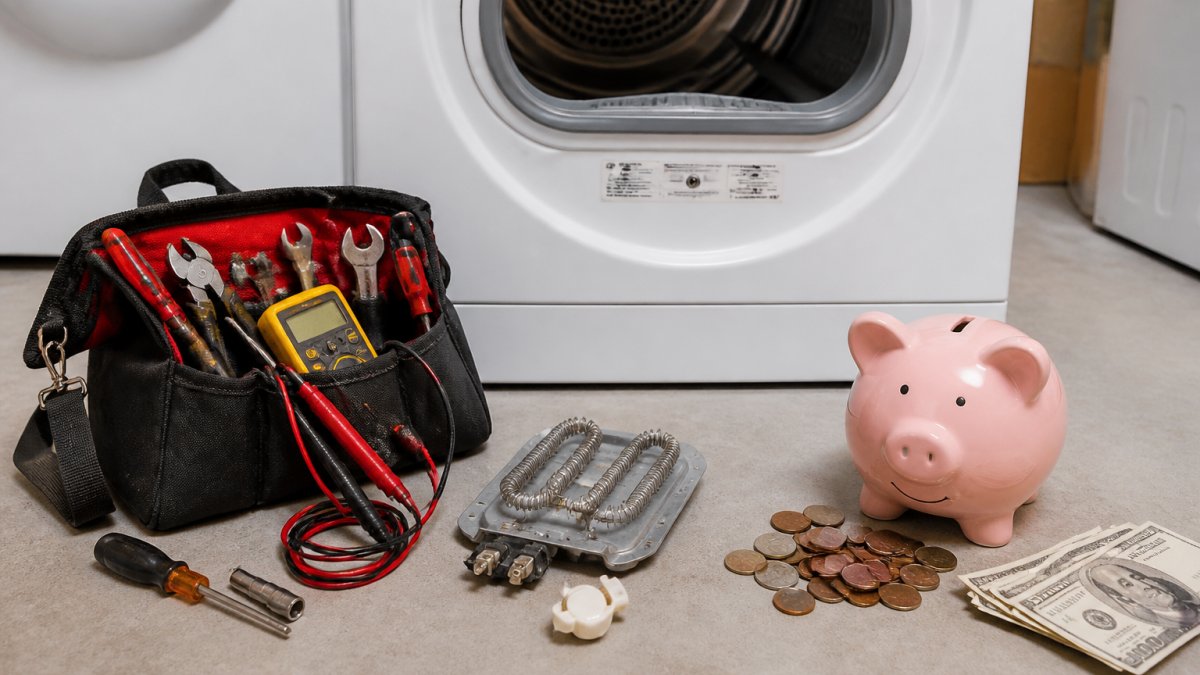
The 50% rule is the most widely used threshold in commercial refrigeration: if a single repair costs 50% or more of what a replacement unit would cost, replacement usually wins. guidance on commercial HVAC repair versus replacement recommends the same cutoff.
That rule is a starting point, not a verdict. It ignores how often you have already paid for repairs this year. Two repairs at 30% each cost more than one at 50%, and the second one leaves you with the same aging equipment.
Use this checklist before you approve any quote:
- Is this repair 50% or more of replacement cost?
- Have you paid for two or more repairs on this unit in the past 12 months?
- Is the unit past 12 years old?
- Is it still running on a refrigerant being phased out?
- Will the part be available in three years?
Two or more checks and replacement deserves serious consideration.
Commercial HVAC Repair vs Replacement Cost: What Actually Drives the Numbers
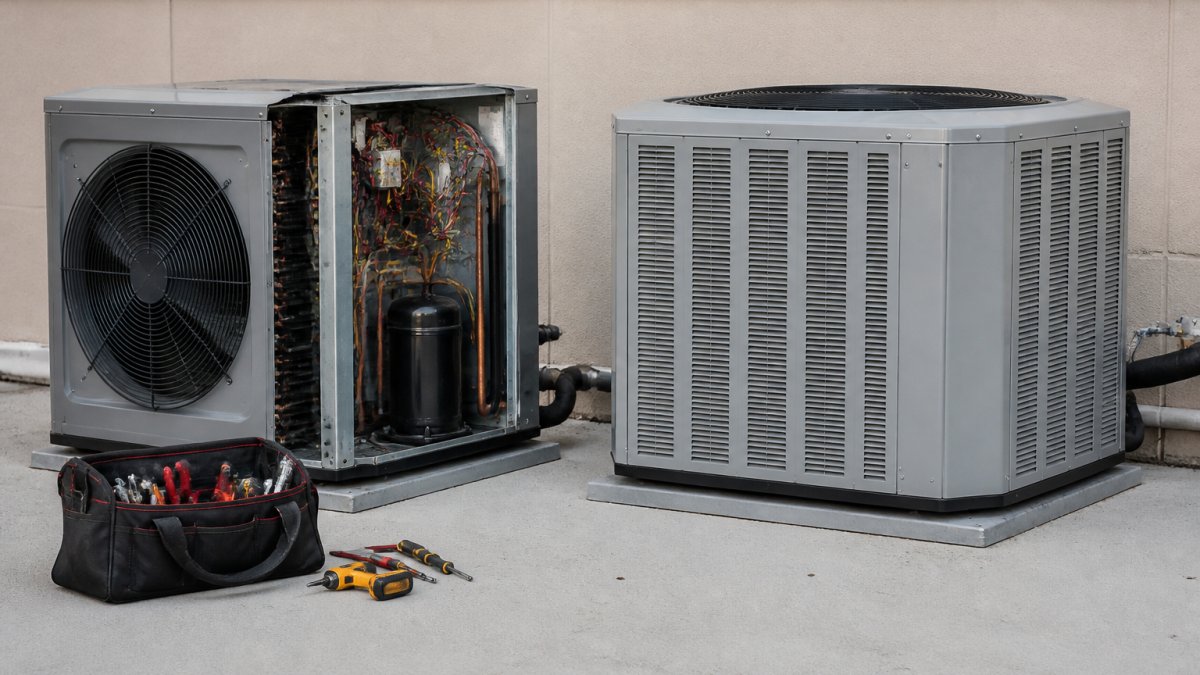
Commercial HVAC repair vs replacement cost is driven by four things: refrigerant type, part availability, labor access, and how much of the system has to come apart. A compressor swap on an accessible rooftop packaged unit is a different job from the same failure inside a walk-in evaporator.
Refrigerant is where quotes diverge most in 2026. Older systems running R-22 sit in a different cost world than units on R-410A or R-454B, because the older gas is no longer produced and supply shrinks every year. Our EPA 608-certified technicians work across legacy and current refrigerants, and we tell customers plainly when a recharge is throwing money at a dead end.
Why Two Identical Units Can Have Wildly Different Repair Quotes
Access is the silent cost driver. A unit mounted on a clear roof with a ladder and a lift path takes far less labor than one boxed in behind ductwork or set above a finished ceiling. Two identical model numbers can produce quotes hundreds of dollars apart for that reason alone.
The second factor is diagnosis quality. A technician who replaces a compressor without finding the leak that killed it will be back. Ask any contractor to explain the root cause, not just the failed part.
Signs a Commercial Refrigerator Is Failing (And What to Do About It)
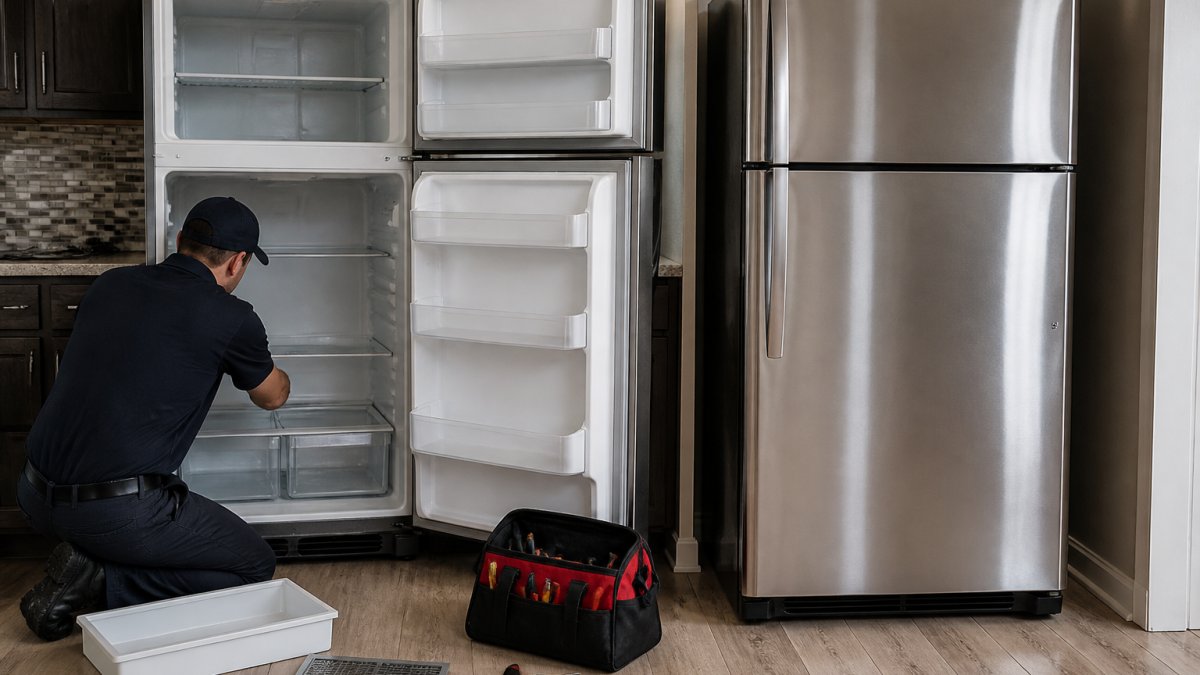
A commercial refrigerator is failing when it shows any of these five signs: rising box temperature, frost or ice buildup in the wrong places, water pooling under the unit, a compressor that runs constantly, or a motor that sounds different than it did last month. Catch them early and most stay repairable.
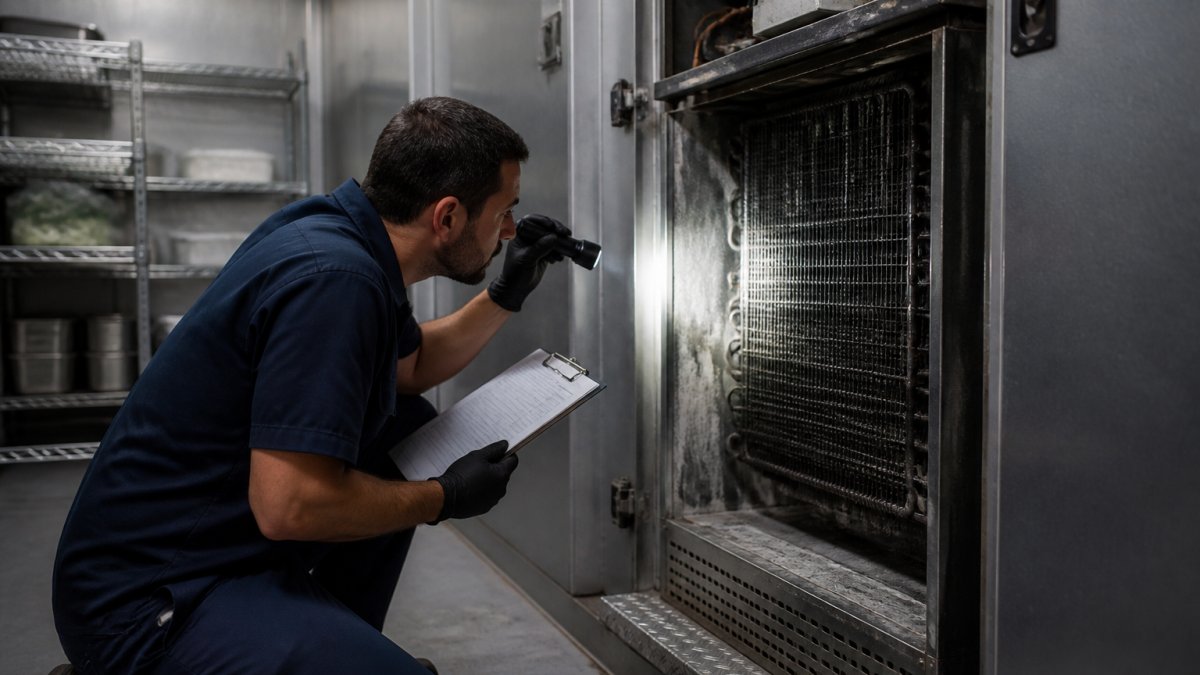
Act on these signals fast:
- Temperature drift: product above safe holding temperature, even briefly
- Ice on the evaporator: usually a defrost or airflow problem, not a refrigerant problem
- Water on the floor: clogged drain line or failed pan
- Short cycling: compressor starting and stopping, often a control or charge issue
- New noise: a bearing or fan motor on its way out
Temperature drift is the one that costs you money immediately. Call for service the same day rather than waiting for the next scheduled visit.
Commercial Refrigeration Unit Lifespan: How Long Should You Expect?
Commercial refrigeration unit lifespan typically runs 15 to 20 years for HVAC equipment under normal operating conditions, according to commercial AC service-life guidance. Walk-in boxes and reach-in refrigerators often land in a similar range when maintained well.
Phoenix heat shortens that window. A rooftop condenser working through 110-degree afternoons runs hotter and harder than the same unit in a milder climate, and heat is what kills compressors.
commercial HVAC repair versus replacement guidance notes that repair often makes more financial sense for systems under 12 years old that have been reasonably serviced. Past that line, and especially without a service history, replacement deserves a harder look.
Commercial Refrigeration Maintenance Checklist to Extend Equipment Life
A commercial refrigeration maintenance checklist is the cheapest way to delay the repair-or-replace decision by years. Most failures we see trace back to something that was visible weeks earlier.
Run this monthly and quarterly:
- Monthly: brush or vacuum condenser coils
- Monthly: check door gaskets for tears and gaps
- Monthly: clear and flush the drain line
- Quarterly: verify defrost cycle timing and termination
- Quarterly: check fan motors for noise and play
- Quarterly: log box temperatures against setpoint
- Seasonally: tighten electrical connections and check contactors
- Annually: professional refrigerant charge and leak check
When Repair Makes More Sense Than Replacement
Repair makes more sense when the unit is under 12 years old, has been maintained, and the current fix is well under half the replacement cost. A failed fan motor, a bad thermostat, a clogged drain, or a door gasket are all straightforward repairs on otherwise healthy equipment.
Refrigerant work is also worth doing when the system still runs on a supported gas. Our team handles R-134a, R-600a, R-290a, and R-454B systems, plus legacy R-12 and R-22, so we can tell you whether a recharge is a real fix or a stopgap.
Here is the practical test. If the repair restores full capacity, the part is readily available, and the unit has no pattern of repeat failures, repair it and put the savings toward maintenance.
When Replacement Is the Smarter Financial Move
Replacement is the smarter move when repair cost approaches half of replacement, the unit is past its expected service life, or parts are getting hard to source. It is also the right call when the refrigerant itself is the problem.
| Situation | Repair | Replace | Why |
|---|---|---|---|
| Unit under 12 years, single failure | Yes | No | Cost is low, life remains |
| Repair at 50%+ of replacement | No | Yes | Money buys new life instead |
| R-22 system needing a recharge | Rarely | Usually | Gas is phased out, supply shrinking |
| Two or more repairs in 12 months | No | Yes | Pattern signals end of life |
| Failed gasket, fan, or thermostat | Yes | No | Cheap fix, healthy system |
| Compressor failure on a 15-year-old unit | No | Yes | New compressor on old system rarely pays |
Making the Call: Repair vs Replace Commercial Cooling Units
When to repair vs replace commercial cooling units is a financial question dressed up as a technical one. Get the age, the repair history, and the current quote in front of you, apply the 50% rule, and check whether the refrigerant is still supported.
If the answer is repair, the next step is finding a team that diagnoses the root cause instead of swapping parts. Home Tech is family-owned, Google Guaranteed, and EPA 608 certified, with same-day and next-day appointments across the Phoenix metro area. We repair walk-in coolers and freezers, commercial HVAC and packaged rooftop units, and commercial laundry equipment, with no hidden fees and a 100% satisfaction guarantee on every repair.
Get started with Home Tech and keep your cooling equipment running through the next Phoenix summer. Call (602) 486-1901 or visit hometechappliancerepair.com to book your appointment.
Frequently Asked Questions
When should a commercial cooling unit be replaced instead of repaired?
Replacement usually makes more sense when the unit is past its expected service life, when a single repair costs 50% or more of a new system, or when repairs are becoming frequent. Commercial HVAC equipment is typically rated for 15 to 20 years under normal conditions. If your unit is 12 or older and already on its second or third major repair, putting that money toward a new system often pays off faster than another fix.
How long do commercial refrigeration units typically last?
Most commercial refrigeration units last 10 to 15 years with regular maintenance, while commercial HVAC equipment is generally rated for 15 to 20 years under normal operating conditions. Units in high-demand kitchens, grocery stores, or laundromats that run continuously may fall on the shorter end. A unit that has been serviced on schedule and kept clean often reaches the upper end of that range.
What are the signs a commercial refrigerator is failing?
Watch for rising interior temperatures, condensation or ice buildup, unusual compressor noise, frequent cycling, and water pooling near the unit. Food spoiling faster than usual is another red flag. If your walk-in cooler or reach-in is struggling to hold temperature during peak hours, that often points to a compressor, refrigerant, or airflow problem. Catching these signs early usually means a cheaper repair.
Is it more energy-efficient to replace an old commercial cooling unit?
Yes, in most cases. Older units and systems using phased-out refrigerants typically draw more power to hit the same temperature as newer, more efficient models. If your unit runs constantly and your energy bills have crept up, a replacement can lower operating costs over time. Ask your technician for a side-by-side comparison of your current unit's draw versus a new system before deciding.
Can frequent repairs indicate that a commercial refrigerator needs replacement?
They can. One repair every few years is normal. Three or more service calls in a single year, especially on the same component, usually signals the unit is near the end of its useful life. At that point, each repair is a short-term patch, and the money adds up fast. A technician can help you weigh the total spent on repairs against the cost of a new unit.