 how-to guide
How to Reset Tankless Water Heater: Step-by-Step Guide
Table of Contents
- Why Your Tankless Water Heater Needs a Reset
- Safety Precautions Before Resetting Your Tankless Water Heater
- How to Reset Tankless Water Heater: Basic Steps
- Rheem Tankless Water Heater Reset Instructions
- Gas Tankless Water Heater Reset Procedure
- Tankless Water Heater Error Codes and Troubleshooting
- Tankless Water Heater Troubleshooting: Common Issues Beyond Reset
- Preventative Maintenance After a Reset
- Frequently Asked Questions
Last Updated: July 22, 2026
When your tankless water heater starts acting up, knowing how to reset it can save you time and money before calling a professional. A reset typically resolves error codes, loss of hot water, or performance issues by clearing temporary fault codes and restarting the control panel logic. Below, we'll show you exactly how to reset tankless water heater systems safely and effectively, whether you're dealing with a gas or electric unit.
Why Your Tankless Water Heater Needs a Reset
A tankless water heater reset clears temporary fault codes and restarts the control panel logic, often restoring normal operation without requiring parts replacement. Scale buildup, electrical supply interruptions, venting issues, or ignition failure sometimes resolve with a simple power cycle. Many homeowners find that a reset eliminates the need for an expensive service call, while others discover that persistent issues require professional diagnosis.
Safety Precautions Before Resetting Your Tankless Water Heater
Resetting a tankless water heater involves working with both electrical supply and gas systems, making safety the absolute priority.
Electrical Supply and Power Cycle Safety
Locate your home's circuit breaker panel and identify the breaker controlling your tankless water heater, typically a 20-40 amp breaker labeled "water heater" or "tankless." Turn the breaker to the OFF position before proceeding.
Wait at least 30 seconds after shutting off power. This allows capacitors in the control panel to fully discharge, ensuring a complete reset when you restore power. Never attempt electrical work if you're unfamiliar with circuit breakers or if you notice scorch marks, melted plastic, or burning smells near the breaker.
Gas Supply Considerations
For gas tankless water heater units, locate the gas shut-off valve on the gas line leading to your unit. Turn the lever perpendicular to the gas line to shut off gas supply completely. Allow gas to dissipate for several minutes before proceeding.
If you smell natural gas at any point during the reset process, immediately shut off the gas supply, leave the area, and call your gas company's emergency line.
How to Reset Tankless Water Heater: Basic Steps
The basic reset procedure applies to most electric and gas tankless water heater models, though specific steps may vary slightly depending on your unit's design.
Locating the Reset Button on Your Unit
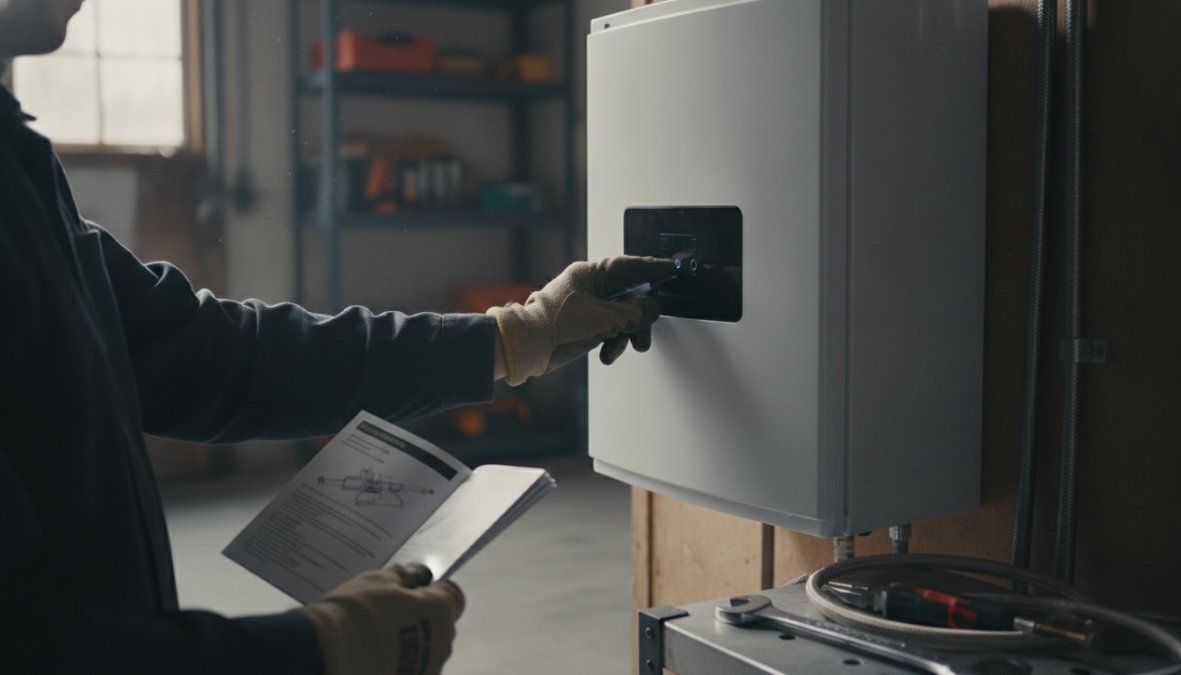
Most tankless water heater units feature a reset button on the control panel. The reset button typically appears as a small red or black button, roughly the size of a ballpoint pen tip, on the front face of the control panel. Some models hide the reset button behind a removable access panel. Consult your manual if you're having difficulty locating it.
If your unit lacks a visible reset button, you'll need to perform a power cycle via the circuit breaker instead.
Power Cycling via the Circuit Breaker
Power cycling your tankless water heater through the circuit breaker provides a complete system reset when a manual reset button isn't available. Locate your home's electrical panel, find the breaker labeled for your water heater, and turn it to the OFF position. Wait a minimum of 30 seconds to allow all electrical charge to drain from the system's capacitors.
After the 30-second wait, return the breaker to the ON position. The control panel will display startup diagnostics for 5-10 seconds. If error codes were present before the reset, they should clear during this startup sequence.
Rheem Tankless Water Heater Reset Instructions
Locate the red reset button on your Rheem unit's control panel. Press and hold the button for 3-5 seconds until you hear a click or see a light indicator change. Release the button and allow the system 10-15 seconds to complete its restart sequence.
If pressing the reset button doesn't clear error codes, perform a power cycle through the circuit breaker. Many Rheem owners report that a reset resolves common error codes like 11, 12, and 14 (which often indicate temporary ignition or water flow detection issues). If the same error code returns within 24 hours, the underlying problem likely requires professional service.
Gas Tankless Water Heater Reset Procedure
Gas tankless water heater systems use similar reset procedures to electric models but require additional attention to the gas supply and ignition system.
Understanding Your Gas Unit's Control Panel
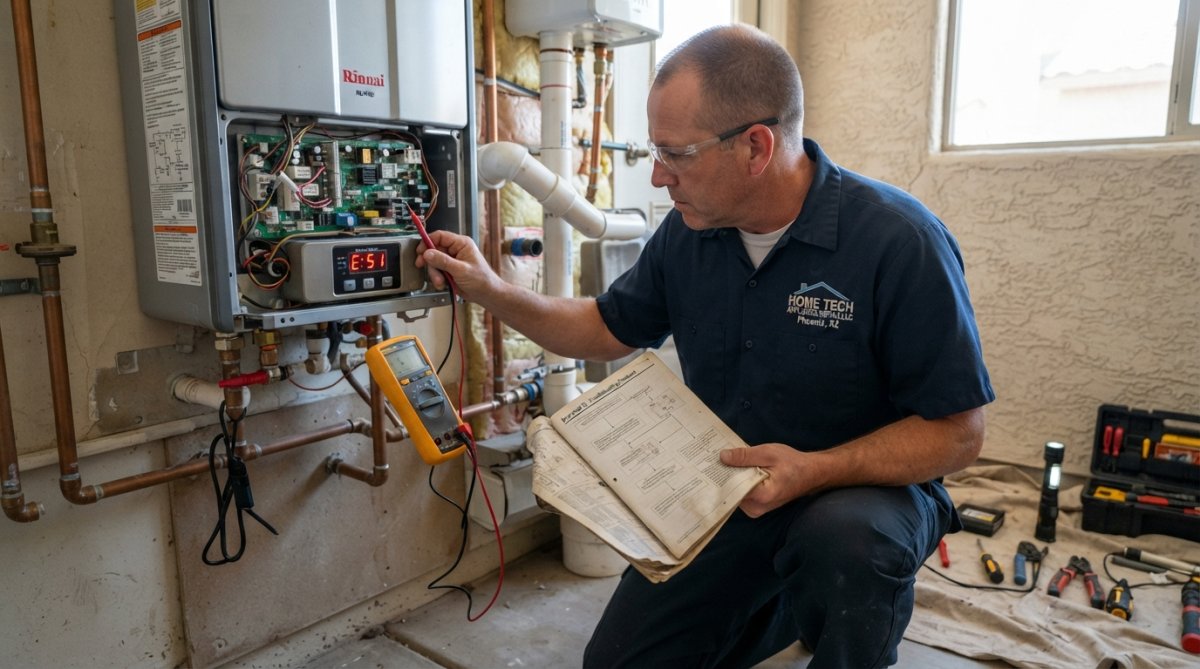
Gas tankless water heater control panels display more information than electric models because they monitor ignition, gas flow, and venting. Most gas units show a digital temperature readout, operational status lights, and error code displays. A steady green light indicates normal operation. A flashing red light signals an error code requiring attention.
Locate the reset button on your gas unit's control panel, typically positioned near the bottom or on the side. Consult your manual for exact positioning.
Hard Reset for Gas Models
A hard reset for gas tankless water heater units involves completely disconnecting power and shutting off the gas supply simultaneously. Turn off the gas supply valve by rotating the lever perpendicular to the gas line. Next, switch the water heater breaker to OFF and wait at least 30 seconds.
After the 30-second interval, restore the circuit breaker to ON. Wait 5 seconds, then turn the gas supply valve back to its original position. The control panel should display startup diagnostics. Allow 10-15 seconds for the system to complete its initialization sequence.
Tankless Water Heater Error Codes and Troubleshooting
Error codes on tankless water heater displays provide specific information about what triggered the fault condition.
| Error Code | Meaning | Common Cause | Reset Likely to Help? |
|---|---|---|---|
| 11 | Ignition failure | Flame detection issue | Yes |
| 12 | Water flow detection failure | Scale buildup or sensor issue | Sometimes |
| 14 | Overheat protection triggered | Temperature sensor malfunction | Yes |
| 16 | Venting or combustion issue | Blocked vent or air intake | No |
| 20 | Electrical supply problem | Low voltage or wiring issue | Sometimes |
| 25 | Gas supply or pressure issue | Regulator or valve problem | No |
Error codes 11 and 14 typically resolve with a reset because they often result from temporary sensor glitches. Error codes 16, 25, and similar codes indicate physical problems that a reset cannot fix. Document the error code before attempting a reset. If the same code reappears within a few hours, contact a professional technician.
Tankless Water Heater Troubleshooting: Common Issues Beyond Reset
Some problems persist even after a successful reset, indicating issues that require additional troubleshooting or professional service.
Ignition Failure and No Hot Water
When your tankless water heater produces no hot water despite displaying normal operation status, check whether you hear clicking sounds from the unit when hot water is requested. Clicking indicates the ignition system is attempting to light but failing, often from a dirty igniter electrode or gas supply interruption.
Verify that your gas supply valve is fully open and the gas supply line shows no visible damage. If ignition failure continues after confirming gas supply and attempting a reset, professional service is necessary.
Scale Buildup and Water Flow Issues
Hard water deposits accumulate inside your tankless water heater's heat exchanger over time, restricting water flow and triggering error codes. A reset clears the fault code but doesn't remove the scale. To permanently resolve water flow issues, you'll need to flush your system with a descaling solution.
If you notice reduced hot water flow or error codes related to water detection after resetting, scale buildup is likely the cause. Professional flushing typically costs significantly less than replacing a scaled-up heat exchanger.
Venting and Fault Code Problems
Tankless water heater venting systems must remain clear for proper operation. Blocked vents trigger fault codes that a reset cannot resolve. Check whether the vent pipe leading from your unit to the exterior shows any visible obstructions like bird nests, insect debris, or ice buildup.
Inspect where the vent exits your home's exterior wall. Ensure the exit is not blocked by landscaping, debris, or ice. If venting appears clear but fault codes persist after reset, the internal venting system may have blockages requiring professional inspection.
Preventative Maintenance After a Reset
Schedule annual professional inspections to catch developing issues before they trigger error codes. Technicians check water flow rates, gas pressure, electrical connections, and venting integrity.
Flush your system annually if you live in a hard water area. This preventative measure removes mineral deposits before they accumulate enough to cause problems. Monitor your unit's performance between professional visits and note any changes in hot water temperature consistency, unusual sounds, or recurring error codes.
Keep your unit's manual accessible and review it periodically. Consider installing a whole-home water softener if hard water is a persistent problem in your area, as softened water eliminates mineral deposits that accumulate in your tankless water heater.
Tankless water heater issues don't always require expensive repairs. Many common problems resolve with a straightforward reset procedure that you can perform safely at home. However, persistent error codes, ongoing performance problems, or issues involving gas supply and venting indicate problems requiring professional diagnosis. At Home Tech, our EPA 608-certified technicians service both gas and electric tankless water heater systems throughout the Phoenix metro area. We handle error code troubleshooting, descaling, heating element replacement, and complete system diagnostics with same-day availability and a 100% satisfaction guarantee. When your reset doesn't resolve the problem, call Home Tech at (602) 486-1901 to schedule your appointment or visit hometechappliancerepair.com for more information about our tankless water heater repair services.
Frequently Asked Questions
Why would a tankless water heater need to be reset?
Tankless water heaters may need a reset when they display error codes, lose power due to outages, experience ignition failure, or accumulate scale buildup. A reset clears fault codes from the control panel and restores normal operation. Common triggers include power interruptions, thermostat malfunctions, or venting issues. If your unit stops producing hot water or shows a flashing light on the diagnostic display, a reset is often the first troubleshooting step before calling a professional plumber.
Where is the reset button on a tankless water heater?
The reset button location varies by brand and model. On most units, it's found on the control panel or near the thermostat display, typically a small red or black button. For Rheem models, check the front of the unit below the digital display. On gas tankless water heaters, the reset may be inside a access panel. Always consult your DIY manual or technical support documentation for your specific model. If you can't locate it, turn off the electrical supply at the circuit breaker and wait 30 seconds before powering back on for a hard reset.
How long should you wait after turning off power to reset a tankless water heater?
Wait at least 30 seconds after shutting off power at the circuit breaker before turning it back on. This allows the internal capacitors and control systems to fully discharge, ensuring a complete hard reset. For units with persistent error codes, some manufacturers recommend waiting 60 seconds. After power is restored, allow 2-3 minutes for the unit to initialize and run its diagnostic cycle before testing water flow. If the fault code returns immediately, the issue likely requires professional diagnostic service.
What should I do if my tankless water heater won't reset?
If your reset attempt fails, first verify the electrical supply is reaching the unit, check the circuit breaker hasn't tripped again. Ensure the safety switch is engaged and gas supply (if applicable) is on. Review any error codes displayed on the control panel using your manual's fault code guide. Scale buildup or venting problems may prevent successful reset. If the unit still won't respond after a hard reset and 30-second power cycle, contact a professional plumber for diagnostic testing. Persistent issues often indicate internal component failure requiring sealed-system service or replacement.