 how-to guide
How to Clean Commercial Dryer Vents: A Step-by-Step Guide
Table of Contents
- Why Commercial Dryer Vent Cleaning Matters
- Fire Safety and Lint Buildup Risks
- Airflow Efficiency and Dryer Performance
- Signs Your Commercial Dryer Vent Needs Cleaning
- Tools and Equipment Required for Commercial Dryer Vent Cleaning
- Step-by-Step Process: How to Clean Commercial Dryer Vents
- Commercial Dryer Vent Cleaning Frequency and Schedule
- Fire Hazards and Safety Compliance for Commercial Dryer Vents
- Commercial Dryer Vent Cleaning Regulations and Compliance
- Common Mistakes to Avoid When Cleaning Commercial Dryer Vents
- Frequently Asked Questions
Last Updated: August 1, 2026
Why Commercial Dryer Vent Cleaning Matters
Learning how to clean commercial dryer vents is essential for facility managers, laundromat operators, and restaurant owners. At Home Tech, we've seen how neglected dryer ventilation systems create serious operational and safety risks. A commercial dryer running 8-12 hours daily accumulates significant lint within weeks, restricting airflow and creating a fire hazard. According to U.S. Fire Administration data on dryer fires, failure to clean dryer vents is a leading cause of laundry fires.
Fire Safety and Lint Buildup Risks
When lint restricts the exhaust path, moisture and heat become trapped inside the dryer cabinet, creating ideal conditions for spontaneous ignition. A single commercial dryer can process 40-60 loads per day, with each load shedding lint fibers that accumulate on duct walls, reducing negative air pressure and forcing exhaust gases to back up into the machine.
Dust, fabric fibers, and chemical residues from commercial detergents combine with lint to create an even more flammable mixture. Static pressure buildup inside the duct system increases the likelihood that any ignition source will ignite this material.
Airflow Efficiency and Dryer Performance
When airflow restriction develops, the dryer must work harder to push air through partially blocked ductwork, consuming 20-30% more electricity per load. In a busy operation running 50-100 loads daily, this inefficiency compounds into thousands of dollars in wasted energy annually. Regular vent cleaning maintains proper air velocity and keeps the dryer operating at design efficiency.
Signs Your Commercial Dryer Vent Needs Cleaning
Extended drying time is the most obvious warning sign. If loads that previously dried in 40 minutes now take an hour or longer, lint buildup is restricting airflow. Moisture accumulation around the dryer or lint visible around the exterior vent hood are additional clear warning signs.
Listen for unusual noise from the dryer during operation. A rattling or vibrating sound often indicates lint-clogged ductwork.
Tools and Equipment Required for Commercial Dryer Vent Cleaning
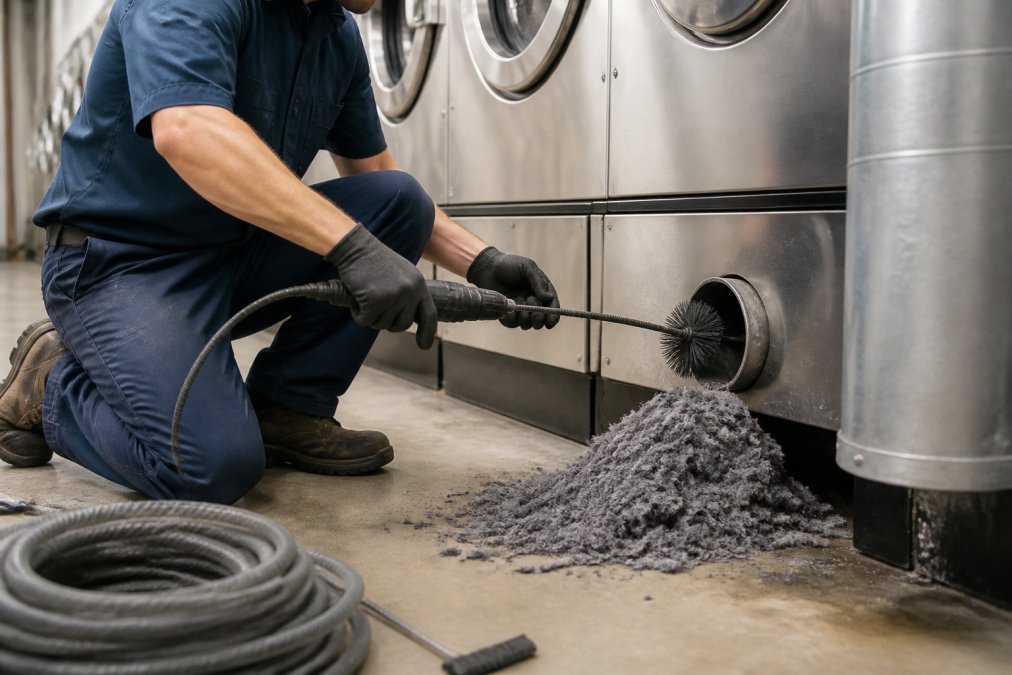
Proper vent cleaning requires specific tools designed for commercial ductwork. The most essential tool is a rotary brush system with motorized variable speed control and brush heads ranging from 4 to 8 inches in diameter. A HEPA vacuum with high suction capacity is critical for containing lint during cleaning. A flexible camera probe allows you to see inside the ductwork before and after cleaning, confirming blockage location and verifying cleaning effectiveness.
| Tool | Purpose | Why It Matters |
|---|---|---|
| Rotary brush system | Dislodge lint from duct walls | Removes buildup that vacuums alone cannot capture |
| HEPA vacuum | Contain and capture lint particles | Prevents lint from spreading; meets air quality standards |
| Rigid metal ducting | Main ventilation pathway | Maintains structural integrity and airflow |
| Inspection camera | Verify blockage and cleaning effectiveness | Documents condition before and after service |
| Brush agitation tool | Flexible shaft with variable speed | Navigates bends without damaging ductwork |
| Vent termination brush | Clean exterior vent hood | Removes lint and debris from exhaust opening |
Additional supplies include duct tape, flexible transition hose (if replacement is needed), and safety equipment including gloves and eye protection.
Step-by-Step Process: How to Clean Commercial Dryer Vents
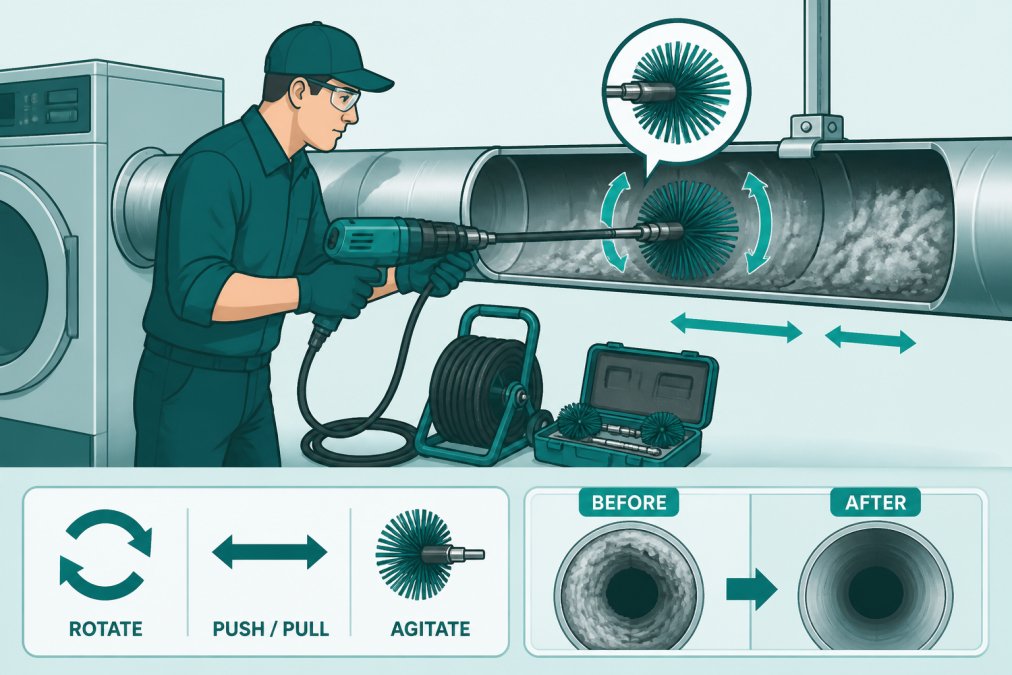
Step 1: Disconnect and Inspect the System
Before any cleaning begins, disconnect the dryer from its power source at the circuit breaker. For gas dryers, also shut off the gas supply at the valve behind the unit. Disconnect the flexible transition hose and inspect it for damage, tears, or excessive lint accumulation. If damaged or severely clogged, replace it rather than clean it.
Step 2: Remove Lint from the Exhaust Vent
Attach your HEPA vacuum to the ductwork opening at the dryer to capture lint as it's dislodged. Insert the rotary brush into the ductwork and activate it at low speed, gradually increasing speed as it encounters resistance. Work the brush in sections, pulling it back toward the dryer after each 1-2 foot advance. Pay particular attention to bends where lint accumulates heavily.
Step 3: Clean the Ductwork and Transition Hose
Once you've cleared the main ductwork with the rotary brush, focus on the flexible transition hose. If salvageable, disconnect it and use a vent brush to scrub the interior walls. If you encounter rigid blockages or damage, replacement is the better option.
Step 4: Check Vent Termination and Airflow
Move to the exterior vent termination point and remove any lint buildup from around the vent hood opening. The vent hood should open freely when the dryer is running and close completely when it's off. With the dryer powered back on, observe the exhaust flow. You should feel strong, consistent air velocity.
Step 5: Reassemble and Test
Reconnect the flexible transition hose to the rigid ductwork, ensuring the connection is tight and secure. Reconnect the transition hose to the dryer's exhaust outlet and verify all connections are secure before restoring power. Run a test load through the dryer. Drying time should be noticeably shorter than before cleaning.
Commercial Dryer Vent Cleaning Frequency and Schedule
Most commercial facilities need cleaning every 3-6 months. A busy laundromat or food service operation with multiple dryers running 8-12 hours daily should clean vents quarterly. The key indicator is performance, if drying times are increasing or lint accumulates around the exterior vent hood, cleaning is overdue.
Many commercial facilities benefit from quarterly inspections even if full cleaning isn't needed every time.
Fire Hazards and Safety Compliance for Commercial Dryer Vents
Understanding fire hazard risks associated with commercial dryer vents is essential for any facility manager. Lint is one of the most flammable materials found in commercial buildings. The National Fire Protection Association (NFPA) has established standards for commercial dryer installation and maintenance. Compliance with NFPA standards is a legal requirement in most jurisdictions and a requirement of commercial property insurance policies.
Understanding Combustible Materials and Static Pressure Risks
Lint isn't the only combustible material in your dryer vent system. Fabric fibers, dust particles, and chemical residues from laundry detergents combine with lint to create a highly flammable mixture. Static pressure buildup inside restricted ductwork creates another hazard, forcing lint and combustible material into areas where they contact the heating element.
Compliance and Insurance Requirements
Your commercial property insurance policy likely includes specific requirements for dryer vent maintenance. Keep records of each cleaning, including the date, technician name, lint accumulation severity, and any repairs performed. This documentation proves compliance if an insurance claim becomes necessary. Local building codes often reference NFPA standards for commercial dryer installation and maintenance.
Commercial Dryer Vent Cleaning Regulations and Compliance
NFPA Standards and Local Building Codes
The National Fire Protection Association (NFPA) publishes standards that govern commercial dryer installation, operation, and maintenance. NFPA 54: National Fuel Gas Code includes requirements for dryer venting in commercial settings. IBC Chapter 15: Exhaust Systems establishes requirements for ductwork material, sizing, and termination. Local fire codes often include specific requirements for commercial laundry facilities, with some jurisdictions mandating quarterly or semi-annual professional cleaning.
Multi-Unit and High-Rise Facility Challenges
Commercial buildings with multiple dryers face unique challenges in vent system design and maintenance. When several dryers exhaust into a common ductwork system, lint from all machines accumulates in the shared duct, creating blockage risk more severe than single-dryer installations. High-rise buildings present additional complexity, with ductwork that may run vertically through multiple floors, creating areas where lint settles due to gravity.
Coordination between building management, tenant laundry services, and maintenance staff is essential to ensure that cleaning schedules are met and downtime is minimized.
Common Mistakes to Avoid When Cleaning Commercial Dryer Vents
The most common mistake is using residential-grade equipment on commercial installations. A residential vent brush or small shop vacuum cannot handle the volume of lint in a commercial system, resulting in incomplete cleaning and recurring blockage within weeks.
Another frequent error is disconnecting only the flexible transition hose and attempting to clean the rigid ductwork without accessing the full system. Rushing through the cleaning process means some lint remains, reducing the benefit of the cleaning.
Failing to inspect and test the system after cleaning means you can't confirm that cleaning was effective. Many facilities neglect to replace damaged flexible transition hoses, instead repeatedly cleaning a compromised hose. Finally, many operations fail to establish a regular maintenance schedule, cleaning only when performance problems become obvious.
Maintaining your commercial dryer vent system is one of the most important safety and efficiency investments you can make. Lint accumulation creates genuine fire risk, and restricted airflow wastes energy while extending drying times. Home Tech specializes in commercial laundry equipment maintenance and can handle professional dryer vent cleaning, inspection, and repair for your facility. Our EPA 608-certified technicians understand commercial equipment and can establish a maintenance schedule that keeps your dryers running safely and efficiently. Contact Home Tech at (602) 486-1901 to schedule a professional vent inspection and cleaning today.
Frequently Asked Questions
How often should commercial dryer vents be cleaned?
Commercial dryer vents should typically be inspected and cleaned every 3 to 6 months, depending on usage frequency and facility type. High-volume laundromats and food service operations may need quarterly cleaning. Regular inspection frequency helps prevent lint buildup and maintains proper airflow restriction levels. Facilities with heavy dryer use should establish a preventative maintenance schedule and document cleaning dates for compliance purposes.
What are the main signs that a commercial dryer vent needs cleaning?
Key indicators include longer dryer cycle times, excessive heat around the dryer unit, moisture accumulation inside the drum, and a burning smell during operation. You may also notice reduced air velocity at the vent termination or visible lint around the exhaust path. If clothes aren't drying efficiently despite proper settings, ductwork blockage or airflow restriction is likely present. These signs suggest lint buildup is restricting the ventilation system.
What tools are essential for commercial dryer vent cleaning?
A professional vent cleaning kit should include a rotary brush, flexible rods or rigid metal ducting tools, a HEPA vacuum for lint collection, and inspection equipment. You'll also need a vent hood removal tool and brush agitation attachments sized for your ductwork diameter. For high-rise or multi-unit facilities, longer reach rods and commercial-grade equipment are necessary. Proper tools ensure effective removal of combustible lint and safe access to the entire exhaust path and vent termination point.
What safety and compliance requirements apply to commercial dryer vent cleaning?
The National Fire Protection Association (NFPA) Standard 54 requires that dryer vents be regularly inspected and cleaned to prevent fire hazards. Many jurisdictions follow International Building Code (IBC) standards for commercial laundry facilities. Insurance policies often mandate documented preventative maintenance schedules. Multi-unit and high-rise buildings face additional requirements for fire safety compliance. Facilities should maintain cleaning records and ensure work is performed by trained technicians familiar with commercial HVAC maintenance and local building codes.