 ultimate_guide
How to Maintain Restaurant Kitchen Equipment
Table of Contents
- Why Preventive Maintenance Matters for Commercial Kitchen Equipment
- Daily Cleaning Routines to Maintain Restaurant Kitchen Equipment
- Weekly Maintenance Schedules and Inspection Checklists
- Preventative Maintenance for Restaurant Equipment
- Cost of Restaurant Equipment Maintenance and ROI
- Restaurant Kitchen Equipment Lifespan and Longevity
- Common Maintenance Mistakes and Troubleshooting Error Codes
- When to Call Professional Service for Restaurant Kitchen Equipment
- Frequently Asked Questions
Last Updated: July 30, 2026
Why Preventive Maintenance Matters for Commercial Kitchen Equipment
Equipment failure in a commercial kitchen costs money fast. A walk-in cooler failure means losing food inventory by the hour. A hood system failure stops operations entirely. Preventive maintenance is the difference between a planned repair and an emergency call that costs thousands.
Equipment that receives regular care lasts significantly longer and performs more reliably than neglected equipment. A $50 filter replacement takes 15 minutes. A compressor replacement costs $2,000 and takes two days. The math is straightforward.
Daily Cleaning Routines to Maintain Restaurant Kitchen Equipment
Your daily cleaning routine is the foundation of equipment longevity. Effective daily cleaning targets food debris and grease buildup before they cause problems. On cooking appliances, grease accumulates in ventilation passages, reducing airflow. On refrigeration units, food particles block drainage systems and create bacterial growth zones. A proper daily routine takes 20-30 minutes per shift and prevents 80% of common equipment failures.
Food Contact Surfaces and Sanitization
Food contact surfaces require sanitization after every use: cutting boards, prep tables, equipment shelves, and conveyor belts. Clean with hot soapy water, rinse thoroughly, then sanitize with an approved solution (200 ppm chlorine-based or 400 ppm quaternary ammonia). Let the sanitizer sit for 30 seconds minimum, then air dry.
Health code violations related to food contact surfaces cost $500-$2,000 in fines. Consistent daily sanitization prevents these violations entirely.
Hood Filters and Ventilation Airflow
Hood filters trap grease before it enters ductwork. A clogged filter reduces ventilation airflow and creates a fire hazard. Daily cleaning means removing filters and rinsing with hot water and degreaser, a 10-minute task that prevents saturation.
Filters reach saturation within 3-5 days of heavy cooking. Daily rinsing keeps them functional and extends the time between professional deep cleaning from weekly to monthly.
Weekly Maintenance Schedules and Inspection Checklists
Weekly maintenance goes deeper than daily cleaning. Your weekly schedule should include: deep cleaning of cooking appliances, temperature verification on refrigeration units, lubrication of moving parts, and visual inspection for wear or damage. Allocate 1-2 hours per week for this work.
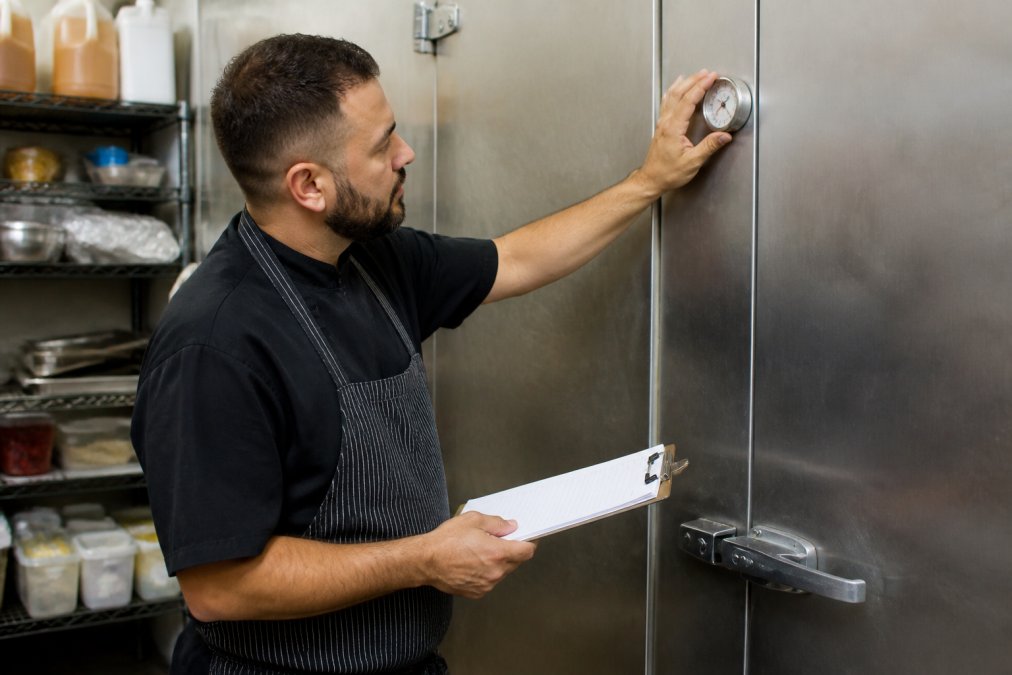
An inspection checklist keeps the process consistent and creates documentation for warranty claims and technician diagnostics.
Grease Buildup and Deep Cleaning Cooking Appliances
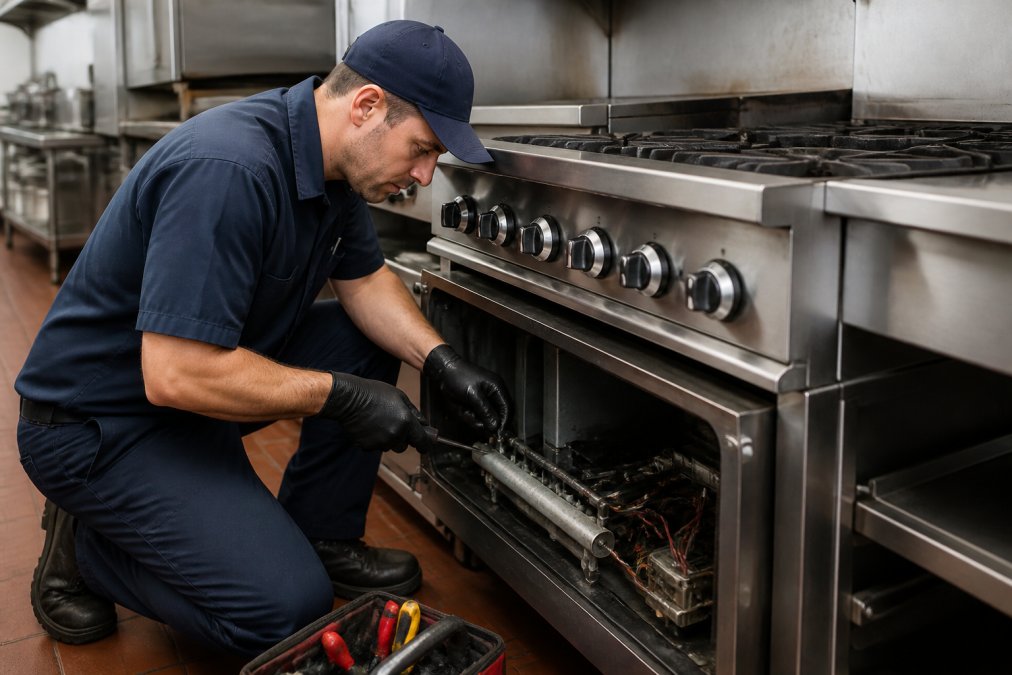
Cooking appliances accumulate grease in hidden places. Weekly deep cleaning means disassembling when possible: remove griddle tops, clean underneath with degreaser, and wipe down all surfaces. For fryers, inspect heating elements and thermostats for grease accumulation. For ovens, wipe interior walls and check that vents aren't blocked.
Grease buildup forces equipment to work harder, increasing energy consumption and reducing cooking performance.
Refrigeration Unit Care and Temperature Control
Check temperatures in walk-in coolers and freezers daily, but weekly verify the thermometer itself is accurate using a calibrated handheld thermometer. Clean evaporator and condenser coils weekly, dust and food debris block airflow, forcing the compressor to work harder. For reach-in coolers, vacuum condenser coils from the back. For walk-in units, inspect drain lines to ensure they're not blocked.
Temperature control is non-negotiable for food safety. Equipment downtime in refrigeration means spoilage and potential health code violations.
Lubrication of Moving Parts and Friction Reduction
Moving parts on equipment require regular lubrication: door hinges on coolers, latch mechanisms, fan bearings, and conveyor belts. Use food-grade lubricant only. Weekly inspection should identify squeaking or stiff movement, which signals that lubrication is needed.
A well-lubricated door latch functions smoothly for years. A dry latch will eventually stick or break, requiring expensive repair.
Preventative Maintenance for Restaurant Equipment
Preventative maintenance is the systematic approach to keeping equipment functional before problems develop. A preventative maintenance program includes scheduled inspections, filter replacements, fluid changes, and component testing based on manufacturer recommendations and your equipment's actual usage patterns.
Document everything: when maintenance was performed, what was done, equipment condition, and who performed the work.
Filter Replacement and Disassembly Procedures
Filters are the most frequently replaced component in commercial kitchen equipment. Hood filters typically need replacement every 1-3 months depending on cooking volume. Fryer oil filters should be replaced daily if filtering oil, or the oil changed entirely every 2-4 weeks. Refrigeration filters should be replaced every 3-6 months.
Always consult the manual before attempting to remove components. Improper disassembly can damage equipment or void warranties.
De-Liming and Faucet Maintenance
Water-using equipment accumulates mineral deposits from hard water. De-liming removes these deposits and restores functionality. For faucets and spray nozzles, soak in a food-safe descaling solution for 30 minutes to an hour, then scrub away deposits. Monthly de-liming prevents mineral buildup from becoming severe.
Faucet maintenance also includes checking seals and replacing aerators if water flow is weak.
Warranty Preservation and Compliance
Equipment warranties often require documented maintenance to remain valid. Keep detailed maintenance logs for every piece of equipment: date, what was done, who did it, and equipment condition. Get receipts from technicians documenting work performed.
Compliance with food safety regulations depends on equipment maintenance. Health inspectors will ask when equipment was last serviced. Documentation showing consistent maintenance demonstrates a well-managed operation.
Cost of Restaurant Equipment Maintenance and ROI
A preventative maintenance program typically costs 5-10% of equipment replacement value annually. For a restaurant with $100,000 in kitchen equipment, that's $5,000-$10,000 per year. This is minimal compared to the cost of a single major failure: a walk-in cooler costs $15,000-$30,000 to replace, a compressor replacement costs $2,000-$4,000, and spoiled inventory costs thousands plus lost revenue.
Equipment lasts longer, performs better, and fails less frequently. Downtime decreases. Food loss decreases. Energy consumption decreases because equipment operates at peak efficiency. Maintenance is an investment that protects a much larger investment in equipment.
Restaurant Kitchen Equipment Lifespan and Longevity
How long does commercial kitchen equipment last? That depends entirely on maintenance. A well-maintained piece of equipment often lasts 10-15 years or more. The same equipment with poor maintenance might fail within 5 years.
Equipment that's well-maintained also holds more resale value. The difference between a 5-year equipment lifespan and a 15-year lifespan is maintenance.
Common Maintenance Mistakes and Troubleshooting Error Codes
The most common mistake is treating maintenance as optional. The correct approach is scheduled preventative maintenance that prevents most failures. A second mistake is over-cleaning or using incorrect cleaning methods. Always use manufacturer-recommended cleaning products and methods.
A third mistake is ignoring small problems. A slightly weak water flow, a door that doesn't seal perfectly, or a minor temperature fluctuation are early warning signs. Address them immediately before they become major failures.
Error codes on modern equipment are diagnostic tools. When a cooler displays an error code, document it, note when it appeared, and contact a service technician. Error codes help technicians diagnose problems faster.
Equipment Downtime Prevention Strategies
Monitor equipment performance daily. Is the cooler maintaining temperature? Is the fryer heating properly? Small changes in performance are early warning signs. Maintain backup equipment or service agreements for emergencies. Train your staff to identify equipment problems and report them immediately.
Staff Training Protocols and Maintenance Logs
Train staff to recognize normal operation versus warning signs. Teach them how to perform daily cleaning and basic maintenance tasks. Create a maintenance log for every piece of equipment with columns for date, time, what was done, equipment condition, and who performed the work.
Assign specific staff members to be responsible for equipment maintenance. Review maintenance logs monthly to identify patterns and adjust your maintenance schedule accordingly.
When to Call Professional Service for Restaurant Kitchen Equipment
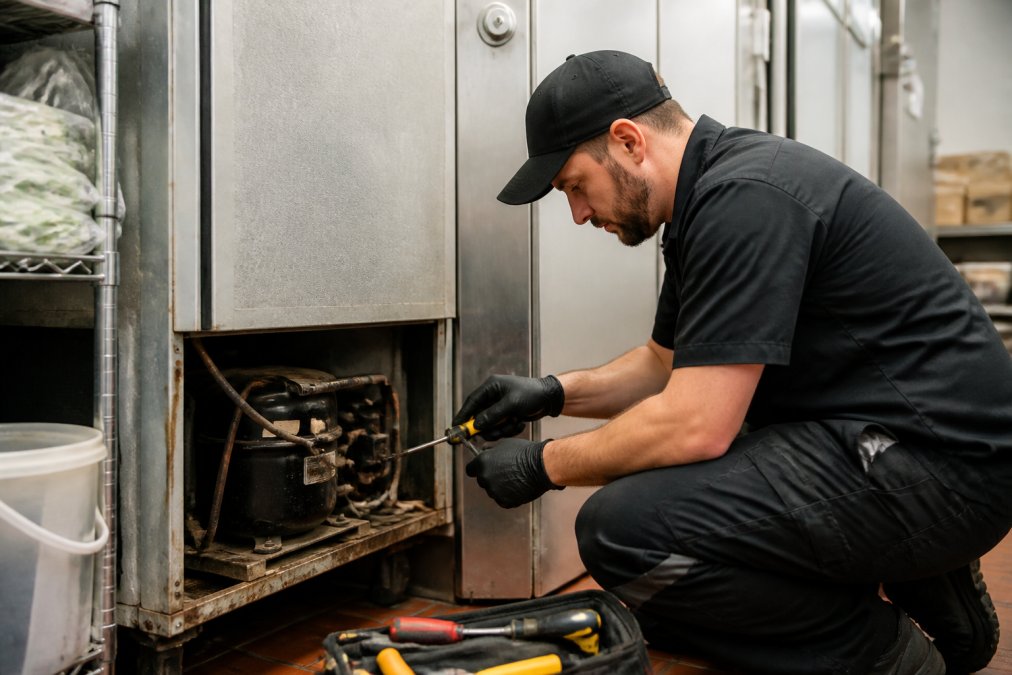
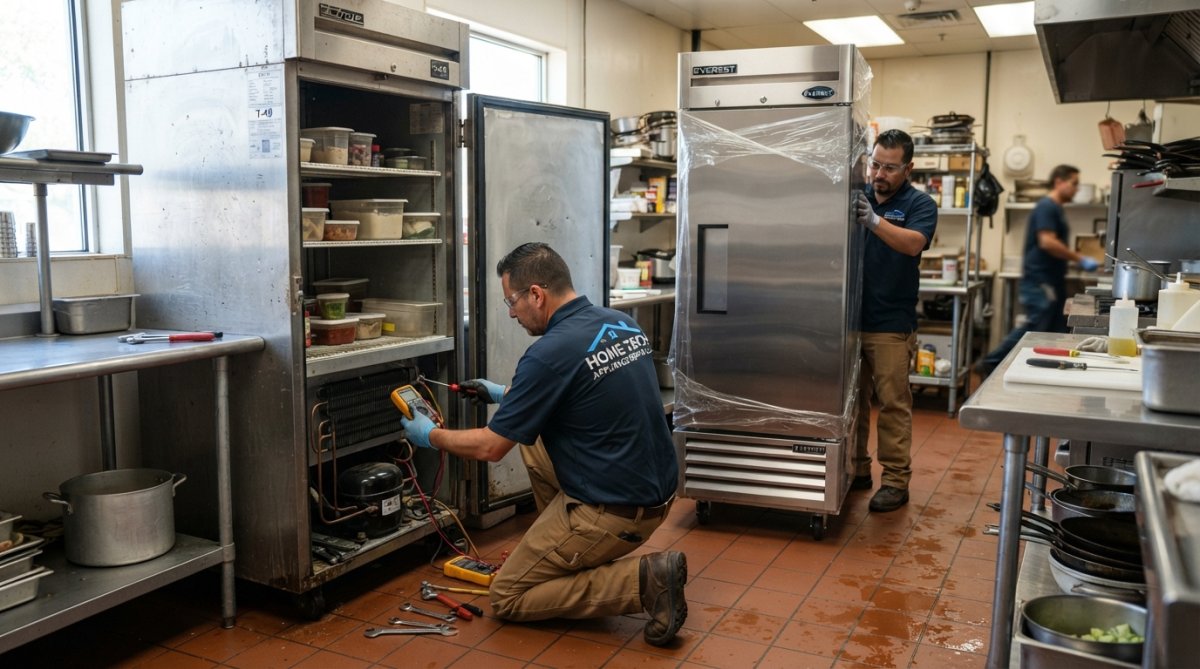
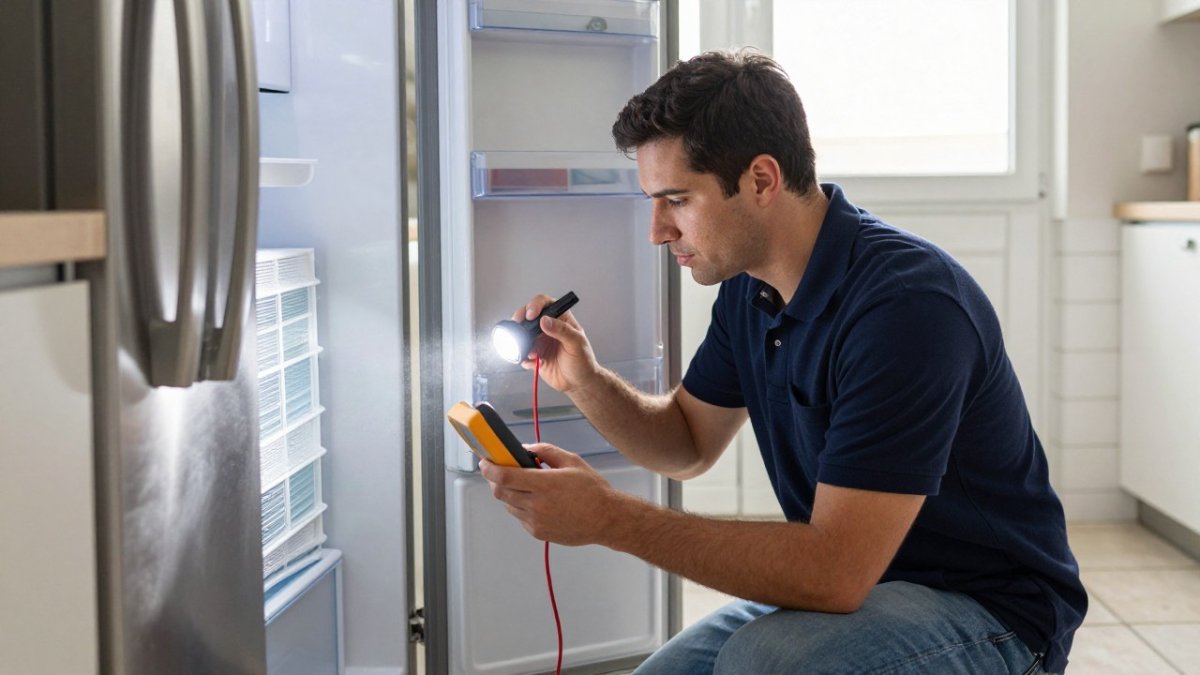
Call a professional technician for refrigerant issues, electrical problems, or sealed-system repairs. These require EPA 608 certification and specialized tools. Call a professional when equipment displays error codes you don't understand, when temperature control is inconsistent, or when you hear unusual noises.
Call a professional for annual preventative maintenance on major equipment. A technician can perform deep cleaning of coils and components you can't easily access, test electrical connections, verify refrigerant charge, and identify developing problems before they cause failure.
At Home Tech, our EPA 608-certified technicians service walk-in coolers, freezers, and all commercial refrigeration equipment. We cover the greater Phoenix metro area, Chandler, Gilbert, Tempe, Scottsdale, Phoenix, Queen Creek, Glendale, Cave Creek, and Fountain Hills, with same-day and next-day service availability. Call (602) 486-1901 or visit hometechappliancerepair.com to book an emergency appointment.
Maintaining restaurant kitchen equipment requires consistency and attention to detail. Daily cleaning, weekly inspections, and scheduled professional service prevent most failures and dramatically extend equipment life. Start with a basic maintenance schedule, document everything, train your staff, and address problems immediately. Your equipment will reward you with years of reliable service.
Frequently Asked Questions
What is a daily maintenance checklist for how to maintain restaurant kitchen equipment?
A daily checklist should include sanitizing all food contact surfaces with approved sanitizing solution, emptying grease traps, wiping down hood filters for visible debris, checking walk-in refrigerator and reach-in cooler temperatures, inspecting cooking appliances for proper operation, and cleaning ventilation airflow areas. Document each task to track compliance and identify patterns requiring deeper attention.
How often should I perform preventative maintenance for restaurant equipment?
Weekly deep cleaning of cooking appliances, monthly filter replacement and hood filter inspection, quarterly de-liming of faucets and water lines, and semi-annual professional HVAC and refrigeration service are industry standards. However, frequency depends on equipment type, usage volume, and local food safety standards. High-volume operations may need more frequent maintenance to prevent equipment downtime.
What is the typical cost of restaurant equipment maintenance and how does it affect my budget?
Maintenance costs vary by equipment type, facility size, and service frequency. Preventive maintenance typically costs less than emergency repairs caused by neglect. Budgeting 5-10% of your equipment's replacement value annually for maintenance and repairs is a common industry guideline. Regular maintenance extends equipment service life, reduces operational efficiency losses, and helps avoid costly health code violations that could impact your business.
How long should restaurant kitchen equipment last with proper maintenance?
With consistent preventive maintenance, commercial refrigeration units typically last 10-15 years, HVAC systems 15-20 years, and cooking appliances 7-12 years. Proper lubrication of moving parts, timely filter replacement, and addressing wear before it causes equipment downtime significantly extend service life. Warranty preservation often requires documented maintenance logs, which also protect your investment.
What common error codes should I know how to troubleshoot on commercial kitchen equipment?
Walk-in coolers may display temperature-control error codes indicating refrigerant issues or thermostat failure. Dishwashers often show drainage or heating errors. Ovens may display calibration warnings. Keep manufacturer documentation handy and maintain a maintenance log noting when errors occur. Most error codes indicate the need for professional service, especially for sealed-system refrigeration work requiring EPA 608 certification.
How can staff training protocols improve how I maintain restaurant kitchen equipment?
Trained staff can identify early signs of wear, perform daily sanitization correctly, and report issues before they cause equipment downtime. Create written procedures for daily cleaning routines, teach proper disassembly of removable parts like hood filters, and establish a maintenance log system. Regular training reduces food safety violations, extends equipment longevity, and ensures operational efficiency across your kitchen.
What maintenance tasks require professional service versus in-house staff?
In-house staff can handle daily sanitization, filter cleaning, and basic visual inspections. Professional technicians are needed for sealed-system refrigeration repairs, HVAC service, complex disassembly of major appliances, and troubleshooting error codes. Attempting advanced repairs without proper certification risks voiding warranties, creating health code violations, and causing equipment downtime that costs your business money.