 listicle
10 Common Washing Machine Error Codes Explained
Table of Contents
- Understanding Washing Machine Error Codes
- 1. E10 / F10 (Water Inlet and Drainage Errors)
- 2. Door Lock and Latch Errors (E20, F20, DC)
- 3. Heating Element and Temperature Sensor Faults (E40, F40, FE)
- 4. Motor and Drive System Errors (E50, F50, UE)
- How to Reset Your Washing Machine Error Code
- When to Call an Appliance Repair Technician
- Conclusion
- Frequently Asked Questions
Last Updated: August 7, 2026
Understanding Washing Machine Error Codes
Washing machine error codes are diagnostic messages your appliance displays when it detects a malfunction, communicating what went wrong so you can decide whether to troubleshoot it yourself or call a professional.
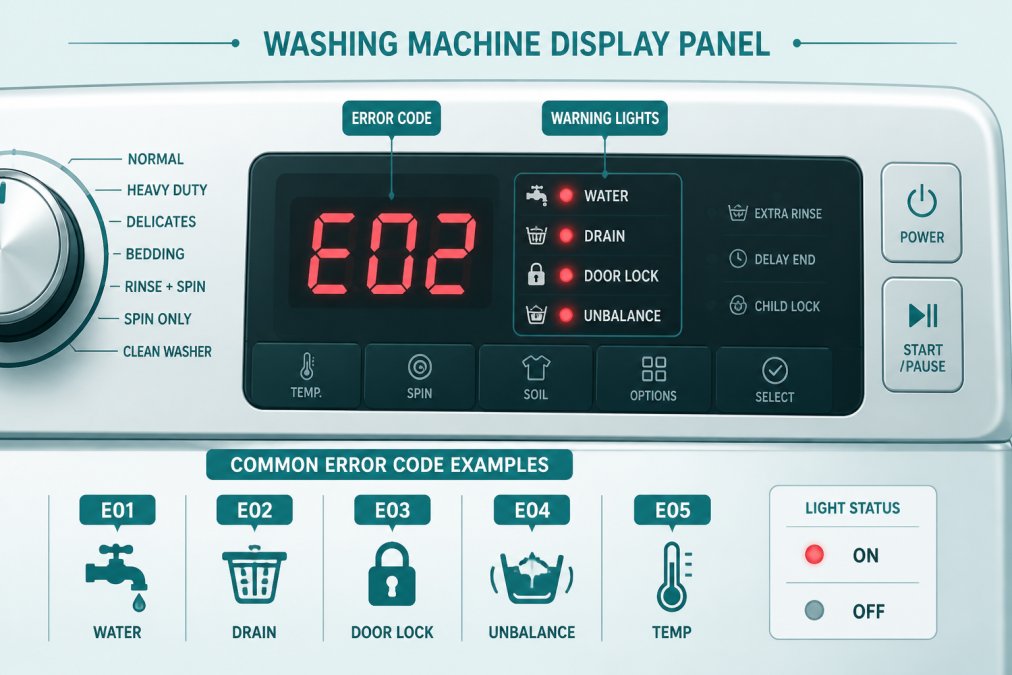
Most manufacturers use a two-character format, a letter followed by a number, where the letter identifies the system (E for error, F for fault) and the number pinpoints the component. A Whirlpool washer might display E10, while an LG shows FE. Despite variation, the underlying problems are often identical across brands: water supply issues, drainage blockages, sensor faults, or motor failures.
The challenge is that the same error code can mean different things depending on your machine's age, brand, and model. An E10 on a newer Whirlpool might indicate a water inlet valve problem, while on an older model it could signal a pressure switch malfunction. This is why understanding both the code and your specific machine's interpretation matters.
Common error codes fall into predictable categories: water supply and drainage issues dominate the list, followed by door lock failures, heating element problems, and motor malfunctions.
1. E10 / F10 (Water Inlet and Drainage Errors)
The E10 or F10 error indicates your washing machine cannot fill with water or cannot drain properly. These codes point to the water inlet valve, the pressure switch, or the drain system.
Water inlet valve failure occurs when the solenoid valve that opens to let water in gets stuck or stops responding to electrical signals. The drum stays dry even though you selected a wash cycle.
Pressure switch malfunction is the second leading cause. This sensor tells the machine when water has reached the correct level. If it fails, the machine can't tell if the tub is full and stops the cycle.
Drain system blockages prevent water from leaving the tub. A clogged drain hose, kinked hose, or blocked pump filter causes the machine to halt the cycle to prevent overflow.
How to troubleshoot E10/F10 errors:
- Check the drain hose for kinks or bends and straighten any visible crimps.
- Inspect the pump filter (usually behind a panel at the machine's base) and remove lint, coins, or debris.
- Verify the drain hose isn't clogged by running water through it over a sink.
- Check that inlet hoses aren't kinked or frozen.
- Listen for a clicking sound when the machine tries to fill; silence suggests a faulty inlet valve.
If the hose is clear and water still won't flow, the inlet valve or pressure switch has likely failed. Home Tech's technicians can diagnose the issue and replace the faulty component.
2. Door Lock and Latch Errors (E20, F20, DC)
Door lock and latch errors prevent you from accessing your laundry. The machine detects that the door isn't properly locked or latched, so it won't start the cycle.
The latch assembly is a mechanical component that physically closes the door and signals to the control board that it's secure. Over time, plastic tabs wear down or the metal catch bends, preventing a solid connection.
The door lock solenoid is an electromagnetic switch that engages when you close the door. If it fails, the machine can't confirm the door is locked. You'll hear a buzzing sound as the solenoid tries repeatedly to engage.
Wiring harness damage between the door latch and control board can also trigger this error.
How to troubleshoot door lock errors:
- Open and close the door firmly and listen for a solid "click" sound.
- Inspect the door frame where the latch engages for bent metal or misalignment.
- Check the door gasket for debris that might prevent the door from closing fully.
- Manually push the latch inward; it should spring back smoothly.
If the door closes firmly but the error persists, the solenoid or wiring is the issue. The latch assembly is usually inexpensive to replace, but accessing it requires removing the front panel, a task best left to professionals.
Front-load washers are particularly prone to door latch wear. If your machine is over seven years old and the latch is worn, replacement is more cost-effective than repeated repairs.
3. Heating Element and Temperature Sensor Faults (E40, F40, FE)
Heating element and temperature sensor errors signal that your machine can't heat water to the set temperature. These codes appear on machines with heated wash cycles, especially relevant for sanitizing cycles.
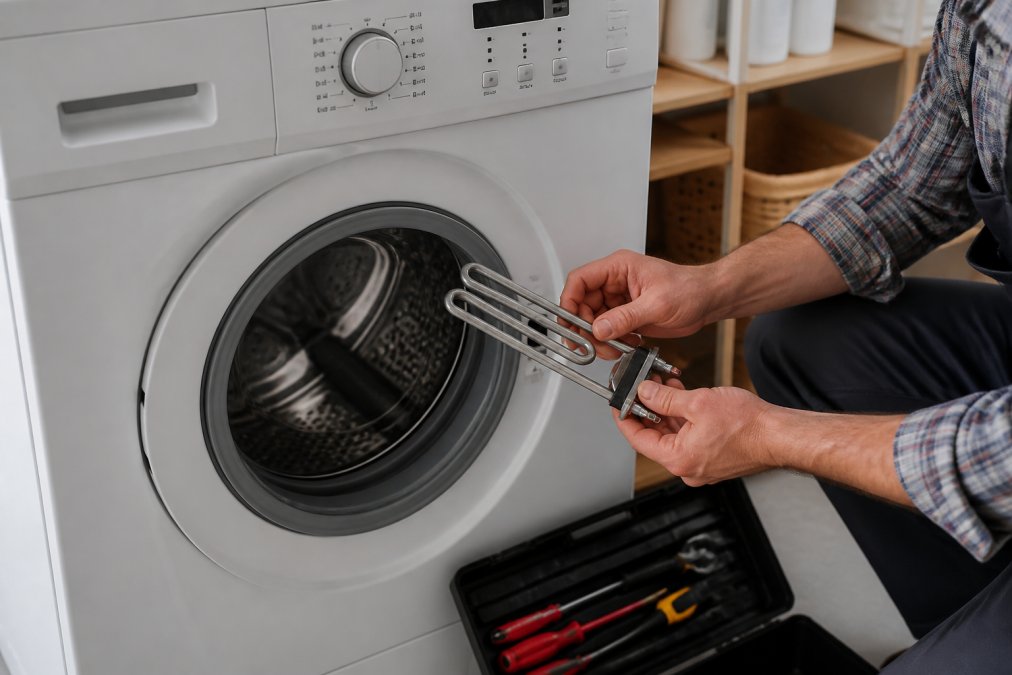
The heating element is a metal coil that warms water as it enters the tub. Over years of use, mineral deposits from hard water coat the element, reducing its efficiency until it burns out completely.
The temperature sensor (or thermistor) measures water temperature and tells the control board whether the heating element is working. A faulty sensor might read incorrect temperatures, causing the machine to shut down heating prematurely or keep it on too long.
Wiring or control board failure can also prevent the heating element from receiving power.
How to troubleshoot heating element and temperature sensor errors:
- Run a hot water wash cycle and feel the water entering the tub. Cold water suggests the heating element isn't working.
- Check that your home's hot water heater is functioning.
- Listen for a humming sound during the heat cycle; silence suggests the element isn't receiving power.
- Inspect the inlet hoses for kinks that would deliver cold water.
Heating element replacement is a moderate DIY task if you're mechanically inclined. However, if the error persists after replacement, the sensor or control board is faulty and requires professional diagnosis.
Hard water areas experience accelerated heating element failure. Installing a water softener can extend its life significantly.
4. Motor and Drive System Errors (E50, F50, UE)
Motor and drive system errors indicate the drum isn't rotating properly or the motor isn't responding to commands. These codes prevent the machine from agitating or spinning.
The motor tachometer is a sensor that monitors drum rotation speed. If it detects the drum isn't spinning at the expected rate, it signals an error due to motor failure, belt slipping, or worn drum bearings.
The drive belt connects the motor to the drum. Over time, rubber belts wear, fray, or snap, preventing the drum from spinning at full speed.
Motor bearing failure creates a grinding sound and resistance to manual drum rotation.
Unbalanced load detection is a safety feature that halts spinning if clothes bunch on one side of the drum. This isn't a mechanical failure, the machine is protecting itself.
How to troubleshoot motor and drive system errors:
- Stop the machine and manually rotate the drum by hand; it should spin freely.
- Visually inspect the drive belt for fraying, cracks, or separation from the pulley.
- Redistribute the load evenly around the drum and run the cycle again.
- Check that nothing is jamming the drum.
- Listen for a buzzing or humming sound during the spin cycle.
Drive belt replacement is a common DIY repair on top-load machines. Motor replacement, however, is best handled by professionals because it involves electrical work and precise alignment.
How to Reset Your Washing Machine Error Code
Resetting your washing machine error code is often the first troubleshooting step and can clear temporary faults caused by electrical glitches.
Power cycle reset (works on most machines):
- Unplug the machine from the electrical outlet, or turn off the circuit breaker if it's hardwired.
- Wait 5 to 10 minutes to allow residual electrical charge to dissipate.
- Plug the machine back in or restore power at the breaker.
- Run a test cycle without clothes.
If the error code reappears, the fault is persistent and requires repair. If it doesn't return, the reset cleared a temporary glitch.
Manufacturer-specific reset sequences:
- Whirlpool/Maytag: Press the "Start/Stop" button three times in rapid succession, then hold for three seconds.
- LG: Press the "Power" button to turn off, wait 5 seconds, then press "Power" again.
- Samsung: Hold the "Start/Pause" button for 3 seconds.
- Bosch: Turn off the machine, unplug it for 30 seconds, then plug it back in.
Consult your machine's manual for the exact sequence for your model.
When to reset versus when to call for help:
Reset the machine if the error appears once and doesn't return. However, if the error code reappears after a reset or appears consistently during the same cycle stage, the machine has a genuine fault requiring repair. Repeated resets won't fix a failing inlet valve, worn door latch, or burned-out heating element.
Document when the error appears, during fill, wash, rinse, or spin, to help technicians narrow down which system is failing.
When to Call an Appliance Repair Technician
Knowing when to attempt a DIY fix versus calling a professional saves time, money, and frustration.
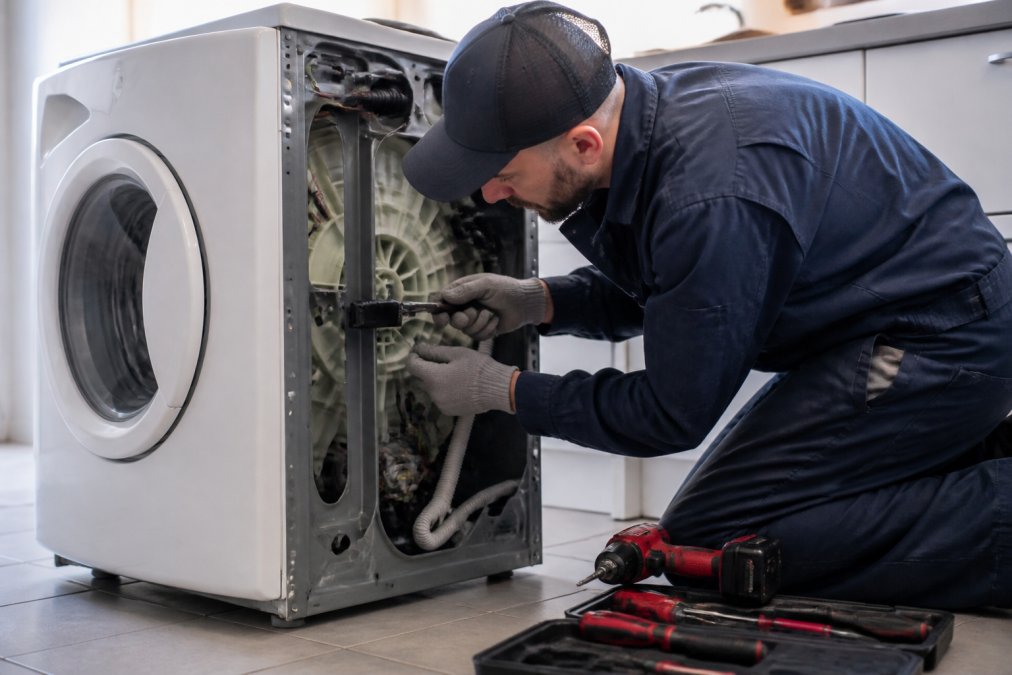
Call a professional immediately if:
The machine won't drain and water is pooling inside. Standing water risks mold growth and odor damage. A clogged drain hose is usually simple to clear, but if the problem is the drain pump itself, you need professional help to avoid water damage to your home's flooring.
The door won't unlock after a cycle. A stuck door lock solenoid can trap wet clothes inside, creating a breeding ground for bacteria and mold.
The drum won't rotate and you've ruled out load imbalance. A failed motor, broken drive belt, or worn bearings requires specialized tools and disassembly.
You smell burning or see smoke. This indicates an electrical fault. Stop using the machine immediately and call for service.
The machine is leaking water from the tub seals or drum. Tub leaks indicate worn seals, cracked tubs, or damaged drum gaskets requiring professional disassembly.
You hear grinding, squealing, or unusual mechanical sounds. These often indicate bearing wear, belt slipping, or motor problems. Continuing to use the machine can accelerate damage.
The control board is displaying multiple error codes or cycling through errors. This suggests a control board fault or wiring harness issue requiring electrical testing equipment.
DIY fixes that are worth attempting:
- Kinked or clogged drain hose
- Pump filter clogged with lint or debris
- Unbalanced load during spin
- Loose inlet hose connections
- Power cycle reset
- Frozen inlet hoses in cold climates
The DIY-versus-professional decision framework:
Ask yourself: Is the fix a simple mechanical task? Does the repair require electrical work or control board access? Do you have the specialized tools? How old is the machine? Is it under warranty?
If the machine is over 10 years old and requires a major component replacement, repair cost might exceed 50% of a new machine's price. At that threshold, replacement often makes more financial sense.
Home Tech's technicians arrive with diagnostic equipment that identifies the exact fault in minutes and carry common replacement parts, so many repairs are completed on the first visit.
Conclusion
Washing machine error codes tell you exactly what's wrong. E10 and F10 errors point to water supply or drainage issues, often fixable by clearing a clogged pump filter or straightening a kinked hose. Door lock errors require latch or solenoid replacement. Heating element faults signal mineral buildup or element failure. Motor errors indicate belt wear, bearing failure, or motor problems.
Some fixes are DIY-friendly: clearing a drain filter, redistributing an unbalanced load, or power-cycling the machine. Others, electrical faults, motor replacement, control board diagnosis, demand professional expertise and specialized equipment.
Home Tech's EPA 608-certified technicians serve the Phoenix metro area with same-day and next-day appointments, no hidden fees, and a 100% satisfaction guarantee. Call (602) 486-1901 or visit hometechappliancerepair.com to book your appointment today.
Frequently Asked Questions
What is the most common washing machine error code?
E10 and F10 are among the most common washing machine error codes, typically indicating water inlet or drainage problems. These errors occur when the machine cannot fill with water properly or drain water after a cycle. The issue often stems from kinked drain hoses, clogged inlet valves, or blocked pump filters. Many homeowners can resolve these by checking the hose connections and clearing debris from the filter, though professional diagnosis may be needed if the problem persists.
How do I reset my washing machine after an error code appears?
Most washing machines can be reset by turning off the power for 5-10 minutes, then turning it back on. For some models, you can also hold the power button for 3-5 seconds. Consult your machine's manual for brand-specific reset procedures. However, simply resetting the error code does not fix the underlying problem. If the error returns after a reset, the issue requires diagnosis and repair. Home Tech recommends contacting a professional if errors persist after a reset attempt.
Can I fix a washing machine error code myself?
Some error codes point to issues you can fix yourself, such as clearing a clogged pump filter, straightening a kinked drain hose, or checking water inlet connections. However, errors related to the control board, heating element, motor, or door lock assembly typically require professional repair. If you're unsure whether the repair is safe or within your skill level, it's best to call a licensed technician. Home Tech serves the Phoenix area with same-day service for complex repairs that need professional attention.
Why does my washing machine keep showing the same error code?
Recurring error codes usually mean the underlying cause was not fully resolved. For example, a drainage error may return if the drain hose is kinked again or if the pump filter has debris buildup. Control board faults, sensor malfunctions, or wiring harness issues can also trigger repeated errors. If an error persists or returns after your troubleshooting attempts, professional diagnosis is necessary to identify whether the problem is mechanical, electrical, or sensor-related and prevent further damage.