 listicle
Best Alternatives to Factory Refrigerator Water Filters
Table of Contents
- OEM vs Aftermarket Water Filters: What's the Real Difference
- NSF Certified Refrigerator Water Filters: Why Certification Matters
- How Often to Change Refrigerator Water Filter: Maintenance Schedule
- Top Alternatives to Factory Filters: Comparison and Recommendations
- Potential Risks of Using Non-Original Filters and Warranty Concerns
- Cost Savings Analysis: When Aftermarket Filters Make Financial Sense
- Environmental and Water Quality Impact of Filter Choices
- How to Choose a Compatible Replacement Filter for Your Refrigerator
- Frequently Asked Questions
Last Updated: August 14, 2026
OEM vs Aftermarket Water Filters: What's the Real Difference
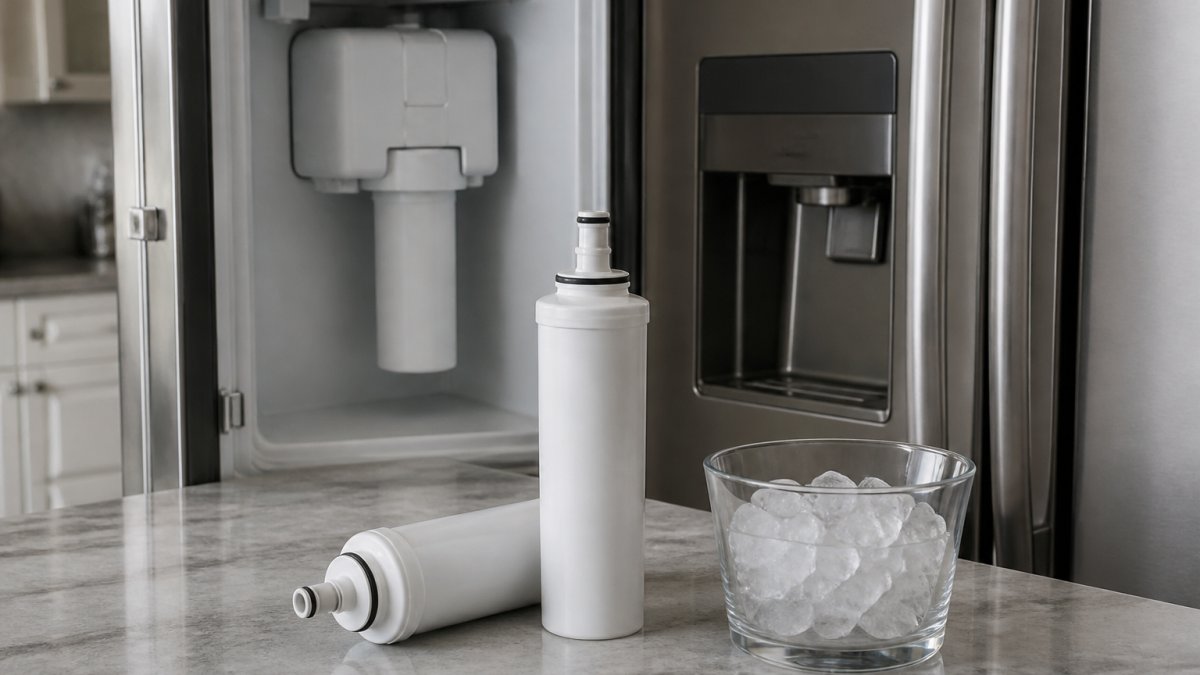
OEM filters are engineered precisely for your refrigerator model and integrate seamlessly with proprietary features like RFID chips or leak detection systems. Aftermarket filters use universal standards and carbon block technology to achieve similar filtration across various brands at lower cost.
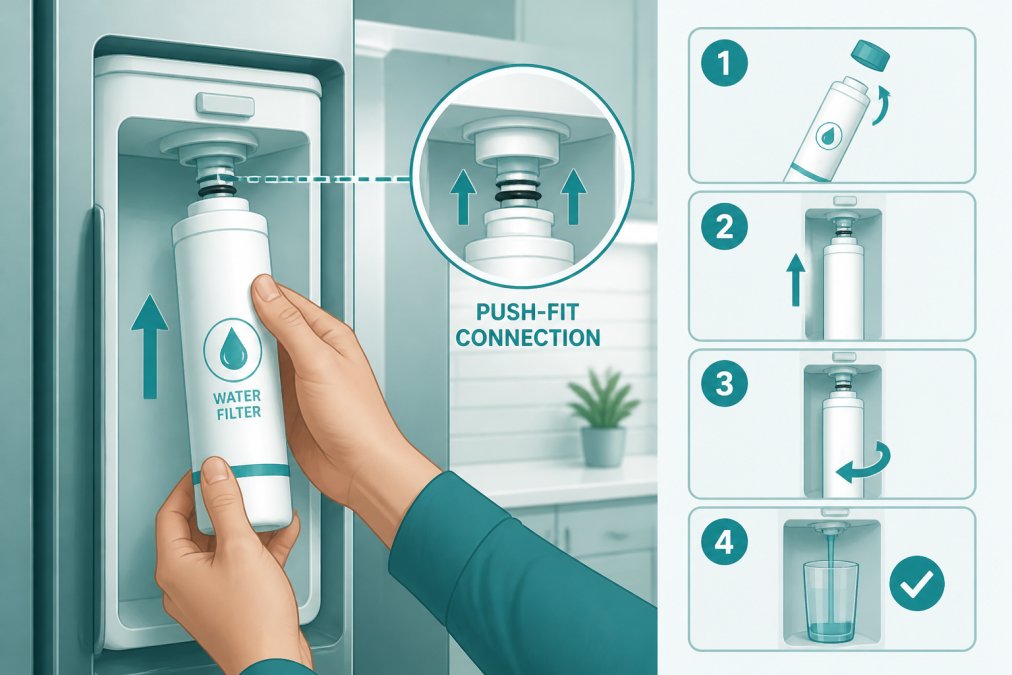
OEM filters guarantee perfect compatibility and preserve warranty coverage. Aftermarket filters offer cost savings and often comparable filtration efficiency if NSF/ANSI certified. Using a non-OEM filter won't automatically void your warranty under federal law, though proving an aftermarket filter didn't cause damage could complicate a claim.
NSF Certified Refrigerator Water Filters: Why Certification Matters
NSF/ANSI certification means an independent laboratory tested the filter against specific contaminant reduction standards. NSF/ANSI 42 certifies reduction of aesthetic contaminants like chlorine taste and sediment. NSF/ANSI 53 certifies health-related contaminants including lead and benzene. NSF/ANSI 372 specifically addresses lead reduction.
Certification requires independent verification, the manufacturer doesn't test its own product. For lead, the standard is strict: filters must reduce lead concentration from 150 parts per billion to no more than 10 parts per billion, a 93% reduction minimum. When evaluating filters, NSF certification should be your first checkpoint.
How Often to Change Refrigerator Water Filter: Maintenance Schedule
Most refrigerator water filters need replacement every six months, depending on water usage and local water quality. Heavy use shortens filter life; light use extends it. Common filter ratings are 300, 500, or 1,500 gallons.
Most modern refrigerators have built-in filter life indicators that track gallons dispensed or days elapsed. Once a filter reaches its rated capacity, filtration efficiency drops significantly. Set a calendar reminder for six months after installation as a backup system.
Top Alternatives to Factory Filters: Comparison and Recommendations
Third-Party Certified Filters for Samsung and GE Models
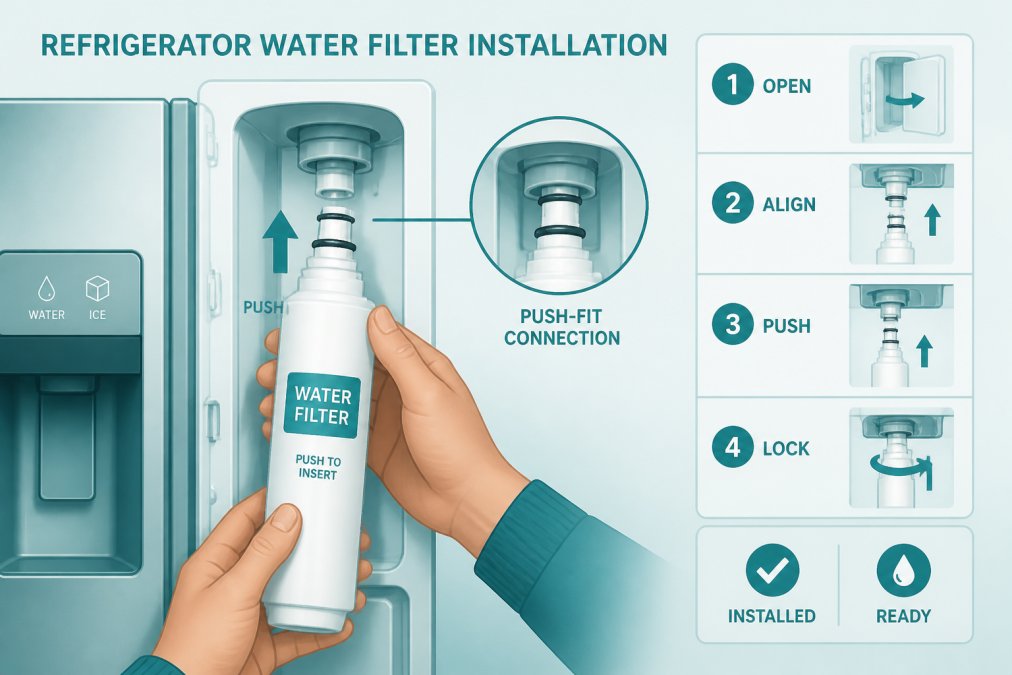
Third-party manufacturers produce certified filters for specific refrigerator models. Waterdrop's DA29-00020B for Samsung carries NSF/ANSI 42, 53, and 372 certification and costs $13.94 to $32.59, significantly less than OEM versions while delivering comparable filtration.
For newer GE refrigerators requiring the RPWFE filter with integrated RFID chip, standard aftermarket filters won't trigger water filter change alerts or enable advanced features. You'll need either the genuine RPWFE or a third-party filter specifically engineered for that system. Glacier Fresh offers NSF/ANSI 42 and 53 certified filters for major brands at $18 to $32 per unit, compatible with older models without proprietary chips.
External Filtration Systems as Long-Term Solutions
External systems connect to your refrigerator's water line rather than installing inside the appliance. Waterdrop's undersink WD-UC system provides 0.01 micrometer ultrafiltration and rates for 16,000 gallons before replacement, roughly 10 times the capacity of internal filters. Most systems use push-to-connect fittings requiring no tools.
Hydroviv customizes filter cartridges to your local water quality by analyzing your regional water report. The system connects to existing quarter-inch refrigerator water lines and rates for 720 gallons per filter, appealing to homeowners concerned about specific local contaminants.
Subscription Services for Automatic Replacements
FilterEasy automatically ships replacement filters on your chosen schedule, typically every six months. Subscription pricing starts around $39 per filter. The service includes a Right-Fit Guarantee, if the filter doesn't fit, FilterEasy ships a replacement at no charge. This model works best for homeowners prioritizing convenience over absolute lowest cost.
| Alternative Type | Typical Cost | Best For | Installation |
|---|---|---|---|
| Third-party certified filters | $13-$35 per filter | Budget-conscious homeowners | Inside refrigerator, tool-free |
| External undersink systems | $60-$100+ initial | Long-term cost savings | Under sink, basic plumbing |
| Subscription services | $39+ per filter | Convenience and reliability | Inside refrigerator, automatic delivery |
| OEM filters | $50-$75+ per filter | Warranty peace of mind | Inside refrigerator, tool-free |
Potential Risks of Using Non-Original Filters and Warranty Concerns
The Magnuson-Moss Warranty Act protects your right to use third-party parts, but manufacturers can deny claims if they prove the aftermarket filter caused damage. However, proving causation is difficult unless the filter demonstrably contaminated the water system.
An incorrectly installed filter or incompatible connection fittings could cause water leaks, leading to electrical problems or mold growth. Verify that your filter matches your exact refrigerator model number before purchase.
Some aftermarket filters have different flow rates than OEM versions. In rare cases, restricted flow might trigger low-pressure sensors in newer refrigerators, affecting ice maker fill or water dispenser speed. These issues usually resolve by checking filter installation and ensuring the bypass plug is removed.
Leak detection systems in newer GE and Samsung refrigerators add complexity. Some aftermarket filters aren't compatible with these systems, potentially disabling automatic shutoff protection. If a water line fails, water won't stop flowing, causing extensive damage.
Cost Savings Analysis: When Aftermarket Filters Make Financial Sense
Replacing an OEM filter every six months costs roughly $100 to $150 annually. Over five years, that's $500 to $750. Switching to certified aftermarket filters at $15 to $30 per unit cuts costs to $60 to $120 annually, saving $200 to $450 over five years.
External filtration systems have higher upfront costs but lower per-filter expenses. A Waterdrop undersink system costs $60 to $100 initially with replacement filters around $30 to $50. Over five years, total cost is $300 to $400, comparable to aftermarket internal filters but with longer filter life.
Subscription services at $39 per filter with twice-yearly replacements cost $78 annually, or $390 over five years, higher than discounted aftermarket filters but lower than OEM pricing.
Environmental and Water Quality Impact of Filter Choices
Every filter represents a trade-off between water quality improvement and environmental impact. Larger filters with higher capacity require fewer replacements, resulting in less plastic waste over time. An external system with 16,000-gallon capacity requires far fewer replacements than internal filters rated for 300 gallons.
Many third-party manufacturers use Sri Lankan coconut shell carbon, a renewable byproduct of coconut processing, rather than coal-based alternatives. Quality filtration reduces contaminants entering septic systems or municipal wastewater treatment.
Proper filter maintenance prevents water damage and extends appliance life. A refrigerator operating without water leaks lasts longer, delaying the environmental cost of manufacturing a replacement.
How to Choose a Compatible Replacement Filter for Your Refrigerator
Start by identifying your exact refrigerator model number, found on a label inside your refrigerator. Search this number on the manufacturer's website or retailer sites like Amazon or Home Depot to display compatible filters.
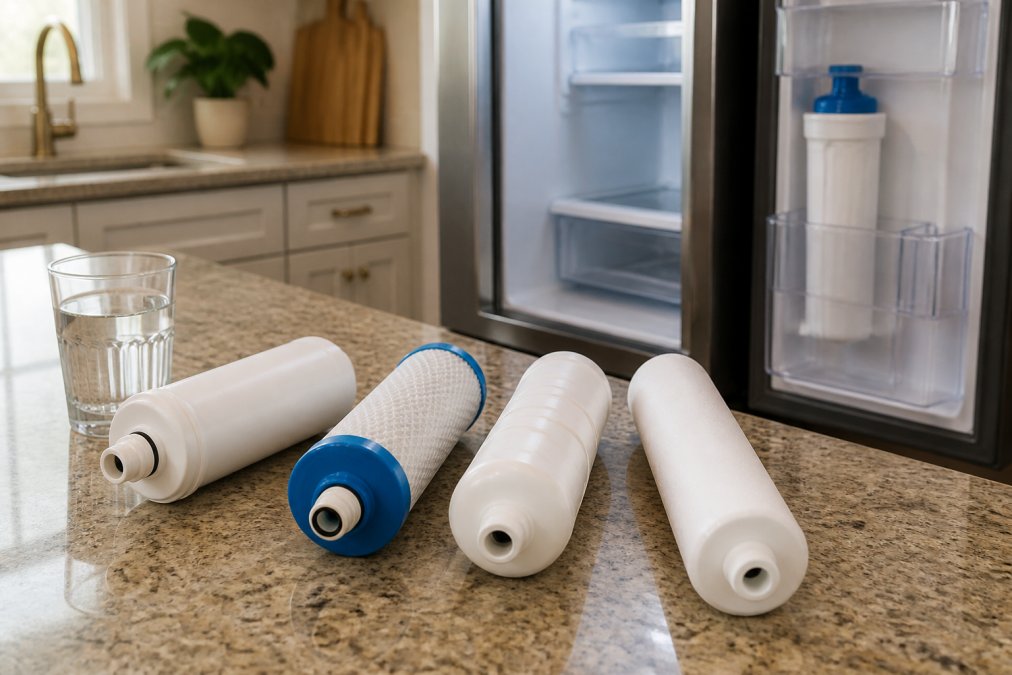
Check filter specifications for three key details: connection type (push-fit, threaded, or proprietary), flow rate (gallons per minute), and special requirements like RFID chips or leak detection compatibility. For aftermarket filters, cross-check physical dimensions and connection type to ensure compatibility.
Read customer reviews specifically for your model, real-world experiences often reveal compatibility issues product descriptions miss. For external systems, measure under-sink space and distance from water line to refrigerator.
Confirm the filter's NSF/ANSI certification status before purchasing. If certification isn't mentioned, contact the manufacturer to ask what testing they've completed.
Choosing between OEM and aftermarket refrigerator water filters depends on your priorities. If warranty peace of mind and guaranteed compatibility matter most, OEM filters provide that assurance. If cost savings and comparable filtration appeal to you, NSF-certified aftermarket options deliver solid value. External filtration systems make sense for households with heavy water usage. Whatever you choose, ensure it's certified and compatible with your specific model. Home Tech can verify your filter choice and ensure proper installation, call (602) 486-1901 to schedule an appointment.
Frequently Asked Questions
Are replacement refrigerator water filters as good as OEM?
Third-party refrigerator water filters can perform just as well as OEM filters if they carry NSF/ANSI certification. NSF certified filters meet the same contaminant reduction standards as factory filters. The key difference is that OEM filters carry the manufacturer's guarantee of exact fit and compatibility, while aftermarket filters may have slightly different flow rates or installation tolerances. Many homeowners report identical water quality and ice maker performance with certified third-party filters at lower cost.
How do I know if an aftermarket water filter is NSF certified?
Look for NSF/ANSI certification markings on the filter packaging or product description. The most common certifications for refrigerator filters are NSF/ANSI 42 (chlorine, taste, odor reduction) and NSF/ANSI 53 (lead and other chemical reduction). Reputable manufacturers like Waterdrop, Glacier Fresh, and Culligan clearly display these certifications on their product pages and packaging. You can also verify certification status through the NSF International website by searching the product model number.
Do generic water filters void refrigerator warranties?
Using non-OEM filters may void warranty coverage for water-related issues in some cases, depending on your refrigerator manufacturer. Major brands like Whirlpool, GE, and Samsung typically allow third-party filters without warranty penalty if the filter meets NSF standards, but damage caused by a non-genuine filter might not be covered. Always check your specific refrigerator's warranty documentation or contact the manufacturer before switching to a third-party filter. Many homeowners use aftermarket filters without issues, but the warranty risk depends on your model and manufacturer policy.
How often should I replace my refrigerator water filter?
Most refrigerator water filters should be replaced every 6 months or after filtering 300-500 gallons of water, whichever comes first. Some external filtration systems like Waterdrop's undersink models can last up to 16,000 gallons, extending replacement intervals to 1-2 years. Your refrigerator's display will usually alert you when replacement is needed. If you notice reduced water pressure, slower ice production, or changes in water taste, replace the filter immediately even if the indicator hasn't appeared yet.
What contaminants do NSF certified refrigerator water filters remove?
NSF certified refrigerator water filters typically reduce chlorine, taste, odor, sediment, and particulates under NSF/ANSI 42 certification. NSF/ANSI 53 certified filters also reduce lead, benzene, carbofuran, and other harmful chemicals. Advanced options like Hydroviv and Waterdrop systems remove PFOA/PFOS, microplastics, arsenic, and select pharmaceuticals. The specific contaminants removed depend on the filter's certification level and technology. Check the product specifications to confirm it addresses the water quality concerns in your area.