 comparison
Alternatives to Gas Water Heaters for Homes
Table of Contents
- Why Homeowners Are Moving Away from Gas Water Heaters
- Heat Pump Water Heater Efficiency and Performance
- Tankless Water Heater Installation Cost and Considerations
- Solar Thermal Water Heating Systems
- Water Heater Replacement Rebates and Tax Credits
- Installation Requirements and Retrofitting Challenges
- Long-Term ROI and Energy Savings Comparison
- Frequently Asked Questions
Last Updated: September 19, 2026
Why Homeowners Are Moving Away from Gas Water Heaters
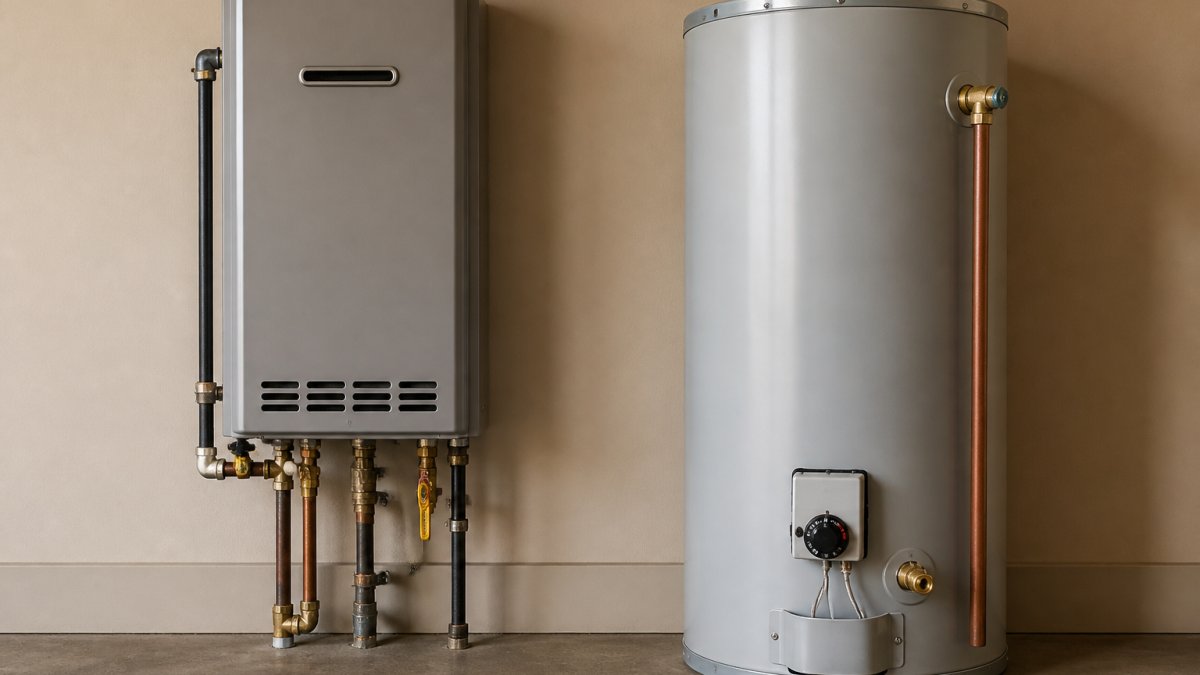
Gas water heaters dominate residential heating but face aging systems, rising costs, and competition from energy-efficient alternatives to gas water heaters. Gas units lose heat through the tank, require venting, and depend on fluctuating fuel prices. Switching to alternatives to gas water heaters cuts annual energy consumption and carbon footprint.
Today's alternatives to gas water heaters use less energy and qualify for substantial tax credits and rebates that offset upfront costs. This guide covers the five most viable alternatives, installation costs, and long-term savings calculations.
Heat Pump Water Heater Efficiency and Performance
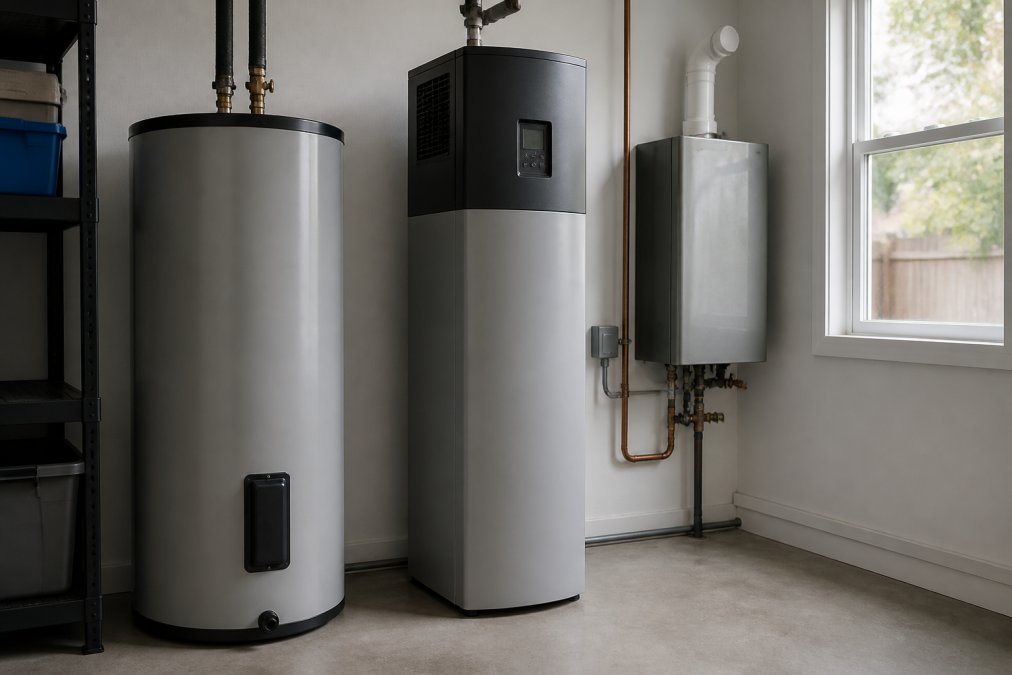
Heat pump water heaters extract thermal energy from air to warm water, delivering 2-4 times the energy efficiency of standard electric tanks. Models like the Rheem ProTerra and GE GeoSpring operate in hybrid mode, combining heat pump technology with electric resistance heating for high-demand situations, reducing annual energy costs substantially.
How they perform in practice:
- Recovery rate: slower than gas or tankless (ideal for households with moderate hot water demand)
- Operating modes: Energy Saver (heat pump only), Hybrid (heat pump + electric), High Demand (electric only)
- Temperature range: most function effectively down to 40°F ambient air temperature
- Noise level: modest hum during operation (louder than gas, quieter than tankless)
The Sanden model uses CO2 refrigerant and operates reliably in cold climates below freezing, though upfront cost is higher.
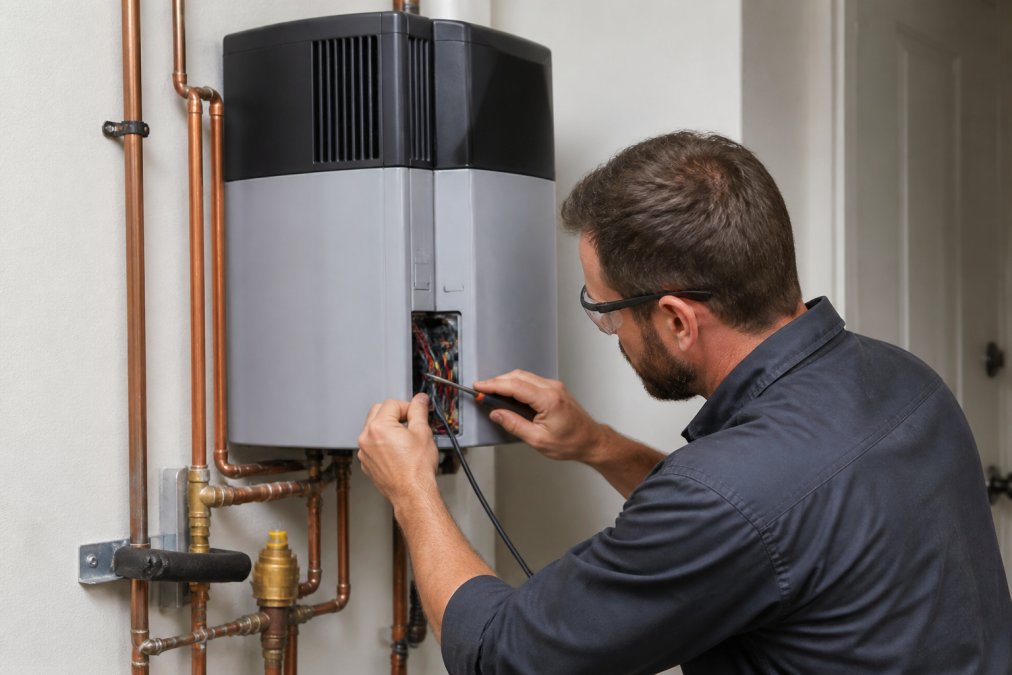
Installation requires 12 inches of clearance on all sides for air intake and exhaust; relocation may be necessary if space is tight.
Tankless Water Heater Installation Cost and Considerations
Tankless (on-demand) water heaters heat water instantly as it flows through the unit, eliminating standby heat loss. The A.O. Smith Signature Series is compact, wall-mounted, and delivers endless hot water on demand.
Key characteristics:
- Space savings: 90% smaller footprint than traditional tanks
- Energy efficiency: no standby losses (water heated only when needed)
- Hot water delivery: instantaneous, limited only by flow rate
- Lifespan: 20+ years typical
The primary challenge is electrical demand: most electric tankless units require 200-amp service and 40-60 amp dedicated circuits. Homes with older panels may need upgrades, adding significant cost. Gas tankless units avoid electrical upgrades but require new venting and gas line modifications, plus annual maintenance to prevent mineral buildup.
Tankless systems work best for small households with modest hot water demand. Larger families may experience flow rate limitations with multiple simultaneous showers.
Solar Thermal Water Heating Systems
Solar thermal systems capture heat from the sun and transfer it to water, offering the lowest operating costs of any alternative to gas water heaters. A typical system includes rooftop collectors, storage tank, and heat transfer fluid.
How solar thermal works:
- Rooftop collectors absorb solar radiation
- Heat transfer fluid (usually glycol-based) carries heat to the storage tank
- A backup heating element (electric or gas) provides hot water on cloudy days
- System operates passively (thermosiphon) or actively (pump-driven)
Solar thermal delivers the best long-term ROI in sunny climates, with payback periods of 7-12 years and lifespans of 20-25 years. Installation requires roof space, structural assessment, and plumbing modifications. Homes with heavy shade or limited southern exposure may not be suitable.
The primary limitation: solar thermal requires a backup heating source for winter months and cloudy periods. This means you'll still need an electric or gas unit alongside the solar system, increasing total installed cost.
Water Heater Replacement Rebates and Tax Credits
Federal tax credits and state rebate programs significantly reduce the net cost of upgrading to energy-efficient alternatives to gas water heaters. The Inflation Reduction Act extended tax credits through 2032.
Federal tax credits available for 2026:
Heat pump water heaters: Up to $3,750 per unit (MAGI limits: $150,000 single, $300,000 married filing jointly); EF of at least 2.0 required. Claim on IRS Form 5695.
Electric tankless units: Up to $300 (same income limits; EF of at least 0.93).
Solar thermal systems: 30% of installed cost with no upper limit or income limits.
How to verify your eligibility:
-
Calculate your modified adjusted gross income (MAGI) from your prior-year tax return.
-
Confirm the unit meets federal efficiency standards.
-
Keep all documentation: contractor invoices, product data sheets, and installation photos.
State and utility rebates:
Example state programs (verify current availability):
- California: Up to $1,500 rebate for heat pump installation.
- New York: Up to $500 rebate for electric heat pump water heaters.
- Massachusetts: Up to $1,000 rebate for air-source heat pump water heaters.
- Texas: Some utilities offer $300-$500 rebates for heat pump installations.
How rebates work:
-
Instant rebates: Contractor deducts rebate from invoice. Example: $3,500 unit with $500 utility rebate = $3,000 at installation.
-
Mail-in rebates: Submit within 30-90 days; rebate mailed 4-8 weeks later.
-
Tax credits: Claim on next year's tax return.
Contractor eligibility:
Calculating your true net cost:
Home Tech can identify which rebates and tax credits apply to your specific upgrade and help ensure you claim every available incentive.
Installation Requirements and Retrofitting Challenges
Heat pump water heaters:
- Electrical: 240V dedicated circuit, 40-60 amps
- Space: 12+ inches clearance on all sides
- Retrofit cost: $500-$2,000
Electric tankless:
- Electrical: 200-amp service minimum; 40-60 amp dedicated circuit
- Retrofit cost: $1,500-$5,000 (panel upgrade adds $2,000-$3,000)
Gas tankless:
- Gas line: may require upsizing
- Venting: new exhaust duct installation
- Retrofit cost: $800-$2,500
Solar thermal:
- Roof: structural assessment required; south-facing exposure ideal
- Retrofit cost: $3,000-$8,000
How to assess your home's retrofit readiness:
-
Check your electrical panel. Open the breaker box and note the main breaker (100, 150, or 200 amps). Count open breaker slots. Fewer than two slots means you'll need a panel upgrade for most electric alternatives.
-
Measure your water heater location. Heat pump units need 12 inches of clearance on all sides. If space is tight, relocation may be necessary, adding plumbing and electrical costs.
-
Inspect your gas line (if applicable). Existing gas lines can be capped if switching to electric. Gas tankless units may require line upsizing.
-
Check roof condition and orientation. Solar thermal requires a south-facing roof with minimal shade. If your roof is 15+ years old, replace it before installing solar collectors.
Common retrofitting obstacles include undersized electrical panels, tight utility closets, venting constraints, and roof structural limitations for solar. A professional assessment identifies these issues before you commit.
Long-Term ROI and Energy Savings Comparison
Comparing alternatives to gas water heaters requires looking beyond the sticker price. Total cost of ownership includes installation, operation, maintenance, and lifespan.
| Water Heater Type | Typical Lifespan | Maintenance Frequency | Best For |
|---|---|---|---|
| Heat pump | 15-20 years | Annual | Moderate hot water demand, moderate climate |
| Electric tankless | 20+ years | Annual (descaling) | Small homes, low hot water demand |
| Gas tankless | 15-20 years | Annual (descaling) | Instant hot water, higher demand |
| Solar thermal | 20-25 years | Annual | Long-term savings, sunny climate |
| Gas storage tank | 10-15 years | Annual | Budget-conscious, existing gas line |
Frequently Asked Questions
What are the main alternatives to traditional gas water heaters?
The primary alternatives to gas water heaters include hybrid heat pump models, tankless electric systems, and solar thermal heating. Heat pump water heaters extract warmth from surrounding air to heat water efficiently. Tankless units provide on-demand hot water without storage tanks. Solar systems use roof-mounted collectors to harness the sun's energy. Each option reduces energy consumption and carbon footprint compared to traditional gas units while qualifying for federal tax credits and rebate programs.
How much can heat pump water heater efficiency reduce my utility costs?
Hybrid heat pump water heaters can be up to 4 times more energy-efficient than standard electric models, potentially reducing annual water heating costs by 50% or more. The exact savings depend on your current usage patterns, local electricity rates, and hot water demand. Most homeowners see payback periods of 5-10 years through lower monthly bills, plus they qualify for federal energy efficiency tax credits that offset initial purchase costs.
What electrical upgrades are needed for tankless water heater installation?
Tankless electric water heaters require high-amperage electrical service, often demanding a 200-amp or larger panel upgrade in older homes. Installation costs vary based on your current electrical infrastructure, distance to the panel, and local labor rates. Some homes may need only a dedicated circuit addition, while others require full panel replacement. A licensed electrician should assess your home's capacity before installation to determine exact costs and feasibility.
What rebates and tax credits are available for water heater replacement?
Federal tax credits under the Inflation Reduction Act offer up to $3,750 for qualified heat pump water heaters installed in 2026. The ENERGY STAR program identifies eligible models. Many states and utility companies offer additional rebate programs, some providing $500-$2,000 off qualifying systems. Check with your local utility provider and state energy office for current programs. Home Tech can help identify which systems qualify for available incentives in your area.