 listicle
7 Signs Your Walk-In Cooler Needs Repair
Table of Contents
- 1. Inconsistent Temperature Fluctuations
- 2. Excessive Frost and Ice Buildup
- 3. Unusual or Loud Noises Coming From the Unit
- 4. Water Leaks and Pooling Inside the Cooler
- 5. Unpleasant or Strange Odors
- 6. Rising Energy Bills and Increased Power Consumption
- 7. Food Spoilage and Visible Decay
- What Is EPA 608 Certified Repair and Why It Matters
- Frequently Asked Questions
Last Updated: September 20, 2026
1. Inconsistent Temperature Fluctuations
When a walk-in cooler needs repair due to temperature control issues, it's telling you something is broken. If you're noticing the thermometer bouncing between 35°F and 50°F, or if one corner stays cold while another warms up, your cooling system is struggling to maintain equilibrium.
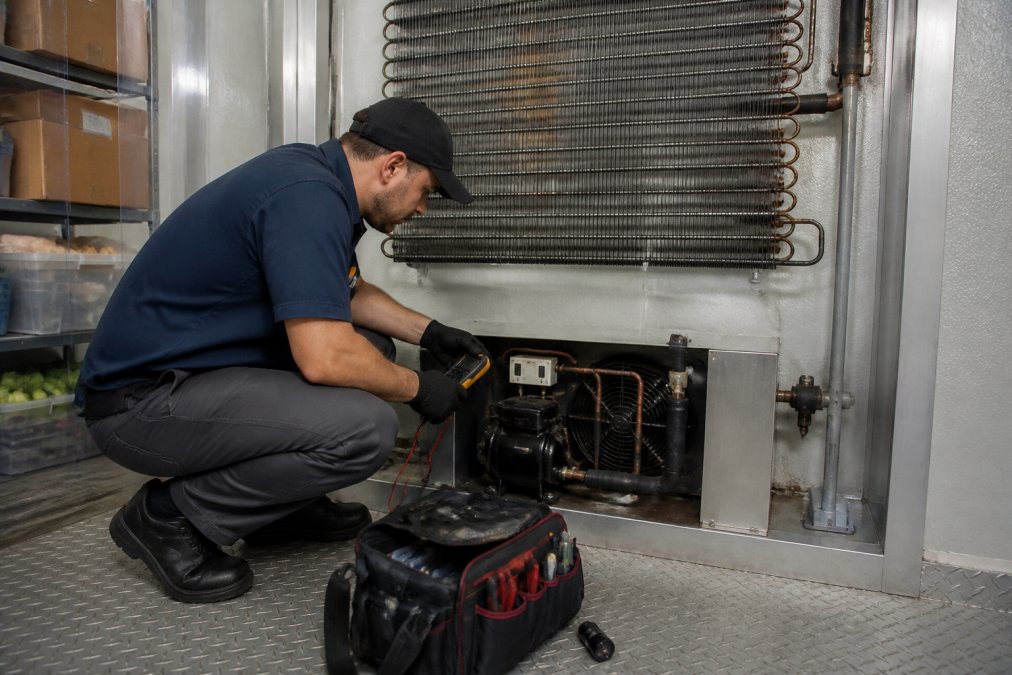
Temperature swings happen when the compressor cycles too frequently or the evaporator fan isn't circulating air properly. Both are common failures. The thermostat itself might be miscalibrated, or refrigerant is leaking out of the sealed system. Each of these problems gets worse the longer you ignore it.
The real danger here isn't just discomfort. Food safety standards require consistent cold storage. Inconsistent temperature fluctuations create zones where bacteria can multiply. You're risking spoilage and, worse, foodborne illness liability.
Home Tech's EPA 608-certified technicians diagnose temperature control issues by checking refrigerant levels, testing the thermostat calibration, and inspecting the compressor's ability to maintain pressure. If you're seeing temperature swings, call before the problem cascades into a full system failure.
2. Excessive Frost and Ice Buildup
Frost accumulation on the evaporator coils is normal. Ice coating the interior walls is not.
When you see thick frost or ice forming inside the cooler, the defrost cycle isn't working. Most walk-in coolers run a timed defrost that melts ice buildup automatically. If that cycle fails, ice keeps building until it blocks airflow entirely. That's when cooling capacity drops fast.
The defrost cycle can fail for several reasons: a broken defrost timer, a faulty heating element, or a stuck solenoid valve that won't trigger the melt phase. Frost buildup also signals that the drain line might be clogged, preventing meltwater from flowing out.
Excessive ice is a red flag because it forces the compressor to work harder to push cold air past the blockage. You're burning energy and accelerating wear on the motor. Eventually, the compressor gives up.
3. Unusual or Loud Noises Coming From the Unit
A healthy walk-in cooler hums quietly. If you're hearing grinding, squealing, rattling, or banging, something inside is failing.
Squealing often means the compressor bearings are wearing out or the fan motor is struggling. Grinding sounds suggest metal-on-metal contact, usually from a loose component or a failing compressor. Rattling can indicate loose bolts, a vibrating condenser fan, or debris inside the unit.
These noises matter because they're early warnings. A squealing fan motor might work for another month or another week. Once it seizes, the entire cooling system stops. A grinding compressor is already damaged and getting worse with each cycle.
Loud noises also point to air circulation problems. If the evaporator fan is failing, you'll hear it struggling to push air through the cooler. That's when temperature control becomes erratic and frost builds up.
Document what you're hearing. Is it coming from the top of the unit (compressor area) or the sides (fans)? That tells the technician where to start looking. Noise diagnostics save time and money on service calls.
4. Water Leaks and Pooling Inside the Cooler
Water pooling on the floor means the drainage system isn't working. Walk-in coolers have a drain line that carries meltwater from the defrost cycle out of the unit. When that line gets blocked or freezes, water backs up inside.
A clogged drain line is usually the culprit. Sediment, algae, or food debris can block the line over months of operation. Frozen drain lines happen in coolers that sit in very cold spaces or when the defrost cycle doesn't warm the line enough.
Water leaks can also come from loose refrigerant line connections or a failing gasket seal around the door. If water is pooling near the compressor or condenser area, you may have a refrigerant leak that's allowing moisture inside the system.
The problem escalates quickly. Standing water promotes mold and mildew growth. It corrodes metal components and creates slip hazards. More importantly, water inside the insulation reduces cooling efficiency and can lead to system failure within days.
5. Unpleasant or Strange Odors
A musty or sour smell inside your cooler signals mold, mildew, or bacterial growth. These thrive in cold, damp environments, especially when air circulation is poor or moisture is trapped in insulation.
Strange odors also come from decomposing food that's been sitting too long due to temperature loss. If the cooler isn't cold enough, food spoils faster and releases odors before you notice the decay.
A chemical or refrigerant smell is more serious. If you detect a sweet or sharp chemical odor, your sealed system may have a refrigerant leak. Refrigerant itself isn't toxic at normal exposure levels, but a leak means your cooling capacity is dropping and your compressor is working without proper pressure.
Odors are often the first sign that something's wrong before you see other symptoms. Pay attention to them. A quick inspection of the drain line, air vents, and food storage can pinpoint the source. If the smell is chemical, stop using the cooler and call a professional immediately.
6. Rising Energy Bills and Increased Power Consumption
Your walk-in cooler works harder when something's broken. A failing compressor, low refrigerant, dirty condenser coils, or blocked airflow all force the system to run longer and draw more power.
Energy consumption rises gradually, so you might not notice the change month to month. But comparing your utility bills over a year often reveals the trend. A cooler that's losing refrigerant or has a struggling compressor can use 20-30% more power than normal while delivering the same cooling.
This is where preventative maintenance pays off. Clean condenser coils, sealed refrigerant systems, and a functioning compressor keep energy use predictable. Once components start failing, efficiency drops fast.
The financial impact compounds. Higher energy bills plus emergency repair costs plus potential food loss add up quickly. Catching problems early through routine inspection costs less than running a failing system until it dies completely.
7. Food Spoilage and Visible Decay
If food is spoiling faster than it should, your walk-in cooler needs repair because it isn't cold enough. Spoilage indicates the cooling system has lost capacity to maintain the proper temperature for food safety standards.
Visible decay, mold on packaging, slime on surfaces, discoloration of fresh items, means bacteria and fungi are multiplying. That happens when ambient temperature inside the cooler drifts above safe thresholds, even if it's still cold to the touch.
Food spoilage is the costliest sign of cooler failure. You're losing inventory, facing potential health code violations, and risking customer illness if spoiled food reaches the market. For restaurants and grocery stores, a single day of spoilage can wipe out profit margin.
Spoilage also indicates that multiple systems are likely failing at once.
What Is EPA 608 Certified Repair and Why It Matters
EPA 608 certification is a federal requirement for anyone handling refrigerants in sealed systems. The Environmental Protection Agency mandates that technicians pass an exam proving they understand refrigerant safety, recovery procedures, and leak prevention before they're allowed to service air conditioning, heating, or refrigeration equipment.
| Sign | What It Means | Urgency |
|---|---|---|
| Temperature fluctuations | Compressor or thermostat failing | Schedule service within days |
| Frost and ice buildup | Defrost cycle broken | Schedule service within 1-2 weeks |
| Unusual noises | Motor or fan wearing out | Schedule service within days |
| Water leaks | Drain line clogged or seal failing | Schedule service within 1-2 weeks |
| Strange odors | Mold growth or refrigerant leak | Call immediately if chemical smell |
| Rising energy bills | System losing efficiency | Schedule diagnostic within 2 weeks |
| Food spoilage | Cooler not holding temperature | Call for emergency service |
Frequently Asked Questions
What are the common signs of a refrigerant leak in a walk-in cooler?
Refrigerant leaks typically show up as inconsistent cooling, frost buildup on the evaporator fan, hissing sounds near the compressor, and oily residue around connection points. If your walk-in cooler needs repair due to a refrigerant leak, the system will struggle to maintain proper temperature, and you may notice the compressor running constantly. An EPA 608-certified technician can detect leaks using specialized equipment and recharge the system with the correct refrigerant type for your unit.
How often should commercial refrigeration equipment be serviced?
Most commercial walk-in coolers should be serviced at least twice per year, typically before peak seasons. Regular preventative maintenance for commercial refrigeration includes cleaning condenser coils, checking gasket seals, inspecting the defrost cycle, and verifying thermostat calibration. Quarterly inspections are recommended for high-use units in busy restaurants or grocery stores. This schedule helps catch problems early and extends the life of your equipment significantly.
What is the importance of EPA 608 certification for cooler repairs?
EPA 608 certification means a technician is legally qualified to handle refrigerant systems and comply with federal environmental regulations. Only EPA 608-certified technicians can safely recover, recycle, and recharge refrigerants in commercial walk-in coolers. This certification ensures proper handling of R404a, R410A, R454B, and other refrigerant types, protects your business from regulatory violations, and guarantees the repair meets industry safety standards. Always verify your repair technician holds this certification before allowing work on sealed refrigeration systems.
Why is my walk-in cooler running constantly without reaching the right temperature?
Continuous operation without proper cooling often indicates a failing compressor, refrigerant leak, or severely dirty condenser coils blocking air circulation. When your walk-in cooler needs repair for this issue, the problem could also stem from a faulty thermostat, damaged gasket seal allowing warm air infiltration, or a blocked defrost drain line. A professional diagnostic will identify the root cause. Running constantly wastes energy and accelerates equipment failure, so this requires prompt attention to prevent food loss and higher utility costs.