 how-to
Why Does My Dishwasher Leave Spots: 7 Fixes
Table of Contents
- Why Does My Dishwasher Leave Spots: Common Causes
- How to Remove Hard Water Stains from Glasses
- How to Clean Dishwasher Filter and Prevent Spots
- White Film on Dishes After Dishwasher: Spotting vs. Etching
- Fix Dishwasher Spots: 7 Actionable Solutions
- Common Mistakes to Avoid When Preventing Dishwasher Spots
- When to Call a Professional Appliance Repair Technician
- Frequently Asked Questions
Last Updated: July 13, 2026
Why Does My Dishwasher Leave Spots: Common Causes
If you're asking why your dishwasher leaves spots on dishes, you're not alone. The white, cloudy residue typically comes from hard water mineral deposits, detergent buildup, or improper drying settings. Hard water is the culprit in most cases, when water contains high levels of calcium and magnesium, these minerals don't rinse away completely and deposit on dishes instead. The good news: most spotting problems are solvable without calling a repair technician.
Hard Water and Mineral Deposits
Hard water creates mineral buildup that appears as white, chalky spots on glassware. When water containing dissolved calcium and magnesium passes through your dishwasher, these minerals stick to dishes during the drying cycle. The hotter the water, the more minerals deposit. You can test your water hardness with an inexpensive test strip from any hardware store. If your water is hard, rinse aid becomes essential.
Over time, heavy mineral buildup can etch glass permanently, creating a frosted appearance that no amount of cleaning will fix. This etching happens when acidic dishwasher detergent reacts with hard water minerals on the glass surface.
Detergent Residue and Dosage Issues
Using too much detergent actually causes more spotting, not less. Modern dishwashers require less soap than most people use. When you overload the detergent dispenser, excess doesn't fully dissolve during the wash cycle and dries on your dishes as cloudy film.
The type of detergent matters too. Pods are pre-measured, which helps prevent overdosing. Switching to a detergent formulated for hard water, or reducing your normal amount by 25%, often eliminates spotting within one or two loads.
How to Remove Hard Water Stains from Glasses
Hard water stains can be removed if the damage is spotting rather than etching. Fresh deposits are easier to remove than stains that have baked on through repeated cycles.
Step-by-Step Removal Process
Start by running your glasses through a hot rinse cycle without dishes or detergent. For stubborn stains, soak the affected glasses in white vinegar for 15-30 minutes. The acidity dissolves calcium and magnesium deposits without scratching the glass.
After soaking, scrub gently with a soft cloth or sponge. Avoid abrasive scrubbers that can scratch the surface. Rinse thoroughly under hot running water. For extremely stubborn deposits, repeat the vinegar soak. For glasses already in your dishwasher, run a cleaning cycle with a commercial dishwasher cleaner designed to remove mineral buildup.
Eco-Friendly DIY Solutions
Vinegar is your most effective natural option. Fill a bowl with white vinegar and submerge spotted glasses for 15-30 minutes. For heavier deposits, make a paste from baking soda and water, apply it to spotted areas, let sit for 10 minutes, then scrub gently with a soft cloth.
Citric acid is another natural option. Dissolve one tablespoon of citric acid powder in warm water and soak glasses for 20 minutes. Citric acid is stronger than vinegar and works faster on mineral deposits.
| Method | Best For | Time Required | Effectiveness |
|---|---|---|---|
| Vinegar soak | Fresh, light spots | 15-30 minutes | Moderate |
| Baking soda paste | Moderate deposits | 10-15 minutes | Good |
| Citric acid soak | Heavy mineral buildup | 20 minutes | Excellent |
| Dishwasher cleaner | Severe deposits + machine cleaning | 1 cycle | Excellent |
How to Clean Dishwasher Filter and Prevent Spots
A clogged filter reduces water pressure and spray arm effectiveness. When your dishwasher can't spray water forcefully enough, food particles and mineral deposits don't rinse away properly, leading directly to spotting.
Monthly Filter Maintenance Routine
Locate your dishwasher's filter at the bottom of the tub, directly under the lower spray arm. Most filters have a cylindrical mesh screen and a flat catch basket underneath. Remove the filter by twisting it counterclockwise. Rinse it under hot running water to remove food particles and debris. Use a soft brush or old toothbrush to gently scrub the mesh.
For stubborn buildup, soak the filter in hot water with white vinegar for 10 minutes, then scrub again. Replace the filter by twisting it clockwise until snug. Do this monthly, or more frequently if you notice spotting or poor wash results.
Clearing the Sump Area
The sump is the area directly beneath your filter where water collects during the wash cycle. Debris that passes through the filter settles here. Check the sump area for food particles, glass fragments, or mineral buildup using a flashlight. Remove any visible debris by hand or with tweezers.
If you see white, crusty buildup in the sump area, that's mineral deposits. Run your dishwasher empty with a commercial dishwasher cleaner to dissolve this buildup.
White Film on Dishes After Dishwasher: Spotting vs. Etching
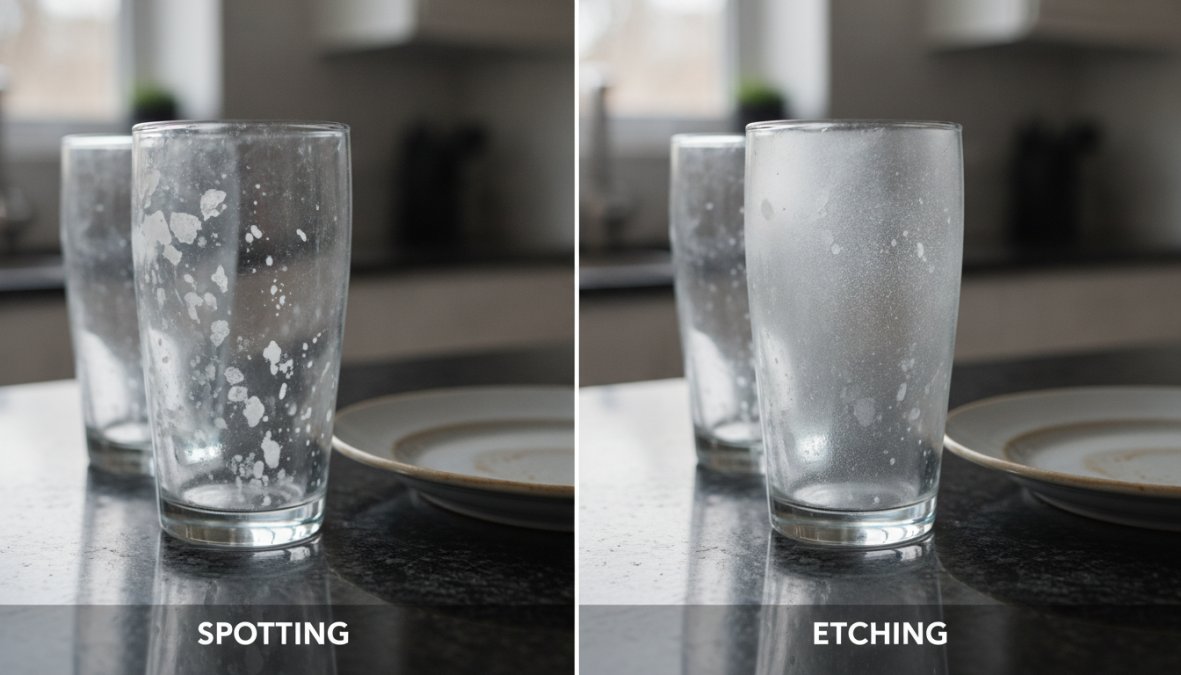
Understanding the difference between spotting and etching determines whether your glassware can be saved. Spotting is temporary; etching is permanent damage to the glass surface itself.
Visual Identification Guide
Spotting appears as white, chalky residue that feels gritty when you rub your finger across it. You can usually wipe or rinse it away with vinegar or a cloth. Spots are concentrated in areas where water droplets dried. The glass underneath is still clear and smooth.
Etching looks like a permanent frosted or cloudy haze across the entire glass surface. It doesn't wipe away with vinegar or scrubbing. The glass surface itself feels slightly rough or dull instead of smooth and shiny.
To test which you have, apply a drop of vinegar to the affected area. If it clears up or becomes less visible, you have spotting. If nothing changes after 30 seconds, it's etching.
Why Glass Etching Happens
Glass etching occurs when acidic dishwasher detergent reacts with hard water minerals on the glass surface during the drying cycle. Rinse aid prevents etching by reducing the surface tension of water, causing it to sheet off the glass rather than pooling. When water sheets away cleanly, minerals don't have time to deposit and react with detergent.
Once etching occurs, it cannot be reversed. Prevention through proper rinse aid use and detergent selection is the only solution.
Fix Dishwasher Spots: 7 Actionable Solutions
Most spotting problems can be solved with one or two simple adjustments. Start with the easiest fixes first.
1. Add Rinse Aid and Adjust Water Hardness Settings
Rinse aid is the single most effective fix for hard water spotting. It reduces water surface tension, allowing water to sheet off dishes instead of forming droplets that leave mineral deposits. Fill your rinse aid dispenser and set your dishwasher's water hardness level to match your local water.
Most dishwashers have a water hardness dial or setting in the control panel. Set it to the hardness level of your water. If you don't know your water hardness, contact your local water utility or test it yourself with a strip test.
2. Optimize Detergent Type and Dosage
Reduce your detergent amount by 25-50% from the recommended dose. Modern detergents are highly concentrated, and most people use too much. Switch to a detergent formulated for hard water if you're in an area with high mineral content. Pods offer convenience because they're pre-measured, but they require adequate water pressure to dissolve completely.
3. Adjust Temperature and Drying Cycle
Hotter water increases mineral deposits because minerals crystallize as water cools during drying. Try using the eco or normal wash setting instead of high-heat options. The drying cycle matters more than most people realize. If your dishwasher has a heated drying option, use it. Rapid heat causes water to evaporate quickly so minerals don't settle on dishes.
4. Inspect and Clear Spray Arms
Spray arms distribute water across your dishes. If they're clogged or not spinning, water pressure drops and spotting increases. Remove the spray arms and inspect the holes for mineral deposits or food particles. Soak them in hot water with vinegar for 15 minutes to dissolve mineral deposits inside the holes. Use a toothpick or small wire to carefully clear any blockages.
5. Descale with Vinegar or Citric Acid
Mineral buildup inside your dishwasher reduces water flow and spray pressure. Run your dishwasher empty with vinegar or citric acid to dissolve interior deposits. Fill a dishwasher-safe bowl with white vinegar and place it on the top rack. Run a normal wash cycle. Do this monthly in hard water areas.
6. Test and Adjust Water Hardness
Your dishwasher's water hardness setting directly controls how much rinse aid dispenses. Test your local water hardness using a test strip from any hardware store. Adjust your dishwasher's setting to match your water hardness. If you're between two settings, start with the higher one.
7. Install or Upgrade Your Water Softener
If you have a whole-home water softener, check that it's functioning properly. A failing softener won't remove minerals from your water. If you don't have a water softener and spotting is severe, installing one solves the problem permanently. A water softener removes calcium and magnesium from all water in your home.
Common Mistakes to Avoid When Preventing Dishwasher Spots
The most common mistake is setting your water hardness dial too low. A too-low setting means your dishwasher doesn't dispense enough rinse aid, directly causing spotting.
Overloading your dishwasher prevents water from reaching all surfaces. Load your dishwasher with space between items for better results. Using too much detergent leaves residue that appears as white film or spotting. Skipping rinse aid in hard water areas is critical, it's the single most effective prevention tool.
Neglecting filter maintenance allows debris to accumulate, reducing spray pressure. A monthly filter cleaning takes two minutes and prevents most spotting problems.
When to Call a Professional Appliance Repair Technician
If you've tried all seven solutions and still see spotting, your dishwasher may have a mechanical problem. A failing water inlet valve restricts water flow. A broken spray arm motor prevents proper water distribution. These issues require professional repair.
Signs of mechanical failure include water not filling properly, spray arms not spinning, or water leaking from the dishwasher. If your dishwasher is more than 10-12 years old and spotting persists despite troubleshooting, replacement may be more cost-effective than repair.
Spotty dishes are frustrating, but the problem is almost always fixable. Start with rinse aid and water hardness settings, these solve 80% of spotting issues. If spots persist, work through the other solutions systematically. Most dishwasher spotting problems are resolved without professional help.
Frequently Asked Questions
How do I know if my dishwasher leaves spots due to hard water?
Hard water spots are typically cloudy, white, or translucent films on dishes and glasses. Test your water hardness using a home test kit, if results show high calcium or magnesium levels, hard water is likely the culprit. Spots that wipe away easily with a cloth are water spots, not permanent etching. Adding rinse aid and adjusting your dishwasher's water hardness settings often resolves the issue quickly.
Does rinse aid really stop dishwasher spots?
Yes, rinse aid significantly reduces spotting by improving water drainage and drying. It works by lowering water's surface tension, allowing droplets to sheet off dishes rather than bead up and leave mineral deposits. Fill your dishwasher's rinse aid dispenser and adjust the dosage setting based on your water hardness. Combined with proper detergent dosage, rinse aid is one of the most effective preventative measures for spotting.
What's the difference between water spots and glass etching?
Water spots (spotting) are temporary mineral deposits that wipe away with a cloth or vinegar solution. Glass etching is permanent damage where the glass surface itself is chemically altered, creating a frosted or dull appearance that cannot be removed. Etching occurs from prolonged exposure to high pH detergent or soft water without proper buffering. If spots don't wipe away, you may have etching, a sign to adjust detergent type or water pH balance.
How often should I clean my dishwasher filter to prevent spots?
Clean your dishwasher filter monthly, or more frequently if you have hard water or heavily soiled dishes. A clogged filter reduces water pressure and circulation, leading to incomplete rinsing and mineral buildup. Remove the filter, rinse under warm water, and use a soft brush to clear debris from the mesh. Also check the sump area (the well beneath the filter) for food particles and limescale that can block water flow and worsen spotting.