 how-to
Why Is Your Washer Shaking and Making Noise?
Last Updated: October 29, 2026
Quick Summary
Most cases of washer shaking come down to an unbalanced load, bad leveling, installation errors like transit bolts left in, or worn suspension parts. A quick rebalance or leveling adjustment solves many cases, while the rest need a part or a technician. Washer shaking is not normal operation, so a machine that walks, bangs, or rattles needs attention.
- Match the sound to the cause: banging on spin means an unbalanced load or worn shock absorbers.
- Leave a hand's width of space at the top of the drum to avoid overloading.
- Run a spin cycle with an empty drum to tell leveling problems from load balance.
- Transit bolts left in a new washer cause banging and shaking from day one.
- Stop DIY when you hear grinding, smell burning, or see water leaking from the tub.
Table of Contents
- Why Is My Washer Shaking and Making Noise?
- How to Balance an Unbalanced Laundry Load
- Washing Machine Leveling Guide: Fix the Feet and the Floor
- Installation Mistakes That Cause Vibration and Noise
- Worn Parts: Shock Absorbers, Springs, and the Suspension System
- Front-Load vs. Top-Load: Why They Shake Differently
- Washing Machine Repair Cost Estimate and When to Stop DIY
- Book a Same-Day Washer Diagnosis
- Frequently Asked Questions
Why Is My Washer Shaking and Making Noise?
A washer shaking across the floor is one of the most common appliance complaints we handle. Most common causes of washing machine vibration and noise fall into a short list: unbalanced loads, bad leveling, installation errors, or worn suspension parts. The good news? You can rule out most of them yourself in under an hour.
A quick rebalance or a leveling adjustment solves many cases. The rest need a part or a technician.
Below, we walk through each cause in order, from the simplest check to the ones that need a pro. We also show you how to use sound and cycle timing to narrow things down fast.
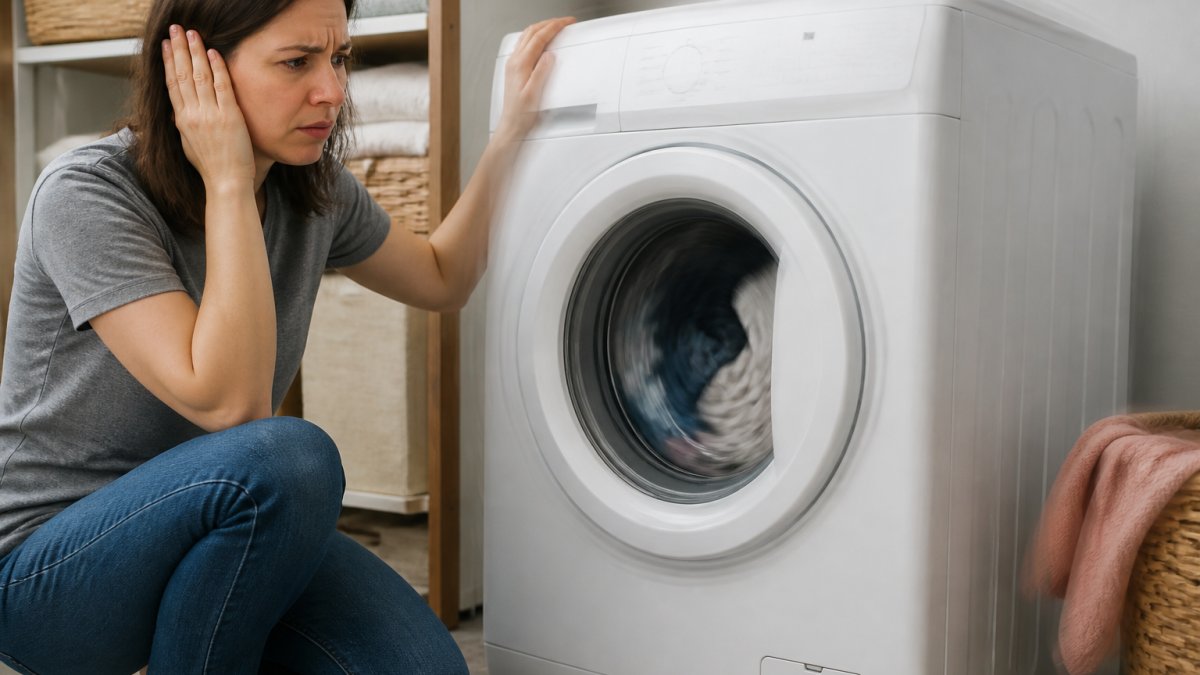
Washer shaking is not normal operation. A little movement during the spin cycle is expected. A machine that walks, bangs, or rattles needs attention.
U.S. Department of Energy appliance guidance notes that proper installation and leveling protect both the machine and your floor. Skipping that step is where most trouble starts.
Diagnose the Noise by Sound and Cycle Stage
The sound tells you where to look. Match what you hear to the list below before you touch anything.
- Banging or thumping during spin: unbalanced load or worn shock absorbers
- Scraping or grinding: something caught in the drum or a failing bearing
- Rattling at all speeds: loose parts, coins in the tub, or transit bolts left in
- Humming that won't drain: blocked filter or drainage problem
- Squealing on top-load models: worn belt or suspension springs
When does it happen? Noise only during the spin cycle points to load balance or suspension. Noise from the first minute points to installation or a foreign object.
How to Balance an Unbalanced Laundry Load
An unbalanced load is the number one cause we see. The fix takes five minutes.
- Stop the cycle and open the lid or door.
- Pull out the laundry and shake it loose.
- Redistribute items evenly around the drum.
- Keep bulky items like comforters paired with smaller pieces.
- Run a rinse and spin cycle to test.
Heavy, absorbent items are a common culprit. Mix large and small items so the load stays even.
Overloading causes the same shaking. Leave a hand's width of space at the top of the drum. If the load won't move freely, it's too full.
Washing Machine Leveling Guide: Fix the Feet and the Floor
A machine that isn't level will shake no matter how well you load it. Leveling is also the check most often skipped after a move or a new install. Work through the sequence below in order, and unplug the washer before you start turning feet or reaching behind it.
Step 1: Level the cabinet, not the lid.
- Place a spirit level on the top edge of the cabinet, front to back, then side to side. Do not trust the lid or the control panel as a reference.
- Adjust the front leveling feet first. Most washers have two front feet that thread in and out; turn them to raise or lower each corner.
- Tighten the lock nuts against the base once the bubble is centered. A loose lock nut lets the foot drift back out of adjustment within a few cycles.
- Push down firmly on each corner in turn. The machine should not rock. If it rocks, one foot is still short, find it and adjust it, don't shim the cabinet.
- Re-check the level after the first load. Vibration can settle a foot that wasn't locked down.
Step 2: Test the floor, not just the machine.
- Press your weight onto the floor at each corner of the washer. A floor that flexes or bounces is transferring that movement into the spin cycle.
- A common pattern in older homes and second-floor laundry rooms is a joist span that is too long for the load. Bracing or sistering the joists under the washer is the durable fix; a rubber anti-vibration pad only masks it.
- Check clearance: leave a few inches between the back of the washer and the wall, and make sure the drain hose and supply lines are not pinched or stretched. A hose pulled tight against the wall can transmit vibration into the plumbing.
- Confirm the washer is not sitting on a flimsy pedestal or a piece of cardboard left from delivery. Both amplify movement.
If the floor sags visibly or the washer sits over a crawl space, do not keep running spin cycles to "test" it. Repeated vibration on a weak floor can crack tile, loosen supply connections, and damage the suspension. Fix the floor or move the machine first.
A quick field test: run a spin cycle with an empty drum. If the empty machine still walks or bangs, the problem is leveling, flooring, or installation, not load balance. If it is quiet empty and violent with laundry, go back to load distribution.
If the machine sits on a second floor or over a crawl space, bracing the joists can make a real difference. Once the feet are locked and the floor is solid, move on to the installation checks before assuming a part has failed.
Installation Mistakes That Cause Vibration and Noise
Transit bolts are the mistake we see most often. These metal bolts lock the drum during shipping. Leave them in, and the machine will bang and shake from day one.
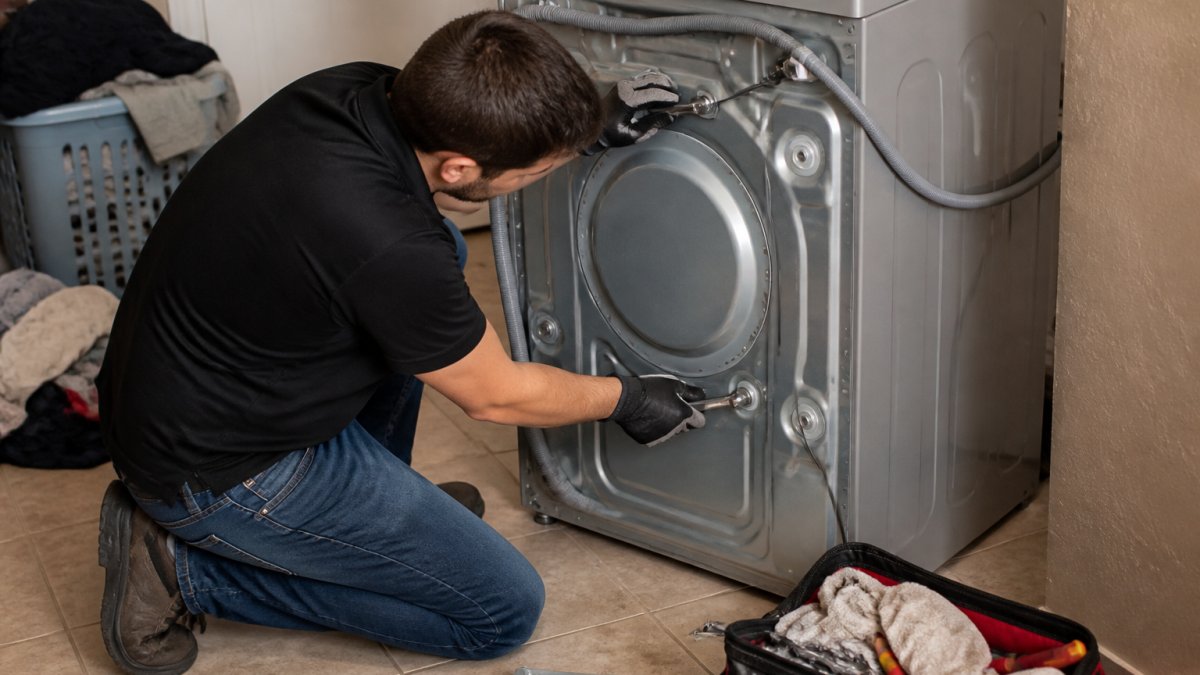
Other common installation errors:
- Shipping foam or packing left under the drum
- Drain hose kinked or pushed too far into the standpipe
- Washer set on a flimsy pedestal that isn't secured
- Feet not adjusted after the machine was moved
If you just bought a new washer and it shakes, check the bolts first. For a machine that needs a proper setup, our team handles appliance installation in Phoenix so the unit starts level and bolt-free.
Worn Parts: Shock Absorbers, Springs, and the Suspension System
When the load and level checks pass and the shaking continues, worn components are next. The suspension system holds the tub steady during spin.
- Shock absorbers: worn units let the tub bounce and bang
- Suspension springs: stretched springs cause excessive movement
- Counterbalance weights: loose bolts create rattling
- Spider shaft: a cracked spider arm makes the drum wobble
If you'd rather not tackle the suspension yourself, our affordable washer repair in Fountain Hills covers part replacement and testing.
Front-Load vs. Top-Load: Why They Shake Differently
Front-load and top-load washers fail in different ways. Knowing your type tells you which checks to run first and which parts are likely suspects.
Front-load washers hang the tub on shock absorbers and springs and spin at higher speeds, often in the 1,000-1,400 RPM range on modern models. That speed and the smaller footprint make them far more sensitive to leveling and floor stiffness. The common failure points are worn shock absorbers, a stretched or broken suspension spring, and a cracked spider arm on the drum.
Top-load washers typically rely on suspension springs, a balance ring, and a self-balancing tub design, and they spin at lower speeds. They tolerate an uneven floor better but are more sensitive to how the load is distributed. Common failure points are worn suspension springs, a worn drive belt (which can squeal), and a loose counterbalance weight. Transit bolts are sometimes present but less universal than on front-loaders.
| Check | Front-Load | Top-Load |
|---|---|---|
| First suspect for shaking | Leveling and floor stiffness | Load distribution |
| Spin speed | Higher, so vibration is amplified | Lower, more forgiving |
| Typical noise | Banging or thumping on spin | Squealing or rattling |
| Suspension parts | Shock absorbers, springs, spider arm | Springs, balance ring, belt |
| Transit bolts | Almost always present on new units | Sometimes present |
Run the checks in this order regardless of type: redistribute the load, then level the machine, then confirm the floor, then verify installation (transit bolts, hoses, pedestal). Only after those pass should you suspect worn suspension parts. That sequence saves the most time and avoids replacing parts that were never the problem.
A front-loader that bangs only at high spin with a balanced load points to shock absorbers or a spider arm. A top-loader that squeals during wash but not spin points to the belt. Matching the symptom to the type narrows the part before anyone opens the cabinet.
Washing Machine Repair Cost Estimate and When to Stop DIY
Pricing depends on the part and the model. For current prices or a quote, visit hometechappliancerepair.com or call (602) 486-1901.
Stop DIY when:
- You've checked load, level, and bolts and the shaking remains
- You hear grinding or smell burning
- Water leaks from the tub or hoses
- The machine is over ten years old and needs major parts
A pro diagnosis saves money when the cause is unclear. For a machine that keeps shaking after your own checks, book washer repair in Phoenix and we'll find the cause fast.
Book a Same-Day Washer Diagnosis
Most shaking and noise problems trace back to a load, a leveling foot, or a worn part. You can rule out the first two yourself. When the shaking continues, it's time for a hands-on diagnosis.
Home Tech offers same-day and next-day appointments, no hidden fees, and a 100% satisfaction guarantee. We repair all major brands, including GE, Whirlpool, LG, Samsung, and Maytag.
Consumer product safety guidance from the CPSC reminds homeowners to unplug appliances before any inspection. Do that first, then call for help with anything beyond a load rebalance.
Need a fast fix? Book a same-day appliance repair in Chandler or Gilbert and get your laundry room back to normal.
Frequently Asked Questions
Why is my washer shaking and making loud noises?
Most washer shaking traces back to an unbalanced load, leveling feet that are off, or a floor that flexes under the spin cycle. Redistribute the laundry, check the machine with a spirit level, and confirm the transit bolts were removed at installation. If the shaking continues with a light, even load, the shock absorbers or suspension springs are likely worn and need a technician's inspection.
Is it safe to run a washing machine that is vibrating heavily?
No. Heavy vibration stresses the drum, spider shaft, and bearings, and it can walk the machine across the floor or damage nearby cabinets. Stop the cycle, redistribute the load, and check the leveling feet before running it again. If it still thumps with a balanced load, unplug it and book a repair rather than risking a cracked tub or a water leak.
Why does my front-load washing machine vibrate more than my old top-loader?
Front-loaders spin at higher RPMs to extract more water, so they transfer more force into the floor and frame. They also rely on shock absorbers and suspension springs that wear out over time. A top-loader's wash plate and lighter spin speed hide minor imbalance; a front-loader amplifies it. That is why leveling, floor stability, and worn suspension parts matter more on a front-load machine.
How do I know if my washing machine leveling legs are off?
Place a spirit level on top of the machine front to back and side to side. Rock the machine corner to corner; any movement means a foot is not touching the floor. Adjust the leveling feet by turning them out until they contact the floor, then lock the nuts. A washing machine leveling guide check takes about five minutes and eliminates one of the most common causes of vibration.
Your washer shouldn't walk across the floor or drown out the TV. If you've rebalanced the load and leveled the feet and it still shakes, the cause is likely a worn part or an installation issue. Home Tech brings same-day service, experienced technicians, and a satisfaction guarantee on every repair. Get started with Home Tech and put the shaking behind you.