 how-to
Troubleshoot Gas Dryer Not Heating: Step-by-Step Diagnostics
Table of Contents
- Safety Precautions Before You Start Troubleshooting
- How Gas Dryer Heating Systems Work
- How to Troubleshoot Gas Dryer Not Heating: Initial Checks
- Testing the Thermal Fuse and Gas Dryer Thermal Fuse Location
- Inspecting the Igniter for Glow and Gas Dryer Igniter Replacement
- Checking Gas Valve Solenoids and Recognizing Solenoid Valve Symptoms
- Flame Sensor Diagnostics and Gas Supply Line Inspection
- Dryer Vent Cleaning Frequency and Airflow Maintenance
- External Sources & Further Reading
- Frequently Asked Questions
Troubleshoot Gas Dryer Not Heating: Step-by-Step Diagnostics
Last Updated: August 4, 2026
A gas dryer that won't heat is frustrating and common. When your dryer tumbles but produces no warmth, the culprit is often simpler than the gas valve or igniter. Learning how to troubleshoot gas dryer not heating helps you understand what's broken before calling for service.
Safety Precautions Before You Start Troubleshooting
Before touching anything inside your dryer, disconnect it from both gas and electrical power. Locate the manual shutoff valve on the gas line behind or beside the unit and turn it perpendicular to the gas line to stop gas flow. For electrical, unplug the unit or switch off the breaker. If hardwired, turn off the breaker and verify power is off using a voltage tester.
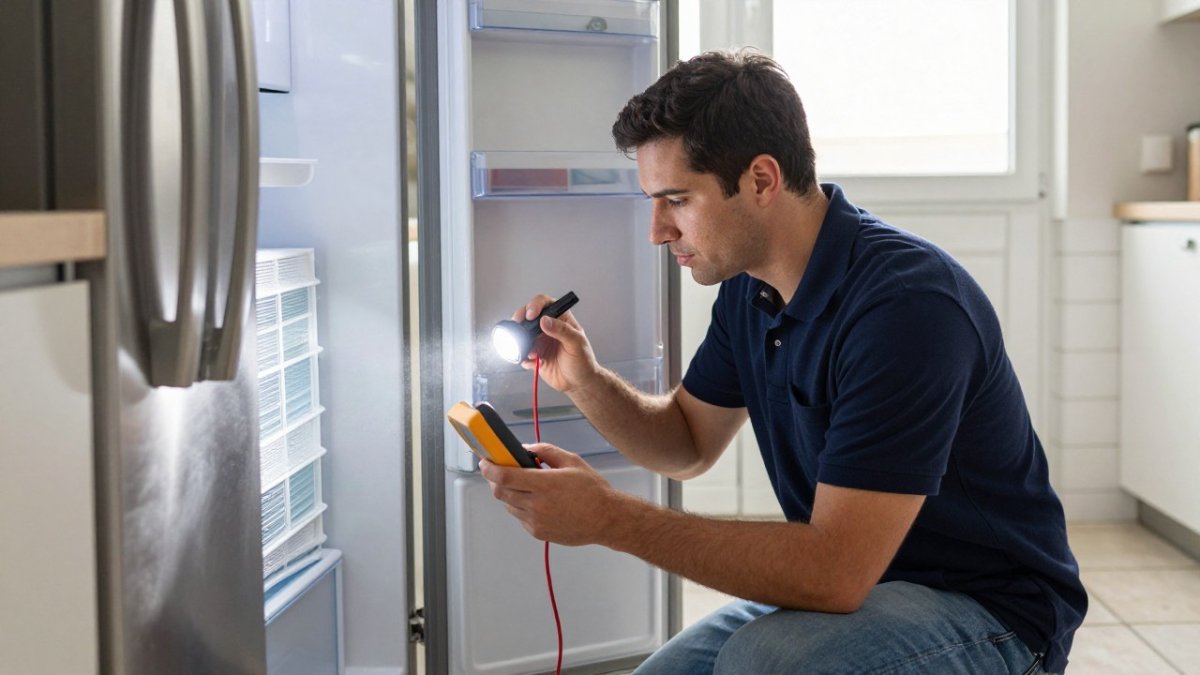
Wear safety glasses to protect your eyes from dust and debris. Have a flashlight handy, dryer interiors are dark. If testing components with a multimeter, ensure the dryer has been unplugged for at least 5 minutes to allow capacitors to discharge. A capacitor shock can cause serious injury or death.
How Gas Dryer Heating Systems Work
A gas dryer heats air using a burner assembly that ignites natural gas or propane. The igniter glows red-hot and ignites the gas in a combustion chamber. That heat passes through a blower wheel into the drum, drying clothes. Exhaust vents moisture and combustion byproducts outside.
The heating element and ignition process
When you select a heat setting and start the dryer, electricity flows to the igniter coil, which heats up and glows bright orange or red within 10-15 seconds. Once the igniter reaches temperature, the gas valve solenoid opens, releasing gas into the combustion chamber. The gas ignites on contact with the hot igniter, creating a flame that heats the air. If the igniter doesn't glow, gas won't be released, and no combustion happens.
The gas valve solenoid is an electromagnet controlling gas flow. When the control board sends voltage to the solenoid coils, they pull open a valve, allowing pressurized gas to flow into the burner. If the solenoid coils are burned out or stuck, gas can't reach the igniter.
Safety devices that stop heating
Your dryer has multiple safety mechanisms that shut off heating if something goes wrong. The thermal fuse is a one-time-use safety device that melts if the dryer overheats, preventing fires. Once melted, it cannot be reset and must be replaced. The high-limit thermostat is a reusable switch that opens if temperature exceeds safe limits, cutting power to the heating circuit until the dryer cools. The cycling thermostat cycles the burner on and off to maintain steady temperature. If any of these fail closed, the dryer won't heat.
How to Troubleshoot Gas Dryer Not Heating: Initial Checks
Start with the simplest possible causes before disassembling anything. Many "broken" dryers are actually working fine, the problem is external.
Verify gas supply and power
Check that the gas shutoff valve is open, aligned parallel to the gas line. If it's perpendicular, it's closed and no gas reaches the dryer. Verify the dryer is plugged in and receiving power. Press the start button. You should hear the blower motor running and feel air from the exhaust vent. If you hear nothing, check the outlet with another appliance. If the outlet is dead, reset the circuit breaker.
Listen for the igniter. When you start the dryer, you should hear a faint clicking sound for 10-15 seconds, this is the igniter heating. If you hear no clicking, the igniter isn't receiving power or is burned out. If you hear clicking but no gas ignites, the gas valve solenoid is stuck or the gas supply is blocked.
Check for ventilation blockage
A clogged vent duct causes heat to build up inside the dryer, triggering the thermal fuse to blow. Before assuming the heating system is broken, inspect the exhaust vent. Go outside and look at the vent hood. Hold your hand near the opening, you should feel a strong rush of warm air when the dryer is running. If you feel weak or no airflow, the vent is restricted.
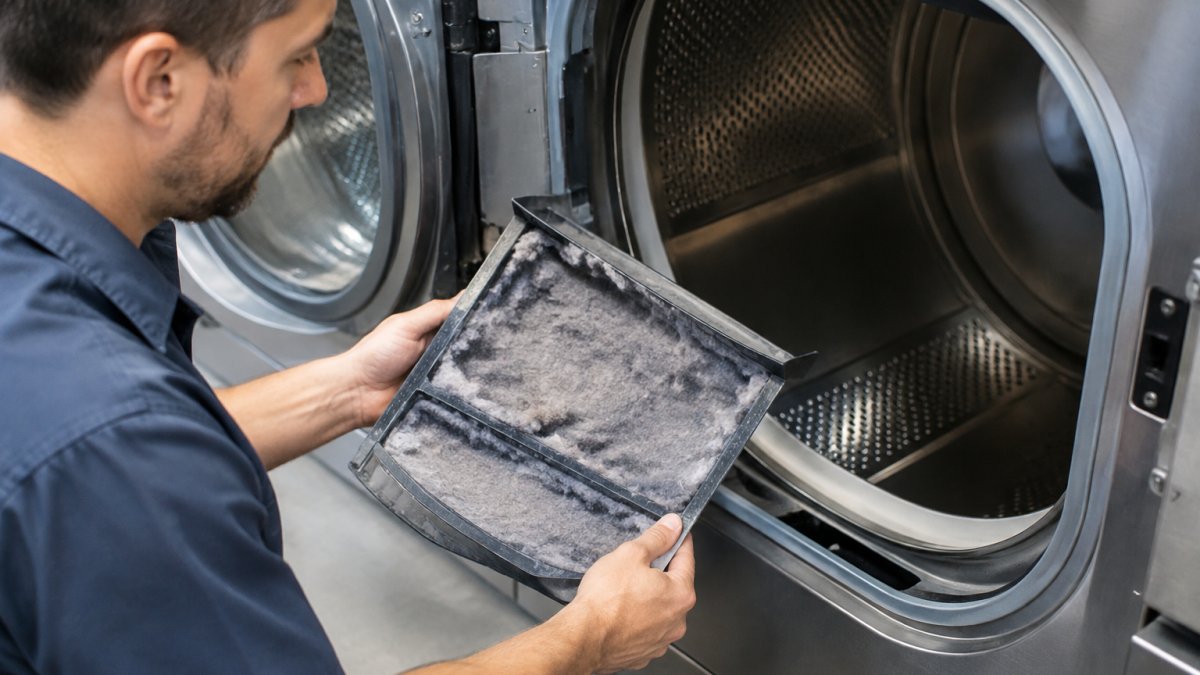
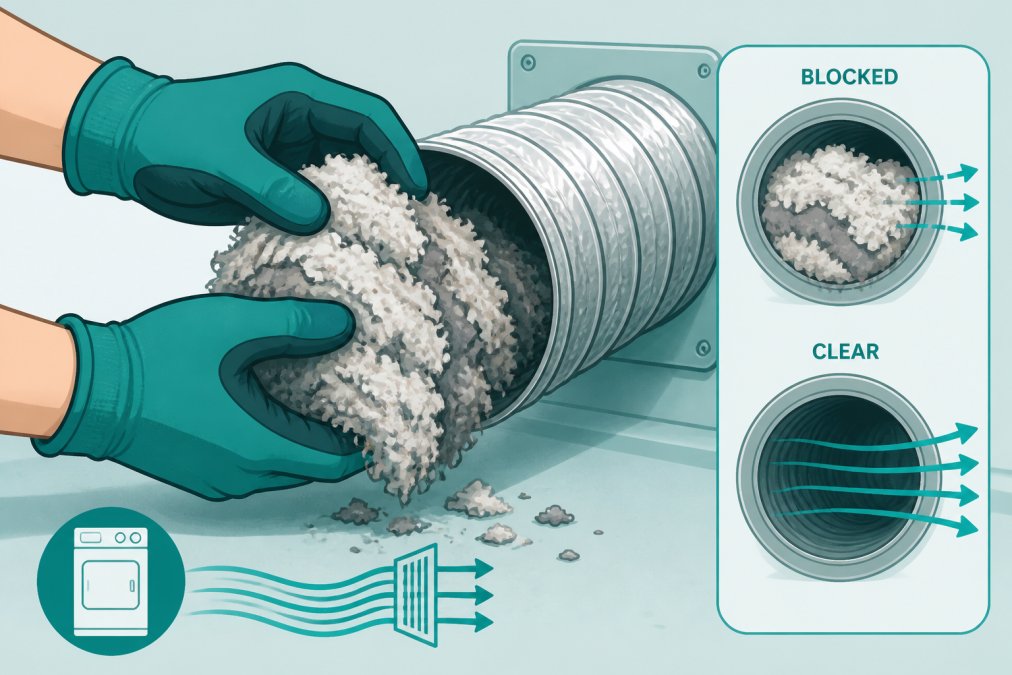
Disconnect the vent hose from the back of the dryer. Look inside with a flashlight. Lint accumulation is the most common blockage cause. Use a vent brush or wet/dry shop vacuum to remove lint. Reattach the hose and test the dryer. Many dryers that seemed to have failed heating systems start working once the vent is cleared.
Testing the Thermal Fuse and Gas Dryer Thermal Fuse Location
The thermal fuse is often the culprit when a dryer stops heating suddenly. It's a safety device that melts irreversibly if the dryer overheats. Once blown, the dryer won't heat until it's replaced.
Where to find the thermal fuse
The thermal fuse location varies by model but is usually mounted on the blower housing or near the exhaust vent inside the cabinet. Consult your dryer's repair manual by searching your model number online. Most thermal fuses are cylindrical, about 1.5 inches long, with two metal terminals on each end.
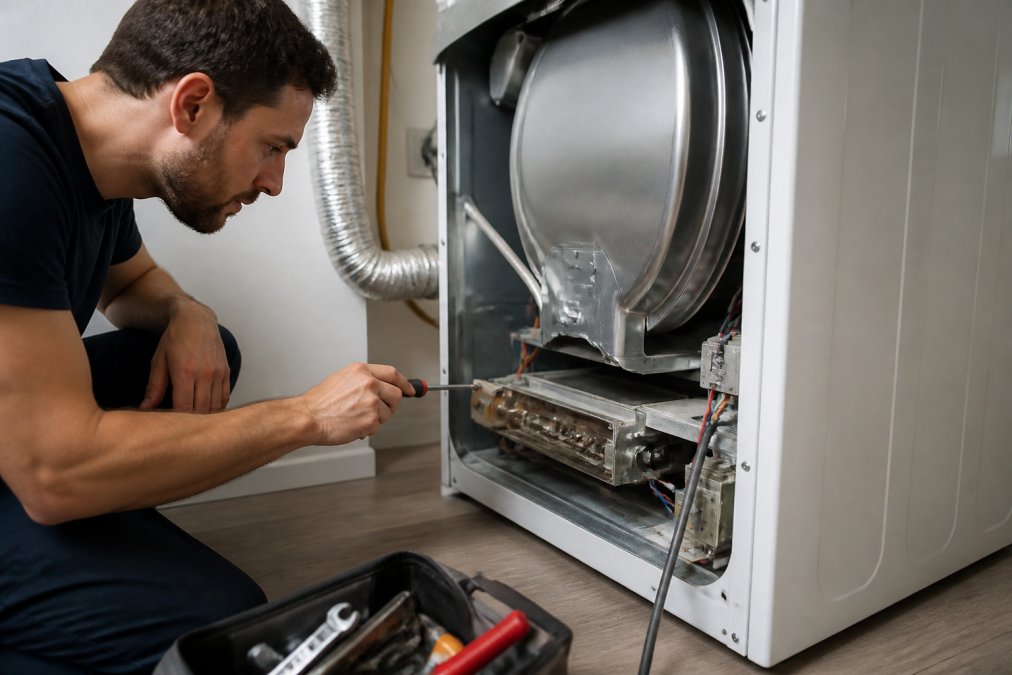
Access the thermal fuse by removing the front or rear panel. Most front-load dryers require removing the lint trap, then unscrewing the front panel. Rear-access dryers require pulling the unit away from the wall and removing the back panel. Once the panel is off, locate the blower housing, a large plastic or metal chamber with a fan wheel inside. The thermal fuse is mounted nearby, often held in a bracket.
Continuity testing with a multimeter
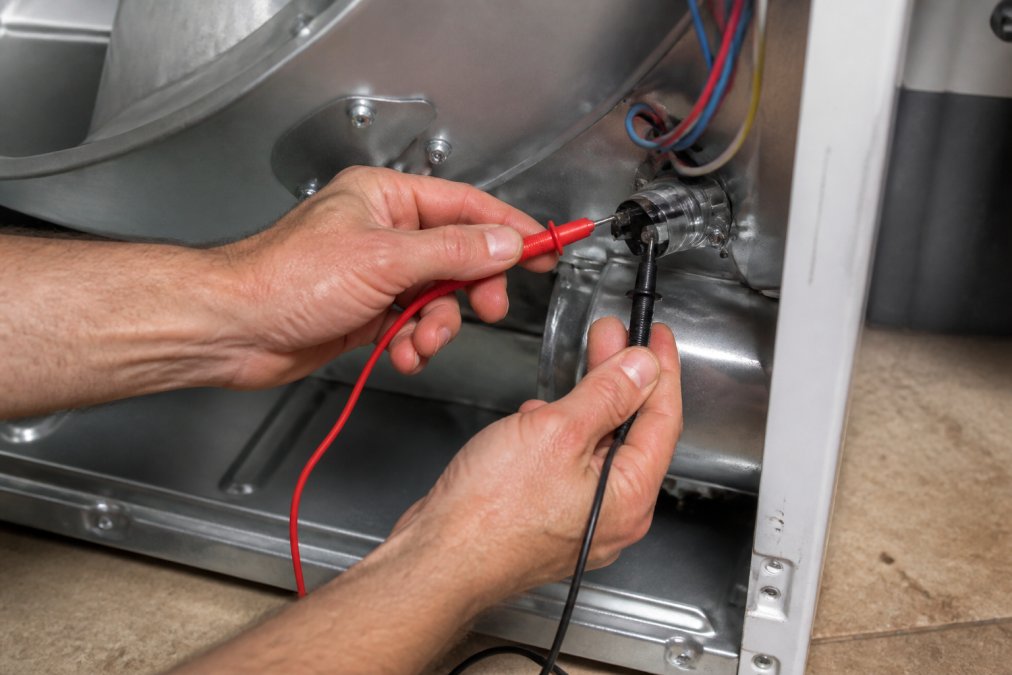
Set your multimeter to "Ohms" or "Continuity." Touch one probe to each terminal of the thermal fuse. If the fuse is good, the meter will show near-zero ohms or beep. If blown, the meter will show infinite ohms or no beep, the circuit is open.
A blown thermal fuse shows a cracked or discolored ceramic body. If the fuse tests as open, it must be replaced. Thermal fuses typically cost $15-40. Before reinstalling a new fuse, clear the vent completely, or the new fuse will blow immediately.
Inspecting the Igniter for Glow and Gas Dryer Igniter Replacement
If the thermal fuse tests good, the igniter is your next suspect. The igniter must glow hot enough to ignite gas. If it's weak or burned out, gas won't ignite.
Visual inspection and voltage testing
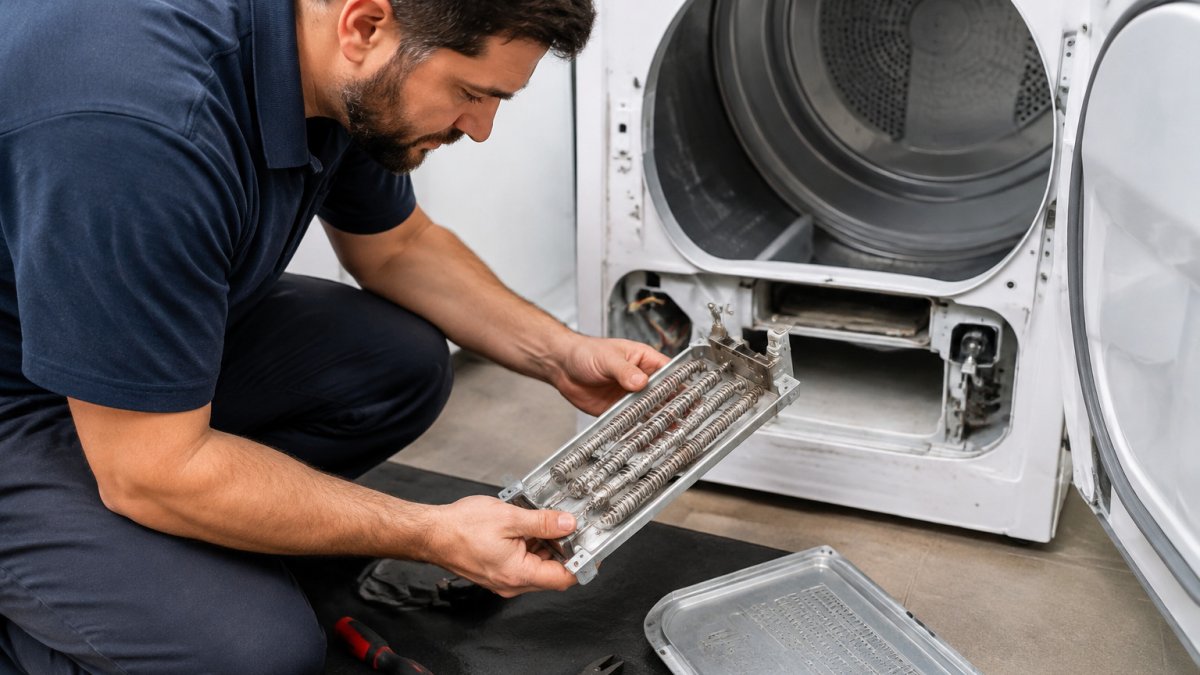
Locate the igniter inside the combustion chamber, usually a ceramic rod or coil mounted near the burner. Start the dryer and watch for a red or orange glow. The igniter should glow brightly within 10-15 seconds. If it glows dimly or not at all, it's failing.
To test with a multimeter, disconnect power and let the dryer sit for 5 minutes. Set your multimeter to measure resistance (Ohms). Disconnect the igniter terminals and touch one probe to each. A good igniter typically shows 40-90 ohms. If the meter shows infinite ohms, the igniter is open and must be replaced. If it shows very low resistance, the igniter is shorted and must be replaced.
When replacement is necessary
If the igniter tests as open or shorted, or glows dimly but the dryer still won't heat after ruling out other problems, replacement is necessary. Gas dryer igniters cost $50-150 depending on brand and model. Replacement involves removing the panel, disconnecting the old igniter, and snapping in the new one. Most igniters are held by a simple bracket or clip.
Checking Gas Valve Solenoids and Recognizing Solenoid Valve Symptoms
The gas valve solenoid is an electromagnet that opens to allow gas flow when the dryer is heating. If the solenoid coils are burned out or the valve is stuck, gas won't flow.
How solenoid coils control gas flow
A solenoid is a coil of wire wrapped around a plunger. When voltage is applied, the coil creates a magnetic field that pulls the plunger, opening a valve. When voltage is removed, a spring pushes the plunger back, closing the valve. The gas valve typically has two solenoid coils, one for the main burner and sometimes one for a pilot light on older models.
If a solenoid coil burns out, it loses the ability to generate a magnetic field, so the valve stays closed. If the valve gets stuck due to lint or debris, the solenoid can't pull it open.
Testing for voltage and mechanical response
With the dryer unplugged, visually inspect the solenoid coils for burn marks, cracks, or discoloration. A burned-out coil often shows black scorch marks or a melted appearance.
For a voltage test, plug the dryer back in and have someone start it. Carefully touch the multimeter probes (set to AC voltage) to the solenoid coil terminals. You should see 120 volts during the heating cycle. If you see zero volts, the control board isn't sending power, or the wiring is broken. If you see voltage but the dryer still doesn't heat, the solenoid coil is burned out or the valve is mechanically stuck.
Flame Sensor Diagnostics and Gas Supply Line Inspection
Once gas ignites, a flame sensor detects the flame and signals the control board to keep the gas valve open. If the flame sensor fails, the dryer may light momentarily, then shut off.
Cleaning and testing the flame sensor
The flame sensor is a small metal rod positioned near the burner flame. Lint and dust can coat the sensor, preventing flame detection. Visually inspect the sensor. If it's visibly dirty or corroded, cleaning may solve the problem.
Unplug the dryer and locate the flame sensor. Carefully remove it (usually held by a single screw). Wipe the sensor with a soft, lint-free cloth or fine steel wool pad. Do not use water or solvents, dry cleaning only. Reinstall and test the dryer.
If cleaning doesn't work, test the sensor's resistance with a multimeter. Disconnect the sensor terminals. Set your multimeter to Ohms and touch one probe to each terminal. A working flame sensor typically shows 200-500 ohms. If the meter shows infinite ohms, the sensor is open and must be replaced. Flame sensors cost $20-50 and take 5 minutes to swap.
Checking gas pressure and supply integrity
Low gas pressure can prevent ignition even if the igniter glows and the solenoid opens. Inspect the gas line from the wall to the dryer. Look for kinks, pinches, or crushed sections. If the line is damaged, gas flow is restricted. Check the connection at the back of the dryer, the fitting should be tight with no signs of gas leaks (a rotten-egg smell indicates a leak). If you suspect a gas leak, leave immediately and call your gas utility.
For a definitive pressure test, professional technicians use a calibrated gas pressure gauge to verify your dryer is receiving correct pressure.
Dryer Vent Cleaning Frequency and Airflow Maintenance
A restricted vent is the most common reason a dryer stops heating. Lint accumulates in ductwork over time, blocking airflow and causing the thermal fuse to blow.
Why lint buildup kills heating performance
Lint is a fire hazard and a heating killer. As lint clogs the vent, exhaust air can't escape, so heat and moisture back up into the dryer. The high-limit thermostat senses excessive heat and opens, cutting power to the heating circuit. If the blockage is severe, the thermal fuse melts, and the dryer stops heating entirely.
A partially blocked vent also reduces airflow through the drum, so clothes dry slower even when the dryer is technically heating.
Preventative maintenance schedule
Clean your dryer vent every 3-6 months, depending on usage. Households drying clothes several times per week should clean quarterly. Households using the dryer once or twice weekly can go 6 months. If you have pets or live in a dusty area, increase frequency to every 2-3 months.
| Maintenance Task | Frequency | Time Required | Impact |
|---|---|---|---|
| Empty lint trap | After every load | 30 seconds | Prevents 90% of blockages |
| Inspect vent hose | Monthly | 2 minutes | Catches early buildup |
| Clean vent hose | Every 3-6 months | 15-20 minutes | Restores full airflow |
| Check vent hood damper | Quarterly | 5 minutes | Ensures exhaust escapes |
| Replace vent hose if damaged | As needed | 10 minutes | Prevents air leaks |
Start by emptying the lint trap after every load, this is the single most important habit. For a deep clean, disconnect the vent hose from both the dryer and wall vent. Use a vent brush (under $20 at any hardware store) to scrub the inside. Work from both ends, pushing and pulling the brush through multiple times. You can also use a wet/dry shop vacuum with a hose attachment. Once clean, reconnect and test the dryer.
When your gas dryer stops heating, diagnosis doesn't have to be complicated. Start with the basics: verify gas supply, clear the vent, and test the thermal fuse. Most failures are thermal fuse or vent blockage, not expensive igniter or solenoid replacement. If you've worked through these steps and the dryer still won't heat, Home Tech's EPA 608-certified technicians can diagnose the exact problem with professional testing equipment. We service all major brands across the Phoenix metro area with same-day appointments and a 100% satisfaction guarantee. Call (602) 486-1901 or visit hometechappliancerepair.com to book your appointment.
External Sources & Further Reading
According to the U.S. Consumer Product Safety Commission guidance on dryer safety, lint accumulation in dryers is responsible for thousands of residential fires annually, making regular vent maintenance critical.
Research from the National Fire Protection Association on appliance fire prevention emphasizes that thermal fuse failure is one of the leading causes of dryer-related fires when vent blockage goes unaddressed.
The Environmental Protection Agency's guidance on gas appliance maintenance recommends annual professional inspection of gas-burning appliances to ensure safe operation and compliance with current safety standards.
Frequently Asked Questions
What's the most common cause of a gas dryer not heating?
A blocked exhaust vent or failed thermal fuse tops the list. Lint accumulation in the vent restricts airflow, triggering the high-limit thermostat to shut off heating. The thermal fuse is a one-time safety device that blows permanently if the dryer overheats. Both issues stop heat production immediately. Check your vent first, then test the thermal fuse with a multimeter for continuity.
How do I know if my gas dryer thermal fuse is blown?
Use a multimeter to test continuity across the thermal fuse terminals. If the meter shows no continuity (infinite resistance or an open circuit), the fuse is blown and must be replaced. A blown thermal fuse typically indicates the dryer overheated due to restricted airflow, a failed blower motor, or a stuck cycling thermostat. Always address the underlying cause before installing a new fuse.
Can a clogged dryer vent cause a gas dryer to stop heating?
Yes. A clogged vent restricts exhaust airflow, causing internal temperature to rise. The high-limit thermostat detects the excess heat and cuts power to the igniter and gas valve solenoids, stopping all heating. You'll also notice longer dry times and clothes staying damp. Clean the vent duct, lint trap, and exhaust hood. Most manufacturers recommend vent cleaning every 12 months, or more frequently if you dry heavy loads weekly.
How often should I clean my dryer vent to prevent heating problems?
Clean the lint trap after every load. Inspect and clean the exhaust vent duct at least once per year, or every 6 months if you use the dryer frequently. If you notice longer drying times or the dryer shutting off mid-cycle, clean the vent immediately. Preventative maintenance prevents thermal fuse failure and keeps the high-limit thermostat from nuisance trips. A clear vent also reduces fire risk and improves efficiency.