 how-to
Troubleshoot Commercial Refrigerator Temperature Issues
Table of Contents
- Safety and Tools Before You Troubleshoot Commercial Refrigerator Temperature Issues
- Commercial Refrigeration Temperature Range Requirements and Food Safety Standards
- Check the Power Supply and Thermostat Calibration
- Commercial Refrigerator Condenser Coil Cleaning and Airflow Checks
- Inspect Door Gaskets, Evaporator Fan Motor, and Defrost Cycle
- Error Code Interpretation and What Is EPA 608 Certified Repair
- Preventative Maintenance and When to Call a Professional
- Frequently Asked Questions
Last Updated: September 16, 2026
Safety and Tools Before You Troubleshoot Commercial Refrigerator Temperature Issues
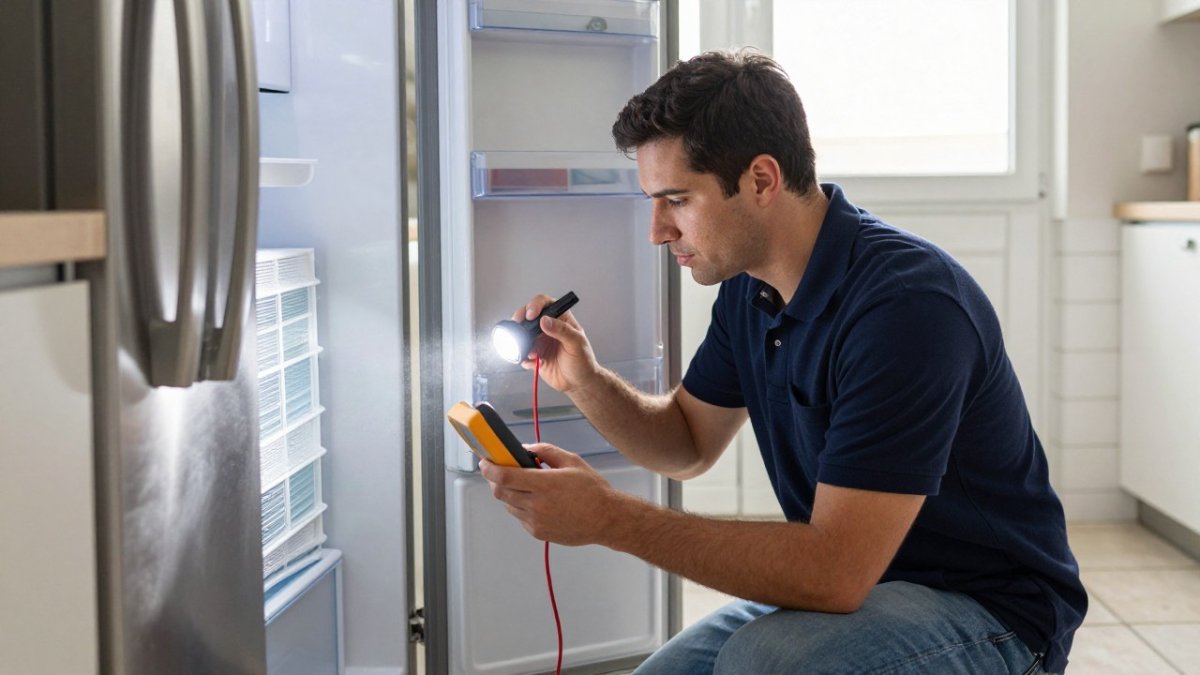
Before you touch a commercial refrigerator, unplug it or shut off the dedicated breaker. Commercial refrigeration combines high-voltage controls, sharp condenser fins, and sealed refrigerant circuits that can cause frostbite or asphyxiation in enclosed spaces. At Home Tech, our technicians treat every diagnostic call as a safety procedure first. You need a calibrated digital thermometer, a multimeter for electrical continuity, a fin comb and coil brush, a voltage tester, insulated gloves, and a flashlight. Skip any step involving refrigerant lines unless you hold EPA Section 608 certification. That certification is a federal requirement under the Clean Air Act for anyone who services, maintains, or disposes of equipment containing regulated refrigerants, per EPA Section 608 certification requirements. Food safety standards also apply: a walk-in running warm for hours can push product into the temperature danger zone, so have a plan to move inventory before you start.
Commercial Refrigeration Temperature Range Requirements and Food Safety Standards
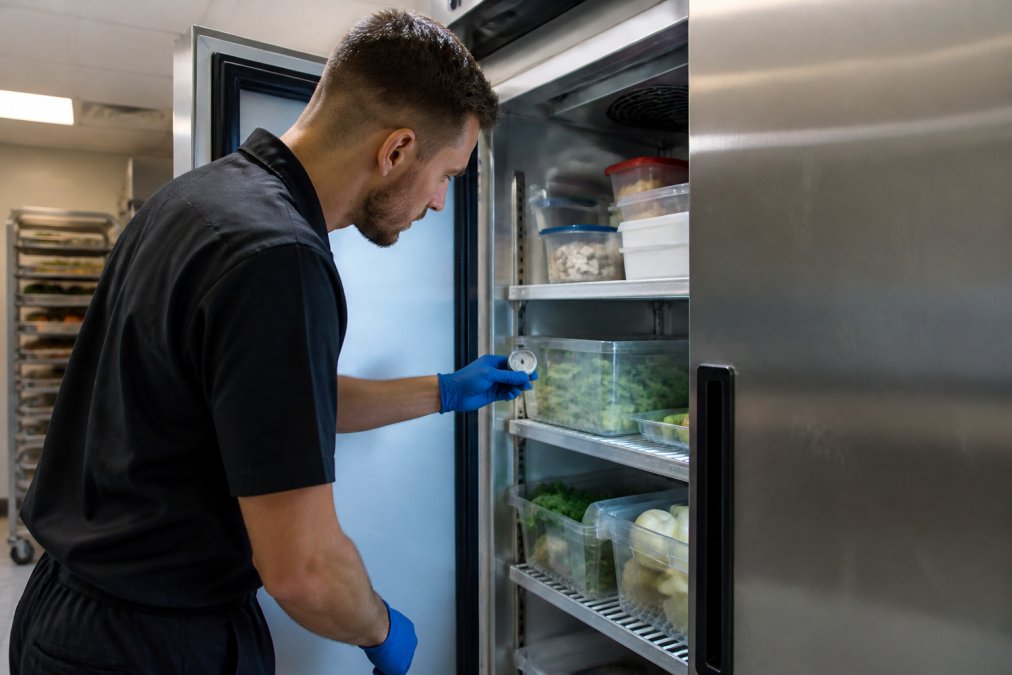
The target range for most commercial refrigeration is 35°F to 38°F for coolers and 0°F or below for freezers. The FDA Food Code sets 41°F as the maximum cold-holding temperature for potentially hazardous food, documented in FDA Food Code cold holding guidance. Anything warmer than that for more than a short window invites bacterial growth. Your refrigerator temperature should sit comfortably below the legal ceiling, not at it. Set the temperature setpoint at 36°F for coolers so a brief door-open cycle or defrost cycle doesn't spike product above 41°F. Keep a temperature gauge in the warmest part of the cabinet, usually the top shelf near the door, and log readings twice daily. That log is also your first diagnostic tool: a slow upward drift points to a different failure than a sudden jump.
| Symptom | Likely Cause | First Check |
|---|---|---|
| Slow temperature drift over days | Dirty condenser coils, failing door gasket | Coil cleaning, gasket seal test |
| Sudden warm spike | Power loss, tripped breaker, failed compressor relay | Power supply, start capacitor |
| Freezer fine, cooler warm | Evaporator fan motor, airflow obstruction | Fan blade, vents, drain line |
| Ice buildup on evaporator | Defrost cycle failure, bad timer or heater | Defrost termination, heater continuity |
| Error code on display | Sensor fault, thermostat calibration, control board | Code lookup, sensor resistance |
Check the Power Supply and Thermostat Calibration
Start at the outlet and work inward. Confirm the breaker isn't tripped and the dedicated circuit isn't shared with a heat-producing appliance. Voltage fluctuations from a shared circuit can cause the compressor to short-cycle, which mimics a temperature problem. Next, test thermostat calibration: place your calibrated digital thermometer beside the thermostat probe, let both stabilize for 20 minutes, and compare readings. A 3°F to 5°F discrepancy means the thermostat is reading wrong and the compressor cycle is running on bad data. On a digital temperature controller, you can often adjust the offset parameter directly. On older mechanical thermostats, replacement is usually faster than recalibration. A common mistake is chasing the compressor when the real fault is a $30 thermostat reading 6 degrees off.
Commercial Refrigerator Condenser Coil Cleaning and Airflow Checks
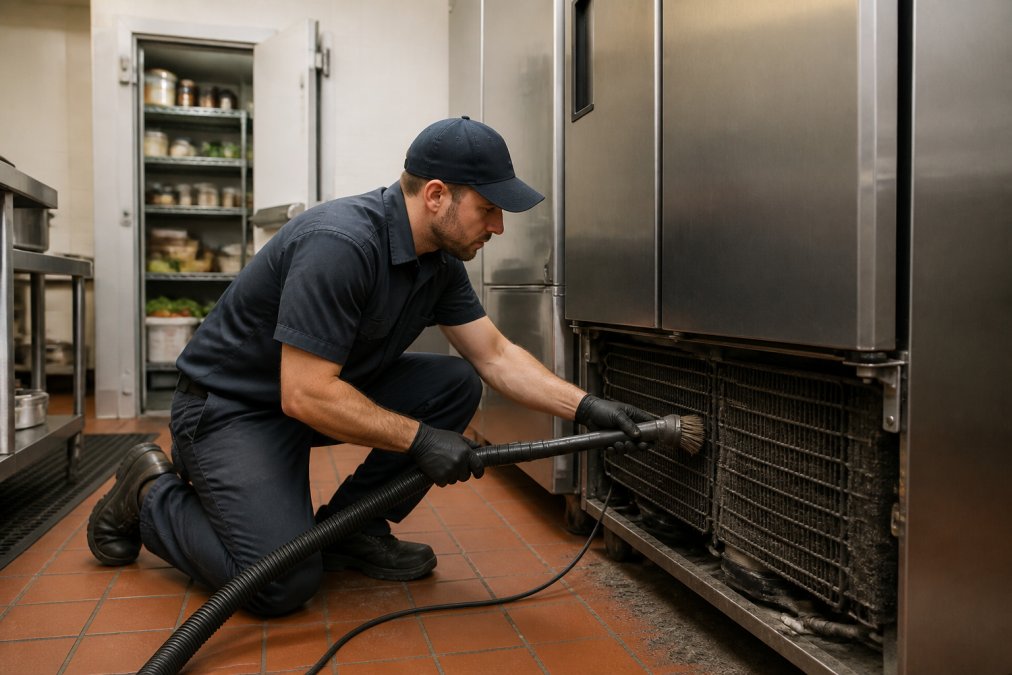
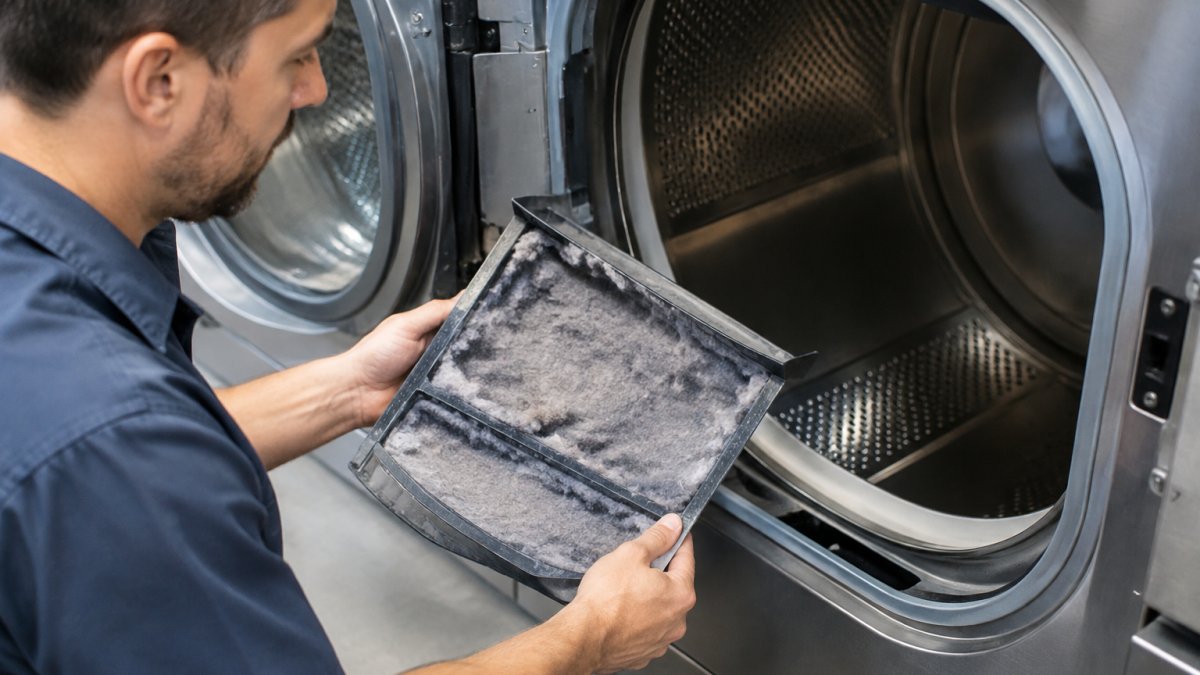
Dirty condenser coils are the single most common cause of commercial refrigerator temperature issues. When coils clog with grease and dust, heat exchange collapses and the compressor runs continuously without reaching the setpoint. Commercial refrigerator condenser coil cleaning takes about 30 minutes: kill power, brush the fins vertically with a fin comb, vacuum with a soft brush attachment, and check that the condenser fan spins freely. In restaurant kitchens, grease film builds fast, so quarterly cleaning is a realistic minimum. Then verify airflow circulation around the cabinet. Blocked air vents, product stacked against the evaporator, or a cabinet pushed flush to a wall all cause airflow obstruction. Leave at least 2 inches of clearance at the rear and never block the return air grille. Ambient temperature matters too: a kitchen running above 90°F pushes the condenser beyond its rated cooling capacity.
Inspect Door Gaskets, Evaporator Fan Motor, and Defrost Cycle
These three components account for a large share of "refrigerator runs but won't hold temperature" calls, and they fail in ways that mimic each other. Work them in order, because a bad gasket can cause the same warm-cabinet symptom as a dead evaporator fan.
Door gaskets. A failing gasket leaks cold air with every cycle, forcing the compressor to run longer and the evaporator to frost faster. Test it with the dollar-bill method: close the door on a bill and pull. If it slides out with no resistance, the gasket is shot. Run the test at the top, middle, and bottom of the door, gaskets often fail at the hinge side or the bottom corner first. Also check the hinge itself: a door that sags or won't self-close will defeat a brand-new gasket. Wipe the gasket with a damp cloth and mild detergent; grease film and food debris keep the magnetic seal from seating.
Evaporator fan motor. If the freezer is cold but the cooler section is warm, the fan isn't moving air across the coil. Before you touch it, kill power at the breaker, the fan circuit is low-voltage but the cabinet still contains line voltage at the defrost heater and compressor. Open the evaporator cover and spin the blade by hand. Grinding, wobble, or a dead stop means replacement. Check the blade for cracks and the motor mount for ice buildup; a fan that ices up is usually a symptom of a defrost problem, not a fan problem. Listen for the fan running intermittently, a motor with a failing bearing can stall when hot and restart when cool, which produces a temperature pattern that looks random.
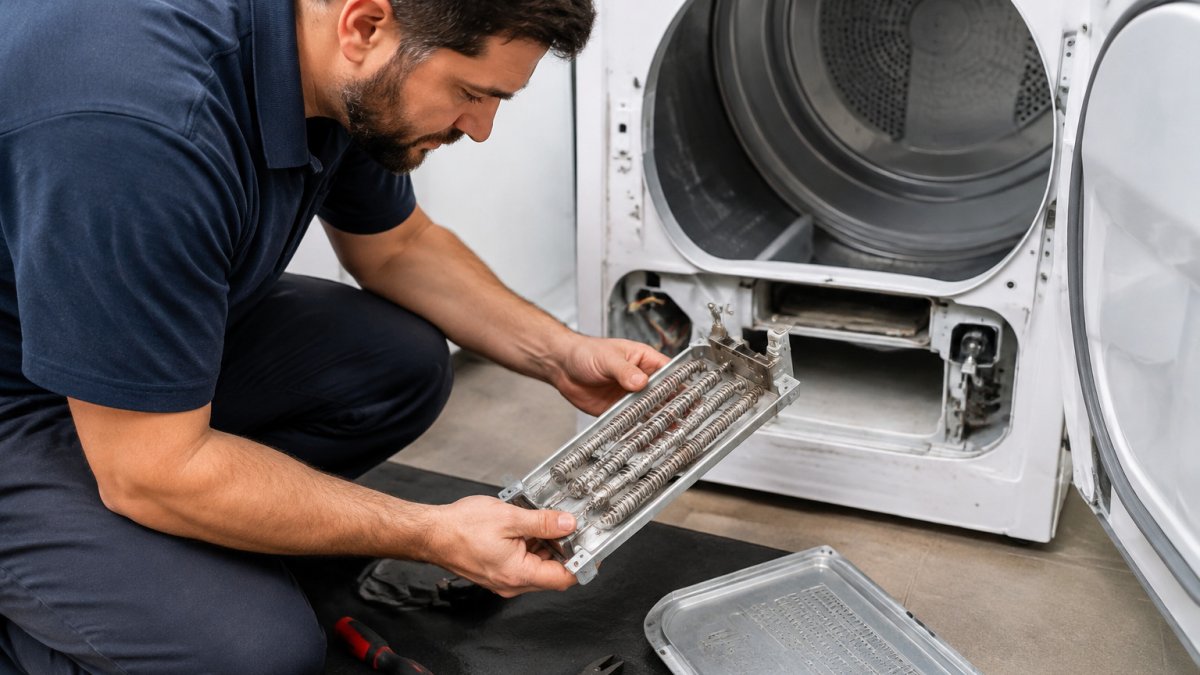
Defrost cycle. Ice buildup on the evaporator coil blocks airflow and insulates the coil from the air it's supposed to cool, so the cabinet warms even though the compressor runs. A failed defrost heater, timer, or termination thermostat leaves ice on the coil.
A quick way to separate these three faults: if the cabinet is warm but the evaporator coil is evenly frosted, suspect the fan or a defrost failure; if the coil is clean but the cabinet is warm, suspect the gasket or a refrigerant issue. That single observation narrows the diagnosis before you open a panel.
Error Code Interpretation and What Is EPA 608 Certified Repair
| Code Pattern | Typical Meaning | First Diagnostic Step |
|---|---|---|
| E1 / P1 / Sn | Cabinet or evaporator sensor fault (open or shorted thermistor) | Test thermistor resistance against the unit's temperature-resistance chart; a reading far outside spec means replace the probe |
| E2 / P2 | Defrost termination sensor fault | Check the defrost termination probe and its wiring harness for moisture intrusion |
| E3 / HA / HI | High-temperature alarm | Confirm actual product temp with your calibrated thermometer before assuming a sensor fault |
| E4 / LA / LO | Low-temperature alarm | Often triggered by a failed defrost cycle or a stuck-open door |
| E5 / dF | Defrost cycle fault or timeout | Inspect defrost heater continuity, termination thermostat, and timer/board |
| E6 / CO | Communication fault between controller and board | Check ribbon cable and board connections before replacing either component |
| E7 / EE | EEPROM or memory error | Usually a control board replacement; back up setpoints first |
EPA 608 certified repair is sealed-system work performed by a technician who has passed the EPA's Section 608 certification exam, which is legally required under the Clean Air Act for anyone who services, maintains, or disposes of equipment containing regulated refrigerants. That covers refrigerant charge verification, leak detection, recovery, and recharge. Without it, you cannot legally open a sealed circuit. If a code points to refrigerant charge, a leak, or a compressor fault that survives a reset, stop. That is a job for an EPA 608-certified technician with recovery equipment, not a DIY fix.
Preventative Maintenance and When to Call a Professional
Preventative maintenance prevents most emergency calls.
Frequently Asked Questions
What are the common reasons a commercial refrigerator isn't cooling?
The most frequent causes are dirty condenser coils, worn door gaskets, a failing evaporator fan motor, thermostat calibration drift, and low refrigerant charge. Each of these affects heat exchange or airflow, so the compressor runs longer without reaching the temperature setpoint. Start with a diagnostic inspection of the power supply and temperature gauge reading, then work through coils, seals, and fans before assuming a sealed-system fault.
How often should commercial refrigeration coils be cleaned?
In a busy commercial kitchen, condenser coils should be cleaned every one to three months. Dusty or greasy environments, common in restaurants, shorten that interval. A clogged coil raises ambient temperature around the compressor, reduces cooling capacity, and can trigger thermal overload. Add coil cleaning to a preventative maintenance schedule and log each cleaning so you can spot trends in compressor cycle length.
Why won't my fridge get colder than 50 degrees?
A unit stuck at 50 degrees usually has a refrigerant charge problem, a stuck compressor relay or failed start capacitor, or significant airflow obstruction. Check that the evaporator fan motor is running and the drain line is clear of ice buildup. If coils are clean and the fan spins, the issue likely involves the sealed system, which requires an EPA 608 certified technician to diagnose refrigerant charge and compressor operation safely.
When should I call a professional for commercial refrigeration repair?
Call a professional when basic checks (power, thermostat, coils, gaskets, airflow) don't fix the temperature issue, when you see error codes you can't interpret, or when food safety standards are at risk. Sealed-system work, refrigerant handling, and compressor relay or start capacitor replacement require EPA 608 certification. A licensed technician can perform a full diagnostic inspection and confirm whether repair or replacement is more cost-effective.