 how-to
Tankless Water Heater Banging: Causes & Fixes
Table of Contents
- Why Your Tankless Water Heater Is Making Loud Banging Noises
- Water Hammer in Hot Water Pipes: The Most Common Cause
- Tankless Water Heater Mineral Buildup and Scale Accumulation
- Tankless Water Heater Flushing: Prevention and Maintenance
- Gas Supply, Burner, and Ignition Issues
- Loose Hardware, Panels, and Vibration
- Safety Triage: When Banging Requires Immediate Attention
- Troubleshooting Steps Before You Call a Technician
- Frequently Asked Questions
Last Updated: October 21, 2026
Why Your Tankless Water Heater Is Making Loud Banging Noises
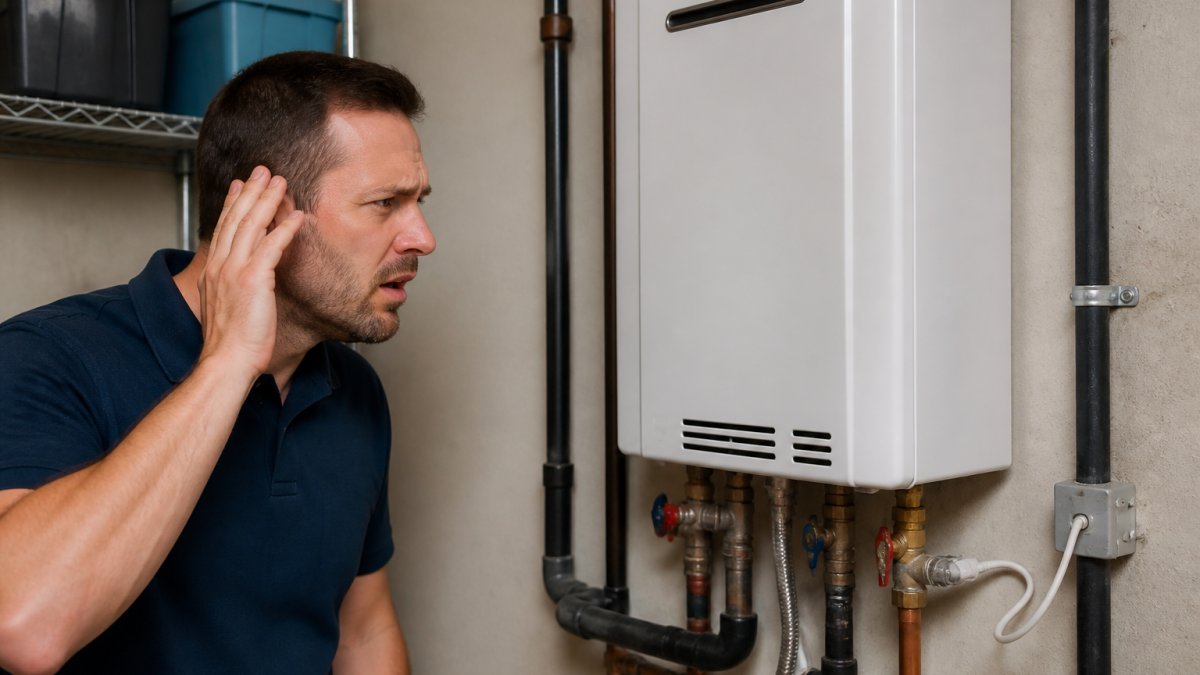
A tankless water heater banging is rarely catastrophic, but it always signals something needs attention.
At Home Tech, we've diagnosed many noisy tankless water heaters across the Phoenix area.
Many of these issues are preventable with routine flushing and inspection.
This guide covers the most common causes, how to identify yours, and when to call for help, including safety concerns that warrant immediate attention.
Water Hammer in Hot Water Pipes: The Most Common Cause
Water hammer is the leading cause of banging in tankless systems, and it's easy to misdiagnose because the sound seems to come from the unit when it's actually in your walls.
Tankless units are especially prone to water hammer because they heat on demand, so flow stops instantly when you close a faucet. Tank heaters absorb the surge instead.
How water hammer develops in tankless systems
Your plumbing's air chambers or expansion tanks absorb pressure spikes, but over time they fill with water and lose effectiveness, worsening water hammer.
Tankless units also run at higher water pressure than tanks, magnifying the shock wave when flow stops suddenly.
Homes built before the 1980s may lack any pressure relief mechanism; older plumbing relied on open vents at pipe ends, while modern code requires expansion tanks or hammer arrestors.
Identifying water hammer versus other noises
Water hammer sounds distinctive: a sharp single bang or rapid series of bangs the moment you turn off hot water. It's not a rumble, grind, or click, and it doesn't happen during startup or while water runs.
Listen carefully to when the noise occurs:
- During or immediately after shutting off a tap: water hammer
- While hot water is running: likely mineral buildup or vibration
- During startup, before water flows: burner or ignition issue
If the banging only happens when you turn off the shower or kitchen sink quickly, water hammer is almost certainly your problem.
Tankless Water Heater Mineral Buildup and Scale Accumulation
Hard water deposits inside your tankless unit create friction and turbulence as water flows through the heat exchanger, producing rumbling, banging, and grinding that worsen over time.
Scale buildup is the second most common cause of tankless noise. Calcium and magnesium precipitate out of hot water and coat the heat exchanger; a thin layer reduces efficiency, while a thick layer creates hot spots, uneven heating, and noise.
Water flowing through a scaled heat exchanger meets resistance and creates cavitation, tiny bubbles that collapse violently and produce banging and popping. Unlike water hammer, this happens while water flows, not when you shut off the tap.
How sediment causes banging and rumbling
Sediment is more common in hard water areas. Phoenix has moderately hard water, so tankless owners here should flush every 1-2 years to prevent buildup.
Thick scale can partially block flow; the unit's sensors detect this and may increase burner intensity to maintain temperature, stressing the heat exchanger and making noise louder.
In extreme cases, scale causes overheating and a safety shutdown, with error codes usually indicating a temperature sensor fault or high-limit shutdown.
Signs your heat exchanger needs cleaning
Listen for a low rumble present while hot water runs but gone when you turn off the tap, unlike water hammer's sharp bang.
Other signs of mineral buildup include:
- Reduced hot water flow or pressure
- Temperature fluctuations (water gets too hot or too cold)
- Error codes on the display (often temperature-related)
If you've lived in your home over 2 years and never flushed the tankless unit, mineral buildup is almost certainly present.
Tankless Water Heater Flushing: Prevention and Maintenance
Regular flushing removes mineral deposits before they cause noise, efficiency loss, or system failure. It's the single best preventive measure you can take.
Flushing means running a descaling solution through the heat exchanger to dissolve calcium and magnesium deposits. It takes 30-60 minutes and costs far less than replacing a damaged unit or paying for emergency repairs.
When and how often to flush your system
Most manufacturers recommend flushing every 1-2 years; annual flushing is better in hard water areas.
Flush before noise develops; once banging starts, damage is underway. After flushing, you'll likely notice improved performance and quieter operation.
We recommend flushing in the fall, before the heating season when your unit works hardest, which also lets you inspect for loose hardware or visible corrosion.
DIY flushing versus professional descaling
DIY flushing is possible if you're comfortable with basic plumbing. You'll need a submersible pump, a bucket, white vinegar or commercial descaler, and isolation valves on the inlet and outlet. The process:
- Shutting off gas and water to the unit
- Connecting the pump to the inlet and outlet ports
- Running the descaling solution through the heat exchanger for 30-60 minutes
- Flushing with clean water to remove all solution residue
- Reopening the isolation valves and testing the unit
If you're not confident working with your unit's plumbing connections, professional descaling is the safer choice.
Technicians have specialized equipment for complete flushing and fluid removal, and can inspect for other issues. If your unit is under warranty, professional flushing may be required to keep it valid.
Gas Supply, Burner, and Ignition Issues
Clicking and banging during startup often point to gas supply, burner tube, or ignition problems, which need prompt attention because they affect safe heating.
Clicking at startup usually means the ignition electrode is struggling to light the burner. It sparks repeatedly trying to ignite gas before the flame catches, and each failed attempt produces a click.
If the unit eventually lights and runs normally, the problem is minor, often just a dirty electrode. If clicking continues and it doesn't heat water, the ignition system needs service.
Clicking and reignition sounds during startup
A single click at ignition is normal; repeated clicking is not. Causes include:
- A dirty or corroded ignition electrode
- Moisture in the ignition chamber (from condensation or a leaking heat exchanger)
- Low gas pressure from an undersized gas line or faulty regulator
Rapid clicking that stops after 10-15 seconds with normal heating is likely just a dirty electrode; clean it carefully with a soft brush or have a technician do it.
If clicking continues past 20 seconds or the unit won't ignite, stop using it and call for service; a failure to ignite safely can indicate a gas leak or serious combustion problem.
Undersized gas lines and regulator problems
An undersized gas line can't deliver enough fuel, so the unit struggles to reach temperature and the burner may click repeatedly as it tries to light.
Gas regulators wear out over time. A faulty regulator delivers inconsistent pressure, causing ignition problems and noise.
If your gas line was sized for a tank heater and you upgraded to tankless, it may be too small, since tankless units demand more gas flow.
Loose Hardware, Panels, and Vibration
Vibration and rattling come from loose components: the unit vibrates during operation, and any loose part rattles against the frame or mounting bracket.
Check these areas:
- Mounting brackets: The unit should be bolted firmly to the wall. If bolts are loose, the entire unit will vibrate and rattle.
- Access panels: Covers over the burner or electronics can come loose. Tighten them by hand or with a screwdriver.
- Inlet and outlet connections: Copper or PEX pipes connected to the unit can vibrate if clamps or brackets are loose.
A visual inspection often reveals loose hardware. Tighten any bolts or fasteners with a wrench or socket set; hand-tight isn't enough.
If tightening visible hardware doesn't stop the noise, the problem is likely internal or the vibration comes from your plumbing rather than the unit.
Safety Triage: When Banging Requires Immediate Attention
Most tankless noises are annoying but not dangerous; a few warrant urgent action.
Stop using the unit immediately if you notice any of these:
- A burning smell or acrid odor from the exhaust vent
- Visible corrosion or rust on the unit's exterior
- Banging so loud it's alarming, paired with a sudden drop in hot water pressure or temperature
In any of these cases, turn off the unit's gas and water, open windows for ventilation, and call a licensed technician.
Normal banging, rumbling, or clicking, even if loud, is usually fixable with flushing, tightening hardware, or a simple repair.
Troubleshooting Steps Before You Call a Technician
A few simple checks can narrow down the cause of your tankless water heater banging, helping a technician diagnose faster and possibly revealing an easy DIY fix.
Isolating the sound and recording its timing
Identify exactly when the noise occurs. Keep a simple log for a few days:
- What time of day does it happen?
- Does it occur during startup, while water is running, or when you turn off the tap?
- Is the noise a single bang, a series of bangs, a rumble, or a clicking sound?
Record a short video of the noise on your phone if possible. This helps a technician understand what you're dealing with.
Banging only when you shut off hot water quickly almost certainly means water hammer; banging while water runs points to mineral buildup.
Checking water pressure and flow patterns
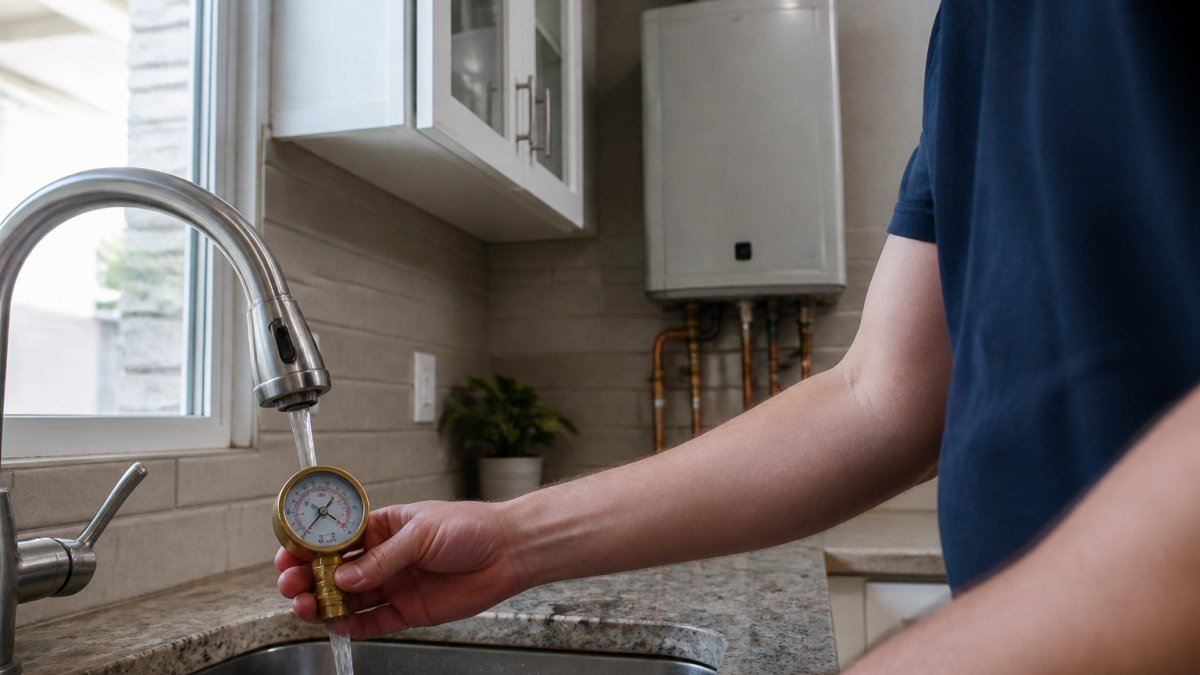
High water pressure worsens water hammer. Test your home's pressure with an inexpensive gauge (under $20 at any hardware store).
Screw the gauge onto an outdoor or laundry sink faucet, turn on the water, and read the pressure.
Note whether hot water flow is consistent. Fluctuating temperature or pressure while running suggests mineral buildup or a flow sensor issue inside the unit.
Inspecting mounting brackets and connections
Turn off the gas and water, then inspect all visible bolts, brackets, and clamps.
White, crusty deposits on pipes or connections mean mineral buildup and a unit that needs flushing.
| Symptom | Most Likely Cause | First Step |
|---|---|---|
| Sharp bang when you turn off hot water | Water hammer | Test water pressure; consider expansion tank |
| Rumbling while hot water flows | Mineral buildup in heat exchanger | Schedule flushing service |
| Clicking at startup | Dirty ignition electrode or low gas pressure | Have technician inspect ignition and gas line |
| Rattling or vibration | Loose hardware or mounting bracket | Tighten all visible bolts and fasteners |
| Burning smell or visible corrosion | Electrical or combustion fault | Stop using unit; call technician immediately |
A noisy tankless water heater is your unit's way of telling you something needs attention, and most causes are straightforward to diagnose and fix.
If tightening hardware doesn't stop the noise, or rumbling suggests mineral buildup, professional service is your next step.
Frequently Asked Questions
Why is my tankless water heater making a loud banging noise?
Banging in tankless water heaters typically stems from water hammer (sudden pressure surges when water flow stops), mineral buildup in the heat exchanger, loose internal components, or burner ignition issues. The sound's timing and pitch help identify the cause. Water hammer produces sharp bangs when you turn off hot water; mineral scale creates rumbling during heating; and ignition clicks occur at startup. Each requires a different fix, so diagnosing the exact noise pattern is the first step.
Can mineral buildup in a tankless water heater cause banging sounds?
Yes. Tankless water heater mineral buildup restricts water flow through the heat exchanger, causing turbulence and vibration that produce rumbling or banging. Hard water deposits calcium and lime scale on the burner tube and internal passages, reducing efficiency and intensifying noise. Descaling through flushing removes this buildup and restores quiet operation. If ignored, scale can eventually trigger error codes or system shutdown.
How often should I flush my tankless water heater to prevent banging?
Flush your tankless water heater annually if you have moderately hard water, or every 6 months in very hard water areas. Tankless water heater flushing removes sediment and mineral deposits before they accumulate enough to cause noise or damage. Professional descaling takes 1-2 hours and uses specialized equipment to circulate vinegar or descaling solution through the entire system. Some homeowners perform basic flushing themselves, but professional flushing ensures thorough cleaning of the heat exchanger and internal passages.
When should I call a plumber about a banging tankless water heater?
Call immediately if banging is accompanied by error codes, loss of hot water, a gas smell, or visible leaks. If the noise started suddenly and is loud or persistent, professional diagnosis is needed within 24-48 hours. Water hammer can be fixed with a pressure relief valve; mineral buildup requires flushing; loose hardware needs tightening. A technician can safely identify whether the issue is plumbing-related (water hammer, pressure), maintenance-related (scale), or mechanical (burner, ignition) and recommend the appropriate fix.