 ultimate-guide
Samsung Bespoke Refrigerator Compressor Repair Guide
Table of Contents
- Signs of a Bad Refrigerator Compressor
- Refrigerator Compressor Troubleshooting Steps
- DIY Diagnosis vs. Professional Service
- Samsung Refrigerator Compressor Replacement Cost
- Warranty Coverage and Claims
- Sealed System Safety and Environmental Disposal
- Preventative Maintenance for Long-Term Reliability
- When to Repair vs. Replace Your Refrigerator
- Frequently Asked Questions
Last Updated: September 2, 2026
Signs of a Bad Refrigerator Compressor
Your refrigerator's compressor is the heart of the cooling system. When it fails, you'll notice problems that escalate quickly. The most common signs of a bad refrigerator compressor include abnormal sounds, temperature swings, and complete cooling failure. Recognizing these early warning signals can mean the difference between a repair and a complete replacement.
Abnormal Sounds and Performance Changes
A compressor in trouble announces itself through noise. You'll hear clicking, humming that won't stop, or a rattling sound coming from the back of the unit. These aren't normal refrigerator sounds. A healthy compressor cycles on and off quietly. A struggling one runs continuously or makes rhythmic clicking noises as it attempts to start but fails.
The thermal overload protector is likely kicking in. This safety device cuts power to the compressor when it overheats, then resets after cooling. If you hear the compressor trying to start every few minutes with clicking sounds, the thermal overload protector is doing its job, but something has pushed the compressor into distress.
Pay attention to the fan motor too. You should hear the condenser fan running when the compressor cycles. If the compressor is running but the fan is silent, airflow over the condenser coils is blocked. Dust buildup on condenser coils forces the compressor to work harder, raising internal temperatures and triggering the thermal overload protector repeatedly.
Temperature and Cooling Issues
The refrigerator section should maintain temperatures between 35°F and 38°F (the FDA). The freezer should stay at 0°F or below (the FDA). When the compressor fails, these temperatures climb. You'll notice food warming up, ice cream melting, or frost disappearing from the freezer.
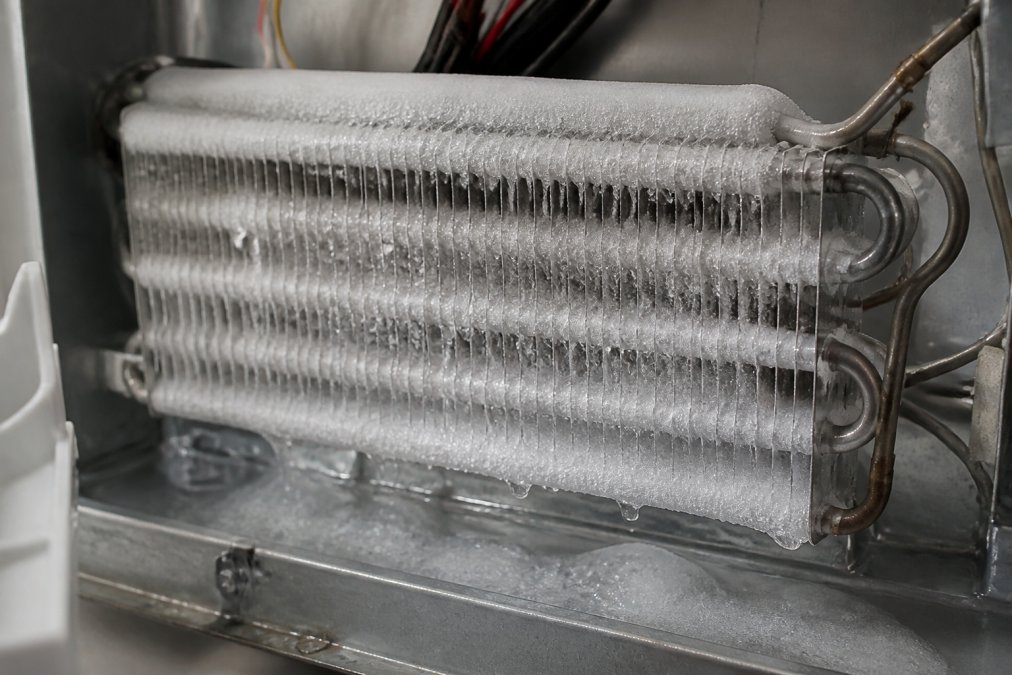
Abnormal temperature readings often start subtly. The fridge might be slightly warmer than usual, or frost buildup disappears from the freezer walls. This indicates the refrigeration cycle has broken down. The compressor circulates refrigerant through the sealed system, the evaporator coils in the freezer, the condenser coils at the back, and the expansion device that regulates flow. Without a working compressor, refrigerant sits idle and cooling stops.
Some compressors fail completely overnight. Others degrade over weeks. You might notice the compressor running constantly without ever reaching the set temperature. This is the compressor struggling against high-pressure buildup or low refrigerant charge, both signs of imminent failure.
Refrigerator Compressor Troubleshooting Steps
Before calling a technician, you can perform basic diagnostics. These steps help confirm whether the compressor itself has failed or whether another component is the culprit. Not all cooling problems point to the compressor.
Checking Error Codes and Diagnostic Mode
Samsung Bespoke refrigerators display error codes on the control panel when sensors detect problems. Common codes like "IF," "FF," or "CF" indicate specific failures. The error code is your first clue about what's wrong.
To enter diagnostic mode on most Samsung models, press and hold the power button and the temperature down button simultaneously for three seconds. The display will show a service code. Write this code down, it tells a technician exactly what the sensors detected. Some codes point directly to compressor issues. Others indicate problems with the main control board, temperature sensors, or the inverter compressor itself.
Error codes are more reliable than symptoms alone. A compressor that won't start might trigger a cooling error, but the root cause could be a failed start relay, a broken inverter compressor, or a tripped thermal overload protector. The diagnostic code narrows this down significantly.
Testing Electrical Continuity and Components
You'll need a multimeter to test electrical continuity. This checks whether electricity can flow through components without interruption. A compressor with broken electrical continuity won't start, regardless of refrigerant charge or system pressure.
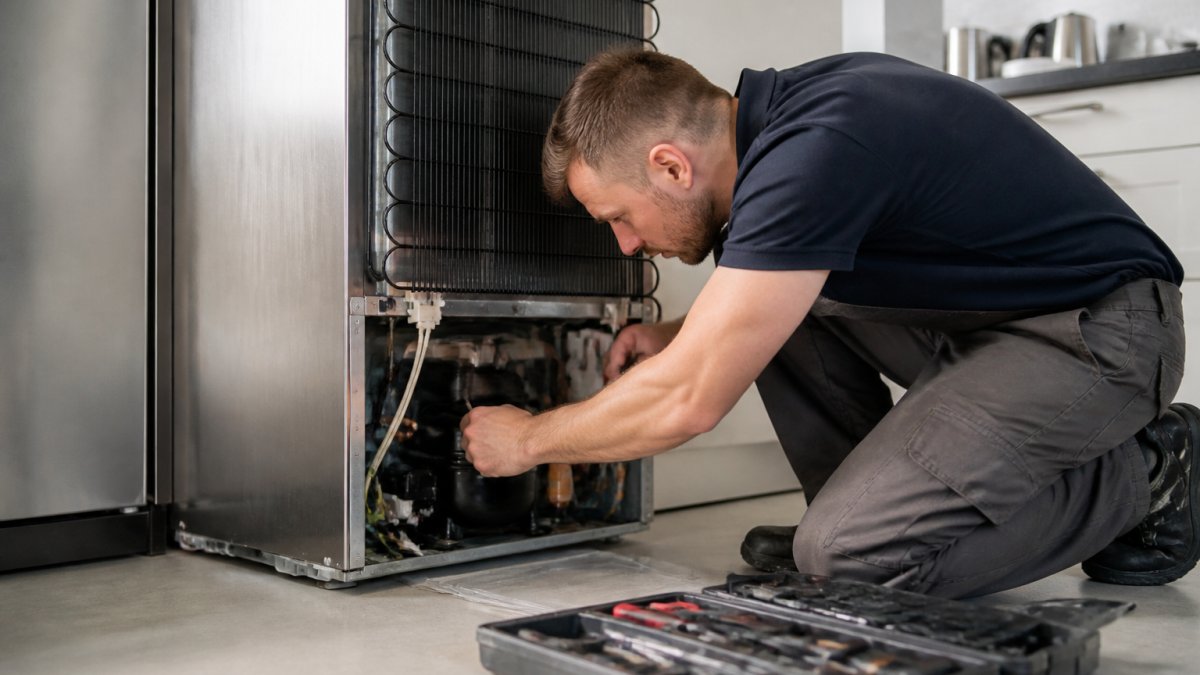
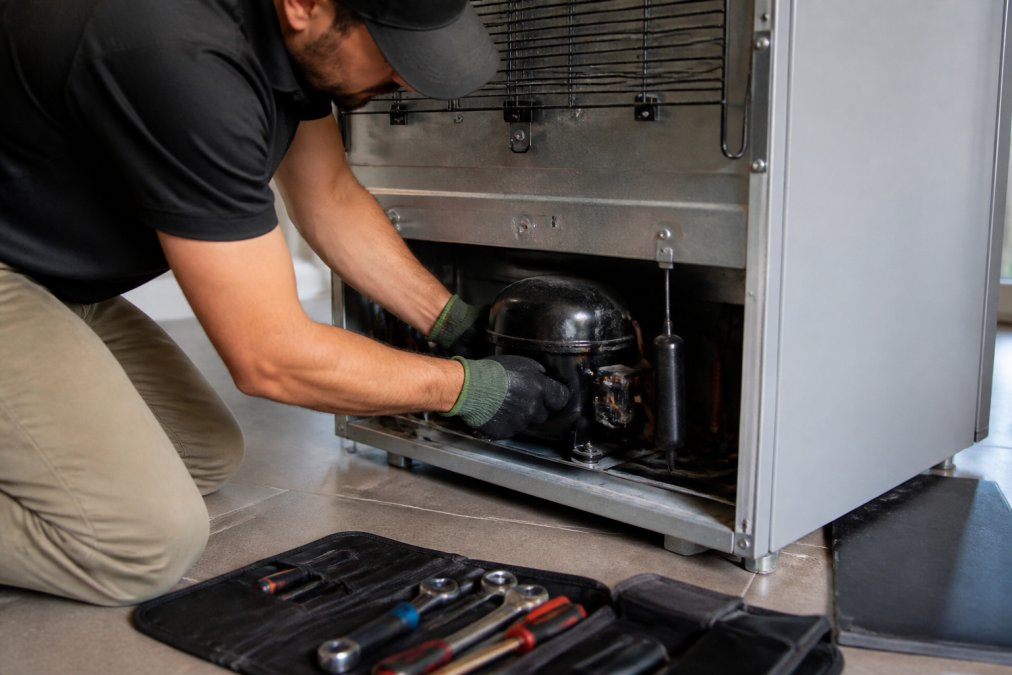
Locate the compressor terminal block at the back of the unit. Unplug the refrigerator first. Using a multimeter set to resistance mode, touch the probes to the compressor terminals. A healthy compressor shows low resistance (typically 5-15 ohms between terminals). If the multimeter shows infinite resistance or an open circuit, the compressor windings are burned out and the compressor has failed.
The start relay is another critical component. This small device sitting near the compressor terminals sends power to the compressor during startup. A failed start relay prevents the compressor from starting even if it's otherwise functional. Test it by tapping it gently with a screwdriver handle while the refrigerator is running. If the compressor suddenly starts, the relay is failing and needs replacement.
The thermal overload protector sits on the compressor housing. If the compressor is running constantly without cooling, the thermal overload protector may be cycling repeatedly. This protection device is working as designed, the problem is why the compressor needs protection. High ambient temperature, dirty condenser coils, low refrigerant charge, or a failing compressor all trigger this response.
DIY Diagnosis vs. Professional Service
Some refrigerator problems you can diagnose yourself. Compressor issues usually require professional help. The sealed system, the network of tubing containing refrigerant, demands specialized equipment and EPA 608 certification to service legally.
Here's the honest assessment: if your troubleshooting points to a compressor failure, stop. You cannot replace a compressor yourself on a sealed system. Attempting to open the sealed system without proper equipment introduces air and moisture, contaminating the refrigerant and destroying the compressor. The cost of fixing a contaminated system exceeds the cost of a professional repair.
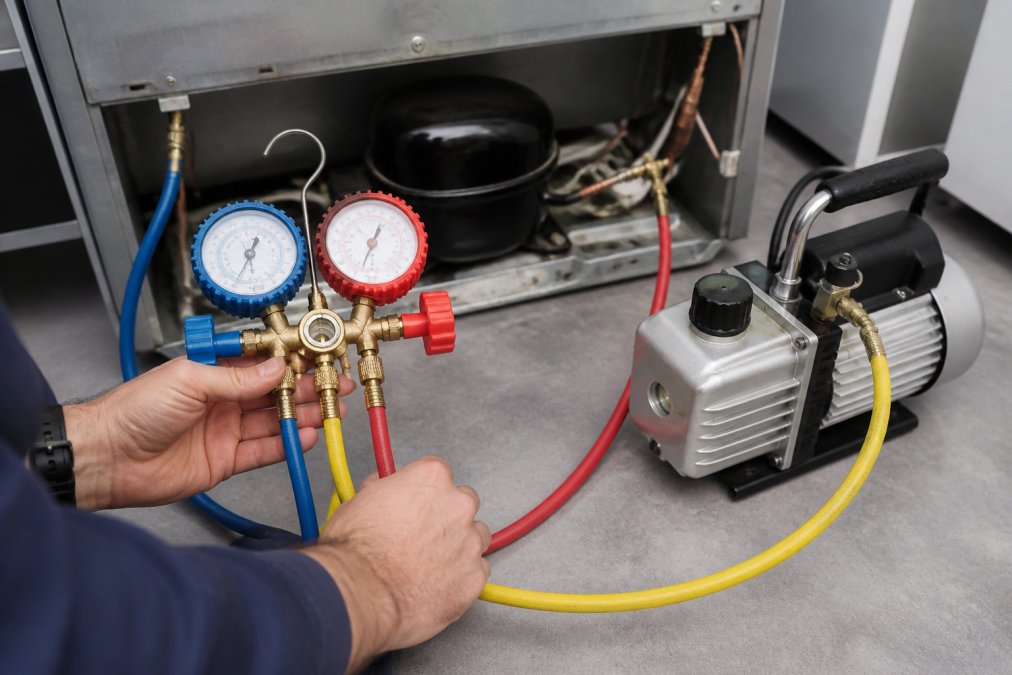
Home Tech's EPA 608-certified technicians handle sealed-system work on Samsung Bespoke refrigerators and all major brands. They have the manifold gauge set, vacuum pump, and recovery equipment required to safely work on the sealed system. Same-day appointments are available for emergencies.
Where DIY diagnosis helps: confirming that the compressor is the problem. Once you've ruled out error codes, checked electrical continuity, and verified that the condenser fan is running and the coils are clean, you know the compressor itself has failed. At that point, professional service is the only option.
Samsung Refrigerator Compressor Replacement Cost
Compressor replacement cost depends on the compressor type, parts availability, and labor rates in your area. Home Tech provides transparent pricing with no hidden fees.
Parts, Labor, and Service Variables
The compressor itself is the largest expense. Samsung Bespoke refrigerators use either a linear compressor or an inverter compressor, depending on the model. Both types are specialized components designed for Samsung's sealed system. OEM parts ensure compatibility and warranty coverage.
Labor cost varies based on how accessible the compressor is. Some models require removing the control board or other components to reach the compressor. Others allow direct access from the rear panel. A technician experienced with your specific model will work more efficiently than someone unfamiliar with the design.
Additional costs may include refrigerant recharge, system evacuation and pressure testing, or replacement of the thermal overload protector if it's damaged. A proper compressor replacement includes testing the entire sealed system to confirm the repair holds. This prevents the scenario where a new compressor fails weeks later because the original problem, contamination, moisture, or a blocked expansion device, wasn't addressed.
For current pricing on compressor replacement for your specific Samsung model, contact Home Tech at (602) 486-1901 or visit hometechappliancerepair.com for a quote. Same-day service is available for emergency calls.
Warranty Coverage and Claims
Samsung's compressor warranty typically covers 10 years from the purchase date on sealed-system components. This is longer than the standard parts warranty, reflecting the importance of the compressor to refrigerator reliability.
Warranty coverage applies only to manufacturing defects, not to damage caused by power surges, improper installation, or contamination of the sealed system. If your compressor fails within the warranty period and the failure is due to a manufacturing defect, Samsung covers the part cost. Labor may or may not be covered depending on your service plan.
To file a warranty claim, you'll need the original purchase receipt and the model number from the refrigerator's serial plate. A technician must diagnose the failure and document the reason before Samsung processes the claim. If the failure is due to something other than manufacturing defect, for example, a power surge that burned out the compressor, the claim will be denied.
Extended warranties offered at the point of sale sometimes cover compressor failure beyond the standard 10-year period. Check your warranty documentation to see what coverage you purchased. If you're unsure, Home Tech can review your warranty status and advise whether a claim is likely to succeed.
Sealed System Safety and Environmental Disposal
Working on a sealed refrigeration system requires EPA 608 certification (the EPA). This certification confirms that a technician understands refrigerant handling, system evacuation, and leak prevention. The EPA enforces these rules because refrigerants can damage the ozone layer and contribute to climate change.
When a compressor fails, the sealed system must be opened to remove the old compressor and install the new one. This process requires:
- A certified technician with proper equipment
- A manifold gauge set to measure system pressure
- A vacuum pump to remove air and moisture
- Refrigerant recovery equipment to capture and recycle the old refrigerant
- Proper disposal of the failed compressor
The old compressor cannot be thrown away. It contains refrigerant that must be recovered before disposal. Scrap metal recyclers accept compressors only if the refrigerant has been properly removed and documented. Home Tech handles refrigerant recovery and proper disposal as part of the compressor replacement service.
Your responsibility is to report any refrigerant leaks to your technician immediately. A leak in the sealed system means refrigerant is escaping into the atmosphere. The system cannot be recharged until the leak is found and sealed. This is why pressure testing is part of a proper repair, it confirms the sealed system holds pressure before you pay for a full refrigerant charge.
Preventative Maintenance for Long-Term Reliability
A compressor in good condition stays that way with basic maintenance. The most important step is keeping the condenser coils clean.
Condenser coils sit at the back or bottom of your refrigerator. Dust and pet hair block airflow, forcing the compressor to work harder and run longer. This accelerates wear and raises the risk of thermal overload. Cleaning the condenser coils twice a year, more often if you have pets, extends compressor life significantly.
Use a coil brush or vacuum with a brush attachment. Unplug the refrigerator first. Gently brush away dust from the coil fins. Do not use a pressure washer or aggressive scrubbing, as you can bend the fins and reduce cooling efficiency.
Keep the area around the refrigerator clear. Air must flow freely around the unit. Placing the refrigerator against a wall or in a tight cabinet reduces airflow and raises the compressor's operating temperature. Maintain at least 2 inches of clearance on all sides, especially at the back where the condenser coils are located.
Check door seals regularly. A worn gasket lets cold air escape, forcing the compressor to cycle more frequently. Replace the gasket if it no longer seals tightly. A simple test: close a dollar bill in the door. If you can pull it out without resistance, the seal is compromised.
Avoid frequent temperature adjustments. Every time you change the thermostat setting, the compressor adjusts its cycling pattern. Set your refrigerator to 37°F and freezer to 0°F, then leave them alone. Stability extends compressor life.
When to Repair vs. Replace Your Refrigerator
A failed compressor forces a decision: repair or replace. For a newer refrigerator, repair almost always makes sense. For an older unit, replacement might be more cost-effective.
Consider the refrigerator's age. Units older than 10 years are approaching the end of their typical lifespan. If the compressor fails at year 12 or 13, you're already living on borrowed time. A replacement might be wiser than investing in a repair that buys you another 2-3 years.
Factor in repair cost relative to replacement cost. A high-end Samsung Bespoke refrigerator is an investment. If the compressor failure occurs within the warranty period or shortly after, a repair preserves that investment. If the unit is out of warranty and repair cost approaches 50% of a replacement's price, replacement becomes attractive.
Think about reliability going forward. An older refrigerator with a failed compressor has already shown its weak point. After repair, other components, the control board, ice maker, or water dispenser, may fail within the next few years. A newer refrigerator comes with a fresh warranty and years of reliable operation ahead.
Energy efficiency is another factor. Older refrigerators consume significantly more electricity than modern models. A new Samsung Bespoke refrigerator uses less power, lowering your utility bills. Over 10-15 years, this savings can offset a substantial portion of the replacement cost.
Home Tech recommends repair for refrigerators less than 8 years old with a failed compressor, especially if the unit is still under warranty. For units older than 10 years, a consultation with a technician can help you weigh repair versus replacement based on the specific model and your situation.
Frequently Asked Questions
What are the most common signs of a bad refrigerator compressor?
A failing compressor typically produces a loud humming, clicking, or rattling noise that differs from normal operation. You may notice the refrigerator running constantly without reaching the desired temperature, or warm food despite the appliance running. Some compressors fail silently, the sealed system loses refrigerant or the compressor stops cycling entirely. Error codes on the display panel, if your Samsung model has them, can point directly to compressor failure.
How much does a Samsung refrigerator compressor replacement cost?
Compressor replacement costs depend on the specific Samsung Bespoke model, whether you choose OEM parts or aftermarket alternatives, your location, and whether the sealed system requires evacuation and recharging with refrigerant. Labor rates vary by technician and complexity. Rather than guessing at a figure, contact a licensed, EPA 608-certified technician for an accurate quote. We recommend getting a diagnostic first to confirm the compressor is the actual problem, sometimes error codes point to the start relay, thermal overload protector, or main control board instead.
Can I replace the compressor myself, or do I need a professional?
Sealed-system work on refrigerators requires an EPA 608 certification and specialized equipment like a vacuum pump and manifold gauge set. Federal regulations prohibit releasing refrigerant into the atmosphere, and improper handling can damage the compressor, evaporator, condenser coils, and the entire refrigeration cycle. A DIY attempt can void your warranty and create safety hazards. Professional service ensures proper evacuation, brazing if needed, and correct refrigerant charge for your model.
Is it worth repairing a refrigerator compressor, or should I replace the whole unit?
If your Samsung Bespoke refrigerator is under warranty, repair is almost always the right choice. For units beyond warranty, consider the refrigerator's age, the cost of repair versus replacement, and long-term reliability. A compressor failure in a 5-year-old unit may justify repair; in a 12-year-old unit, replacement might be more economical. Factor in food loss risk, a broken refrigerator in a restaurant or grocery store costs money every hour it's down. A professional diagnostic and cost estimate will help you decide.
A failed compressor doesn't mean your Samsung Bespoke refrigerator is finished. But it does require professional expertise. Home Tech's EPA 608-certified technicians diagnose compressor problems accurately and handle sealed-system repairs with precision. We offer same-day service, transparent pricing with no hidden fees, and a 100% satisfaction guarantee on every repair. Call (602) 486-1901 or book online at hometechappliancerepair.com to schedule your appointment today.