 ultimate-guide
Most Common Refrigerator Repair Issues Explained
Table of Contents
- The Most Common Refrigerator Repair Issues
- Why Is My Refrigerator Leaking Water
- Refrigerator Not Cooling Properly
- How to Clean Refrigerator Condenser Coils
- Other Common Refrigerator Problems
- Refrigerator Repair vs Replacement Guide
- DIY vs Professional Repair: Safety Thresholds
- Preventative Maintenance to Avoid Repairs
- Frequently Asked Questions
Last Updated: September 28, 2026
The Most Common Refrigerator Repair Issues
Water leaks, cooling failures, and ice maker breakdowns are the three most common refrigerator repair issues. Water pooling on your kitchen floor is typically caused by a blocked defrost drain, damaged door gasket, or faulty water inlet valve. Insufficient cooling stems from dirty condenser coils, a failing evaporator fan, a faulty thermostat, or refrigerant leak.
Understanding what typically breaks helps you decide whether repair or replacement makes sense.
Why Is My Refrigerator Leaking Water
Water pooling under or inside your refrigerator usually traces to the appliance's drainage system, which removes condensation that naturally forms as cold air circulates.
Blocked Defrost Drain
The defrost drain is a small tube running from the evaporator coils down through the cabinet to a drain pan, where water from melted frost evaporates.
When food particles, ice, or mineral buildup clog this drain, water backs up inside the cabinet or pools underneath.
How to check: Look under your refrigerator or behind the back panel for the drain opening. Try flushing it with warm water using a turkey baster or small syringe. If water backs up or doesn't flow freely, the drain is blocked. You may need to locate the interior drain opening (usually near the back wall inside the fridge) and clear it from above as well.
Many homeowners can clear a blocked drain with warm water. If the blockage won't budge, a professional can use specialized tools to clear it.
Damaged Door Gasket
The rubber seal around your refrigerator door is called the door gasket. When it cracks or warps, warm air leaks in, the compressor works harder, and excess condensation forms.
This excess condensation can cause water to back up and leak, and a damaged gasket reduces efficiency and increases energy costs.
How to check: Close the door on a dollar bill. If the bill slides out easily, the seal is compromised. Look for visible cracks, hardening, or areas where the gasket doesn't sit flush against the cabinet.
Replacing a door gasket is affordable and straightforward; a technician can swap it in under an hour.
Faulty Water Inlet Valve
A water inlet valve supplies water to ice makers and dispensers. If it cracks or fails to seal, water leaks inside the cabinet or at the connection behind the fridge.
How to check: Look behind your refrigerator at the water line connection. If you see water dripping or pooling, the inlet valve or its connection is likely the culprit. You can also listen, a faulty valve sometimes makes a hissing or dripping sound even when the ice maker isn't running.
Water inlet valve replacement requires turning off the water supply and is best left to a professional.
Refrigerator Not Cooling Properly
A refrigerator that doesn't cool is a crisis, but many cooling failures stem from simple issues you can address.
Dirty Condenser Coils and Air Circulation
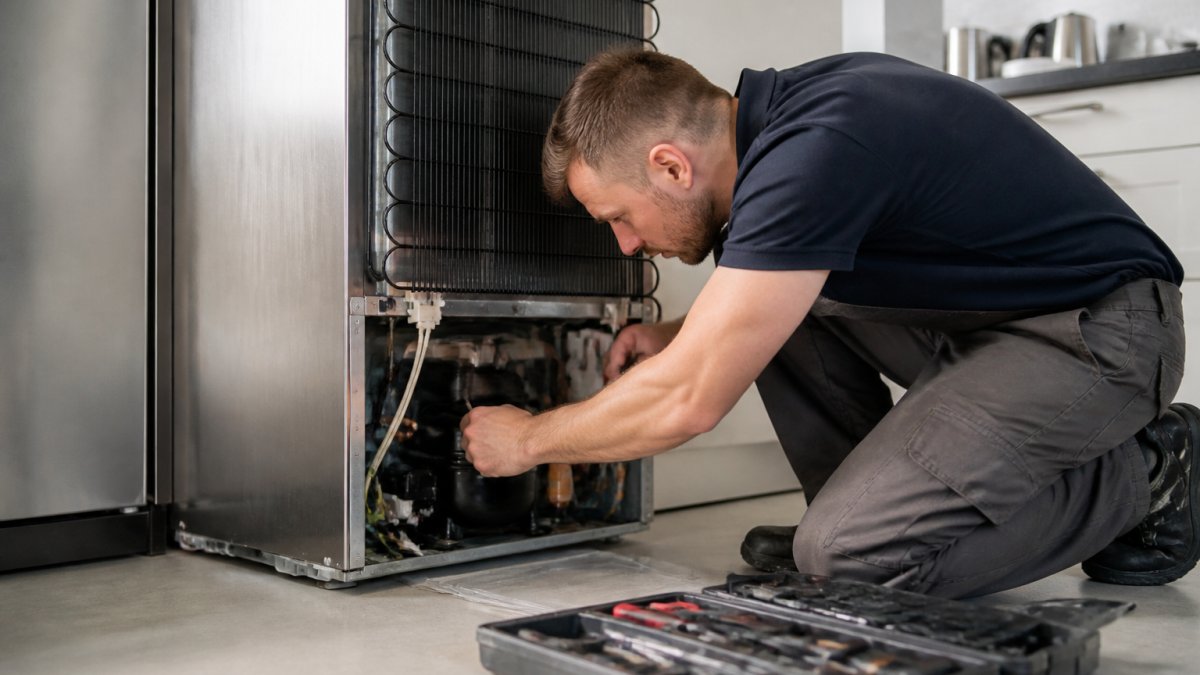
The condenser coils on the back or underneath your refrigerator release heat. When dust and debris coat these coils, heat can't escape, the compressor runs harder, and cooling fails.
Poor air circulation also traps heat; ensure your refrigerator has clearance on all sides.
How to check: Unplug the refrigerator and pull it away from the wall. If the coils are visibly caked with dust or airflow feels restricted, that's your problem.
Faulty Evaporator Fan or Thermostat
The evaporator fan circulates cold air throughout the cabinet. If it fails, the fridge warms up even though the compressor runs.
A faulty thermostat may signal the compressor to shut off prematurely or fail to signal at all, leaving the fridge running without cooling.
How to check: Listen inside the fridge for a faint humming sound from the fan. If silent, the fan may have failed. If the compressor runs but the fridge isn't cold, the evaporator fan or thermostat is likely at fault.
These components require professional replacement, as accessing them means opening the sealed system.
Refrigerant Leak
Refrigerant absorbs heat inside your fridge and releases it outside. Leaks require sealed-system work; you can't simply refill refrigerant.
How to Clean Refrigerator Condenser Coils
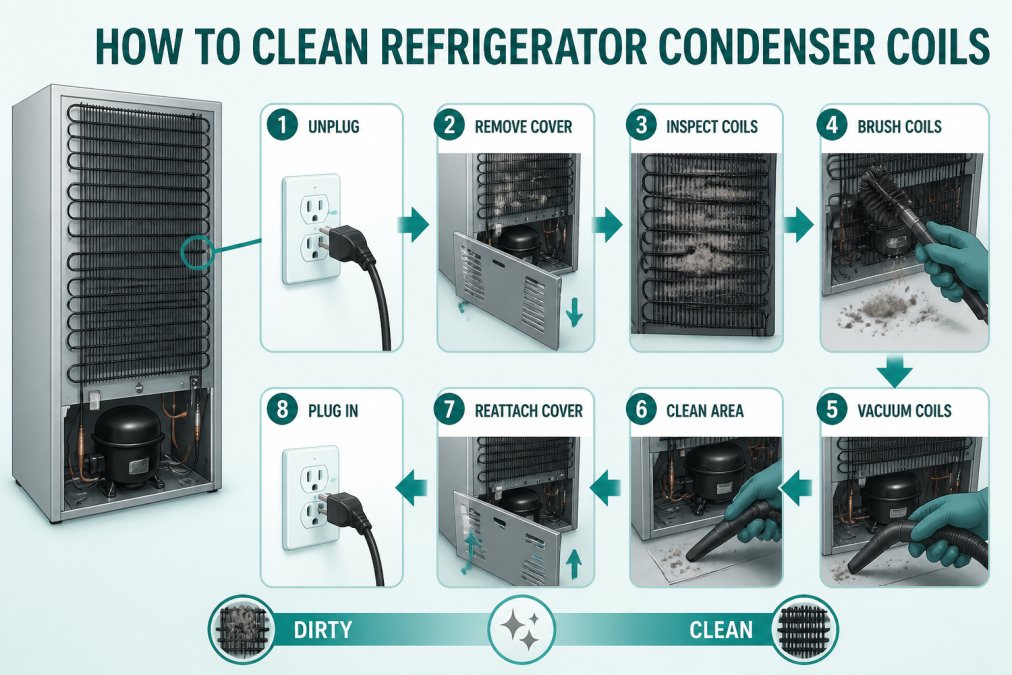
What you'll need:
- Flashlight
- Coil brush or soft-bristled brush
- Vacuum with a hose attachment
- Warm water and a cloth
- Screwdriver (if your fridge has a removable access panel)
Steps:
-
Unplug the refrigerator. Safety first, always disconnect power before working on any appliance.
-
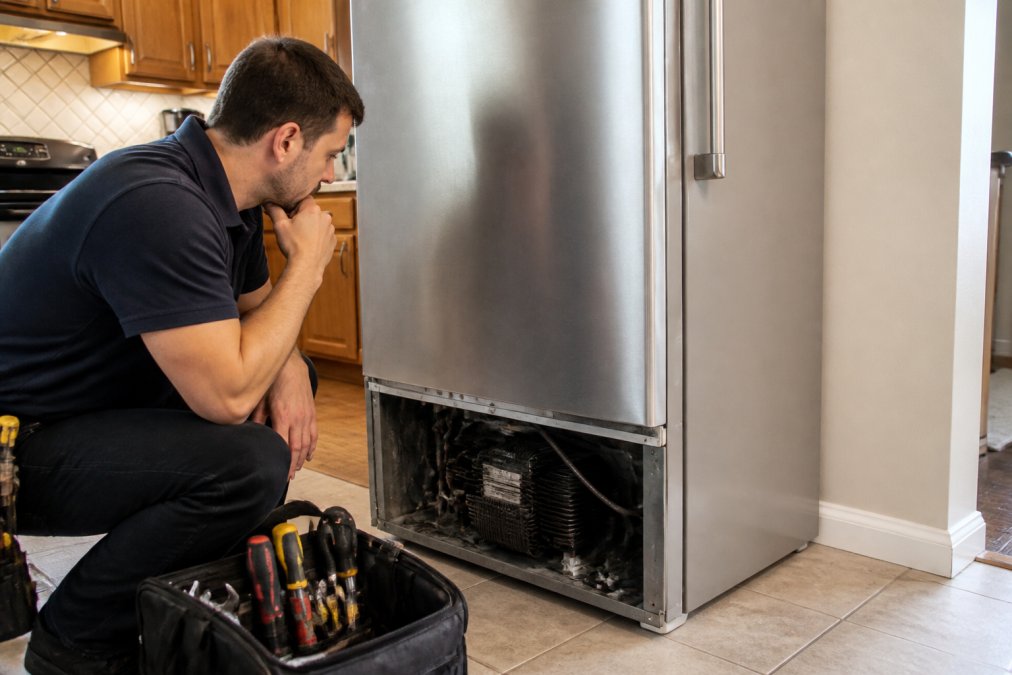
Locate the condenser coils. On most models, coils are on the back of the unit. Some refrigerators have coils underneath, accessed by removing a front kickplate (usually held by a screw or two). Consult your manual if you're unsure.
-
Brush the coils gently. Use the coil brush or a soft brush to loosen dust and debris. Work methodically, brushing in the direction the coils run. Don't bend or damage the coils, they're delicate.
-
Vacuum thoroughly. Use the hose attachment to vacuum up all the loosened dust. Get into crevices and corners where dust accumulates.
-
Wipe with a damp cloth. Once most dust is gone, wipe the coils with a cloth slightly dampened with warm water. This removes fine dust and oil residue.
-
Check the drain pan. While you're back there, look for the drain pan (usually a tray under or behind the coils). Empty it if it has standing water, and rinse it clean.
-
Plug the refrigerator back in. Wait a few minutes before opening the door, then check that it's cooling normally.
Other Common Refrigerator Problems
Ice Maker Malfunctions
A broken ice maker is usually not an emergency. Common causes include a frozen water line, faulty ice maker assembly, failed water inlet valve, or faulty thermostat.
Noisy Operation
A refrigerator should hum quietly. If it's buzzing, rattling, or grinding, something is loose or failing. Common causes include a loose compressor mount, failing evaporator fan, ice buildup in the defrost drain, or an object stuck against a moving part.
Water Dispenser Issues
If your water dispenser isn't dispensing, the problem is usually a frozen water line, blocked inlet valve, failed solenoid, or clogged inline filter.
Refrigerator Repair vs Replacement Guide
The decision to repair or replace hinges on three factors: the appliance's age, the repair cost, and the likelihood of future failures.
When to Repair
Repair makes sense when the appliance is under 7-8 years old, the repair cost is less than half the price of a new refrigerator, and the failed component is not the compressor.
When to Replace
Replace when the refrigerator is older than 10-12 years and the repair involves the compressor or sealed-system work. A new compressor alone can cost $800 to $1,200 installed.
DIY vs Professional Repair: Safety Thresholds
Safe for DIY:
- Cleaning condenser coils
- Clearing a blocked defrost drain (using warm water, not tools that could puncture the line)
- Replacing a door gasket
- Removing and cleaning the drain pan
- Replacing a clogged water filter
Requires a professional:
- Refrigerant work of any kind (requires EPA 608 certification) (the EPA)
- Compressor replacement or repair
- Sealed-system diagnostics or repairs
- Evaporator or condenser coil replacement
- Electrical component replacement (thermostat, solenoid, fan motor)
- Water inlet valve replacement (requires working with water lines and electrical connections)
Sealed-system work exposes you to hazardous refrigerant. Electrical repairs risk shock or fire. Water line work can cause leaks. A professional technician carries insurance and has the right tools.
Preventative Maintenance to Avoid Repairs
The best repair is the one you never need. A few simple maintenance steps dramatically reduce the risk of common failures.
Frequently Asked Questions
What is the most common reason a refrigerator stops cooling?
The most common cause of insufficient cooling is dirty condenser coils, which prevent heat from escaping the system. Dust and debris block airflow around the coils, forcing the compressor to work harder and reducing cooling efficiency. The second most common issue is a faulty evaporator fan that fails to circulate cold air throughout the refrigerator. Both problems are preventable with regular maintenance and can be diagnosed by checking whether the back coils are caked with dust or listening for unusual fan noise.
How often should refrigerator coils be cleaned to prevent repairs?
Clean your refrigerator's condenser coils every 6 to 12 months, depending on your environment. Homes with pets, high dust levels, or kitchens with frequent cooking should clean coils every 6 months. Standard households can extend to 12 months. Regular cleaning prevents the compressor from overworking, extends the appliance lifespan, and improves energy efficiency. A simple vacuum and brush take 15 minutes and can save you hundreds in repair costs.
Is it worth repairing a 10-year-old refrigerator?
Most refrigerators last 10 to 15 years. At 10 years old, repair makes sense if the issue is a single component like a water inlet valve, door gasket, or ice maker assembly. However, if the compressor fails or you need a refrigerant recharge, replacement often becomes more cost-effective. Compare the repair estimate against the cost of a new unit and consider the appliance's energy efficiency. A 10-year-old refrigerator uses significantly more electricity than modern models, so replacement may save money long-term.
What are the signs that a refrigerator needs professional repair?
Call a professional if you notice: food not staying cold despite the thermostat being set correctly, water pooling inside the fridge or underneath it, unusual buzzing or rattling sounds, frost buildup in the freezer, or a broken water dispenser. Also seek professional help if the compressor cycles constantly, the door seal is visibly cracked, or you smell unusual odors. These symptoms indicate problems beyond basic maintenance and often require sealed-system work or component replacement that demands EPA 608-certified technician expertise.