 ultimate-guide
Average Refrigerator Lifespan: When to Repair vs Replace
Table of Contents
- What Is the Average Refrigerator Lifespan?
- Factors That Affect Your Refrigerator's Longevity
- Signs of a Failing Refrigerator
- Why Is My Refrigerator Leaking Water?
- How to Extend the Life of Your Refrigerator
- Refrigerator Repair vs Replace: Making the Right Decision
- Lifespan Differences by Refrigerator Type
- Frequently Asked Questions
Last Updated: September 25, 2026
What Is the Average Refrigerator Lifespan?
Most refrigerators last between 10 and 15 years under normal household conditions. The average refrigerator lifespan depends heavily on maintenance, usage frequency, and unit quality.
Core mechanical components like the compressor, condenser coils, and sealed system are designed to operate reliably for 10-15 years. After 15 years, even well-maintained units begin showing their age. The difference between early failure and extended life almost always comes down to maintenance and usage intensity.
A unit in a cool basement will outlast an identical model in a hot garage. Constant use by a large family stresses the appliance more than occasional use. These variables matter more than the calendar.
Factors That Affect Your Refrigerator's Longevity
The refrigerator lifespan you experience is shaped by forces both inside and outside your control. Some relate to how you use the appliance; others relate to what you bought in the first place.
Brand Quality and Manufacturing Standards
Higher-end models from Bosch, Jenn-Air, and GE use heavier-gauge components and more durable compressors than budget alternatives. Longer warranties (five to seven years on parts) signal the maker expects them to survive longer.
Budget models often cut corners on compressor quality and seal materials, reaching 10 years but requiring repairs sooner.
Units with simpler defrost systems tend to last longer than those with complex electronic controls. More sensors and circuit boards mean more potential failure points.
Usage Patterns and Environmental Conditions
How hard your refrigerator works directly affects how long it survives. A unit cycling constantly in a 95°F garage burns through its compressor faster than one in a climate-controlled kitchen.
Heat is the enemy. Every degree above 75°F ambient temperature stresses the compressor and condenser coils. High humidity increases defrost system workload and accelerates corrosion.
A primary kitchen refrigerator running 24/7 for a family of five ages faster than a secondary unit opened occasionally. Frequent door openings force the unit to work harder to recover lost cold air.
Refrigerators need several inches of clearance on the sides and back for condenser coil ventilation. Poor ventilation traps hot air, forcing the compressor to work harder and reducing refrigerator lifespan significantly.
Signs of a Failing Refrigerator
Strange noises, grinding, squealing, or clicking, suggest the compressor is struggling or a fan bearing is wearing out, typically signaling months until breakdown.
Temperature swings, running cold then warming up, or frost buildup followed by thawing, indicate a failing thermostat or compressor and signal the refrigerator lifespan is nearing its end.
Visible rust or corrosion, especially around the drain, suggests moisture accumulation and often precedes seal failure. Water pooling at the bottom indicates a blocked drain or cracked pan.
If you've had the compressor serviced, thermostat replaced, or seals repaired within the last 18 months, you're likely in the final chapter of the refrigerator lifespan.
Why Is My Refrigerator Leaking Water?
Water leaks are among the most common refrigerator problems, and they can signal different issues depending on where the water appears.
A puddle under the fridge usually means the drain line is clogged. Running warm water or a thin wire through the drain line clears the blockage. This type of leak doesn't necessarily shorten your refrigerator lifespan; it's usually a maintenance issue.
Water pooling inside or dripping from shelves points to a blocked defrost drain. This is usually repairable by clearing the drain or thawing a frozen line.
Water seeping from the gasket suggests the door seal is failing. Replacing a gasket costs $50-$150 in parts, but on an old unit, it may signal larger aging issues.
Leaks don't automatically mean your refrigerator lifespan is over. Many are quick fixes. But if leaks occur alongside other problems, temperature fluctuations, strange noises, or visible rust, you're likely looking at the end of the unit's useful life.
How to Extend the Life of Your Refrigerator
Preventative maintenance is the single most effective way to extend your refrigerator lifespan. A few simple habits can add years to your unit's life.
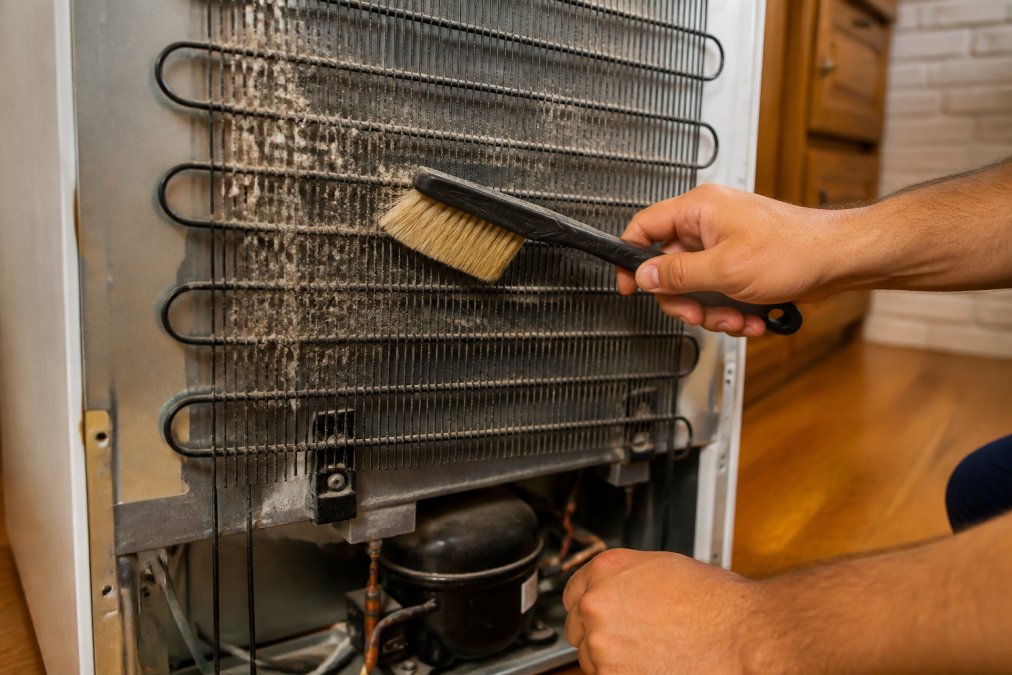
Keep the condenser coils clean by vacuuming every three to six months. Dust buildup forces the compressor to work harder, and cleaning alone can extend refrigerator lifespan by several years.
Check and clean the door gasket regularly. A cracked or dirty seal lets cold air escape. Replace it if damaged to prevent moisture problems.
Avoid overstuffing, which blocks airflow and makes the compressor work harder. Proper air circulation extends refrigerator lifespan.
Make sure there's adequate ventilation around the unit. Leave at least three inches of clearance on the sides and back. If your refrigerator is built into cabinetry, ensure the cabinet has ventilation openings. Poor airflow is one of the fastest ways to shorten a refrigerator's lifespan.
Preventative Maintenance for Condenser Coils and Seals
Condenser coils and door seals are the two components most worth monitoring. They're inexpensive to maintain but expensive to ignore.
Condenser coils accumulate dust, pet hair, and debris over time. This insulation reduces the coil's ability to shed heat, forcing the compressor to work longer and harder. Quarterly cleaning takes ten minutes and extends refrigerator lifespan noticeably. Use a soft brush or coil cleaning tool, never a pressure washer, which can damage the fins.
The door gasket deteriorates gradually. Rubber becomes brittle and cracks form, usually at the corners. A failing gasket increases energy consumption and allows warm air to enter, which stresses the cooling system. Replacing a gasket costs far less than replacing a compressor. If you notice condensation on the outside of the door or frost building up inside near the seal, replacement is overdue.
Thermostat calibration also matters. Many refrigerators have a simple dial you can adjust. If your fridge isn't holding temperature properly but the compressor is running, the thermostat may be miscalibrated. A simple adjustment can restore proper operation and extend refrigerator lifespan.
Refrigerator Repair vs Replace: Making the Right Decision
The decision to repair or replace an aging refrigerator comes down to cost and likelihood of future problems. There's no universal rule, but a few factors help clarify the choice.
If your refrigerator is under ten years old and the repair cost is less than half the price of a new unit, repair usually makes sense. You're likely to get several more years of service. If the unit is 12 years or older and the repair costs more than a third of a new refrigerator's price, replacement is often the smarter move.
Consider the repair history. If this is the second or third repair in two years, the refrigerator lifespan is clearly ending. Additional failures are likely, and you'll spend money repeatedly on fixes that won't last. A single major repair on a younger unit is different, it may be an isolated problem, not a sign of systemic aging.
Energy efficiency also factors in. Older refrigerators consume significantly more electricity than modern units. A 15-year-old fridge might cost $200 or more per year to run, while a new ENERGY STAR model costs $100 or less. Over five years, the savings on electricity can offset the cost of replacement.
Cost-Benefit Analysis and Warranty Considerations
Run the numbers before deciding. Add up the repair cost, then estimate how many more years you'll realistically get from the unit. Multiply the annual electricity cost by that number of years and add it to the repair cost. Compare that total to the cost of a new refrigerator with a good warranty.
Most new refrigerators carry a one-year warranty on parts and labor.
| Decision Factor | Repair | Replace |
|---|---|---|
| Refrigerator age | Under 10 years | Over 12 years |
| Repair cost vs. new unit | Less than 40% | More than 50% |
| Repair history | First or second repair | Third+ repair in 2 years |
| Energy efficiency | Acceptable | Noticeably high bills |
| Warranty remaining | Valuable coverage | Expired or minimal |
Lifespan Differences by Refrigerator Type
Different refrigerator styles have slightly different lifespans and failure patterns. Understanding these differences helps you set realistic expectations.
Frequently Asked Questions
How long does the average refrigerator lifespan typically last?
Most refrigerators have a median lifespan of 10 to 18 years, depending on brand, model type, and maintenance. Standard refrigerators tend to last longer than compact models. Regular preventative maintenance, cleaning condenser coils, checking gasket seal integrity, and ensuring proper ventilation, can help your refrigerator reach the upper end of that range.
Is it worth repairing a 10-year-old refrigerator, or should I replace it?
At 10 years, repair versus replacement depends on the repair cost and your refrigerator's condition. If the compressor or sealed system fails, repair costs can be substantial. However, if the issue is a gasket replacement or defrost system problem, repair often makes financial sense. Consider the refrigerator's energy efficiency compared to newer models, older units consume significantly more electricity, so a replacement may save money over time.
What are the most common signs that a refrigerator compressor is failing?
A failing compressor typically shows these warning signs: the fridge runs constantly without maintaining proper temperature, cooling performance drops noticeably, you hear loud humming or clicking sounds, or the unit cycles on and off frequently. If your refrigerator is leaking water or the evaporator fan isn't working, those can also indicate compressor stress. Professional diagnosis is essential, compressor failure is one of the most expensive repairs.
Does regular maintenance really extend refrigerator life?
Yes. Cleaning condenser coils every 6 months prevents airflow restriction and reduces compressor strain. Checking and replacing worn gaskets maintains seal integrity and cooling performance. Ensuring proper ventilation around the unit and keeping the thermostat calibrated correctly minimizes temperature fluctuations and mechanical stress. These simple preventative maintenance steps can add 2-4 years to your refrigerator's service life.