 ultimate-guide
Average Cost of Professional Refrigerator Repair
Table of Contents
- What Factors Influence Refrigerator Repair Costs
- Understanding Refrigerator Repair Service Call Fees
- Common Refrigerator Problems and Repair Expenses
- Signs Your Refrigerator Needs Professional Repair
- Refrigerator Compressor Replacement Cost and Considerations
- Repair vs. Replace: Making the Right Decision
- Warranty Coverage and Cost Protection
- Frequently Asked Questions
Last Updated: September 27, 2026
What Factors Influence Refrigerator Repair Costs
The average cost of professional refrigerator repair depends on several variables that work together to determine your final bill. Understanding what drives these costs helps you anticipate expenses and make informed decisions about whether to repair or replace your unit.
The primary cost drivers are the type of problem, the replacement parts needed, labor rates in your area, and whether your refrigerator is still under warranty. A simple thermostat adjustment might cost significantly less than a compressor replacement or sealed system repair. The complexity of accessing components also matters, some refrigerators require technicians to remove panels or drain water systems before they can diagnose the actual issue.
Service call fees represent the starting point. Many appliance technicians charge a diagnostic fee just to identify the problem. Labor rates vary based on the technician's experience level and EPA 608 certification status (required for refrigerant work). Parts markup also affects your total cost, genuine manufacturer parts cost more than aftermarket alternatives, but they typically come with better warranties and reliability guarantees.
The age and brand of your refrigerator influences pricing too. Newer models with electronic control boards and advanced features often cost more to repair because the parts are expensive and diagnosis requires specialized knowledge. Older, simpler models may have cheaper parts but harder-to-find components if they're no longer manufactured.
Understanding Refrigerator Repair Service Call Fees
A refrigerator repair service call fee covers the technician's time to arrive at your home, inspect your appliance, and diagnose the problem. This is separate from the actual repair labor and parts costs.
Service call fees typically range based on whether you need emergency or standard scheduling. Same-day appointments often carry a premium compared to next-day service. Many technicians waive the diagnostic fee if you authorize the repair on the spot, but you'll pay it if you decline to proceed. This fee compensates the technician for their expertise in identifying what's wrong with your refrigerator, not for fixing it.
When you call for service, ask whether the company offers flat-rate pricing or hourly labor rates. Flat-rate pricing means you pay a set amount for specific repairs regardless of how long the technician works. Hourly rates charge you for every minute spent on your refrigerator, which can add up if diagnosis takes longer than expected. Some companies use hybrid models where the diagnostic fee is flat-rate but additional labor is hourly.
The service call fee also depends on your location and the company's service area. Technicians who service a dense urban area can schedule more appointments per day, which sometimes means lower per-call fees. Rural or outlying areas may have higher service call fees because travel time is longer.
Home Tech offers same-day and next-day appointments throughout the Phoenix metro area with transparent pricing and no hidden fees. We credit our diagnostic fee toward your repair cost if you proceed.
Common Refrigerator Problems and Repair Expenses
Different refrigerator failures carry different repair costs. The most common problems fall into a few categories, each with distinct price ranges.
Thermostat and temperature control issues are among the less expensive repairs. If your refrigerator isn't maintaining the right temperature, the problem might be a faulty thermostat, defrost timer, or control board. These components are relatively affordable to replace, and diagnosis is straightforward. A technician can usually identify and fix this problem in one visit.
Refrigerant leaks require sealed system repair, which is more involved. The technician must locate the leak, repair it, evacuate the system, and recharge it with the correct refrigerant type. This process requires EPA 608 certification and specialized equipment. Sealed system repairs take longer and cost more than simple component replacements.
Evaporator fan failures prevent cold air from circulating into your fresh food compartment. The fan motor can fail, or the fan blade can break. Replacement is moderately priced but requires disassembling parts of the refrigerator to access the component safely.
Ice maker problems range from inexpensive to moderately priced depending on whether the issue is the water valve, the ice maker assembly itself, or the water line. A clogged water line is cheaper to fix than a failed ice maker motor.
Start relay and capacitor failures prevent the compressor from starting. These are small, inexpensive parts, but they're critical to operation. Replacing them is quick and affordable.
Condenser coil cleaning isn't always a repair, but it's a maintenance service that prevents future problems. Dust accumulation on the condenser coils forces the compressor to work harder, raising your energy bills and potentially causing premature failure. Professional cleaning costs less than a compressor replacement and extends your refrigerator's lifespan.
Signs Your Refrigerator Needs Professional Repair
Recognizing when your refrigerator needs professional attention helps you avoid food loss and prevents small problems from becoming catastrophic failures.
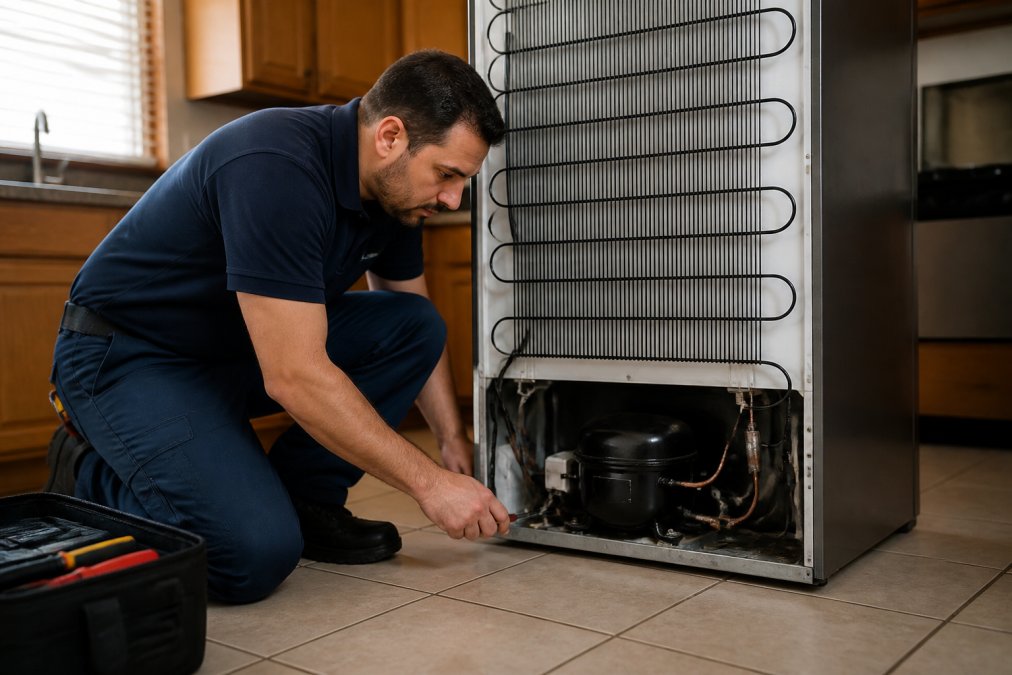
Temperature inconsistency is the most obvious warning sign. If your fresh food compartment feels warm or your freezer isn't holding items solid, the refrigerator isn't cooling properly. This could indicate a thermostat failure, a refrigerant leak, or a compressor problem. Don't wait, temperature issues can spoil food quickly.
Strange noises like grinding, clicking, or high-pitched sounds suggest mechanical problems. A clicking noise might indicate a faulty start relay. Grinding sounds suggest compressor issues. Hissing or bubbling could mean a refrigerant leak. These noises warrant professional diagnosis because they often precede complete failure.
Water pooling inside the refrigerator or underneath it points to a drainage problem. The defrost system might be clogged, or the water line feeding the ice maker could be leaking. Standing water promotes mold growth and can damage your kitchen floor if left unchecked.
Frost buildup in the freezer beyond normal accumulation suggests a defrost timer failure or a blocked air vent. Excessive frost reduces storage space and indicates the defrost cycle isn't working properly.
The compressor running constantly without cycling off means the refrigerator can't reach its target temperature. This overworks the compressor and increases energy consumption dramatically. Continuous operation is a sign of sealed system problems or thermostat failure.
Leaking refrigerant produces an oily residue around the compressor area and often comes with a chemical smell. Refrigerant leaks require immediate professional attention because they prevent cooling and the system won't function until sealed and recharged.
When any of these signs appear, contact a professional appliance technician promptly. Home Tech provides same-day diagnostics so you can understand what's wrong and make repair decisions quickly.
Refrigerator Compressor Replacement Cost and Considerations
The compressor is the heart of your refrigerator's cooling system. It circulates refrigerant through the sealed system, creating the temperature drop that keeps food cold. When a compressor fails, your entire refrigerator stops cooling.
Compressor replacement is the most expensive repair you'll likely face. The part itself is costly, and installation requires EPA 608 certification because the technician must work with sealed system refrigerant. The job involves evacuating the old refrigerant, removing the failed compressor, installing a new one, and recharging the system with the correct refrigerant type.
The refrigerant type matters because different refrigerators use different formulations. Older models might use R12 or R22, while newer units use R134a, R600a, R290a, or R454B. Some refrigerants are being phased out due to environmental regulations, which affects availability and cost. A technician must identify your specific refrigerant type and ensure the replacement uses the correct one.
Compressor failures are particularly common in older refrigerators or units that have been running continuously without proper maintenance. Dirty condenser coils force the compressor to work harder, shortening its lifespan. Regular cleaning of coils can prevent premature failure.
When facing compressor replacement, you're at the critical repair-versus-replace decision point.
Repair vs. Replace: Making the Right Decision
The average cost of professional refrigerator repair must be weighed against the cost of replacement. This decision depends on your refrigerator's age, the repair cost, and the appliance's remaining useful life.
| Factor | Favors Repair | Favors Replacement |
|---|---|---|
| Age | Under 8 years | Over 12 years |
| Repair cost | Below 40% of new price | Above 50% of new price |
| Prior repairs | None in past 3 years | Multiple repairs recently |
| Warranty status | Still covered | Expired |
| Energy consumption | Recent model | Very old model |
Warranty Coverage and Cost Protection
Your refrigerator's warranty significantly impacts repair costs. Understanding what your warranty covers prevents unexpected bills and clarifies when you're responsible for expenses.
Frequently Asked Questions
What is the average service call fee for refrigerator repair?
Service call fees vary based on your location and the repair company's pricing model. Some technicians charge a flat diagnostic fee upfront, while others roll that cost into the final repair bill if you proceed with the work. Call Home Tech at (602) 486-1901 or visit hometechappliancerepair.com for a current quote on your specific situation.
Is it worth repairing a refrigerator or should I replace it?
The answer depends on your refrigerator's age, the repair cost, and its remaining lifespan. If repair costs exceed 40-50% of a new unit's price and your fridge is over 10 years old, replacement often makes financial sense. For newer models or less expensive fixes, repair is usually the better choice. A technician can help you assess this during a diagnostic visit.
How much does it cost to replace a refrigerator compressor?
Compressor replacement is one of the more expensive repairs because the compressor is the heart of your refrigerator's cooling system. The final cost depends on the refrigerant type, your model, and labor rates. Contact Home Tech for a professional estimate, as pricing varies significantly based on whether your unit uses R134a, R600a, or other refrigerant types.
What are the most common refrigerator problems that require professional repair?
Frequent issues include refrigerant leaks in the sealed system, compressor failure, defrost timer malfunction, evaporator fan breakdown, and control board problems. Other common repairs involve thermostat replacement, water valve issues for ice makers, and condenser coil cleaning. A professional technician can diagnose the exact problem during a service call.