 how-to
Samsung Bespoke Ice Maker Troubleshooting Guide
Table of Contents
- How to Troubleshoot Samsung Bespoke Ice Maker Problems
- Finding the Samsung Bespoke Ice Maker Reset Button Location
- Power Cycling Your Refrigerator to Reset the Ice Maker
- Checking Water Supply Lines and Pressure
- What to Do When Your Samsung Refrigerator Ice Maker Frozen Up
- Samsung Refrigerator Water Filter Replacement Frequency
- When to Call a Professional Technician
- Preventative Maintenance to Avoid Ice Maker Issues
- Frequently Asked Questions
Last Updated: August 6, 2026
How to Troubleshoot Samsung Bespoke Ice Maker Problems
When your Samsung Bespoke refrigerator ice maker stops working, you lose the convenience modern appliances provide. The good news: most ice maker problems can be handled without a service call. Understanding how to troubleshoot starts with identifying where the failure occurs, then working through the most common causes systematically.
At Home Tech, we've diagnosed thousands of ice maker failures across the greater Phoenix metro area.
This guide walks you through troubleshooting step by step. You'll learn where to find your reset button, how to power cycle correctly, what to check before calling a technician, and how to prevent these problems from returning. If you're in the Phoenix area and need professional help, Home Tech offers same-day appointments with EPA 608-certified technicians who specialize in Samsung Bespoke systems.
Finding the Samsung Bespoke Ice Maker Reset Button Location
The reset button on a Samsung Bespoke refrigerator is typically located inside the refrigerator compartment on the control panel near or behind the ice bucket, usually on the right side of the ice maker housing.
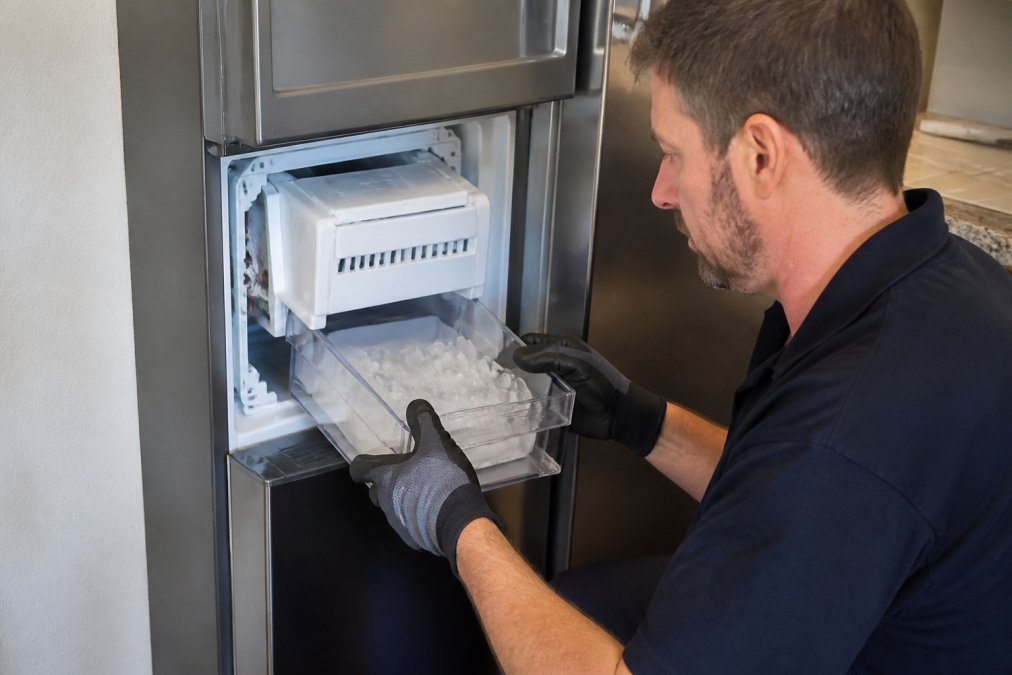
To locate your reset button, open the refrigerator door and look at the ice maker unit. Remove the ice bucket by pulling it straight out. Behind the bucket, you should see the control panel with a small, recessed button. If you can't find it visually, search "Samsung Bespoke [your model number] manual" online.
When you press the reset button, you send a signal to the ice maker's control board to restart its cycle. Hold the button for 3-5 seconds, then release. You should hear a chime or see a light indicator change. If nothing happens, the control board may have a deeper issue requiring professional diagnosis.
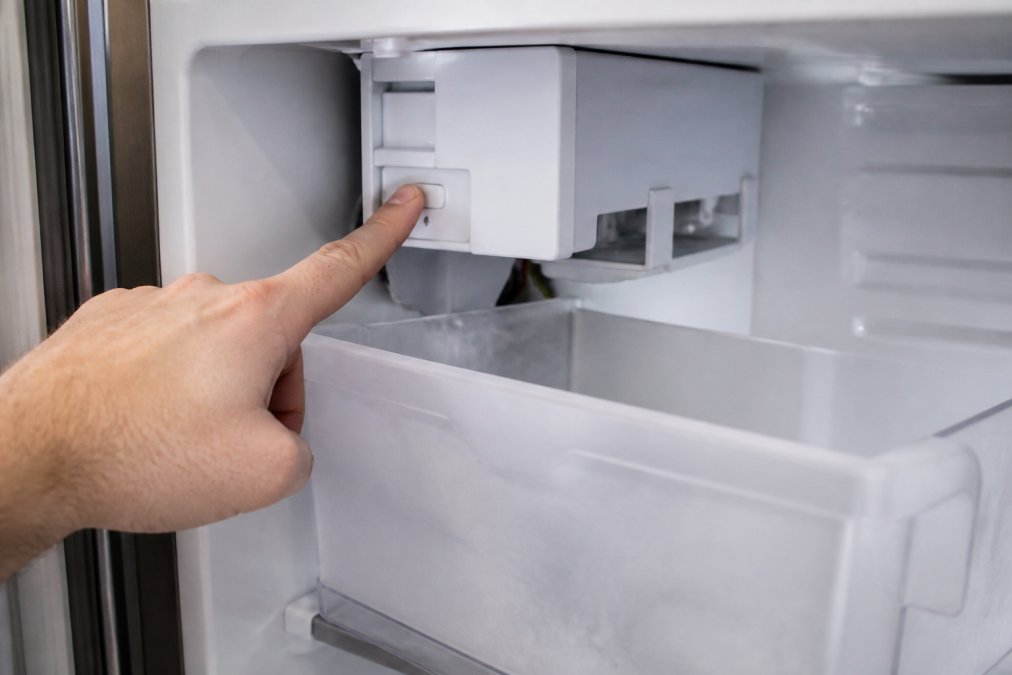
Some newer Bespoke models have digital controls instead of physical reset buttons. If your model has a touchscreen panel, look for an "Ice Maker" or "Reset" option in the settings menu and select restart. The digital reset performs the same function as a physical button.
Power Cycling Your Refrigerator to Reset the Ice Maker
Power cycling clears all temporary errors and forces a full system restart. Many ice maker problems resolve with a proper power cycle before you need professional service.
Locate your refrigerator's power cord at the back of the unit and unplug it completely. Wait a full 5 minutes, this duration matters, as it gives the system time to fully discharge. After 5 minutes, plug the refrigerator back in and listen for the compressor to kick in within 30 seconds.
Once restarted, press the reset button on the ice maker. Water should flow into the ice tray, freeze, and eject into the bucket. This cycle typically takes 2-4 hours on the first attempt after a power cycle.
Power cycling works because ice maker control boards can enter a fault state where they've misinterpreted sensor data or gotten stuck in a loop. A complete power-down resets the board's memory and forces it to re-evaluate all sensors from scratch. If your ice maker was producing nothing, small cubes, or running continuously without ejecting ice, a power cycle is the first troubleshooting step.
The risk to food is minimal if you keep the door closed during the 5-minute wait. Food inside a sealed refrigerator stays cold for several hours without power.
Checking Water Supply Lines and Pressure
A frozen or kinked water supply line is one of the most common causes of ice maker failure. Your Samsung Bespoke has a water inlet line running from your home's water supply to the ice maker. If this line is blocked, frozen, or disconnected, no water reaches the ice maker.
Locate the water supply line, typically a clear plastic or copper tube running along the back of the refrigerator. Follow it from where it enters the unit to where it connects to your home's water supply. Look for visible kinks, cracks, or cloudy sections. Kinks restrict water flow. Cracks cause leaks. Cloudy sections indicate mineral buildup or ice formation inside the line.
If the line is kinked, gently straighten it by hand. If permanently deformed, the line needs replacement. If you see cracks, the line is failing and must be replaced immediately to prevent water damage.
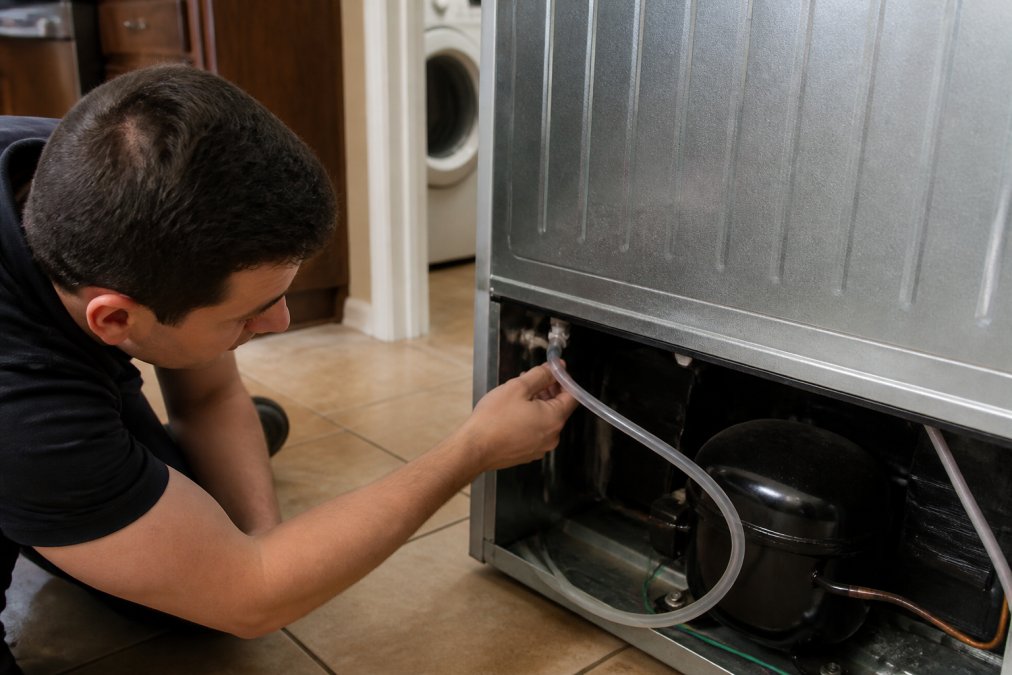
Next, check water pressure. Low water pressure prevents the ice maker from filling properly. Turn on your sink faucet and observe the flow. If water comes out slowly, your home's water pressure may be below the 20 PSI minimum that Samsung Bespoke ice makers require. Call a plumber to test your water pressure. If pressure is low, a plumber can install a pressure regulator or identify blockages in your main line.
If water pressure is adequate and the supply line looks clear, check the connection points. Make sure both connections are tight. A loose connection can cause water to leak or fail to flow. Use a wrench to gently tighten the fitting at the refrigerator inlet valve, hand-tight plus a quarter turn is sufficient.
What to Do When Your Samsung Refrigerator Ice Maker Frozen Up
A frozen ice maker is different from one that simply isn't producing ice. When components freeze solid, they can't move through their normal cycle. The ice tray can't rotate, the ejector arm can't push ice into the bucket, and water can't flow. You may see ice buildup around the ice maker compartment or hear the motor straining without any ice being ejected.
Freezing happens when humidity inside the ice maker compartment is too high or when warm water enters the system and freezes in unintended places. It can also occur if the defrost cycle isn't working properly.
To address a frozen ice maker, turn off the ice maker at the control panel. Do not try to force any moving parts. Remove the ice bucket and inspect the ice maker housing for visible ice buildup. If you see ice coating the walls or blocking the ejector arm, you need to melt it. The safest method is to leave the refrigerator off for 4-6 hours, allowing the ice to melt naturally. Place towels on the floor to catch water as the ice melts.
Do not use a hair dryer, heat gun, or boiling water to speed up melting. These methods can damage plastic components or warp the housing.
After the ice has melted, power cycle the refrigerator. Once it restarts, check that the ice maker's moving parts operate freely. Press the reset button and observe the next ice production cycle. If freezing returns within a few days, the problem is likely a failed defrost system or excessive humidity. Professional service is necessary because the defrost heating element or thermostat may need replacement.
Samsung Refrigerator Water Filter Replacement Frequency
Your Samsung Bespoke refrigerator's water filter plays a critical role in ice maker performance. A clogged filter restricts water flow to both the ice maker and water dispenser. As the filter accumulates sediment, minerals, and contaminants, water pressure drops. Eventually, water flow becomes so restricted that the ice maker can't fill properly.
Samsung recommends replacing the water filter every 6 months under normal use. If your home has hard water, you may need to replace it every 3-4 months. If you use very little water, you might stretch it to 9 months. Monitor filter condition rather than just following a calendar.
Most Samsung Bespoke models use a filter located in the upper right corner of the fridge compartment or in the base grille. Check your manual to find your specific filter location. Note the date on the existing filter. If it's been more than 6 months since installation, replacement is overdue.
To replace the filter, turn off the water supply to the refrigerator by turning the shut-off valve clockwise. Locate the filter housing and twist or pull the old filter out. Have a towel ready as water may drip. Install the new filter by twisting it in or pushing it into the housing until it seats completely. Turn the water supply back on and run water through the dispenser for 30 seconds to flush the new filter.
After filter replacement, your ice maker should produce ice more quickly and with better clarity. If ice production doesn't improve within 24 hours, the issue likely isn't the filter alone. Check your water supply line and pressure.
When to Call a Professional Technician
Some ice maker problems require professional diagnosis and repair. Knowing when to stop troubleshooting and call a technician saves you time and prevents further damage.
Call a professional if you've completed all the troubleshooting steps above and ice production hasn't resumed. Specifically:
- The reset button doesn't respond or the system won't restart after a power cycle
- Water supply line is cracked, kinked beyond repair, or completely disconnected
- Water pressure is below 20 PSI and you can't identify the cause
- The ice maker produces water but not ice, suggesting a freezing issue inside the mechanism
- You hear grinding or unusual noises from the ice maker motor
- Error codes appear on the control panel
- Ice production was frozen up, you thawed it, but freezing returns immediately
Home Tech specializes in Samsung Bespoke ice maker repair and can typically diagnose the problem within 30 minutes. Our EPA 608-certified technicians carry common replacement parts including inlet valves, control boards, defrost thermostats, and ejector arms, so many repairs are completed on the first visit. We serve the greater Phoenix metro area with same-day and next-day appointments, and we stand behind every repair with a 100% satisfaction guarantee.
Preventative Maintenance to Avoid Ice Maker Issues
The best approach to ice maker problems is preventing them. Regular maintenance catches small issues before they become expensive failures.
Replace your water filter every 6 months. This single step prevents most water flow problems and extends the life of your ice maker's inlet valve. A clogged filter forces the valve to work harder, and it will eventually fail. Filter replacement costs less than valve replacement and takes 10 minutes.
Keep the ice maker compartment clean and dry. Moisture promotes ice buildup and corrosion. If you notice condensation inside the ice maker housing, check that the refrigerator's door seals properly. A failing door seal lets warm, humid air into the fridge, and that moisture migrates to the ice maker. Replace door seals if they're cracked or no longer seal completely.
Inspect your water supply line every 3 months for kinks, cracks, or loose connections. A small leak now prevents a large water damage claim later. If you find a kink, straighten it gently. If you find a crack, replace the line immediately.
Check your ice bucket for cracks or damage. A cracked bucket can cause water to pool in the ice maker compartment instead of draining properly. Replace the bucket if damaged.
Monitor ice cube size and clarity. If cubes become noticeably smaller or cloudy, your water filter is likely due for replacement. Smaller cubes indicate reduced water flow. Cloudy cubes indicate mineral content in the water.
Listen for unusual sounds. A grinding noise, clicking, or continuous humming without ice ejection suggests mechanical failure. Address them promptly rather than waiting for complete failure.
If you're in the Phoenix area and want professional preventative maintenance, Home Tech can perform a seasonal ice maker inspection. Our technicians check water pressure, filter condition, supply line integrity, and component function. Call (602) 486-1901 to schedule an appointment.
Your Samsung Bespoke ice maker is a reliable system when properly maintained. Most failures are preventable with regular filter replacement and simple inspections. When problems occur, systematic troubleshooting, starting with the reset button and power cycle, then checking water supply and pressure, resolves the majority of issues without professional service. For repairs requiring parts replacement or component diagnosis, Home Tech is ready to help with same-day service across the greater Phoenix metro area. Contact us at (602) 486-1901 or visit hometechappliancerepair.com to book your appointment.
Frequently Asked Questions
Where is the ice maker test button on my Samsung Bespoke refrigerator?
The test button is typically located on the ice maker control panel inside your refrigerator's freezer compartment. Open the freezer door and look for a small button on the ice maker unit itself, usually marked with a test icon or labeled 'Test.' Press and hold it for 3 seconds to trigger an ice production cycle. If you can't locate it, check your model's user manual or contact a technician for guidance.
Why is my Samsung ice maker frozen up, and how do I fix it?
A frozen ice maker typically results from excess moisture, a malfunctioning water inlet valve, or temperature settings that are too cold. First, check that your freezer temperature is set between 0-5°F. If ice buildup is visible, manually remove it using a plastic scraper, never use sharp metal tools. If the problem persists after power cycling, the water inlet valve may need replacement, which requires professional service.
How often should I replace my Samsung refrigerator water filter?
Samsung recommends replacing your refrigerator's water filter every 6 months or after filtering 300 gallons of water, whichever comes first. A clogged filter reduces water pressure to the ice maker, preventing proper ice production. Most Samsung models have a filter indicator light on the control panel that alerts you when replacement is due. Using the correct genuine Samsung filter ensures optimal performance and ice quality.
What should I do if my ice maker still isn't working after I reset it?
If resetting doesn't work, check your water supply line for kinks, leaks, or frozen sections. Verify that the water inlet valve is functioning by listening for water flow during the ice production cycle. Test water pressure at the refrigerator inlet, it should be between 20-120 psi. If water pressure is low or absent, your water supply line may be blocked or the inlet valve may have failed, requiring professional diagnosis and repair.