 how-to
Refrigerator Sealed System Leak: Identify, Understand & Fix
Table of Contents
- What Is a Refrigerator Sealed System Leak?
- How a Sealed System Leak Happens
- Refrigerator Refrigerant Leak Symptoms to Watch For
- The Role of Refrigerant in Your Cooling Cycle
- Refrigerator Sealed System Repair Cost: What You Should Know
- EPA Regulations for Refrigerant Handling and Safety
- Repair vs. Replace: Making the Right Decision
- Why Professional Repair Matters for Sealed Systems
- Frequently Asked Questions
Last Updated: August 9, 2026
What Is a Refrigerator Sealed System Leak?
Asealed system leak is a breach in the hermetically sealed refrigeration circuit that allows refrigerant to escape from your appliance. This system is completely closed and designed to operate without ever needing refrigerant added, the same charge should last the entire lifespan of the refrigerator. When a leak develops, the system loses its ability to absorb and release heat effectively, and your food begins warming up.
The sealed system is the heart of refrigeration. It contains refrigerant (typically R134a or R600a in modern residential units), which circulates through the compressor, condenser coils, evaporator coils, and capillary tube in a continuous cycle. A leak at any point in this circuit compromises the entire cooling process. At Home Tech, we've diagnosed hundreds of sealed system failures across the Phoenix metro area, and the pattern is always the same: a small breach leads to gradual refrigerant loss, then total cooling failure within days or weeks.
What makes sealed system leaks particularly frustrating for homeowners is that they're invisible until symptoms appear. You can't see refrigerant escaping. You can't smell it (modern refrigerants are odorless). You only know there's a problem when your fridge stops keeping food cold.
How a Sealed System Leak Happens
Sealed system leaks don't occur randomly. They result from specific failure modes that develop over time or strike suddenly depending on the cause. Understanding the mechanism helps explain why repair costs are what they are and why prevention matters.
Solder Joint Failure
The sealed system is assembled using brazing and solder joints to connect copper tubing. These joints are where the compressor connects to the condenser, where the condenser connects to the capillary tube, and where the evaporator coils connect back to the compressor. Each joint is a potential failure point.
Solder joints fail when thermal stress exceeds the metallurgy's tolerance. Your refrigerator cycles on and off continuously, creating repeated heating and cooling cycles at the joint. Over 10-15 years, this thermal cycling causes the solder to develop micro-fractures. Eventually, those fractures become a pinhole leak. The leak may start so small that it takes months to lose enough refrigerant to notice a cooling problem.
Vibration from the compressor also stresses solder joints. If your refrigerator sits on an uneven floor or against a wall that vibrates from nearby appliances, the constant micro-movement accelerates joint failure. Poor installation, when a unit isn't level or is pushed against plumbing or electrical lines, compounds the problem.
Corrosion and Moisture Ingress
Copper tubing corrodes when moisture enters the sealed system. This happens most often during manufacturing defects or improper repair procedures where the system wasn't properly evacuated before being sealed. Even tiny amounts of water vapor can cause problems.
Once moisture is inside, it reacts with refrigerant and oil to form acids. These acids attack the copper tubing from the inside, creating pinholes and larger breaches. Corrosion is slow but relentless. A refrigerator might operate normally for years before corrosion weakens the tubing enough to leak.
Humidity in your kitchen accelerates external corrosion too. If condensation builds up on the outside of copper lines, it can corrode the tubing wall. This is especially common in humid climates like the Phoenix metro area during monsoon season, when moisture levels spike.
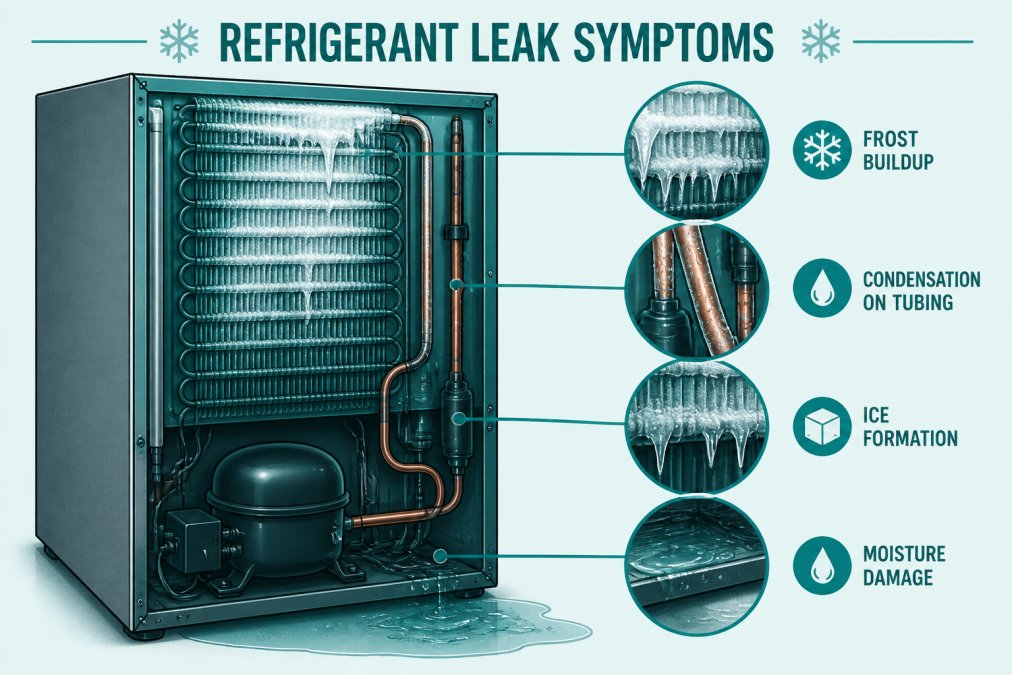
Refrigerator Refrigerant Leak Symptoms to Watch For
Catching a sealed system leak early is nearly impossible because the symptoms don't appear until significant refrigerant loss has already occurred. By the time you notice something wrong, the leak has usually been developing for weeks or months.
The most obvious symptom is reduced cooling. Your fridge runs constantly but doesn't reach the target temperature. Food in the back stays cold, but items on shelves closer to the door warm up. The compressor cycles more frequently than normal, trying to maintain temperature but failing because it has insufficient refrigerant to complete the cooling cycle effectively.
Listen for a compressor that never stops running. A healthy refrigerator compressor cycles on for 10-15 minutes, then off for 20-30 minutes. A compressor struggling with low refrigerant runs almost continuously. You'll hear it humming almost constantly, and the appliance will feel warm to the touch on the sides where the condenser coils are located.
Frost buildup on the evaporator coils is another warning sign. When refrigerant pressure drops, the evaporator can't absorb enough heat from the food compartment. The moisture in the air freezes on the coils instead of being properly managed. You might see ice accumulation in the freezer section or frost on the back wall of the refrigerator.
Unusual noises from the compressor, hissing, bubbling, or grinding sounds, indicate refrigerant escaping or internal damage. These sounds mean the system is under stress and failure is imminent.
The Role of Refrigerant in Your Cooling Cycle
Refrigerant is the working fluid that makes cooling possible. It's not a permanent substance that sits in the system like oil in an engine. Instead, it circulates continuously, changing states between liquid and gas as it moves through the sealed system. The refrigeration cycle depends entirely on this phase change.
Here's how it works: The compressor pressurizes low-pressure refrigerant gas, heating it. This hot, high-pressure gas flows to the condenser coils (usually on the back of your refrigerator), where it releases heat to the room and condenses into a liquid. The liquid then flows through the capillary tube, which restricts its flow and causes a pressure drop. As pressure drops, the liquid evaporates into a gas inside the evaporator coils (the cold part inside your fridge). As it evaporates, it absorbs heat from your food compartment, cooling everything inside. The cold, low-pressure gas then returns to the compressor, and the cycle repeats.
This cycle is elegant and efficient, if the system is sealed and the charge is correct. When refrigerant leaks out, the system can't complete the cycle. The compressor tries to pressurize gas that isn't there. The evaporator coils don't have enough refrigerant to absorb heat. The condenser can't release heat effectively. The whole system fails to cool.
The amount of refrigerant in your sealed system is precisely calculated by the manufacturer. A refrigerator with R134a might contain only 2-4 ounces of refrigerant. A small leak that loses just half an ounce per month will render the system non-functional within a few months.
Refrigerator Sealed System Repair Cost: What You Should Know
Sealed system repairs are expensive, and understanding why helps explain whether repair or replacement makes sense for your situation.
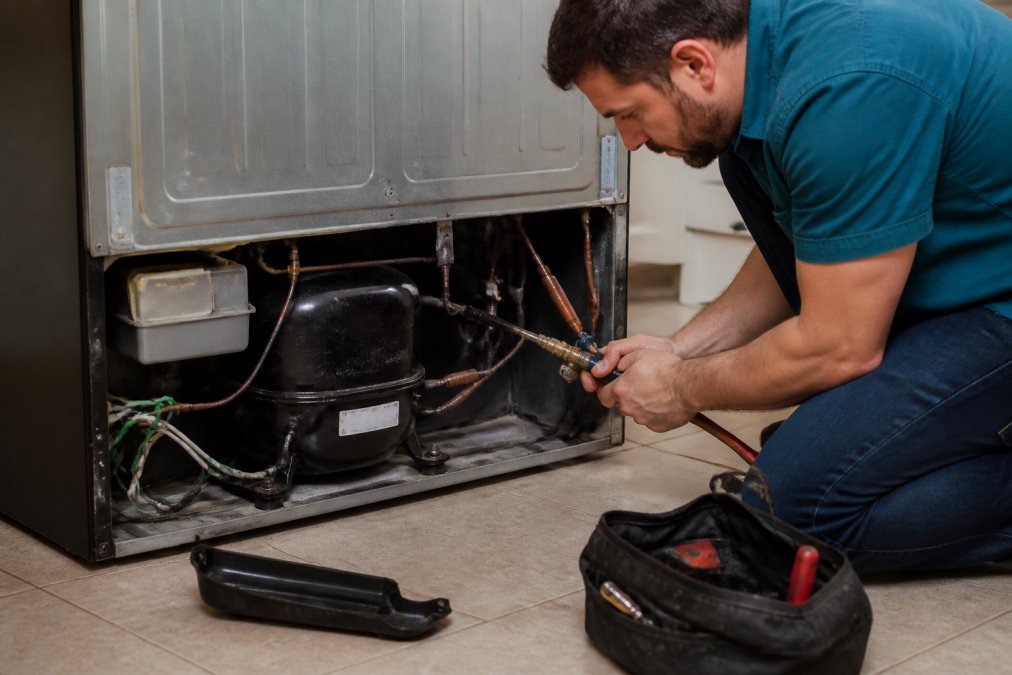
The primary cost driver is labor. A sealed system repair requires EPA 608 certification, specialized equipment, and significant time. The technician must locate the leak (often difficult), access the sealed system (which may require removing components), repair the breach, evacuate the system to remove all air and moisture, recharge with the correct amount of refrigerant, and test the repair. This process typically takes 2-4 hours of skilled work.
Beyond labor, sealed system repairs require evacuation equipment and nitrogen pressure test equipment. These tools are expensive and necessary for safe, proper repair. The EPA strictly regulates refrigerant handling, and improper evacuation or charging violates federal law and can damage the system further.
Most sealed system repairs range from several hundred dollars to over a thousand dollars, depending on the leak location and what components need replacement. This is why many homeowners face a genuine repair-versus-replace decision.
EPA Regulations for Refrigerant Handling and Safety
The EPA regulates refrigerant handling under the Clean Air Act, specifically Section 608 of the Significant New Alternatives Policy (SNAP). These regulations exist because refrigerants can damage the ozone layer and contribute to climate change if released into the atmosphere.
Anyone handling refrigerant must be EPA 608 certified. This certification requires passing an exam covering refrigerant types, recovery procedures, safety protocols, and legal requirements. Technicians must demonstrate competency before touching any sealed system. Home Tech's technicians carry EPA 608 certification and stay current with changing regulations.
The EPA mandates that refrigerant must be recovered and recycled, never vented to the atmosphere. When a sealed system is opened for repair, the refrigerant must be captured using approved recovery equipment and stored for recycling or reuse. Venting refrigerant is a federal violation with significant fines.
Older refrigerants like R12 (CFC) and R22 (HCFC) are being phased out under the Montreal Protocol. R12 was banned in 1994; R22 is being phased out completely by 2030. If you have an older refrigerator using R12 or R22, repair options are limited and expensive because these refrigerants are scarce. Replacement may be the only practical option.
Modern refrigerants like R134a, R600a (isobutane), R290a (propane), and R454B are approved for new appliances and are what you'll find in refrigerators manufactured in the last 15 years. These are lower-GWP (global warming potential) alternatives that comply with current EPA regulations.
Repair vs. Replace: Making the Right Decision
The sealed system leak forces a binary choice: invest in repair or buy a new refrigerator. This decision depends on several factors, and there's no universal right answer.
Repair makes sense when:
- Your refrigerator is less than 10 years old. Older units are nearing the end of their typical lifespan anyway, and repair cost is justified by remaining useful life.
- The leak is in an easily accessible location (solder joint, accessible tubing section) rather than in the compressor or deep within the sealed system.
- Repair cost is less than 50% of the cost of a replacement appliance.
- Your refrigerator is a premium model or has features you value and would be expensive to replace.
Replacement makes sense when:
- Your refrigerator is older than 12-15 years. You're near the end of expected lifespan, and another major repair may follow soon.
- The leak is in the compressor or requires compressor replacement. This is nearly as expensive as a new unit.
- Repair cost exceeds 60-70% of replacement cost.
- Your refrigerator has required multiple repairs in the past 2-3 years. This pattern suggests other components are aging and failure is likely.
- You want better energy efficiency. Modern refrigerators use 30-40% less energy than models from 10+ years ago, which can offset replacement cost over time.
The decision ultimately reflects your budget, your attachment to the appliance, and your tolerance for future repairs. At Home Tech, we present both options honestly and let homeowners decide. The repair-versus-replace decision is genuinely situational.
Why Professional Repair Matters for Sealed Systems
DIY sealed system repair is not an option for homeowners. This isn't a preference or a suggestion, it's a federal requirement and a safety imperative.
The EPA requires that only certified technicians handle refrigerant. Attempting to repair a sealed system yourself violates federal law. Penalties include fines of thousands of dollars. Beyond legality, DIY repair risks releasing refrigerant into the atmosphere, damaging the ozone layer and contributing to climate change.
Safety is equally critical. Refrigerant can cause frostbite on skin contact. Pressurized refrigerant lines can cause serious injury if they rupture. The evacuation process requires specialized equipment to remove all air and moisture from the system, failure to do this properly leaves water vapor inside, which causes corrosion and system failure. Improper charging (adding too much or too little refrigerant) damages the compressor and creates additional leaks.
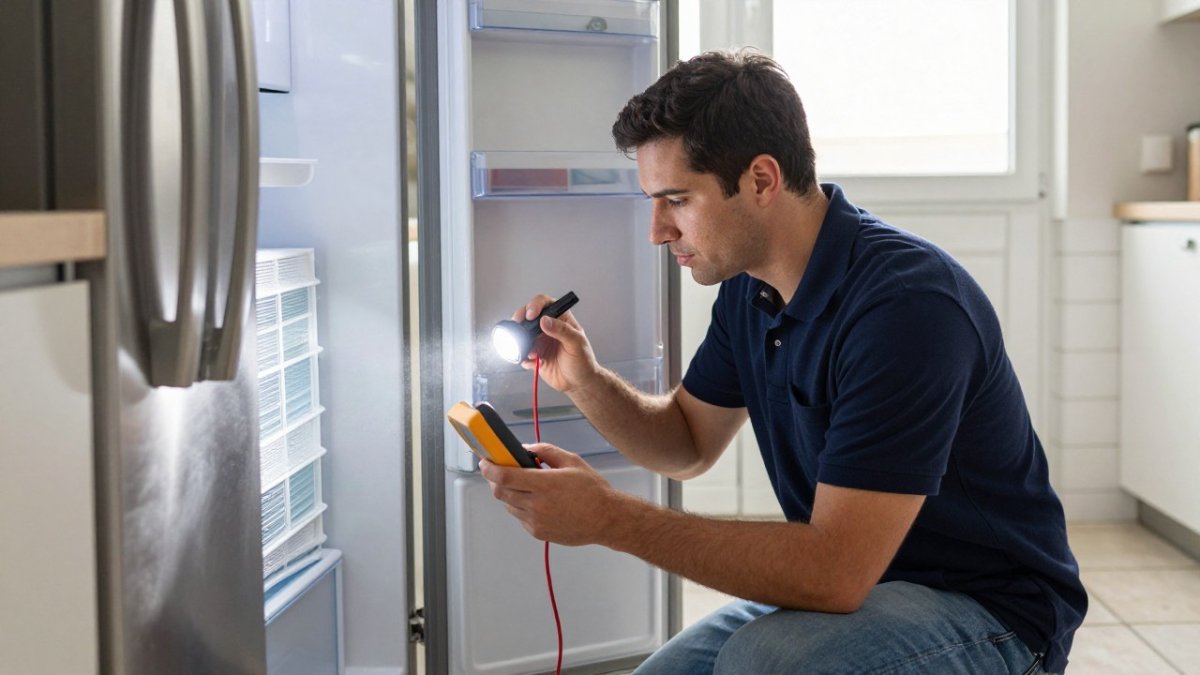
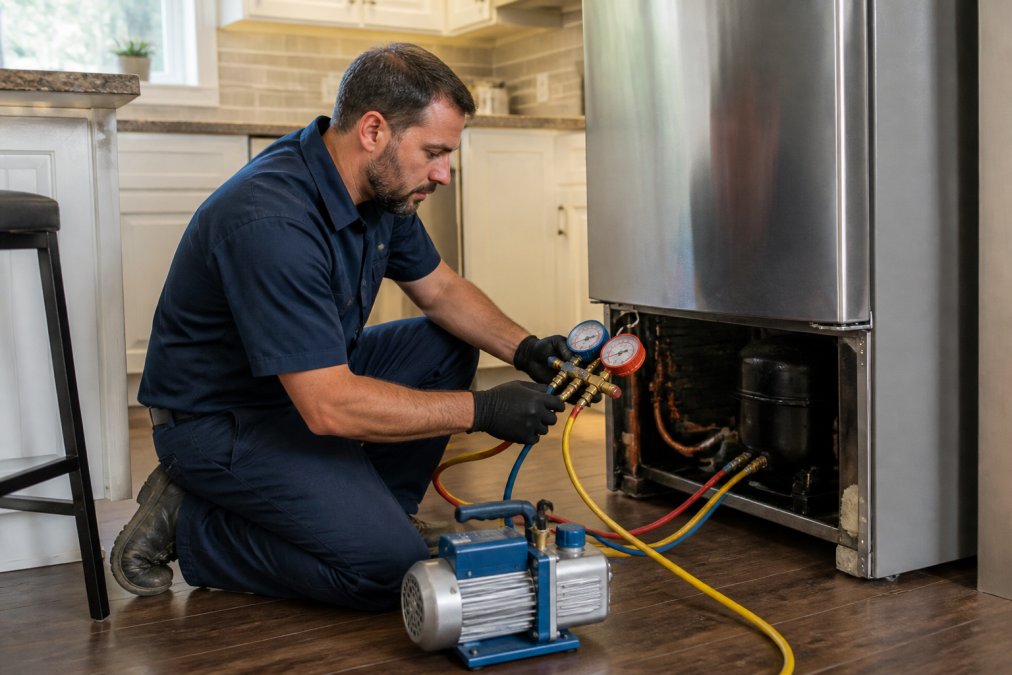
A certified technician brings EPA 608 certification, proper equipment, and diagnostic expertise. They locate the leak using electronic leak detectors or dye tracing methods. They understand the cooling cycle and can recognize whether a repair is feasible or if replacement is necessary. They follow EPA recovery procedures and maintain detailed records of refrigerant handling.
Professional repair also includes a warranty. If the repair fails within a reasonable timeframe, the technician will return and fix the problem. This protection is absent in DIY attempts and is crucial given the cost involved.
At Home Tech, every sealed system repair includes diagnostic testing, proper evacuation, accurate charging, and a satisfaction guarantee. We service all major refrigerator brands, GE, Whirlpool, LG, Samsung, Bosch, Maytag, and others, and handle all approved refrigerant types. We arrive same-day or next-day, wear shoe covers to protect your home, and clean up after ourselves. Our EPA 608-certified technicians answer your questions and explain what they find before proceeding with repairs.
A sealed system leak transforms your refrigerator from a reliable appliance into a food-safety risk. The decision to repair or replace deserves careful thought, but the first step is always professional diagnosis. Contact Home Tech at (602) 486-1901 or visit hometechappliancerepair.com to schedule a sealed system inspection. Our technicians will identify the leak, explain your options, and help you make the right decision for your situation. Same-day service is available throughout the Phoenix metro area, including Chandler, Gilbert, Tempe, Scottsdale, and surrounding communities.
Frequently Asked Questions
What are the symptoms of a refrigerator refrigerant leak?
The most common signs include reduced cooling, ice buildup on the evaporator coils, warm food compartments, and frost or moisture on the back of the unit near the sealed system components. If your refrigerator runs constantly but doesn't cool properly, or you notice hissing sounds, a refrigerant leak is likely. Some homeowners also report a sweet chemical smell near the compressor area, though this is less common with modern refrigerants like R134a and R600a.
Can you repair a sealed system refrigerator?
Yes, sealed system refrigerators can be repaired by EPA 608-certified technicians. The repair involves locating the leak using nitrogen pressure tests or electronic leak detectors, then sealing the breach through brazing or solder joint repair. After sealing, the system is evacuated to remove moisture and contaminants, then recharged with the correct refrigerant type. However, some older systems or severe corrosion may make replacement more cost-effective than repair.
Why is sealed system repair so expensive?
Sealed system repairs require specialized EPA 608 certification, expensive diagnostic equipment for leak detection, and precise brazing or soldering skills to restore hermetically sealed joints. The evacuation process alone requires professional equipment to remove all moisture and air from the system. Additionally, if the compressor or other major components are damaged, parts costs add up quickly. Labor-intensive diagnostics and the need to recharge with the correct refrigerant type (R134a, R600a, or R454B) also contribute to the final bill.
How long does sealed system repair take?
A straightforward sealed system repair typically takes 2-4 hours from diagnosis through completion. Simple solder joint repairs may be faster, while complex leaks requiring extensive diagnostics or multiple breach points can take longer. If parts need to be ordered or the compressor requires replacement, the job may extend over multiple visits. Emergency same-day repairs are possible in many cases, though the exact timeline depends on the severity of the leak and parts availability.