 ultimate-guide
Refrigerator Compressor Repair Cost Phoenix: 2026 Pricing Guide
Table of Contents
- What Drives Refrigerator Compressor Repair Cost in Phoenix
- Parts and Labor: Breaking Down Your Invoice
- Signs Your Refrigerator Compressor Is Failing
- Refrigerant Leak Repair Cost and Sealed System Work
- Sealed System Repair Cost vs. Replacement in Phoenix
- Refrigerator Not Cooling in Phoenix: Compressor Diagnostics
- Refrigerator Replacement Cost in Phoenix vs. Repair
- Same-Day vs. Scheduled Service: Cost and Availability
- Frequently Asked Questions
Refrigerator Compressor Repair Cost Phoenix: 2026 Pricing Guide
Last Updated: July 19, 2026
When your refrigerator stops cooling in Phoenix's brutal desert heat, the stakes feel immediate. A failed compressor means spoiled food, potential health risks, and a costly decision. Understanding refrigerator compressor repair cost phoenix before you call a technician puts you in control and helps you avoid surprise invoices.
At Home Tech, we've handled hundreds of compressor diagnostics across the greater Phoenix metro area. Most homeowners don't understand what they're paying for when an estimate arrives. They see a number and assume it's inflated. Often, they're simply seeing the real cost of sealed-system work, EPA-certified labor, and environmental fees that most guides skip over.
Below, we'll break down what drives refrigerator compressor repair cost in Phoenix, show you how to read an invoice, and help you decide whether repair or replacement makes sense for your situation.
What Drives Refrigerator Compressor Repair Cost in Phoenix
Several factors push Phoenix compressor repair costs higher than the national average.
The Phoenix Climate Factor
Phoenix's extreme heat is the primary driver of accelerated compressor failure. When outdoor temperatures consistently exceed 110°F during summer, your refrigerator's condenser fan works overtime to reject heat from the sealed system. A compressor that might run for 12-15 years in a temperate region often fails at 8-10 years in Phoenix.
Repair shops in Phoenix price their labor accordingly. You're paying for the reality that compressors fail more frequently here, technicians need EPA 608 certification to handle refrigerant work, and same-day emergency calls during summer heat waves command premium rates.
Sealed System Complexity
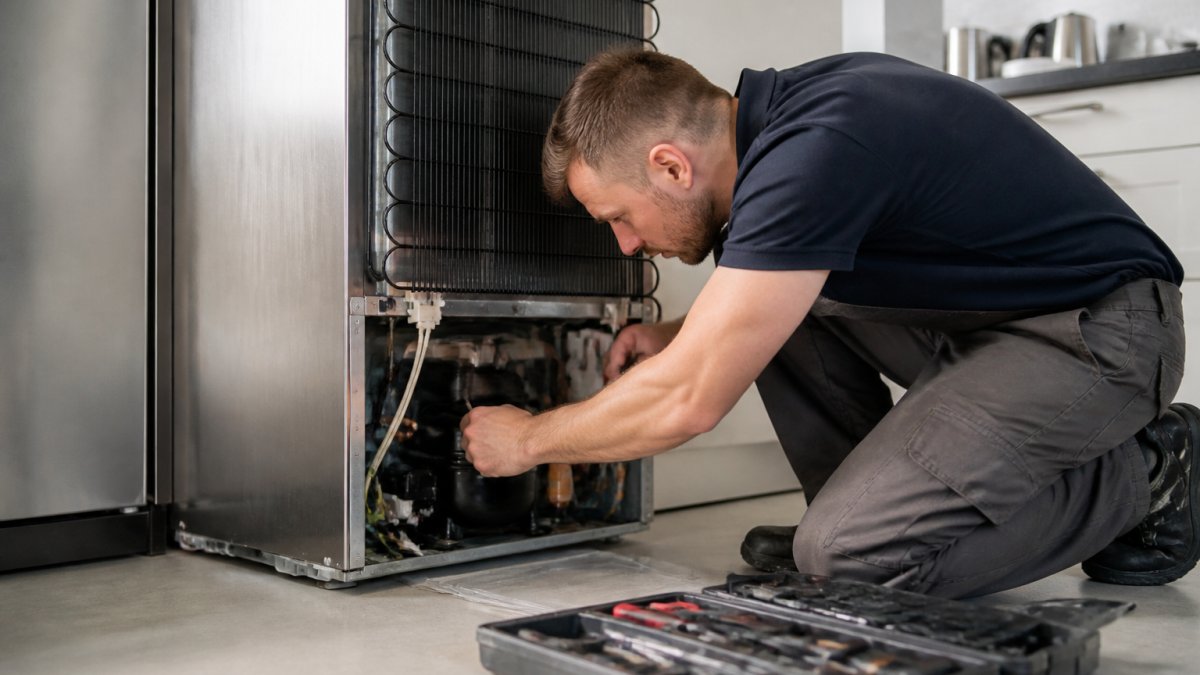
Your refrigerator's sealed system is a closed loop of refrigerant that circulates through the compressor, condenser coil, filter dryer, and evaporator coil. When the compressor fails, the system is compromised.
The technician must evacuate the existing refrigerant (EPA rules require proper recovery), identify what caused the failure, replace the compressor or repair the sealed system, replace the filter dryer, evacuate the system with a vacuum pump to remove moisture, and recharge with the correct refrigerant type and quantity. This multi-step process requires specialized equipment and EPA certification.
Parts and Labor: Breaking Down Your Invoice
When a repair shop quotes you a price for compressor work, that number typically breaks into three categories: the compressor itself, the filter dryer and other sealed-system components, and labor.
What You're Paying For
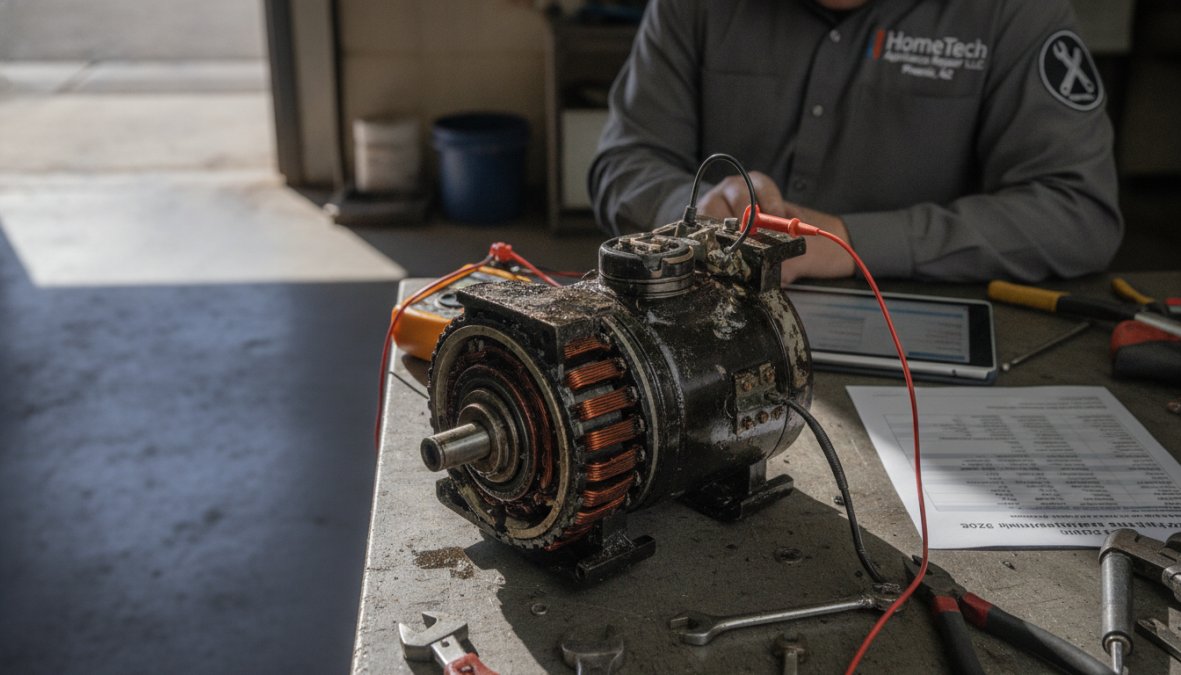
The Compressor: This is the heart of the sealed system, an electric motor and pump combined into one sealed unit. OEM compressors for major brands like Samsung, LG, GE, and Whirlpool vary in cost based on the refrigerator model, capacity, and type.
Filter Dryer and Sealed System Components: After any refrigerant loss or compressor replacement, the filter dryer must be replaced. This component removes moisture and contaminants from the refrigerant. Skipping this step allows moisture to corrode the new compressor from the inside.
Labor: A sealed-system repair typically takes 3-5 hours depending on the refrigerator model and compressor accessibility. EPA-certified technicians command higher hourly rates because they've passed federal certification exams and carry liability insurance for refrigerant handling.
Signs Your Refrigerator Compressor Is Failing
Understanding what a failing compressor sounds and behaves like helps you confirm the diagnosis and avoid unnecessary service calls.
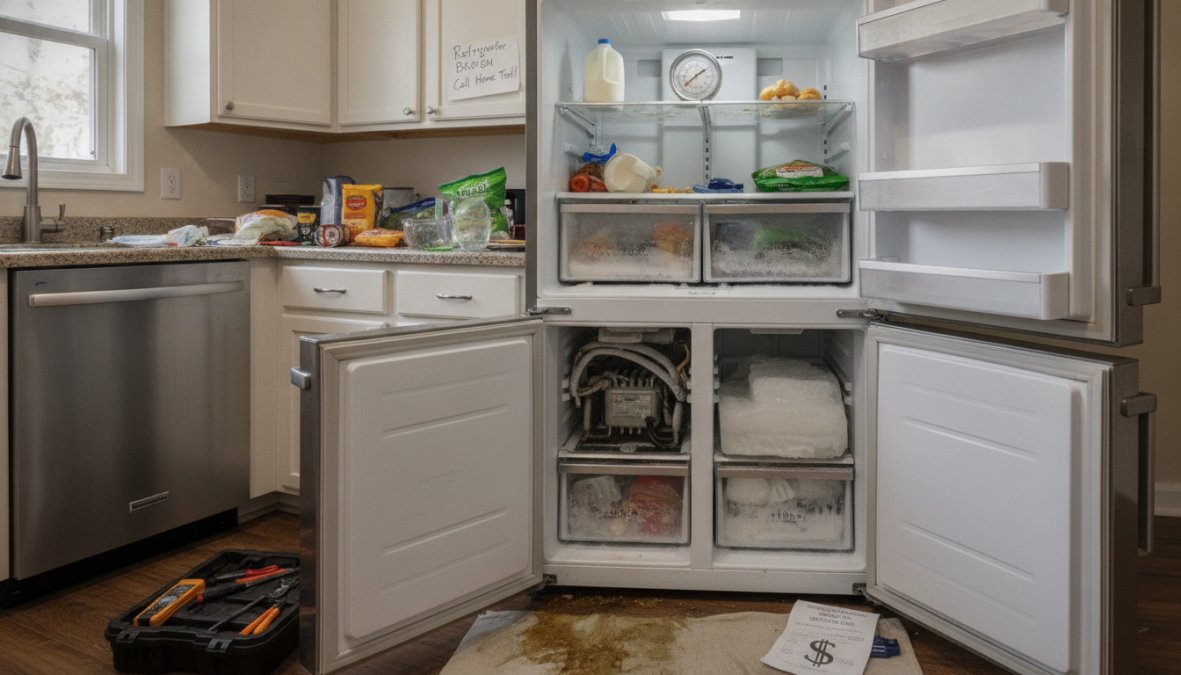
Constant Humming or Clicking: A healthy compressor cycles on and off as the fridge maintains temperature. A failing compressor hums continuously without cycling, or clicks repeatedly as the thermal overload protector trips and resets.
Refrigerator Not Cooling (But Fan Running): The condenser fan and evaporator fan may still run while the compressor has failed. You'll hear air moving, but the fridge and freezer gradually warm up. If the condenser coils are room temperature and the compressor isn't running, the compressor has likely failed.
Compressor Makes a Grinding or Rattling Noise: This indicates mechanical breakdown inside the sealed unit. Metal-on-metal contact means internal components are failing and the compressor needs replacement.
Compressor Gets Extremely Hot: The compressor housing should be warm but not hot enough to burn your hand. If it's too hot to touch, the thermal overload protector is about to trip.
Refrigerant Leak Visible Around Compressor: Look for oily residue around the compressor base or copper tubing connections. A visible leak means the sealed system is compromised and the compressor is running without adequate refrigerant, accelerating failure.
Multiple signs warrant a diagnostic call. A clicking sound might be the start relay, and lack of cooling might be a refrigerant leak that can be repaired without replacing the compressor.
Refrigerant Leak Repair Cost and Sealed System Work
Many homeowners assume a refrigerant leak requires full compressor replacement. It doesn't. Sealed system repair is often possible and significantly cheaper.
When a refrigerant leak is detected via pressure testing or dye injection, the technician locates the source. Common leak points include solder joints where copper tubing connects to the compressor or condenser coil, micro-cracks in tubing caused by vibration, and loose fittings.
If the leak is at a solder joint or fitting, the repair involves evacuating the remaining refrigerant, brazing the joint or tightening the fitting, replacing the filter dryer, evacuating the system with a vacuum pump, and recharging with fresh refrigerant. This repair costs less than compressor replacement because you're keeping the compressor itself. However, it requires skill, improper brazing creates weak joints that fail again.
EPA Certification and Environmental Fees
The EPA's Section 608 certification program requires technicians handling refrigerant to pass an exam covering regulations, safety, and proper handling procedures. This certification is federal law. When you see an "environmental fee" or "refrigerant recovery fee" on an invoice, that's the cost of proper refrigerant disposal. Recovered refrigerant must be stored in dedicated containers and sent to certified recovery centers.
Sealed System Repair Cost vs. Replacement in Phoenix
The decision to repair or replace depends on the refrigerator's age, repair cost, replacement cost, and whether the repair is likely to hold.
When Repair Makes Sense
Repair is the right choice when the refrigerator is under 8 years old, the repair cost is less than 50% of replacement cost, the failure is a sealed-system leak rather than compressor mechanical breakdown, and you're satisfied with the refrigerator otherwise. Sealed-system repairs in Phoenix typically hold reliably for 4-6 years, enough time to justify the repair cost.
When Replacement Is the Better Choice
Replacement is the better choice when the refrigerator is 10+ years old, the repair cost is more than 50% of replacement cost, the compressor has failed due to mechanical breakdown, multiple components have failed, or you want energy efficiency improvements. Modern refrigerators use significantly less energy than units from 10+ years ago, and monthly energy savings can offset replacement cost over 5-7 years.
Refrigerator Not Cooling in Phoenix: Compressor Diagnostics
Not every refrigerator that stops cooling has a failed compressor. A proper diagnostic narrows down the actual cause.
A competent diagnostic includes visual inspection for refrigerant leaks and ice buildup, compressor operation testing by listening and feeling for vibration, pressure testing using gauges to measure refrigerant pressure on high-side and low-side lines, temperature testing of refrigerant returning to the compressor and leaving the condenser, and electrical testing to check voltage and current draw. This diagnostic typically takes 30-60 minutes and costs less than the repair itself.
The diagnostic results tell you whether the problem is compressor failure, refrigerant leak, condenser fan failure, evaporator fan failure, thermostat or control board failure, or blocked airflow. Home Tech diagnoses first, then presents the repair-vs-replace analysis without pressure for unnecessary work.
Refrigerator Replacement Cost in Phoenix vs. Repair
When replacement makes sense, the next question is what to buy. Phoenix's climate creates specific demands for refrigerator reliability.
Manufacturer-Specific Cost Tiers
Budget tier ($400-$800): Basic top-freezer and bottom-freezer models from brands like Amana and Frigidaire. These work fine in Phoenix but have simpler sealed systems and slightly higher compressor failure rates.
Mid-range tier ($800-$1,500): French-door and side-by-side models from GE, Whirlpool, and LG. These offer better build quality and more reliable compressors. This is the sweet spot for Phoenix buyers.
Premium tier ($1,500-$3,000+): Samsung Bespoke, high-end LG, and specialty brands. These include advanced features and premium materials with excellent compressor quality, though repair costs are higher if something fails.
For Phoenix specifically, mid-range French-door models from Whirlpool and LG have proven the most reliable. Research shows mid-range refrigerators from established manufacturers have 15-20% lower failure rates than budget models over a 10-year period. In Phoenix's heat, that reliability premium is worth the extra upfront cost.
Same-Day vs. Scheduled Service: Cost and Availability
In Phoenix, timing affects pricing. A compressor repair scheduled two weeks out costs less than an emergency call on a Saturday afternoon when your food is thawing.
Same-day or next-day appointments: Higher labor rates apply. Same-day availability during business hours and next-day appointments are available for most calls, because a failed refrigerator in Phoenix heat is genuinely urgent.
Scheduled appointments (3-7 days out): Standard rates apply. If your refrigerator stopped cooling but the food is still cold, waiting a few days saves money.
Weekend and evening calls: Premium rates apply.
| Service Type | Typical Availability | Cost Impact | Best For |
|---|---|---|---|
| Scheduled (3-7 days) | Standard business hours | Standard rate | Non-urgent repairs, planned maintenance |
| Next-day | Morning or afternoon slot | 10-15% premium | Urgent repairs, food safety concern |
| Same-day | Limited slots, business hours | 25-40% premium | Emergency failures, commercial equipment |
| Weekend/evening | Limited availability | 50%+ premium | True emergencies only |
Frequently Asked Questions
What factors affect refrigerator compressor repair cost in Phoenix?
Several factors influence compressor repair cost: the type of refrigerant your system uses (R134a, R600a, R290a, R454B), whether you have a refrigerant leak requiring sealed system evacuation and brazing, your refrigerator's brand and age, and the complexity of the diagnostic work. Phoenix's extreme heat accelerates thermal overload on compressors, making failure more common here than in cooler climates. Emergency same-day service costs more than scheduled appointments. Contact Home Tech for a diagnostic fee and transparent quote.
Is it worth repairing a refrigerator compressor in Phoenix, or should I replace the unit?
Repair makes sense if your refrigerator is under 7-8 years old, the compressor itself is still functional (only the sealed system or start relay needs work), and the repair cost is significantly less than replacement. Newer models with warranty coverage often benefit from repair. However, if your refrigerator is older, has already required multiple repairs, or the compressor has failed completely, replacement may save money long-term. Home Tech can provide a repair estimate and replacement cost comparison to help you decide.
What does sealed system repair cost include for refrigerant leaks?
Sealed system repair for a refrigerant leak includes diagnostic work to locate the leak, system evacuation (removing old refrigerant safely), brazing or component replacement to seal the leak, vacuum pump evacuation to remove moisture, and refrigerant recharge. EPA 608 certification is required for this work. Environmental disposal fees apply for old refrigerant. The total cost depends on the leak's location and severity. Home Tech handles all refrigerant types and provides itemized invoices showing parts, labor, and environmental fees separately.
How much does a refrigerator compressor diagnostic fee cost, and is it credited toward repair?
Diagnostic fees vary by service provider. Home Tech offers transparent pricing, call (602) 486-1901 or visit hometechappliancerepair.com for current rates. Many reputable technicians credit the diagnostic fee toward repair costs if you proceed. A diagnostic includes testing the compressor, checking refrigerant levels, inspecting the thermal overload and start relay, and examining the filter dryer and evaporator coil. This identifies whether the issue is truly the compressor or a related sealed system component.
Do I need a licensed technician for refrigerator compressor repair in Phoenix?
Yes. Any work involving refrigerant or sealed system components requires an EPA 608-certified technician. DIY repair is illegal and voids warranties. Licensed professionals have the proper evacuation equipment, brazing tools, and knowledge to handle R134a, R600a, R290a, and R454B refrigerants safely. Home Tech's technicians are EPA 608 certified and bonded. Attempting DIY work risks environmental violations, personal injury, and system damage that costs far more to fix.