 how-to
7 Phoenix Multi-Housing Laundry Room Solutions That Work
Last Updated: October 28, 2026
Quick Summary
Phoenix multi-housing laundry room solutions start with planning the room around machine-to-unit ratios and resident demand, then specifying commercial-grade washers and dryers sized for daily shared use. Match machines to the room's electrical, gas, venting, and drain infrastructure, and confirm parts and service coverage before you sign.
- Count machines against resident demand by asking how many units share the room and how many loads each household runs weekly.
- Commercial-grade units cost more upfront but last longer under daily use than the cheapest machines, which often carry the highest repair bills.
- Confirm the duty rating in writing before ordering, since light residential machines will not hold up in a shared room.
- Each dryer needs a short, straight vent run to the outside because long or convoluted runs trap lint and raise fire risk.
- Clean dryer vent runs monthly and schedule full vent-duct cleaning annually by a qualified contractor.
Table of Contents
- Start With a Laundry Room Plan That Fits Your Property
- Choosing an Apartment Laundry Room Layout That Flows
- Commercial Washers and Dryers for Apartments: What to Specify
- Surfaces, Cabinetry, and Flooring That Survive Daily Use
- Shared Laundry Room Maintenance and Repair Planning
- Ventilation, Plumbing, Electrical, and Fire Safety Checks
- Accessibility, Security, and Resident Experience
- Book Laundry Equipment Repair for Your Phoenix Property
- Frequently Asked Questions
Start With a Laundry Room Plan That Fits Your Property
Phoenix multi-housing laundry room solutions work best when they start with numbers, not finishes, and that same multi-housing laundry planning discipline carries through every decision below. This guide covers how to plan, specify, and maintain a shared laundry room across a multifamily property.
Shared laundry is one of the few amenities residents use every week. Get it wrong and you hear about it. Get it right and it quietly earns its keep.
Below are considerations for planning the room, choosing equipment, and keeping it running.
Count Machines Against Resident Demand
Start with a simple machine-to-unit ratio.
Ask two questions before you order anything:
- How many units share this room?
- How many loads does a typical household run each week?
Set a Budget Before You Choose Equipment
Watch out: the cheapest machines often carry the highest repair bills. Commercial-grade units cost more upfront and last longer under daily use.
Choosing an Apartment Laundry Room Layout That Flows
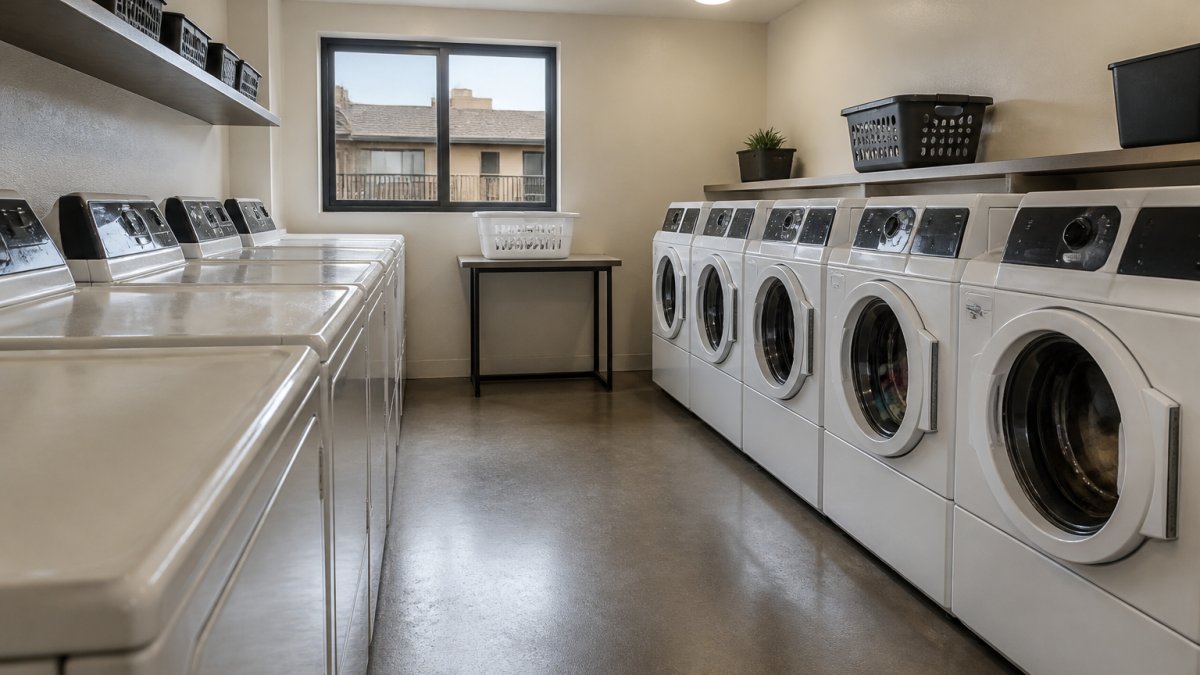
An apartment laundry room layout should keep walking paths clear, put folding space near the dryers, and leave room to open every door fully. Flow matters more than square footage.
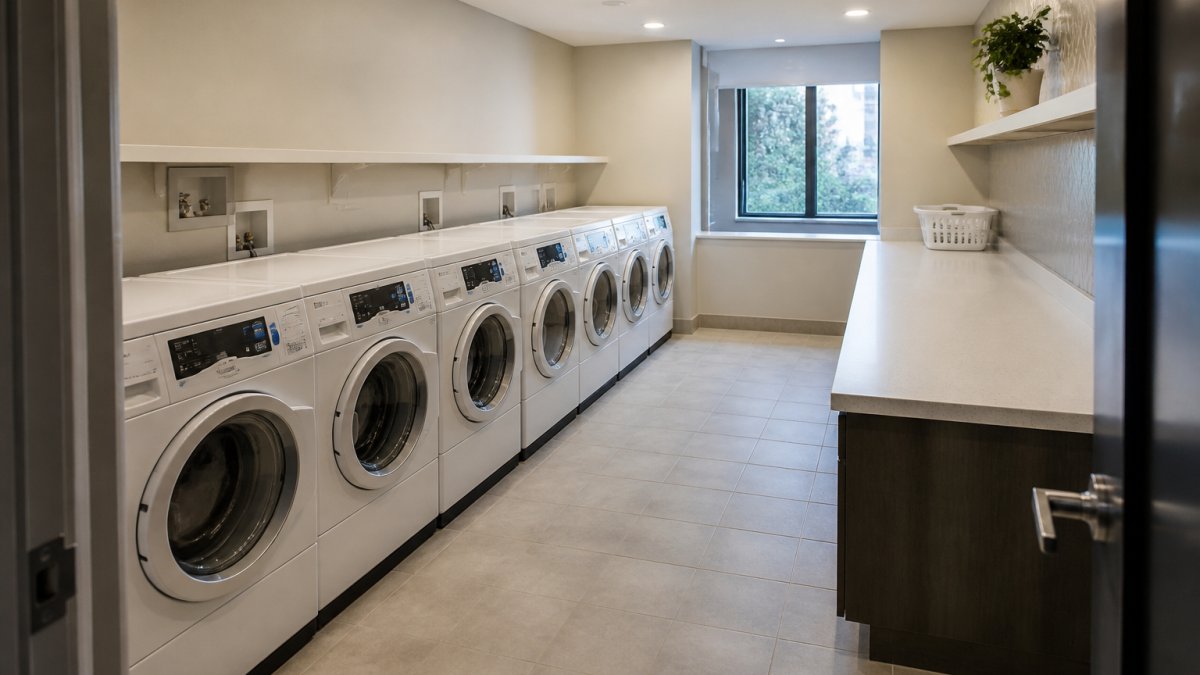
Good layouts share three traits:
- A clear path from door to machines
- Counter space beside the dryers
- Room to sort and load without blocking others
U-Shaped, L-Shaped, and Double Washer-and-Dryer Setups
A U-shaped layout wraps machines and counters around three walls.
An L-shaped layout uses two walls and leaves the rest open.
Double washer-and-dryer configurations stack or pair units.
Commercial Washers and Dryers for Apartments: What to Specify
Commercial washers and dryers for apartments should be sized for daily use, not occasional loads. The specification decision has four parts: capacity, payment, infrastructure fit, and service coverage. Get all four right and the room runs for years; miss one and you inherit a maintenance queue.
Size Capacity to Load Volume, Not Unit Count
Ask suppliers for the rated capacity in cubic feet and the expected cycles per day for a shared-use duty rating. A machine rated for light residential use will not hold up to a room serving dozens of households. Confirm the duty rating in writing before you order.
Decide How Residents Pay
- Coin-operated: Lowest upfront cost, but requires collection, secure coin boxes, and a plan for handling jams and slugs.
- Card or app-based: Higher upfront cost, but usage logs, remote diagnostics, and no cash handling. Many operators find the data worth the premium because it shows which machines fail and when.
- Included in rent: No payment hardware, but you absorb utilities and have no usage signal. This works best in smaller properties where the amenity is a leasing differentiator.
Match Machines to the Room's Infrastructure
- Electrical: Commercial dryers typically need dedicated circuits and often higher voltage than residential units. Confirm panel capacity and breaker space before ordering.
- Gas or electric: Gas dryers cost less to operate in many markets but require gas lines and venting. Electric dryers are simpler to install but draw more power.
- Venting: Each dryer needs a short, straight vent run to the outside. Long or convoluted runs trap lint and raise fire risk.
- Water and drain: Confirm supply line size and drain capacity for the number of washers planned.
Confirm Parts and Service Before You Sign
- How fast can a technician reach the property?
- Are common parts stocked locally?
- What is the response time under a service contract?
Brands like Electrolux Professional build lines for multi-housing rooms, and other commercial-laundry manufacturers offer comparable shared-use lines. Property operators should confirm service coverage before signing. Washer repair solutions keep specified commercial machines serviced. ENERGY STAR guidance on commercial laundry equipment can help you compare efficiency, and efficiency matters because shared machines run far more cycles than residential units.
Weigh Buying Against Leasing
Buying gives you full control and no contract term, but the full capital cost lands upfront. Leasing lowers upfront cost and may bundle service, but ties you to a term and can limit which machines you install. For a property planning a long hold, buying often wins on total cost; for a short hold or a cash-constrained renovation, leasing can bridge the gap. Run both scenarios against your expected cycle volume before deciding.
Surfaces, Cabinetry, and Flooring That Survive Daily Use
For flooring, porcelain tile resists water best. flooring guidance from the National Association of Home Builders covers how to match materials to traffic levels.
Shared Laundry Room Maintenance and Repair Planning
Shared laundry room maintenance should follow a written schedule, not a reaction to complaints. In a multi-housing setting, maintenance is also a revenue and retention decision: every day a machine is down, residents either wait, leave the property to do laundry, or complain to management.
Build a Schedule by Frequency
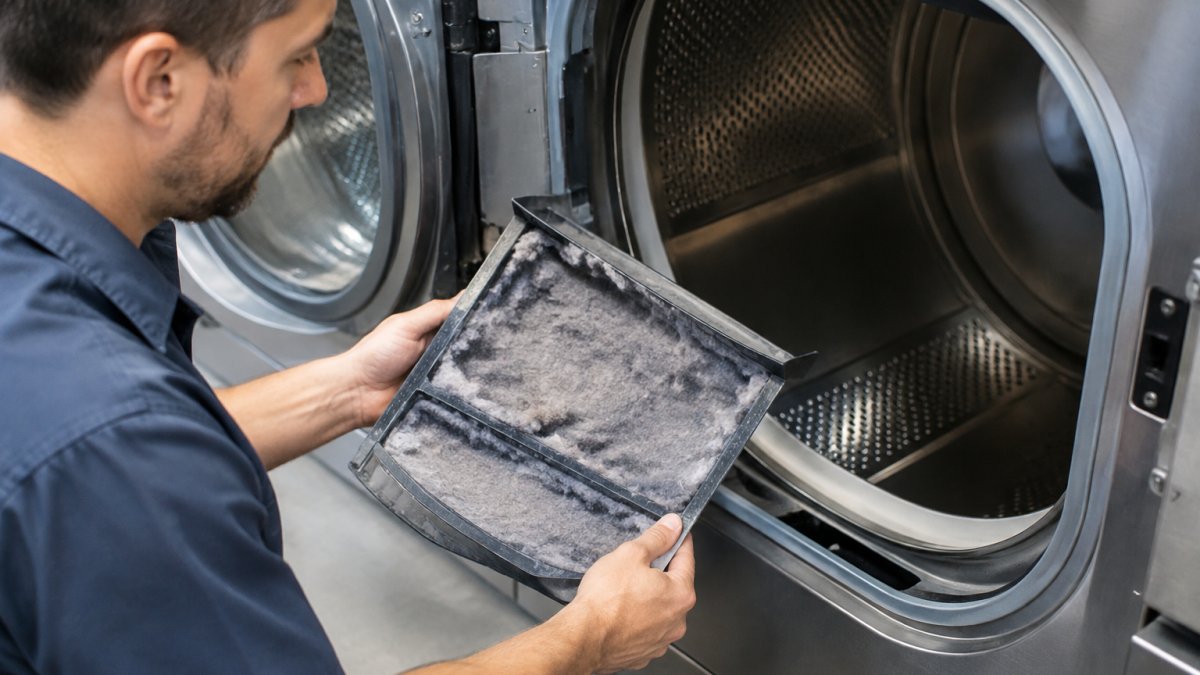
- Daily or per-shift: Wipe machine exteriors, clear lint filters, check for leaks, and confirm the room is stocked and lit.
- Weekly: Inspect door seals and hoses, test payment readers, and check that posted instructions are legible.
- Monthly: Clean dryer vent runs, check drain lines, and review the usage log for machines with rising error counts.
- Quarterly: Deep clean the room, inspect electrical connections, and review the parts inventory.
- Annually: Full vent-duct cleaning by a qualified contractor and a service review of every machine.
Keep a Log That Actually Diagnoses Problems
- Machine ID and location
- Date and time reported
- Symptom the resident described
- Issue the technician found
- Parts replaced
- Who did the work and how long it took
Set Downtime Targets and a Repair Path
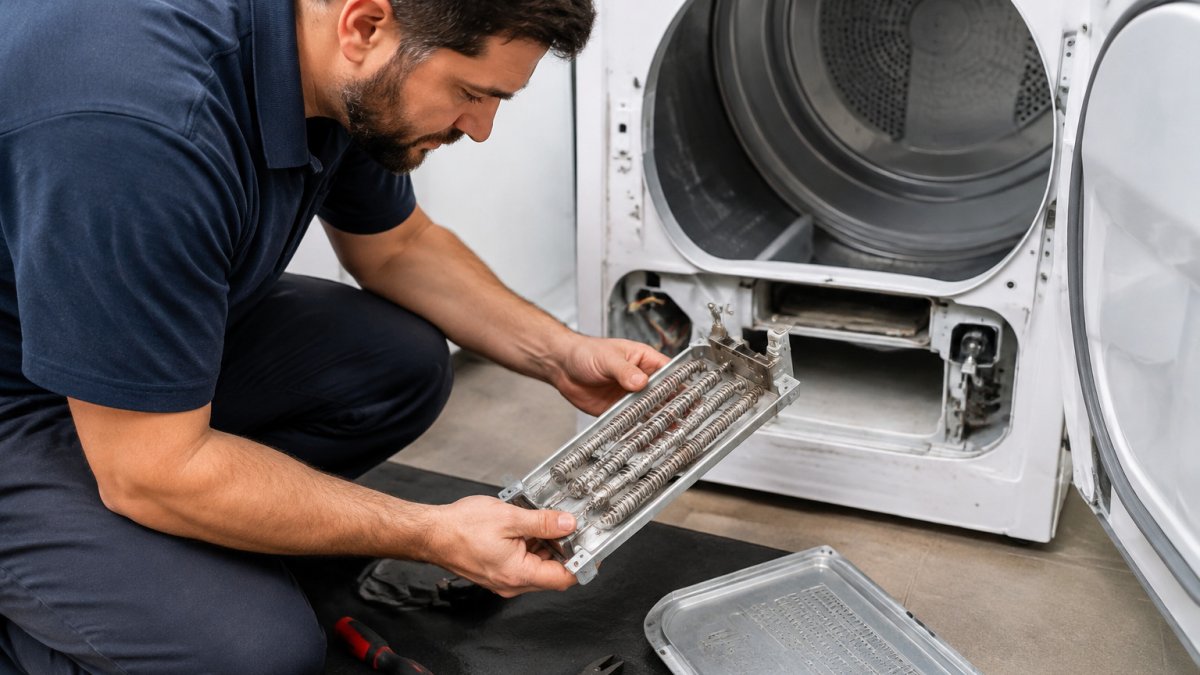
When a machine goes down, fast repair matters. Washer and dryer repair solutions help you plan ongoing maintenance for shared laundry equipment.
Plan for Resident Communication
- What is out of service
- When a technician is expected
- Where the nearest alternative machine is
Track Cost Against Revenue
Maintenance spending only makes sense against what the room earns. If residents pay per cycle, track revenue against repair and utility costs each quarter. If laundry is included in rent, track cost per unit instead. Either way, a machine that costs more to repair than it earns over a year is a candidate for replacement, not another repair.
A written schedule keeps shared laundry running, and this is the frequency the article recommends for each task.
| Frequency | What to do |
|---|---|
| Daily or per-shift | Wipe exteriors, clear lint filters, check for leaks, confirm stocked and lit |
| Weekly | Inspect door seals and hoses, test payment readers, check posted instructions |
| Monthly | Clean dryer vent runs, check drain lines, review usage log for errors |
| Quarterly | Deep clean the room, inspect electrical connections, review parts inventory |
| Annually | Full vent-duct cleaning by a qualified contractor and service review |
Ventilation, Plumbing, Electrical, and Fire Safety Checks
- Dryer vent routing to the outside
- Water supply lines and shutoff valves
- Dedicated electrical circuits for each machine
- Working smoke alarms and clear exit paths
U.S. Fire Administration guidance on dryer fire prevention explains why lint cleaning is not optional.
Accessibility, Security, and Resident Experience
- Keyed or card entry
- Good lighting inside and out
- Cameras at the entrance
Book Laundry Equipment Repair for Your Phoenix Property
At Home Tech, we repair commercial laundromat washers and dryers, including coin and card-operated machines. We offer same-day and next-day appointments, no hidden fees, and a 100% satisfaction guarantee. Our technicians clean up after themselves and focus on cost-effective repair over replacement.
To book washer and dryer repair, use our washer and dryer repair services.
Frequently Asked Questions
What should a shared laundry room in a multi-housing property include?
A workable shared room needs commercial-grade washers and dryers sized to the resident count, a folding surface, a utility sink, and enough clearance for carts and residents to move past each other. Add durable flooring, secure card or coin payment, and good lighting. Plan ventilation and drainage before cabinets and countertops go in, because moving a dryer vent or drain later means tearing out finishes. A written maintenance schedule keeps machines running and residents satisfied.
How do you choose commercial washers and dryers for apartments?
Match capacity to building size first, then compare cycle programs, payment options, and service terms. Commercial washers and dryers for apartments are built for repeated daily cycles, so a residential unit will fail early in a shared room. Ask each vendor about parts availability, response time for repairs, and whether they lease or sell equipment. Confirm the machines fit your electrical and venting setup before ordering, and keep a service contact who handles coin and card-operated equipment.
How often should shared laundry equipment be inspected and maintained?
Check machines weekly for lint buildup, leaks, and unusual noise, and schedule professional service at least twice a year. Clean dryer vents and lint traps frequently, since clogged vents slow drying and raise fire risk. Log every repair so you can spot a unit that keeps failing and decide between fixing it and replacing it. In a busy Phoenix property, a same-day repair call keeps one broken machine from backing up the whole room.
How can a property manager make a shared laundry room more convenient for residents?
Post clear hours, keep a folding counter and seating, and make payment simple with card readers or an app. Add signage for reporting broken machines and respond to those reports quickly. Good lighting and a clean floor make the room feel cared for, which reduces misuse. If your equipment breaks down, call a repair team that services commercial washers and dryers and can reach the property fast, so residents are not left without a working machine for days.
A broken machine costs you money every day it sits idle. Home Tech brings same-day service, bonded technicians, and a 100% satisfaction guarantee to every commercial laundry call. Get started with Home Tech and keep your residents doing laundry instead of waiting.