 how-to
5 Steps to Unclog a Dishwasher Air Gap Safely
Last Updated: October 25, 2026
Quick Summary
To unclog dishwasher air gap, remove the decorative cover and inner cap by turning counterclockwise by hand, then use a long-handled brush and pipe cleaner to clear food particles and mineral deposits from inside the opening. Flush with hot water until it drains freely, then reassemble and run a test cycle.
- Remove the decorative cover and plastic inner cap by hand, turning counterclockwise.
- Use a long-handled brush and pipe cleaner soaked in hot vinegar to clear debris inside the opening.
- Pour hot water down the opening and repeat cleaning steps until water drains freely.
- The complete cleaning procedure takes 15-20 minutes with no special skills required.
- If cleaning doesn't solve the problem, the clog may be in the drain hose, P-trap, garbage disposal, or dishwasher's internal filter.
Table of Contents
- What a Dishwasher Air Gap Is and Why It Matters
- How to Identify a Clogged Air Gap
- Safety Steps Before You Start Cleaning
- How to Clean a Dishwasher Air Gap: The Complete Procedure
- Diagnosing a Dishwasher Air Gap Overflowing or Backing Up
- When Your Dishwasher Drain Hose Clogged: Checking Beyond the Air Gap
- Dishwasher Air Gap Troubleshooting: What to Do If Cleaning Doesn't Work
- 1. Confirm the air gap is actually clear
- 2. Check the hose from the air gap to the sink drain
- 3. Check the dishwasher drain hose and its high loop
- 4. Check the garbage disposal and sink drain
- 5. Check the dishwasher's internal filter and drain pump
- Reassembly checklist
- When to stop and call a professional
- Book a Professional Repair if the Problem Persists
- Frequently Asked Questions
What a Dishwasher Air Gap Is and Why It Matters
Without one, contaminated water from your sink or garbage disposal could siphon backward into your dishwasher, ruining dishes and damaging components.
When you need to unclog dishwasher air gap, water backs up, drainage slows, and water may pool around the base of the device, your signal that something needs attention.
How to Identify a Clogged Air Gap
The most obvious sign of a clogged air gap is water backing up out of the opening and pooling on your counter or sink rim.
If your dishwasher runs but drains slowly or incompletely, the air gap could be the culprit, dishes sit in standing water at the cycle's end, and the unit may beep or display an error code.
Check for these specific indicators:
- Water pooling around the air gap cover
- Slow or stopped drainage from the dishwasher
- Odors coming from the air gap opening
Clogs usually form from food particles, grease, and mineral buildup inside the narrow tubing, restricting flow and forcing water back up and out.
Safety Steps Before You Start Cleaning
Before you touch anything, turn off your dishwasher at the breaker, or unplug it if it has a cord, to prevent accidental activation. If it just ran, let it cool at least 10-15 minutes; the water inside can be hot enough to cause burns.
Gather your supplies before you start:
- Adjustable wrench or pliers
- Long-handled brush or bottle brush
- Pipe cleaner or straw cleaner
Place towels around the air gap to catch drips, and keep your bowl ready for debris.
How to Clean a Dishwasher Air Gap: The Complete Procedure
Cleaning takes 15-20 minutes and requires no special skills. Follow these steps in order.
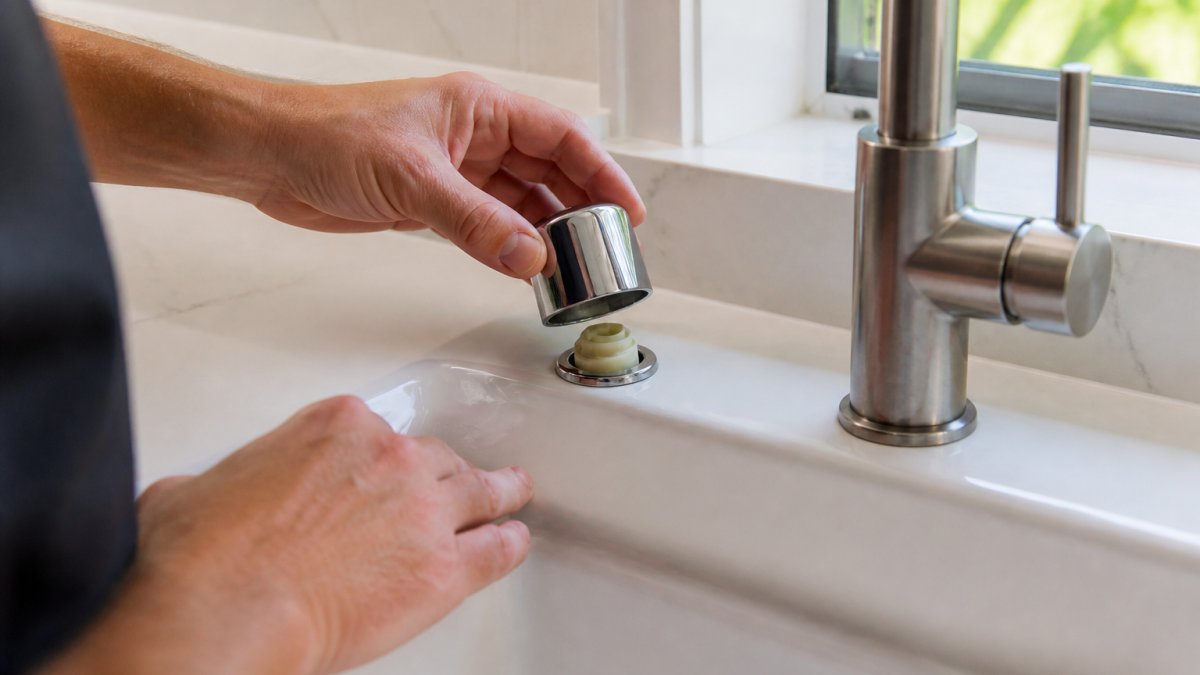
Remove the Decorative Cover and Inner Cap
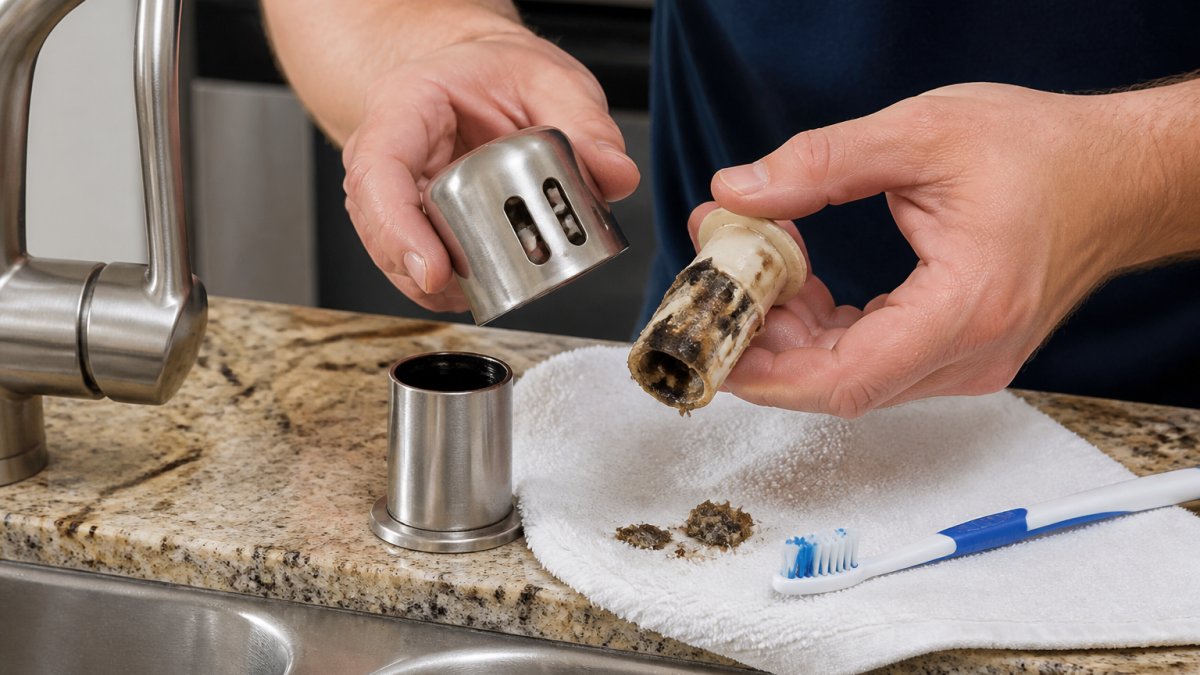
Lift off the decorative chrome or stainless steel cover. Most unscrew by hand, grip firmly and turn counterclockwise; no tools needed.
Underneath is a plastic cap or inner cover, which also unscrews by hand (or with a wrench if tight). Turn it counterclockwise, lift it away, and set both pieces on your towel.
Clear Food Particles and Debris
Look inside the opening, you'll likely see food particles, grease, or mineral deposits coating the walls. Push your long-handled brush down and scrub the interior walls to loosen this material.
Pull out whatever comes loose and repeat several times.
For stubborn deposits, soak a pipe cleaner in hot vinegar for a minute, then work it up and down inside the opening; the acidity breaks down mineral deposits and grease.
Inspect the Air-Gap Opening and Tubing
Once visible debris is cleared, shine a flashlight deeper into the opening to check the tubing. If you see a clog, feed a flexible pipe cleaner down to break it up, or disconnect the tubing under the sink to clear it from the other end, for most homeowners, the pipe cleaner is simpler.
Flush and Reassemble
Pour hot water down the opening. If it backs up or drains slowly, the clog isn't fully cleared, repeat the brush and vinegar steps until water flows freely.
Run a short cycle to test, watching the air gap during the drain phase.
Cleaning a dishwasher air gap follows a straightforward sequence of steps.
| Step | What to Do | Time or Tools |
|---|---|---|
| 1 | Remove decorative cover and inner cap | Hand tools, turn counterclockwise |
| 2 | Clear food particles and debris | Long-handled brush, pipe cleaner |
| 3 | Inspect air-gap opening and tubing | Flashlight, flexible pipe cleaner |
| 4 | Flush and reassemble | Hot water, hand-tight reassembly |
| Total | Complete cleaning procedure | 15-20 minutes |
Diagnosing a Dishwasher Air Gap Overflowing or Backing Up
If cleaning the air gap didn't stop the overflow, the blockage is elsewhere in the drain path. The air gap is only one of four likely clog points: the air gap body, the dishwasher drain hose, the tailpiece/disposal connection, or the sink drain line. Isolate which one is blocked before taking anything else apart.
Step 1: Isolate the symptom
Run a drain cycle and watch three places at once: the air gap opening, the sink basin, and the cabinet under the sink.
- Water only at the air gap, sink drains fine: the clog is between the air gap and the sink drain connection, or inside the air gap body. Go to Step 2.
- Water at the air gap and the sink drains slowly or gurgles: the clog is downstream in the sink drain or P-trap. Go to Step 3.
- Water at the air gap and the garbage disposal hums or won't drain: the clog is in the disposal or the tailpiece. Go to Step 4.
Step 2: Test the air gap body and its short outlet hose
With the decorative cover and inner cap removed, pour a cup of hot water directly into the air gap opening. Watch how fast it drains.
- Drains freely: the air gap body is clear. The clog is downstream, move to Step 3.
- Drains slowly or backs up: the air gap body or the short hose from the air gap to the sink drain is blocked. Feed a flexible pipe cleaner down through the opening. If that doesn't clear it, disconnect the hose at the sink drain end and flush it backward with hot water.
A common pattern is a film of grease and starch coating the inside of the air gap body, narrowing the passage so water drains slowly instead of stopping completely.
Step 3: Test the sink drain and P-trap
Fill the sink basin with 2-3 inches of water, then pull the stopper and watch the drain.
- Sink drains fast and the air gap still overflows: the clog is in the short hose between the air gap and the drain, not the sink line. Recheck Step 2.
- Sink drains slowly or gurgles: the P-trap or the branch of the drain line serving the sink is partially blocked. Place a bucket under the P-trap, unscrew the slip nuts by hand, and clear the trap. A clog here will back water up into the air gap even when the air gap itself is spotless.
Step 4: Test the garbage disposal connection
- Run the disposal with the water running. If it hums without spinning, stop and clear it using the hex wrench in the bottom or the reset button.
- Check the knockout plug. On a newly installed disposal, the dishwasher inlet has a plastic knockout plug that must be removed before the dishwasher hose is connected. If it was never punched out, the dishwasher will back up at the air gap from day one. This is one of the most common causes of a brand-new air gap overflowing.
- If the disposal runs but the sink still drains slowly, the clog is in the disposal's internal chamber or the tailpiece. Clear it from the top with a drain snake or by removing the tailpiece.
Step 5: Test the dishwasher drain hose
If water never reaches the air gap but the dishwasher tub fills with standing water, the drain hose or internal filter is the likely culprit.
- Pull the dishwasher out far enough to reach the drain hose. Check for kinks, especially where the hose bends behind the cabinet.
- Disconnect the hose at the air gap end and blow through it or run hot water through it backward. If water won't pass, clear the hose with a pipe cleaner or replace it.
- If the hose is clear, check the dishwasher's filter and drain pump screen. Most models have a removable filter at the bottom of the tub that traps food and grease; a clogged filter will stop drainage even with a perfectly clean air gap.
Once you've identified the blocked component, clear it, reassemble, and run a short drain cycle to confirm water flows freely through the air gap and down the sink drain.
When Your Dishwasher Drain Hose Clogged: Checking Beyond the Air Gap
Your dishwasher drain hose runs from the dishwasher to the air gap. If it clogs, the dishwasher won't drain at all, even with a clean air gap.
Signs of a clogged drain hose:
- Dishwasher won't drain at all
- Water pools inside the dishwasher after the cycle
- No water flows from the air gap during drainage
To check the hose, pull the dishwasher out from under the counter, taking care not to damage the connections. Look for kinks or visible blockages.
Dishwasher Air Gap Troubleshooting: What to Do If Cleaning Doesn't Work
You've cleaned the air gap, flushed it, and reassembled it, and water still backs up. Work through this ordered checklist before calling anyone; each step rules out one cause.
1. Confirm the air gap is actually clear
Don't assume. Remove the cover and inner cap again and pour a cup of hot water straight into the opening.
- Water flows straight down and disappears: the air gap body is clear. Move to step 2.
- Water pools in the opening or drains slowly: debris is still lodged inside. Soak the opening with hot water and white vinegar for 10 minutes, then scrub with a bottle brush and flush again. Repeat until water drains freely.
2. Check the hose from the air gap to the sink drain
This short hose, running from the bottom of the air gap to the sink drain or disposal, is the most commonly overlooked clog point.
- Look for kinks where the hose bends behind the cabinet.
- Disconnect the hose at the sink end, hold a bucket underneath, and run hot water through it from the air gap end. If water won't pass, clear it with a pipe cleaner or replace it.
- Reconnect and tighten the clamp. A loose clamp lets water seep out under the cabinet and can mimic a clog.
3. Check the dishwasher drain hose and its high loop
The drain hose from the dishwasher to the air gap must rise to a high point, usually fastened to the underside of the counter, before connecting. This high loop prevents sink water from siphoning back into the dishwasher.
- If the hose sags below the air gap, water sits in the low spot and clogs form there. Re-clamp the hose so it rises continuously from the dishwasher to the air gap.
- Disconnect the hose at the air gap end and flush it backward with hot water. If it's clogged, clear it with a pipe cleaner or replace it.
4. Check the garbage disposal and sink drain
- Run the disposal. If it hums without spinning, clear it with the hex wrench or reset button before doing anything else.
- Confirm the knockout plug was removed from the disposal's dishwasher inlet. A new disposal with the plug still in place will back up the air gap every cycle.
- Fill the sink with a few inches of water and let it drain. Slow draining or gurgling means the P-trap or sink branch line is partially blocked. Clear the P-trap before assuming the air gap is at fault.
5. Check the dishwasher's internal filter and drain pump
If water stands in the bottom of the dishwasher after a cycle, the problem may be inside the appliance, not the air gap.
- Remove the filter at the bottom of the tub and rinse it under hot water. Most manufacturers recommend cleaning it monthly.
- Check the drain pump screen for food particles and grease.
- Run a short cycle and watch the air gap during the drain phase. If water flows freely now, the air gap was never the problem.
Reassembly checklist
Before you declare the job done, confirm each of these:
- Inner plastic cap screwed on hand-tight, snug, not torqued down.
- Decorative cover seated flush and turned clockwise until it stops.
- Both hose clamps tight at the air gap and at the sink drain or disposal.
When to stop and call a professional
Cleaning and the checks above solve most air gap backups. Call a licensed plumber or appliance technician if any of these are true:
- Water backs up from multiple fixtures in the kitchen, not just the air gap, that points to a main drain line blockage.
- The P-trap and sink branch line are clear but the air gap still overflows.
- The dishwasher won't drain even with a clear hose, clean filter, and clear air gap, the drain pump may have failed.
A technician can camera the drain line, test the drain pump, and replace the air gap if the body is cracked. Most replacements are straightforward once the diagnosis is confirmed.
Book a Professional Repair if the Problem Persists
When you book a drain inspection, we'll diagnose the issue and explain your options. If it's a simple fix, we handle it same-day.
Don't let water backup damage your kitchen or dishwasher. Browse our dishwasher repair services or schedule an appointment to get back to clean dishes without the hassle.
Frequently Asked Questions
How do I tell if a dishwasher air gap is clogged?
Signs include standing water inside the air gap, water backing up into the sink when the dishwasher runs, slow drainage, or a foul smell coming from the air-gap opening. You may also notice the bottom rack of the dishwasher filling with water instead of draining. If water is visibly pooling in the chrome or plastic cap, the air gap is blocked and needs cleaning.
What should I use to clean a dishwasher air gap?
A bottle brush, straw cleaner, or long-handled pipe brush works best for reaching inside the air-gap tubing. For stubborn debris, flush with hot water and white vinegar. Avoid chemical drain cleaners, which can damage the air-gap tubing and the dishwasher's internal components. Mechanical cleaning with a brush is safer and more effective for food particles and gunk.
What do I do if my dishwasher air gap is overflowing?
Turn off the dishwasher immediately and stop running new cycles. Remove the decorative cover and inner cap to inspect the air-gap opening for visible blockages. If you see food particles or debris, clear them by hand or with a brush. If water is backing up into the sink, the clog may be deeper in the drain hose or garbage disposal. Check that the drain hose connection under the sink is not kinked or clogged.
When should I call a professional appliance repair technician?
Call a technician if cleaning the air gap doesn't stop the backup, if water continues pooling after reassembly, or if you suspect the clog is in the dishwasher drain hose or sink drain rather than the air gap itself. If the air-gap tubing is cracked or the dishwasher breaker trips when you run a test cycle after cleaning, professional help is needed. Same-day repair can prevent food loss and water damage.
A clogged dishwasher air gap is frustrating, but it's almost always fixable with basic tools and a little patience. Most homeowners can clear one in under 20 minutes. But if the backup persists after cleaning, or if you're not comfortable working under your sink, Home Tech's experienced technicians are here to help. We'll get your dishwasher draining properly and make sure your kitchen plumbing is working as it should.