 how-to
How to Prepare HVAC for Summer: 7-Step Checklist
Table of Contents
- Why Preparing Your HVAC System for Summer Matters
- Step 1: Replace or Clean Your Air Filters
- Step 2: Clear Debris from Your Outdoor Condenser Unit
- Step 3: Inspect and Clean Indoor Vents and Registers
- Step 4: Check Thermostat Settings and Batteries
- Step 5: Schedule Professional Maintenance and Average Cost of HVAC Tune-Up
- Step 6: Test Your System Before Peak Heat
- Frequently Asked Questions
Last Updated: August 22, 2026
Why Preparing Your HVAC System for Summer Matters
Summer cooling demands are unforgiving. When temperatures peak, your air conditioning system runs constantly, precisely when failures happen. The difference between a system that coasts through the season and one that breaks down mid-July comes down to preparation.
At Home Tech, we've spent over a decade servicing HVAC systems across the Phoenix metro area. The pattern is unmistakable: homeowners who prepare their HVAC for summer avoid emergency calls. Those who don't face expensive repairs when technicians are booked solid and outdoor temperatures make the work harder on both equipment and people.
Preparing your HVAC for summer isn't complicated. It's preventative maintenance that takes a few hours and costs nothing upfront. The alternative is a system failure costing hundreds or thousands to repair, plus days without air conditioning in 115-degree heat.
This guide walks you through every step, what you can handle yourself and when to call a professional. By the end, your system will be ready for whatever the season throws at it.
Step 1: Replace or Clean Your Air Filters
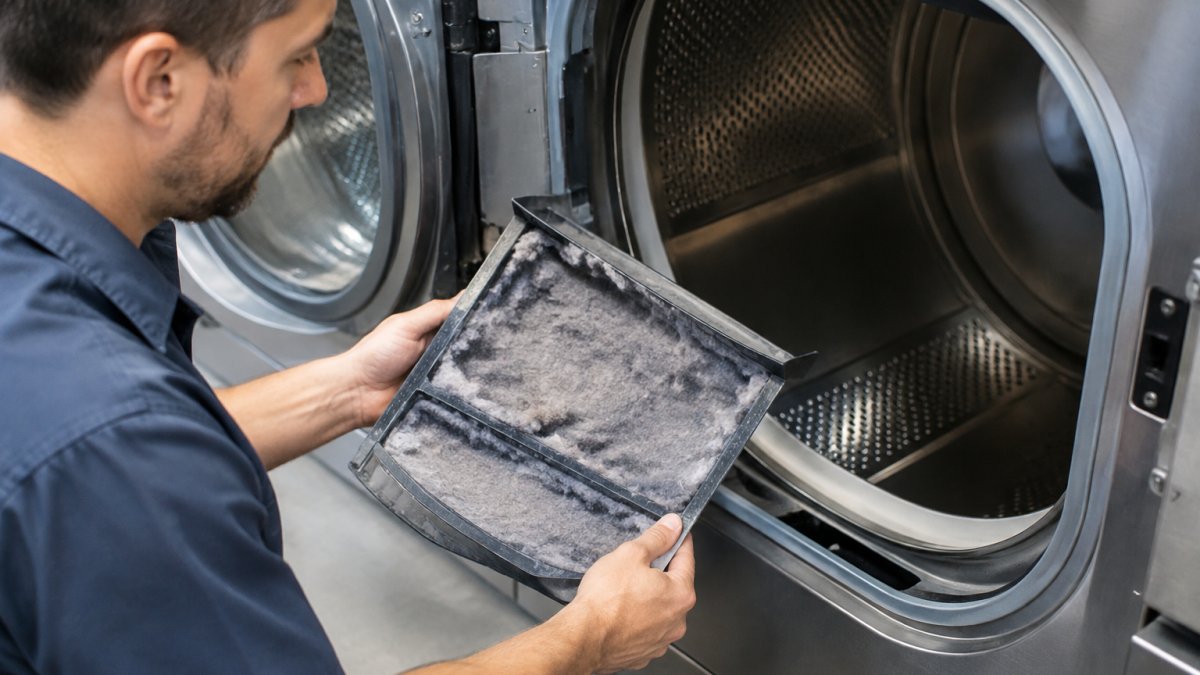
Your air filter is the first line of defense for your entire HVAC system. A clogged filter forces your air conditioner to work harder, reduces airflow, and can damage the compressor over time.
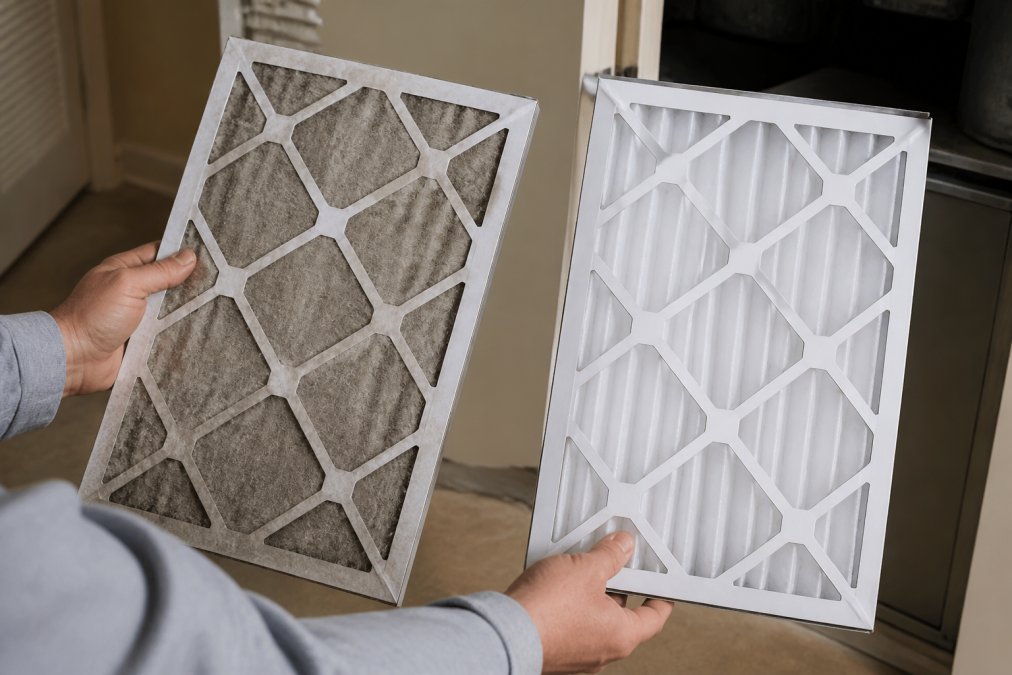
Most residential HVAC systems use disposable filters with a MERV rating printed on the frame. For summer cooling, a MERV 8 or MERV 11 filter strikes the right balance between airflow and filtration (the EPA). Higher MERV ratings restrict airflow more, which can strain your system during peak cooling season.
Before summer arrives, replace your filter with a fresh one. If your system uses a reusable filter, vacuum it thoroughly or rinse it with water and let it dry completely before reinstalling.
How Often to Change HVAC Air Filters
During summer, when your air conditioner runs constantly, filters clog faster than in other seasons. A standard disposable filter typically needs replacement every 30 days during active cooling season (energy.gov). If you have pets or live in a dusty area, change it every 15-20 days. Reusable filters should be cleaned every 2-4 weeks during summer. Set a phone reminder on the first of each month to check your filter.
Step 2: Clear Debris from Your Outdoor Condenser Unit
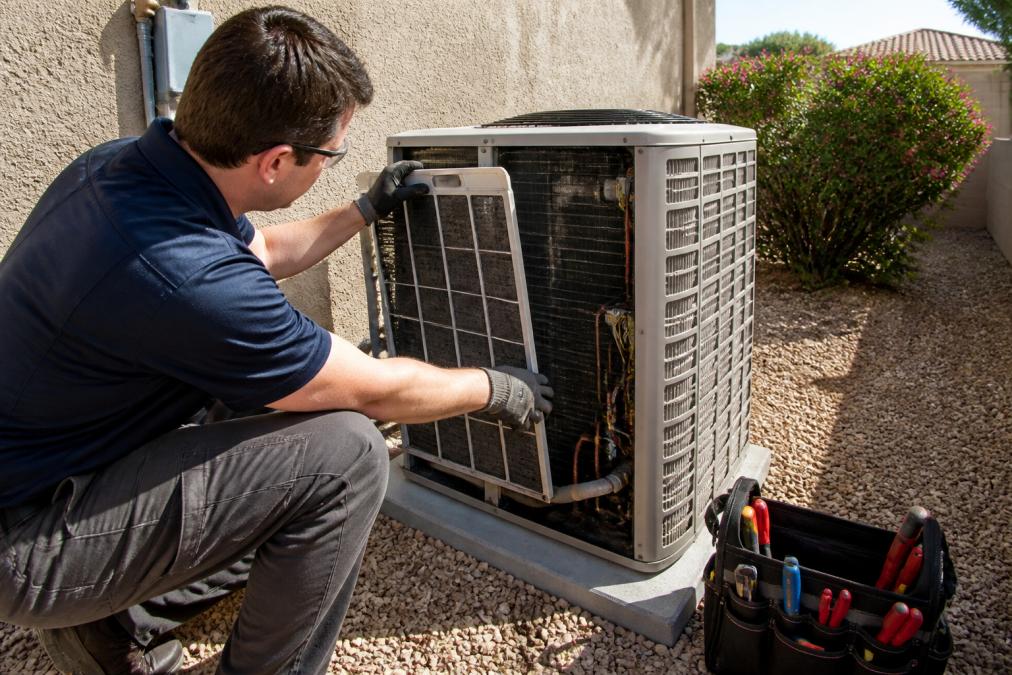
Your outdoor condenser unit releases the heat your air conditioner pulls from inside your home. If the condenser is blocked by debris, the system can't function properly. Over winter and spring, leaves, twigs, dirt, and grass clippings accumulate around the unit.
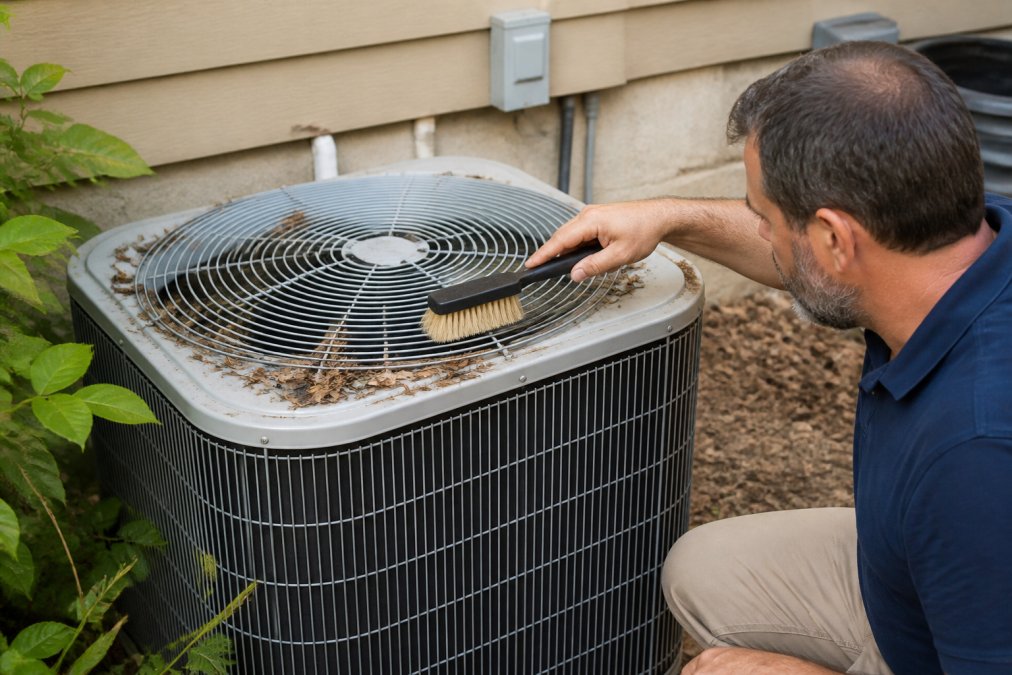
Start by turning off your system at the breaker. Remove any large debris by hand, then use a soft brush or old toothbrush to gently clean the fins. The fins are delicate aluminum; aggressive scrubbing can bend them and reduce efficiency.
For stubborn dirt buildup, use a garden hose on low pressure, spraying perpendicular to the fins. Never use a pressure washer, the force can damage internal components. After cleaning, ensure at least two feet of clearance around the unit on all sides. Plants, fences, and structures that block airflow force your condenser to work harder and reduce its lifespan.
Step 3: Inspect and Clean Indoor Vents and Registers
Your indoor vents and registers are where conditioned air enters your living spaces. Dust buildup reduces airflow and forces your system to work harder. Walk through each room and inspect every vent and register.
Vacuum the registers with your upholstery attachment to remove surface dust. If very dirty, unscrew them and wash with warm soapy water. While they're off, use your vacuum hose to reach into the ductwork opening and pull out any dust or debris you can reach.
Look for obstructions in your ductwork. Furniture, boxes, or curtains blocking vents force air to work around them instead of flowing freely. Clear vents mean balanced airflow throughout your home and a system that doesn't have to compensate for blocked areas.
Step 4: Check Thermostat Settings and Batteries
Your thermostat is the control center for your entire HVAC system. Before summer, verify it's set correctly and functioning properly.
Battery Check and Display Verification
If your thermostat runs on batteries, replace them now with fresh ones. A dead battery means your thermostat stops communicating with your system, and your air conditioner may run constantly or not at all, wasting energy. For digital thermostats, check the display for error codes or warnings like "Lo Bat" (low battery) or "Err" (sensor error).
Programming Your Summer Cooling Schedule
Most homeowners set their summer schedule to cool to 78°F during occupied hours and 80°F at night or when away to reduce energy consumption. Each degree you raise your thermostat saves approximately 1-3% on cooling costs (energy.gov). If you work outside the home during the day, programming your system to cool to 82°F while away and dropping to 78°F an hour before you return balances comfort with efficiency.
Smart Thermostat Optimization for Summer
Smart thermostats add automation that standard programmable models cannot match. These devices learn your patterns, detect occupancy, and adjust cooling automatically to reduce energy waste.
Key summer features to enable:
-
Geofencing: The system detects when household members leave and adjusts temperature upward automatically. When the first person approaches home, cooling resumes before arrival.
-
Humidity control: Set a humidity threshold (typically 50-55% relative humidity). The system will run longer if needed to dehumidify, preventing that sticky, uncomfortable feeling.
-
Smart scheduling: Adaptive schedules based on weather forecasts optimize runtime and reduce peak-hour energy use.
-
Energy usage reports: Daily or weekly reports show cooling runtime and estimated costs, helping you understand which times consume the most energy.
Integration with utility programs: Some smart thermostats integrate with utility demand-response programs. During peak demand periods, your utility may offer incentives to reduce cooling temporarily. Smart thermostats can participate automatically, shifting cooling to off-peak hours and lowering your bill.
If considering a smart thermostat upgrade, summer is the perfect time. Installation typically takes 30 minutes to an hour. Popular models include Nest, Ecobee, and Honeywell Home. Many utilities offer rebates of $50-$150, offsetting upfront cost.
Signs Your AC Needs Refrigerant Before Summer
Your air conditioning system relies on refrigerant to absorb heat from your home and release it outside. If your system is low on refrigerant, it can't cool effectively. Signs include weak cooling (system runs constantly but doesn't reach target temperature), ice buildup on the indoor evaporator coil or refrigerant lines, or a hissing sound near the outdoor unit.
If you suspect your system is low on refrigerant, don't attempt to recharge it yourself. Refrigerant handling requires EPA 608 certification and specialized equipment. A professional EPA-certified technician can diagnose whether your system needs refrigerant and identify any leaks causing the loss.
Step 5: Schedule Professional Maintenance and Average Cost of HVAC Tune-Up
Professional HVAC maintenance catches problems before they become emergencies. A seasonal tune-up typically includes inspecting the compressor, checking electrical connections, testing refrigerant levels, cleaning the evaporator coil, and verifying that all components operate within specification.
What a Professional Summer Tune-Up Includes
A comprehensive HVAC tune-up before summer should cover:
-
Compressor inspection: A technician checks for unusual vibration, noise, and electrical draw to ensure it's operating within normal parameters.
-
Refrigerant level check: Low refrigerant reduces cooling capacity and forces the compressor to work harder. A technician measures refrigerant pressure and adds refrigerant if needed.
-
Evaporator and condenser coil cleaning: Professional cleaning removes buildup that household vacuuming cannot reach.
-
Electrical connections and capacitors: A technician tightens all connections and tests capacitors, which store electrical energy. Failed capacitors prevent the compressor or fan from starting.
-
Airflow and ductwork assessment: A technician measures airflow at key points and identifies leaks or blockages that reduce cooling efficiency.
-
Thermostat calibration: The technician verifies your thermostat reads accurately and communicates correctly with your system.
Timing and Scheduling Strategy
Many HVAC contractors offer maintenance plans that include two annual tune-ups, one before summer and one before winter. These plans often include priority service, discounts on repairs (typically 10-15%), and sometimes waived service call fees.
Scheduling maintenance in spring, before peak cooling season, ensures your system is ready when temperatures spike. If a technician finds a problem during the tune-up, you have time to fix it before you need maximum cooling. Waiting until summer means facing emergency service rates and potential days without air conditioning.
Energy Efficiency Rebates and Tax Incentives
Maintenance alone doesn't qualify for federal tax credits, but upgrades often do.
Federal tax credits: The Inflation Reduction Act (effective through 2032) offers up to $3,200 in tax credits for installing a high-efficiency air conditioning system in your primary residence. The new system must meet SEER2 ratings of 16 or higher, and installation must be performed by a certified contractor.
State and utility rebates: Many states and local utilities offer additional rebates for upgrading to high-efficiency systems, typically ranging from $500 to $2,000. Contact your local utility to ask about summer cooling rebates.
Energy savings from maintenance: A well-maintained system operates at peak efficiency. A system not serviced in several years can lose 5-15% of cooling efficiency due to refrigerant leaks, dirty coils, and worn components. A professional tune-up restores that efficiency, reducing summer cooling costs by an estimated 5-10%.
When to Consider System Replacement
If your system is more than 10-15 years old, a professional tune-up is a good opportunity to assess whether replacement makes financial sense. New systems with SEER2 ratings of 16+ are 20-40% more efficient than systems from 10+ years ago. If your system requires a major repair (compressor replacement, refrigerant leak repair), the cost often approaches 50% of a new system's price. In these cases, replacement may be the better long-term investment.
Step 6: Test Your System Before Peak Heat
Before summer heat arrives, run your air conditioner through a full test cycle. Set your thermostat to cooling mode and lower the temperature 5 degrees below the current indoor temperature. The system should kick on within a minute and begin cooling.
Listen for unusual noises, grinding, squealing, or rattling sounds indicate mechanical problems. Feel the air coming from your registers; it should be cool, not just slightly cooler than room temperature. Check that air flows from every register in your home. If some areas feel warmer than others, you may have ductwork leaks or airflow imbalances needing professional attention.
Let the system run for 15-20 minutes and check that your thermostat reaches its target temperature. Run this test on a mild spring day, not during a heat wave, giving you time to address any issues without the pressure of extreme temperatures.
Preparing your HVAC for summer season is essential in this climate. A few hours of maintenance now prevents weeks of discomfort and thousands in emergency repairs later. If you've completed these steps and your system is running smoothly, you're ready for summer. If you've discovered problems or you're unsure about any step, Home Tech's team is ready to help. Call (602) 486-1901 or visit hometechappliancerepair.com to schedule your professional tune-up and ensure your air conditioning is ready for peak season.
| Step | Task | Timing | DIY or Professional |
|---|---|---|---|
| 1 | Replace or clean air filters | Before summer | DIY |
| 2 | Clear outdoor condenser debris | Before summer | DIY |
| 3 | Inspect and clean indoor vents | Before summer | DIY |
| 4 | Check thermostat settings | Before summer | DIY |
| 5 | Schedule professional maintenance | Spring, before heat | Professional |
| 6 | Test system performance | Before summer | DIY |
Frequently Asked Questions
Q: How do I know if my AC needs a tune-up before summer?
A: Look for weak airflow from vents, unusual noises from the condenser unit, or higher utility bills than last summer. If your system hasn't been serviced in over a year, schedule preventative maintenance before peak cooling season. A professional HVAC technician can run diagnostics to check refrigerant levels, test the compressor, and inspect the evaporator coil, catching small problems before they become expensive repairs.
Q: What are the signs your AC needs refrigerant?
A: Low refrigerant causes reduced cooling capacity, longer cooling cycles, and higher energy bills. You may notice ice buildup on the outdoor condenser unit or evaporator coil, hear hissing sounds, or feel warm air from vents even at full cooling mode. Refrigerant leaks require professional repair, never attempt to recharge without finding and sealing the source. An EPA 608-certified technician can diagnose the leak and restore proper refrigerant levels.
Q: How often should I change my HVAC air filter during summer?
A: Most 1-inch filters need replacement every 1-3 months, depending on dust, pets, and usage. During heavy summer cooling, check your filter monthly, clogged filters restrict airflow, reduce system efficiency, and increase utility costs. High-efficiency pleated filters last longer than basic fiberglass but cost more. If you run your AC constantly or have allergies, monthly checks and replacement every 6-8 weeks improves indoor air quality and system performance.
Q: What should I set my thermostat to in summer for efficiency?
A: The EPA recommends 78°F when home and awake, and 82-85°F when away or sleeping. Each degree higher saves about 3% on cooling costs. Programmable or smart thermostats automatically adjust temperatures throughout the day, reducing energy waste. If you have a smart thermostat, enable vacation mode before extended travel and use scheduling to align cooling with occupancy patterns rather than running full AC all day.