 how-to
How to Fix Samsung Ice Maker Ice Clumping
Table of Contents
- How to Fix Samsung Ice Maker Ice Clumping: Start With the Right Diagnosis
- How to Unstick a Samsung Ice Maker
- Samsung Ice Maker Makes Small or Cloudy Ice
- Samsung Ice Maker Troubleshooting: Water Supply, Lines, and Temperature
- How to Stop Ice From Clumping in the Freezer
- Repair Costs, Warranty, and DIY Limits
- Frequently Asked Questions
Last Updated: October 5, 2026
How to Fix Samsung Ice Maker Ice Clumping: Start With the Right Diagnosis
Ice clumping is a condition where ice cubes freeze together into a solid mass inside the ice bin instead of staying loose. It is one of the most common complaints about Samsung refrigerators, and it almost always traces back to one of five causes: warm freezer air, blocked airflow, low water flow, a dirty filter, or a failing auger.
At Home Tech, we repair Samsung refrigerators across the Phoenix metro area, and ice clumping is a frequent call. The good news is that most cases do not need a new ice maker.
Below, we'll walk through a clear diagnostic sequence. You'll learn how to unstick the bin safely, spot the difference between normal storage behavior and a real fault, and know when to stop troubleshooting and call a technician.
Samsung's official refrigerator support center publishes model-specific guidance, and it's worth checking your exact model number before you start.
How to Unstick a Samsung Ice Maker
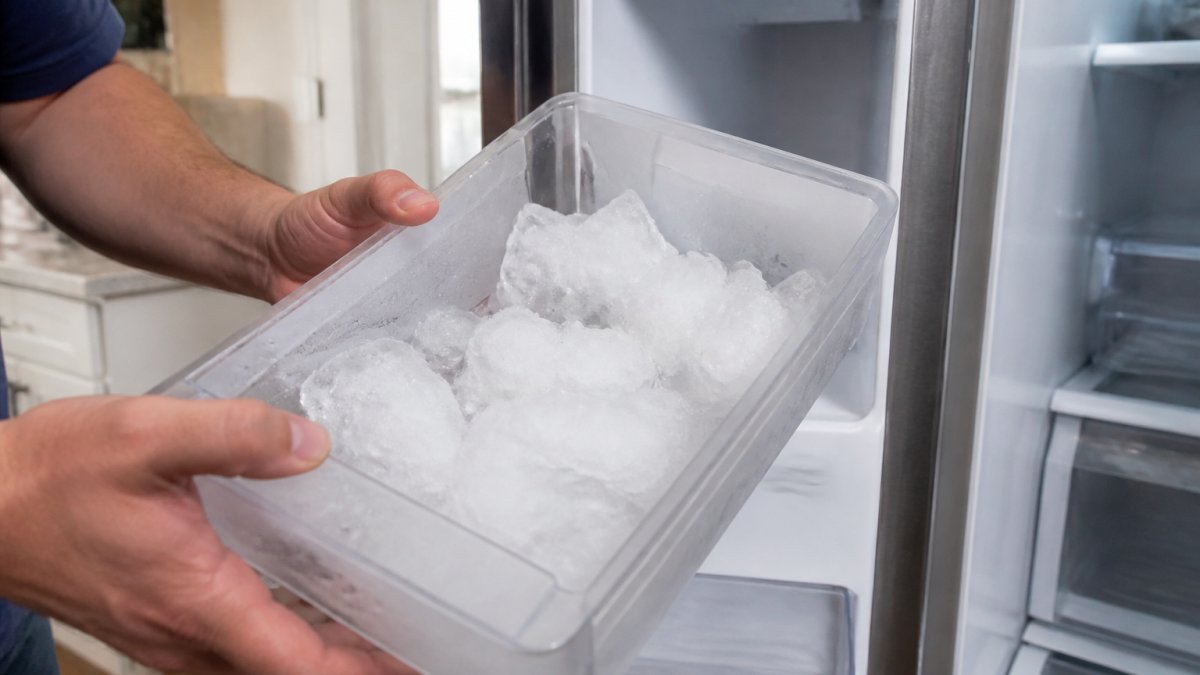
The safe way to unstick a Samsung ice maker is to power it off, remove the bin, and let the ice thaw at room temperature. Never chip at the ice with a screwdriver, knife, or ice pick.
Here's why that matters. The ice maker assembly and auger sit behind thin plastic and metal components. A sharp tool can puncture the liner or crack the auger housing, and that turns a simple thaw into a parts replacement. A plastic scoop or your hands are the only tools that belong near the bin.
Before you start, identify your model. Your model and serial plate is inside the fresh-food compartment or on the left interior wall, and the model number is the fastest way to pull the correct procedure from Samsung's official refrigerator support center.
Safe Steps to Break Up Clumped Ice
Follow these steps in order:
- Power the ice maker off. On most models, press and hold the ice maker reset button for about three seconds. If you can't find it, unplug the refrigerator for two minutes.
- Pull the ice bucket straight out of the freezer. On in-door designs, lift the bin slightly as you pull so the auger drive disengages.
- Set the bin on a towel in the sink and let it sit for 20 to 30 minutes. Do not run hot water over the bin, thermal shock can crack the plastic.
- Use a plastic scoop to break up ice gently once it loosens.
- Empty the bin completely and wipe it dry. Any standing water refreezes into the next batch.
- Check the auger for visible ice buildup before you reinstall.
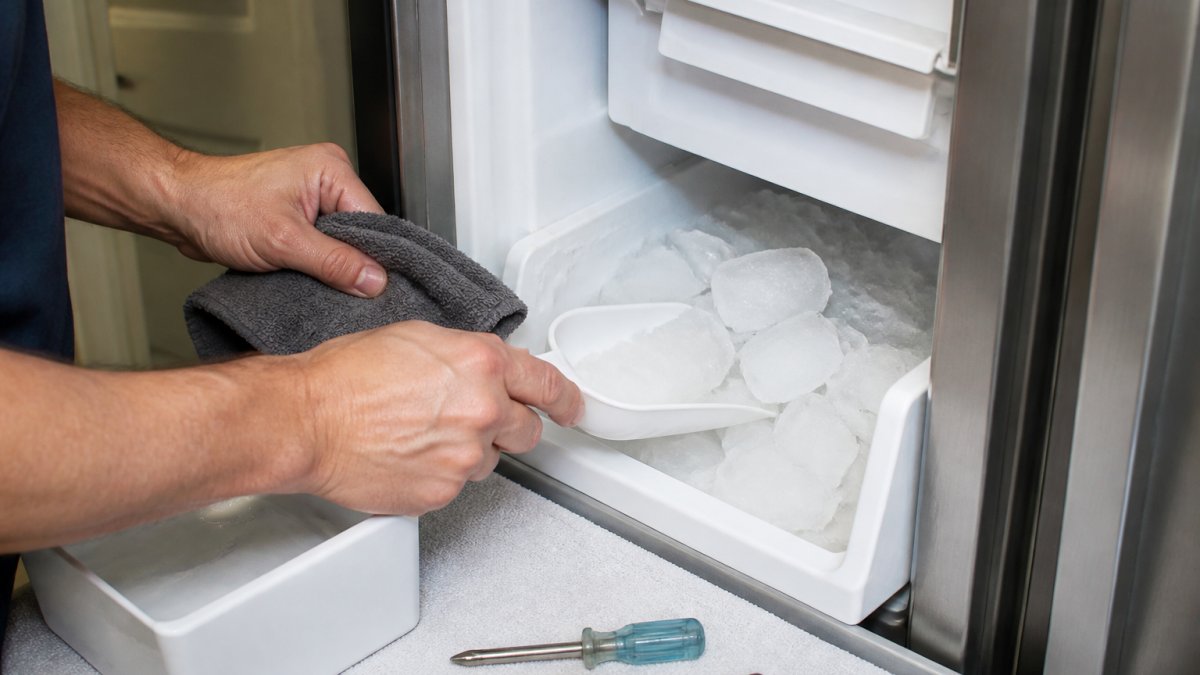
If the cubes are glazed or wet, the problem is moisture, not the auger. That points to a temperature or airflow issue, which we cover below.
When the Auger Is the Real Problem
The auger is the spiral metal rod that pushes ice toward the dispenser. When it jams, you'll hear the auger motor hum but no ice comes out.
A common mistake is assuming a jammed auger means a dead motor. Often the auger is fine and ice has simply frozen around it. Clear the ice first, run a test cycle, and only then suspect the motor or the ice maker assembly itself.
To run a test cycle on most Samsung models, press and hold the Ice Type or Ice Off button for about three seconds, or use the test button on the ice maker head if your model has one. The cycle takes a few minutes and should drop a fresh batch of cubes.
Once the bin is clear and the auger turns freely by hand, move on to the water supply, line, and temperature checks below. Those three areas cause most recurring clumping.
Samsung Ice Maker Makes Small or Cloudy Ice
Small or cloudy ice usually means the ice maker isn't getting enough water, or the water it gets contains too much air or mineral content.
Here's the mechanism. Each cycle, a solenoid opens the water inlet valve for a set number of seconds and fills the ice mold to a fixed level. If flow is restricted anywhere upstream, filter, valve, or line, the mold underfills. The cubes come out small, hollow, or crescent-shaped instead of full and clear. Cloudy ice is a separate signal: dissolved air and minerals freeze into the cube as it forms. It's harmless, but it tells you the water quality or the fill is off.
Water Filter Condition and Replacement
A clogged water filter is one of the most overlooked causes of ice problems. When the filter restricts flow, the ice maker fills partially, producing small or misshapen cubes.
Check these items:
- Filter age: most Samsung refrigerators call for a filter change every six months or roughly 300 gallons, whichever comes first. The filter indicator light on the control panel is a reminder, not a measurement, it counts time, not gallons used.
- Filter seating: a filter that isn't twisted fully into place leaks pressure. Pull it, reseat it, and listen for the click.
- Water supply valve: make sure it's open all the way. A quarter-turn shutoff that's only half open is a common find.
- Water line: look for kinks behind the fridge. A line pinched against the wall starves the ice maker no matter how good the valve is.
If you've replaced the filter and the cubes are still small, the issue is likely upstream in the water supply, not the filter itself.
Food Safety and Ice Disposal
Old ice is not just a clumping problem, it's a food-safety one. Ice absorbs odors and can harbor bacteria from hands, scoops, or a dirty bin. If the bin has held a solid clump, or if the ice smells or tastes off, discard the whole batch rather than trying to salvage it.
When you clean the bin:
- Wash it with warm water and mild dish soap, not bleach.
- Rinse thoroughly and dry it completely before reinstalling. Residual moisture refreezes and starts the next clump.
- Let the first fresh batch run and discard it, then observe the next batch for 24 hours. If cubes come out loose and full, the fix held. If they clump again within a day, the cause is temperature or airflow, not the bin.
Reading the Cubes
- Full, clear cubes: water flow and temperature are in range.
- Small or hollow cubes: restricted fill, check filter, valve, and line.
- Cloudy but full cubes: dissolved air or minerals, replace the filter and flush the line.
- Wet or glazed cubes: temperature fluctuation or high freezer humidity.
- Cubes fused into a block: airflow or door-seal issue, covered in the temperature section below.
If the filter is fresh, the valve is fully open, and the line is clear, and the cubes are still small, the inlet valve itself may be failing. That is a technician-level part on most Samsung models because it sits behind the refrigerator and ties into the household supply.
Samsung Ice Maker Troubleshooting: Water Supply, Lines, and Temperature
Most persistent ice clumping traces back to water supply, water lines, or freezer temperature. Work through these three areas before you consider replacing parts.
Checking the Water Supply Valve and Pressure
The water supply valve sits behind the refrigerator or under the sink. If it's only partly open, the ice maker gets a weak fill every cycle.
Turn the valve fully counterclockwise, then check the water line for pinched or kinked sections. A line pinched against the wall behind the fridge will starve the ice maker no matter how good the valve is.
Low household water pressure can cause the same symptom. If your kitchen faucet flow is weak too, the problem is in the supply, not the fridge.
Freezer Temperature and Humidity Checks
Freezer temperature is the single biggest factor in ice clumping. Ice stays loose and dry at a steady 0°F (-18°C). When the freezer drifts warmer, ice partially melts and refreezes into clumps.
Check these settings and habits:
- Set the freezer to 0°F and give it 24 hours to stabilize
- Avoid opening the door repeatedly during the day
- Don't overload the freezer, since blocked airflow traps humid air
- Keep the ice bin clear of the freezer walls
High humidity in the freezer, often from frequent door opening, is what turns loose cubes into one solid block.
How to Stop Ice From Clumping in the Freezer
Preventing clumping comes down to steady temperature, clear airflow, and clean components. A little maintenance beats another thaw session.
Run through this preventive checklist every few months:
- Confirm freezer holds a steady 0°F
- Empty and clean the ice bin
- Check the water filter and replace if due
- Inspect the water line for kinks
- Clear space around freezer air vents
- Run an ice maker test cycle
- Listen for unusual auger noise
| Symptom | Likely Cause | First Fix |
|---|---|---|
| Solid block of ice | Warm freezer or humid air | Check temperature and door seals |
| Small or hollow cubes | Low water flow | Check filter and supply valve |
| Cloudy cubes | Dissolved air or minerals | Replace filter, flush the line |
| Auger hums, no ice | Ice jam or weak motor | Thaw bin, then test the auger |
| Wet or glazed ice | Temperature fluctuation | Stabilize freezer temp |
If clumping keeps returning after you've done all of this, the ice maker assembly itself may be the source.
Repair Costs, Warranty, and DIY Limits
Knowing when to stop is as important as knowing how to fix it. Some jobs are safe for a homeowner; others are not.
DIY-friendly tasks include thawing the bin, replacing the water filter, clearing a kink in the water line, and adjusting freezer temperature. These carry no real risk.
Leave these to a technician:
- Auger motor or ice maker assembly replacement
- Sealed-system and refrigerant work
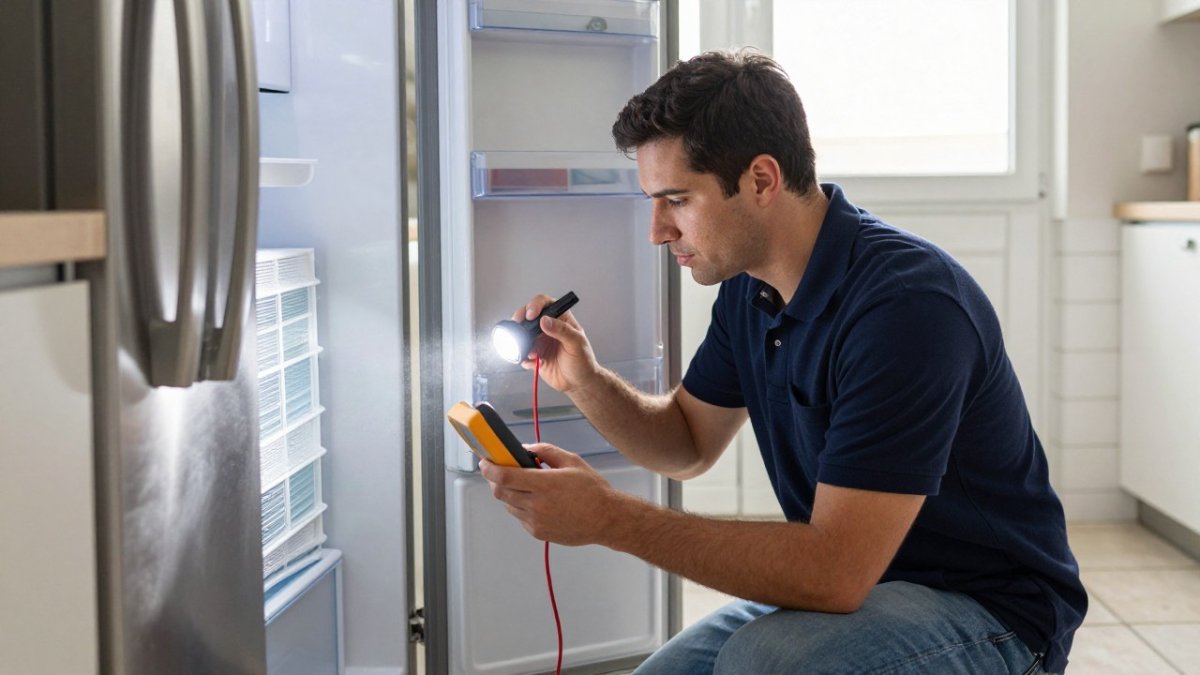
- Control board or sensor diagnostics
- Any repair that needs the fridge pulled out and partly disassembled
For warranty coverage, check your Samsung paperwork before you touch anything. Many repairs done by an unqualified party can void coverage. A licensed technician can tell you whether the fault falls under warranty or is a straightforward out-of-pocket fix.
Home Tech handles Samsung ice maker and auger repairs, including Samsung Bespoke refrigerators, with same-day and next-day appointments across the metro area.
Ice clumping rarely means you need a new refrigerator, but it does mean something in the cooling or water system needs attention.
Frequently Asked Questions
Why is my Samsung ice maker clogging?
Samsung ice maker clogging usually traces back to water flow or temperature. A clogged water filter, low water pressure, a kinked line, or a freezer that drifts above 10°F can cause wet or glazed cubes that freeze together. Check the filter first, then confirm the freezer holds a steady temperature.
How do I stop my ice maker from clumping?
Empty and clean the ice bin every few weeks, replace the water filter on schedule, and keep the freezer between 0°F and 5°F. Also check the door seal and avoid leaving the door open, since warm, humid air is the main driver of clumped ice.
Can a faulty water filter cause Samsung ice to clump?
Yes. A clogged or old filter restricts water flow, so the ice maker fills with too little water and produces small, wet cubes that bond together. Replace the filter every six months or when the indicator light comes on to restore normal ice production.
When should I call an appliance repair technician for a Samsung ice maker?
Call a technician if you have already replaced the filter, confirmed steady freezer temperature, checked for kinked lines, and reset the ice maker, but clumping returns. A failing auger motor, ice maker assembly, or sealed-system issue needs a trained technician with the right tools and EPA certification.