 how-to
How to Fix HVAC Drainage Pipe Clogs: Step-by-Step
Table of Contents
- Signs Your HVAC Condensate Drain Line Is Clogged
- Why HVAC Drain Lines Clog and How to Spot the Problem
- Safety Steps Before You Start
- How to Fix HVAC Drainage Pipe Clogs: Step-by-Step Process
- Step 1: Turn Off Your Air Conditioner and Power
- Step 2: Locate Your Condensate Drain Line and Access Cap
- Step 3: Inspect the Drain Line and Remove Visible Debris
- Step 4: Use a Wet/Dry Vacuum to Clear the Blockage
- Step 5: Flush the Drain Line with Cleaning Solution
- Step 6: Test Water Flow and Restore Power
- What to Use to Clean an AC Drain Line Safely
- How to Prevent AC Drain Line Clogs
- When to Call a Professional HVAC Technician
- Frequently Asked Questions
Last Updated: October 14, 2026
Signs Your HVAC Condensate Drain Line Is Clogged
A clogged condensate drain line shows itself in specific ways. Your air conditioner produces water as it cools your home. That water drains through a pipe. When the pipe clogs, problems appear fast.
Watch for these warning signs:
- Water pooling around your air handler or indoor unit
- A musty, moldy smell coming from vents or the unit itself
- Water dripping or leaking inside your home near the AC system
- Your AC running but not cooling as well as usual
- Visible algae or dark buildup around drain openings
- Standing water in the drain pan beneath the air handler
The drain line is usually a small PVC pipe running from your indoor air handler to an outdoor drain outlet. If you see water where it shouldn't be, the condensate drain is likely blocked.
Why HVAC Drain Lines Clog and How to Spot the Problem
HVAC drainage pipe clogs happen for predictable reasons. Understanding why helps you prevent them later.
Common causes:
- Algae and biofilm buildup inside the pipe (grows in warm, moist conditions)
- Dirt, dust, and debris drawn in from the air
- Lint from your home's air filters
- Pet hair and household dust accumulation
- Mineral deposits from hard water
- Mold growth in the dark, damp pipe environment
The condensate drain line stays wet and dark. It's the perfect environment for algae and mold to thrive. Over time, these organisms clog the pipe and block water flow.
Condensate Drain Clogs vs. Other Water Leaks
Not every water leak near your AC means the condensate drain is clogged. Other issues can cause water problems too.
A true condensate drain clog produces water that drips slowly or pools in the drain pan. The water is clear or slightly cloudy.
The difference matters because a clogged drain line you can often clear yourself. Other leaks usually need a professional HVAC technician.
Safety Steps Before You Start
Before you touch your AC system, take these precautions seriously.
Turn off power first. Your air conditioner has electrical components.
Know where the drain line is. Not all drain lines are easy to reach.
Prepare your workspace. Have towels ready to catch water.
Don't force anything. If a cap won't come off or the line won't budge, stop.
Check local codes. Some areas have rules about where condensate water can drain.
How to Fix HVAC Drainage Pipe Clogs: Step-by-Step Process
Clearing a clogged condensate drain line takes about 30 to 60 minutes if you do it yourself. You'll need basic tools and supplies. Most homeowners can handle this job safely.
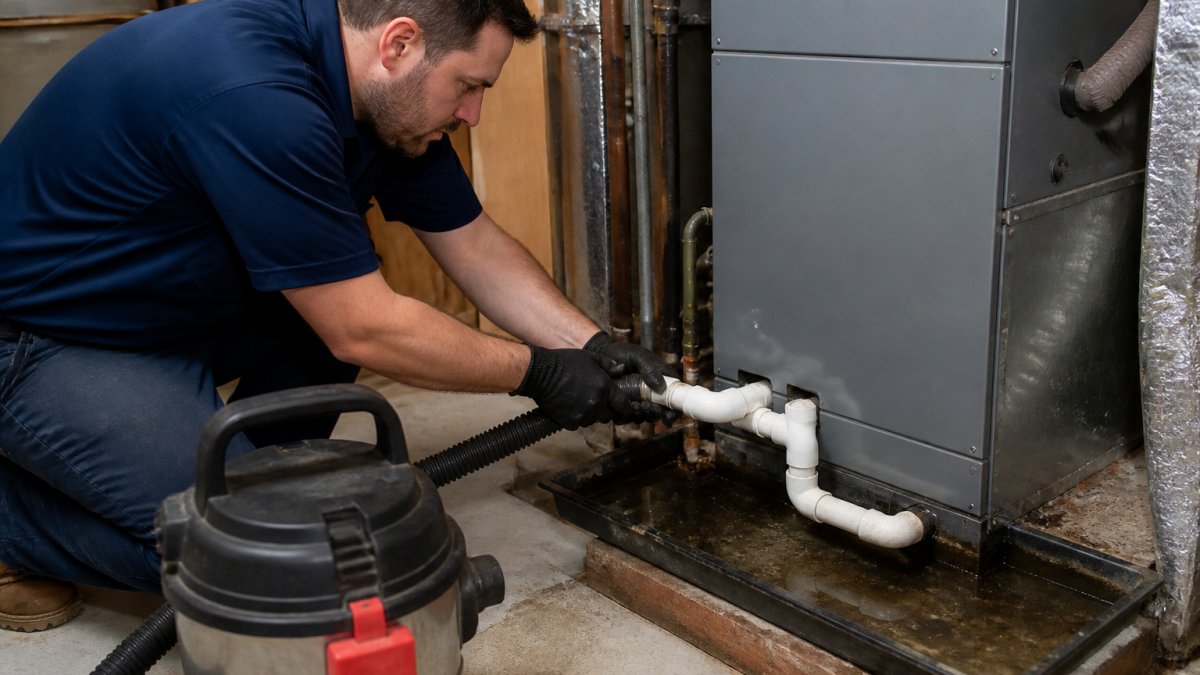
Step 1: Turn Off Your Air Conditioner and Power
Never work on your AC system while it's running.
Go to your thermostat and set it to "Off." Wait a few minutes for the system to stop completely. Then go to your electrical panel and flip the breaker that controls your AC unit to the "Off" position.
Some systems have a secondary power switch near the air handler unit itself. Flip that to "Off" as well if you have one. Double-check that the system is truly off by listening for the compressor outside, it should be silent.
Step 2: Locate Your Condensate Drain Line and Access Cap
Your drain line starts at the air handler unit, usually located in a basement, attic, or utility closet.
Look for a small PVC pipe (typically 3/4 inch in diameter) connected to the air handler.
At the beginning of the drain line, near the air handler, you'll find an access cap or clean-out fitting.
If you can't find the drain line, check your AC system manual or call a professional.
Step 3: Inspect the Drain Line and Remove Visible Debris
Place a bucket or towels under the access cap before you remove it. Water will spill out.
Carefully unscrew the access cap by hand. If it's stuck, use a wrench, but don't force it. Once the cap is off, look inside with a flashlight.
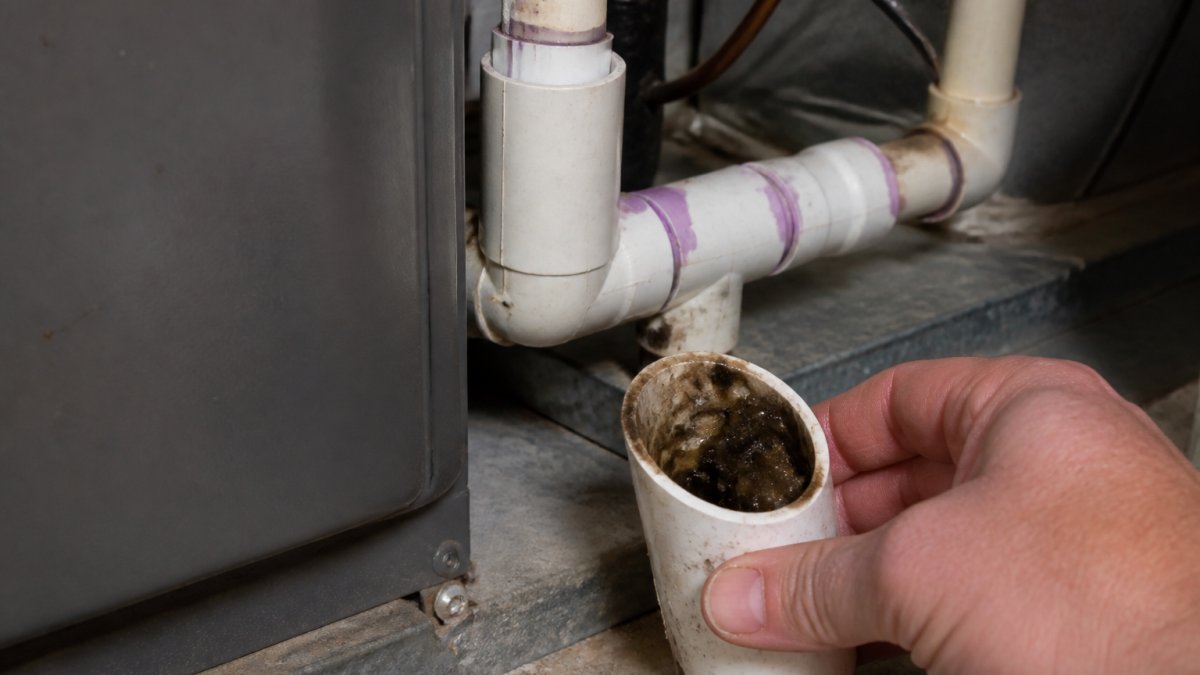
If you can see debris, algae, or standing water, the clog is confirmed.
Remove any debris you can reach. You may see dark slime (biofilm and algae) coating the inside of the pipe.
Step 4: Use a Wet/Dry Vacuum to Clear the Blockage
A wet/dry shop vacuum is the most effective tool for clearing condensate drain clogs.
Attach the vacuum hose to the drain line opening. You may need a hose adapter to get a tight seal.
You should hear the vacuum working harder as it pulls water. If you hear a sudden change in sound, the clog may have cleared.
Repeat this process 2 to 3 times. Each pass should pull out more material.
Step 5: Flush the Drain Line with Cleaning Solution
After vacuuming, flush the line with a safe cleaning solution to remove remaining algae and biofilm.
Mix a solution of equal parts water and white vinegar in a spray bottle or pitcher.
If you prefer a commercial option, use a PVC-safe AC drain line cleaner. Follow the product instructions carefully.
After the solution sits, pour clean water down the line to rinse it. Watch for water to flow out the other end (outside your home).
Step 6: Test Water Flow and Restore Power
Pour a cup of water down the drain line opening. It should flow quickly and exit outside without backing up.
If water flows freely, you've cleared the clog. Screw the access cap back on tightly.
Run your AC for 30 minutes and check for leaks around the air handler.
If water still backs up or drains slowly, the clog may be deeper in the line.
What to Use to Clean an AC Drain Line Safely
Choosing the right cleaner matters. Some products damage PVC pipes. Others don't work well on algae and biofilm.
Best options:
- White vinegar and water (50/50 mix), Safe, inexpensive, and effective at breaking down algae. Pours easily and requires no special handling.
- Commercial AC drain line cleaner, Designed specifically for condensate lines. Check the label to confirm it's PVC-safe. Follow instructions for mixing and contact time.
- Plain water, Useful for rinsing after vinegar or cleaner. Helps flush remaining debris.
Avoid these:
- Bleach solutions (can degrade PVC over time)
- Drain cleaners designed for kitchen sinks (too harsh for AC lines)
- Hydrogen peroxide (can leave residue)
- Caustic or corrosive chemicals
Vinegar is your safest bet. It's cheap, safe for PVC, and works well on the biofilm that causes most clogs. If vinegar doesn't work after repeated applications, a commercial AC cleaner is your next step.
How to Prevent AC Drain Line Clogs
Once you've cleared the clog, keep it clear with simple maintenance.
Monthly checks during cooling season:
- Pour a cup of water down the drain line opening. It should drain quickly.
- If water backs up or drains slowly, repeat the vinegar flush before a full clog develops.
- Check the drain pan for standing water. Empty it if needed.
Every 3 months:
- Pour a vinegar and water solution down the drain line. Let it sit for 15 minutes, then flush with water.
- This prevents algae and biofilm from building up.
Annually (before summer):
- Have your air filter checked and replaced if needed. A clean filter reduces dust in the system, which means less debris in the drain line.
- Inspect the drain line opening outside. Remove any leaves, dirt, or debris blocking the outlet.
System-level improvements:
- Keep your home's humidity below 50% during summer. Lower humidity means less condensation and slower algae growth.
- Ensure your air handler is level. A tilted unit can trap water in the drain pan instead of draining it.
- Consider installing a drain line float switch. This device stops your AC if water backs up, preventing water damage.
Regular maintenance takes minutes and saves you from costly water damage. Most homeowners who maintain their drain lines never experience a clog.
When to Call a Professional HVAC Technician
Some situations require professional help. Know when to stop and call.
Call a professional if:
- The drain line is in a hard-to-reach location (high ceiling, inside walls, attic)
- You've tried clearing it yourself and water still backs up
- The access cap is stuck and won't budge
- You see water leaking from refrigerant lines (copper tubing)
- Your system has a secondary drain line you can't locate
- Water is leaking inside your home and you can't find the source
- You're uncomfortable working on your AC system
- The drain line is cracked or damaged
Professional technicians have specialized tools like drain line cameras, high-powered suction equipment, and commercial-grade cleaners. They can clear stubborn clogs that DIY methods miss.
Home Tech provides same-day and next-day HVAC service across the greater Phoenix area, including Chandler, Gilbert, Tempe, Scottsdale, and surrounding communities. Our EPA 608-certified technicians handle condensate drain issues, refrigerant recharge, and full system diagnostics.
Frequently Asked Questions
How can I tell if my HVAC condensate drain line is clogged?
Look for standing water around your air handler, water pooling near your indoor unit, or a musty odor coming from your AC system. You may also notice water leaking indoors or hear a gurgling sound from the drain line. If your AC is running but the drain pan is overflowing, your condensate drain line is almost certainly blocked. Check the drain outlet outside your home, if no water is dripping when the AC runs, the line is clogged.
What can I use to unclog my AC drain pipe safely?
A wet/dry vacuum is the safest first step for clearing visible blockages. For flushing after debris removal, use diluted vinegar (one part vinegar to three parts water) or a PVC-safe cleaner designed for drain lines. Avoid bleach on PVC pipes unless your system specifically allows it, as it can damage the material. Pour the cleaning solution slowly down the drain opening to flush out algae and biofilm buildup. Always test with water first to ensure the line clears properly.
Can I use a wet/dry vacuum to clear an AC drain line?
Yes, a wet/dry vacuum is highly effective for removing debris and blockages from condensate drain lines. Remove the access cap, place the vacuum hose firmly over the drain opening, and use suction to pull out dirt, algae, and buildup. Start with moderate suction pressure, then increase if needed. This method works best for clogs caused by debris or biofilm. After vacuuming, flush the line with water or diluted vinegar to ensure full drainage restoration.
How do I prevent my HVAC drain line from clogging again?
Perform routine maintenance every three months: flush the condensate drain line with diluted vinegar to prevent algae and biofilm growth. Keep the drain outlet clear of debris and leaves. If your system has a float switch, ensure it moves freely. Change your air filter regularly to reduce dust entering the system. In humid climates, consider installing a secondary drain line for added protection. Annual professional HVAC inspection can catch early signs of buildup before a clog develops.
Fixing a clogged HVAC drainage pipe is a straightforward task for most homeowners. The process takes less than an hour and requires only basic tools. But if you're unsure about any step or if the clog returns frequently, professional help is worth the investment. A trained HVAC technician can identify why your drain line clogs and prevent the problem from happening again. Contact Home Tech today to get your AC system running smoothly and protect your home from water damage.