 how-to
How to Fix Dishwasher Not Draining: 7 DIY Steps
Table of Contents
- What You'll Need Before Starting
- Step 1: How to Clean Dishwasher Filter and Check for Debris
- Step 2: Inspect and Clear Dishwasher Drain Hose Clogs
- Step 3: Check the Garbage Disposal Dishwasher Connection
- Step 4: Test the Drain Pump and Clean the Drain Valve
- Step 5: Inspect and Clean the Air Gap
- Step 6: Run a Cancel/Drain Cycle and Reset Your Dishwasher
- How to Fix Dishwasher Not Draining: Safety Precautions
- Frequently Asked Questions
Last Updated: July 6, 2026
A clogged dishwasher is frustrating, but standing water doesn't always require a costly repair. According to the International Association of Appliance Manufacturers, nearly 40% of dishwasher service calls involve drainage issues homeowners can resolve themselves. Below are seven practical steps addressing the most common culprits, from clogged filters to kinked hoses and failing drain pumps. Most fixes take under an hour with basic household tools.
What You'll Need Before Starting
Tools and supplies:
- Flashlight or headlamp
- Adjustable wrench (for hose clamps)
- Needle-nose pliers (for removing debris)
- Bucket or towel (to catch water)
- Baking soda and white vinegar
- Wet/dry shop vac (optional)
- Screwdriver set
- Rubber gloves
A flashlight is essential, most drainage problems occur in dark spaces under the sink. If your dishwasher is under warranty, check the manual before disassembling anything.
Step 1: How to Clean Dishwasher Filter and Check for Debris
The filter is the first place to check when your dishwasher isn't draining. Food particles, mineral deposits, and grease accumulate here, blocking water from reaching the drain pump. This is the easiest fix and solves the problem in roughly 30% of cases.
Locate the cylindrical mesh filter at the bottom of the tub and unscrew it counterclockwise. Hold it to light, if you can't see through the mesh, it's clogged. Rinse under hot running water using an old toothbrush to scrub debris. For mineral buildup, soak in white vinegar for 15-20 minutes, then scrub again.
While the filter is out, inspect the filter housing and drain valve opening below it. Use a wet cloth or shop vac to remove standing water and loose particles. If you see visible blockage, use needle-nose pliers to gently pull it out. Reinstall the filter, ensuring it seats fully, and run a short drain cycle to test.
Step 2: Inspect and Clear Dishwasher Drain Hose Clogs
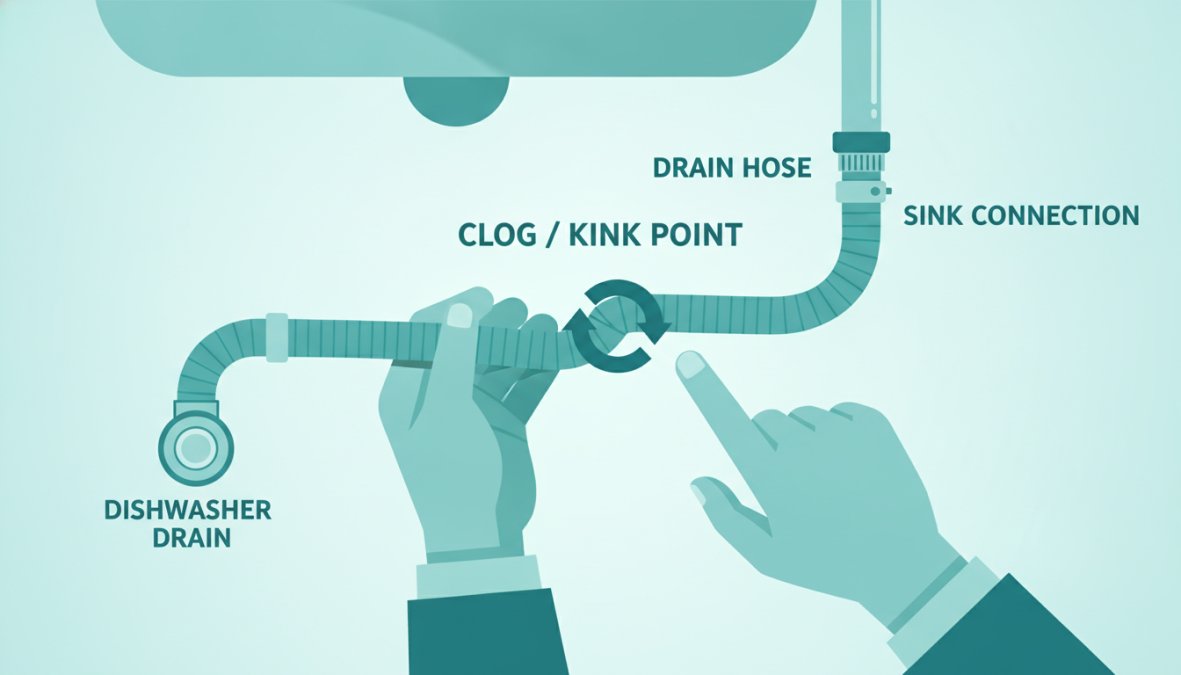
The drain hose carries water from the dishwasher to your plumbing system. Kinks, bends, and blockages are the second most common cause of poor drainage. Accessing the hose takes 10-15 minutes and often solves the problem.
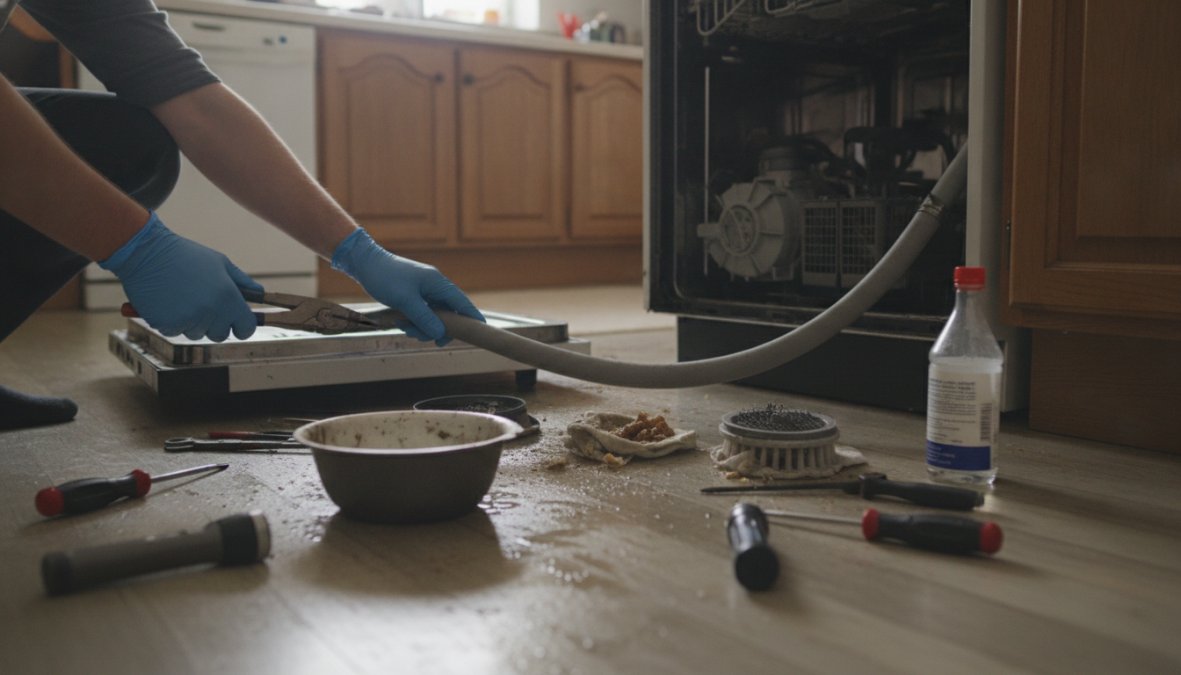
Locate the drain hose connection under the sink. It's typically a flexible rubber or plastic tube connecting to either the garbage disposal, sink drain, or a dedicated drain line. Place a bucket underneath, there will be residual water.
Check for Kinked Hose
Inspect the entire hose for kinks, twists, or sharp bends. The hose should have a gentle curve, never a sharp angle. Straighten any kinks by hand. If the kink is permanent, the hose needs replacement, a $15-30 part and 20-minute job.
Check hose clamps at both ends. Tighten each using an adjustable wrench, turning clockwise until snug but not over-tight.
Remove Blockages from the Drain Line
Disconnect the hose from both ends. Have your bucket ready, water will drain out. Hold the hose to light and look through it. If you can't see light on the other end, there's a blockage.
Run hot water through the hose from the sink side. If it flows freely, the clog is in the garbage disposal or drain trap. If water backs up, the blockage is inside the hose.
For a hose blockage, flush with a mixture of baking soda and hot vinegar. Pour half a cup of baking soda into the hose, followed by a cup of white vinegar. Let sit for 15 minutes, then flush with hot water. If the blockage persists, use a plumbing snake or straightened wire coat hanger to dislodge it carefully.
Reconnect the hose, ensuring both clamps are tight and the hose has no new kinks. Run the dishwasher's drain cycle to test.
Step 3: Check the Garbage Disposal Dishwasher Connection
Many dishwashers drain through the garbage disposal. If your disposal is clogged or jammed, the dishwasher can't drain. This connection is often overlooked but worth checking.
Locate the drain hose connection at the garbage disposal. Check that it's tight and free of leaks. Run the garbage disposal for 30 seconds to clear debris. Listen for normal grinding sounds. If it's jammed or makes grinding noise without spinning, turn it off immediately.
To clear a jammed disposal, turn off power at the circuit breaker. Use tongs or a wooden spoon to remove visible debris, never use your fingers. Once cleared, restore power and test again.
If your dishwasher has a separate drain line that doesn't go through the garbage disposal, skip this step.
Step 4: Test the Drain Pump and Clean the Drain Valve
If you've cleaned the filter, cleared the hose, and checked the garbage disposal but water still sits in the tub, the problem likely involves the drain pump or drain valve.
The drain pump is a small electric motor that forces water out. When you run a drain cycle, you should hear a humming sound from the bottom of the dishwasher. If you hear nothing, the pump may not be receiving power or may be faulty. If you hear humming but no water drains, the pump may be unable to move water due to an internal blockage or failed impeller.
Access the pump by removing the lower spray arm and filter assembly. Look for visible debris wrapped around the pump impeller. Mineral deposits and hair can jam it. Use needle-nose pliers to carefully remove debris, working gently to avoid damaging the impeller blades.
The drain valve controls water flow during the drain cycle. Mineral buildup or food particles can prevent it from opening fully. Soak the valve in white vinegar for 20 minutes to dissolve deposits, then reinstall it.
If the pump makes no sound, check the power supply. Trace the pump's electrical connector and ensure it's firmly seated. If it's loose, push it back in place. If the pump still doesn't respond, it may need replacement, a job best left to a professional.
Step 5: Inspect and Clean the Air Gap
An air gap is a small device on the countertop or sink that prevents dirty water from flowing backward into the dishwasher. If your system includes one and it's clogged, drainage will be blocked completely.
The air gap looks like a small chrome or stainless steel cylinder, 1-2 inches tall, mounted on the sink rim or countertop. Unscrew the cap by hand and look inside, you'll likely see debris and mineral deposits.
Empty visible debris and scrub the interior with an old toothbrush. Soak the cap in white vinegar for 10 minutes to dissolve mineral buildup, then scrub clean. Rinse under hot running water.
Check both hose connections for tightness and kinks. Tighten any loose clamps and straighten any kinked hoses. Reinstall the cap and run a drain cycle to test.
Step 6: Run a Cancel/Drain Cycle and Reset Your Dishwasher
Before concluding that a component has failed, try running your dishwasher's built-in drain cycle. Many models have a dedicated "cancel" or "drain" button that forces the pump to run and empty the tub, bypassing normal wash logic.
Press the cancel or drain button and let the cycle run for 2-3 minutes. Listen and watch for water movement. If water drains, the pump is functional and the issue was likely a temporary blockage or stuck valve.
If the drain cycle doesn't work, try resetting the dishwasher. Most models reset by holding the start button for 3-5 seconds, or by turning off power at the circuit breaker for 30 seconds. Check your manual for your specific model. A reset clears error codes and restarts the control board, sometimes resolving drainage issues caused by sensor errors.
After resetting, run a short wash cycle and observe whether water drains at the end. If it does, the problem was a software glitch. If water still stands, the problem is mechanical.
How to Fix Dishwasher Not Draining: Safety Precautions
Dishwasher repairs involve water, electricity, and moving parts. Treat safety seriously to prevent injury and home damage.
Electrical safety: Always turn off power at the circuit breaker before opening the cabinet or accessing internal components. Never work on a powered dishwasher. Water and electricity are dangerous, and the control board carries voltage even when the cycle isn't running.
Water and flooding: Dishwashers hold several gallons of water. Place towels and a bucket underneath before disconnecting anything. Wear gloves to protect your hands from dirty water containing bacteria. Dry any spills immediately to prevent water damage.
Chemical safety: Do not mix cleaning chemicals. Baking soda and vinegar are safe, but combining vinegar with bleach creates toxic fumes. Never use chemical drain cleaners designed for sink drains, these damage dishwasher seals and the pump.
Mechanical hazards: The drain pump has moving parts. Never reach into the pump area while power is on. The impeller spins at high speed and can cause cuts. Always kill power before investigating the pump or filter area.
When to call a professional: If you've completed all six steps and water still pools in the tub, the problem likely involves internal pump failure, a cracked pump housing, or a blocked plumbing trap. Professional diagnosis is warranted at this point.
If your dishwasher isn't draining and the steps above haven't resolved it, a faulty drain pump or internal plumbing issue may require professional repair. Home Tech's EPA-certified technicians diagnose and repair dishwasher drainage problems for all major brands, GE, Whirlpool, LG, Samsung, Bosch, and more, across the greater Phoenix area. We offer same-day and next-day appointments with no hidden fees and a 100% satisfaction guarantee. Call Home Tech at (602) 486-1901 or visit hometechappliancerepair.com to schedule your repair.
| Step | Time Required | Difficulty | Success Rate |
|---|---|---|---|
| Clean filter | 10 minutes | Very easy | 40% |
| Inspect drain hose | 15 minutes | Easy | 25% |
| Check garbage disposal | 5 minutes | Very easy | 10% |
| Test drain pump | 20 minutes | Moderate | 15% |
| Clean air gap | 10 minutes | Easy | 5% |
| Run drain cycle | 5 minutes | Very easy | 3% |
| Reset dishwasher | 5 minutes | Very easy | 2% |
Frequently Asked Questions
Why is there standing water in the bottom of my dishwasher?
Standing water typically indicates a clogged filter, blocked drain hose, or faulty drain pump. Start by removing the bottom rack and inspecting the filter for debris. Then check the drain hose for kinks or blockages. If water remains after cleaning these components, the drain pump may be failing and require professional diagnosis.
How do I know if my dishwasher pump is broken?
Signs of a bad dishwasher drain pump include standing water that persists after cleaning the filter and drain line, unusual grinding or humming noises during the drain cycle, and water backing up into the tub. If the drain pump motor doesn't activate when you run a cancel/drain cycle, the pump impeller may be jammed or the motor may have failed, both require professional repair.
Can I use Drano or baking soda and vinegar in my dishwasher to unclog the drain?
Avoid chemical drain cleaners like Drano, they can damage dishwasher seals and internal components. Baking soda and vinegar are gentler alternatives. Pour one cup of baking soda into the bottom of the empty tub, add one cup of white vinegar, let it sit for 30 minutes, then run a hot water cycle. This method can help dissolve minor blockages without harming the appliance.
How often should I clean my dishwasher filter to prevent drainage problems?
Clean the dishwasher filter monthly, or more frequently if you load heavily soiled dishes. A clogged filter is the most common cause of poor drainage. Remove the filter basket from the bottom of the tub, rinse it under warm running water, and use a soft brush to remove food particles and debris. Regular maintenance prevents standing water and keeps your drain system functioning properly.