 how-to
How to Defrost Refrigerator Drain Hole: Step-by-Step Guide
Table of Contents
- Identifying the Symptoms of a Clogged Refrigerator Drain
- Safety Precautions Before You Start
- Tools and Materials You'll Need
- Locating the Defrost Drain Hole on Your Refrigerator
- Step-by-Step Flushing Process to Defrost Your Drain
- Why Does My Fridge Drain Hole Keep Freezing and How to Stop It
- Refrigerator Leaking Water Inside: Diagnosis and Prevention
- Choosing the Right Refrigerator Drain Hole Cleaning Tool
- Frequently Asked Questions
Last Updated: August 8, 2026
Identifying the Symptoms of a Clogged Refrigerator Drain
Water pooling on your refrigerator floor signals a clogged defrost drain. During the defrost cycle, ice buildup in the evaporator coils prevents water from flowing properly, and that water has nowhere to go. If you see standing water near the bottom, notice frost accumulating in the freezer section, or detect a musty smell from stagnant water, your drain system needs attention.
Not every water leak means a clogged drain, sometimes it's a frozen drain line or damaged drain pan, but ice blockage in the defrost drain hole is the most common culprit. Check your refrigerator's kickplate area for an overflowing drain pan or water leaking underneath. Standing water can damage flooring and create conditions for mold growth.
| Warning Sign | What It Means | Action to Take |
|---|---|---|
| Water pooling on fridge floor | Drain backup inside unit | Check drain hole and defrost drain line |
| Ice buildup in freezer | Defrost cycle not working | Inspect evaporator coils and drain system |
| Water leaking underneath | Drain pan overflow | Clear drain pan and flush drain line |
| Musty or sour smell | Stagnant water in drain | Flush drain system with warm water |
Safety Precautions Before You Start
Unplug your refrigerator from the wall outlet before touching anything inside. You're working with water and electrical components in close proximity. Wait five minutes after unplugging to allow residual electrical charge to dissipate.
Clear the area around your refrigerator and lay towels on the floor to catch drips. Pull the unit forward if it's against a wall so you can access the back and bottom. Wear old clothes or an apron, as warm water and debris will splash.
Never use chemical drain cleaners inside your refrigerator. These products damage plastic tubing and seals, and leave residue that contaminates your food storage area. Stick to warm water and baking soda solutions instead. Check your refrigerator's manual for your specific model's drain location before you start.
Tools and Materials You'll Need
Gather these items before you start:
Essential tools:
- Turkey baster or large syringe (60ml or larger)
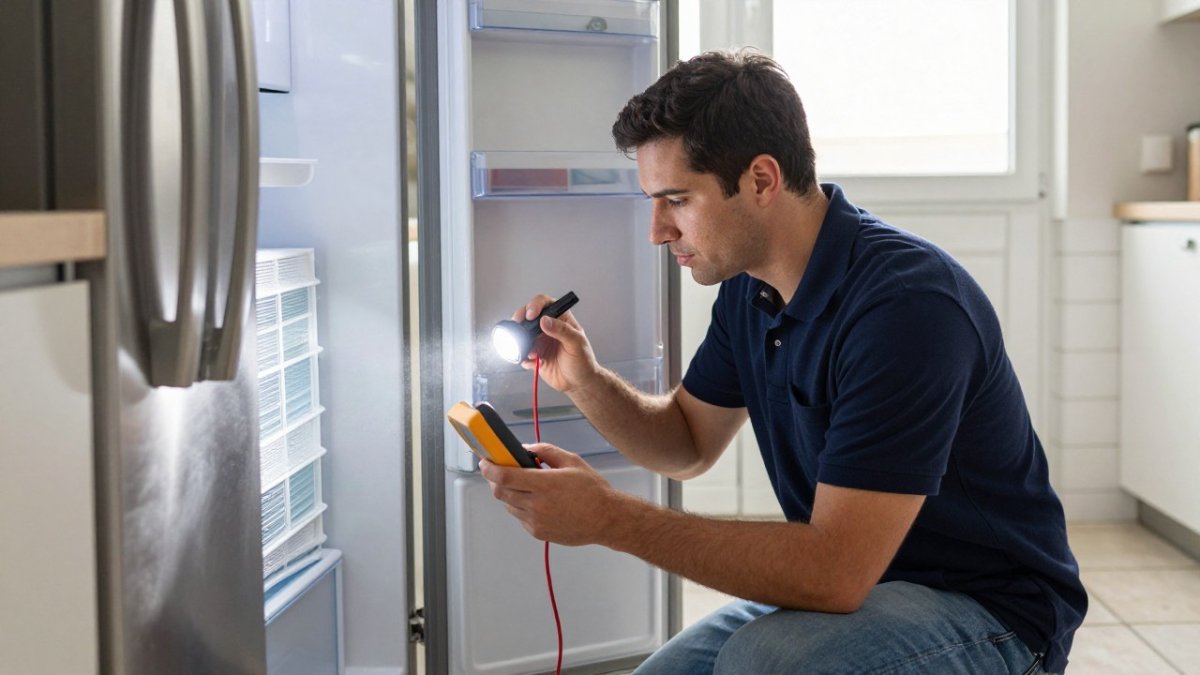
- Small flashlight or headlamp
- Bucket or large bowl to catch water
- Towels and rags
- Warm water (not boiling)
- Baking soda
Optional but helpful:
- Flexible plastic tubing or thin plastic pipe cleaner
- Spray bottle filled with warm water
- Sponge or cloth for cleanup
- Work gloves
The turkey baster is your primary tool, it's gentler than a syringe and gives you control over water pressure. Warm water (around 100-110°F) is critical; boiling water can warp plastic components. Mix one tablespoon of baking soda with one cup of warm water for a mild solution that helps dissolve ice and debris without harshness.
A small flashlight makes locating the drain hole much easier. Keep a bucket under the drain hole area before you start flushing to catch water.
Locating the Defrost Drain Hole on Your Refrigerator
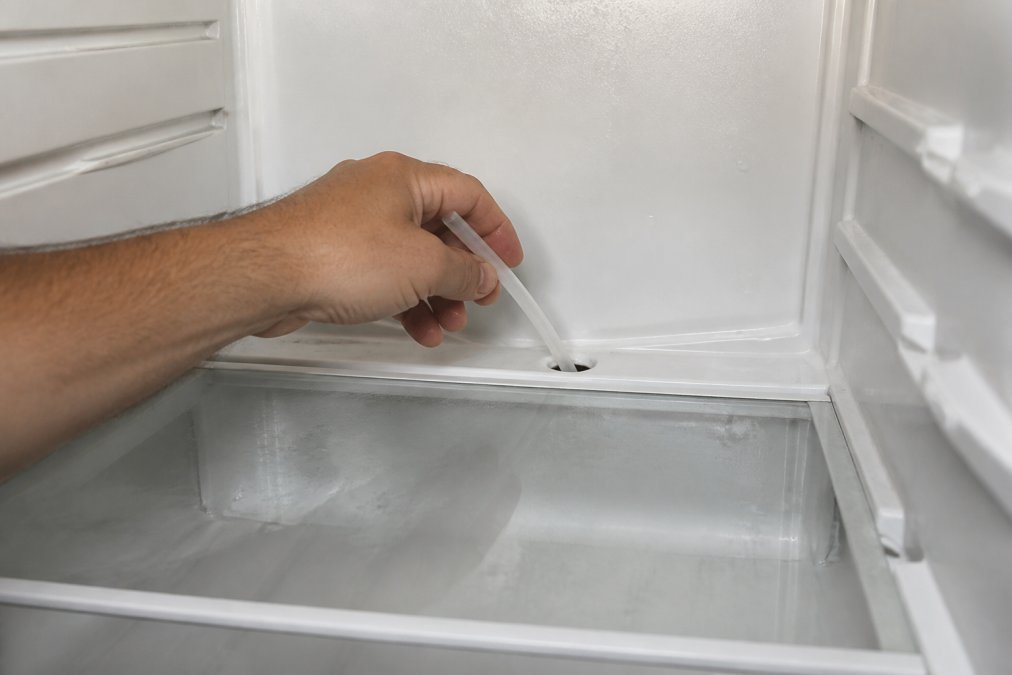
The defrost drain hole is almost always at the bottom of the refrigerator compartment, along the back wall near the floor or near the sides. The hole is typically about the diameter of a pencil. If you can't find it visually, consult your refrigerator's manual or search the model number online.
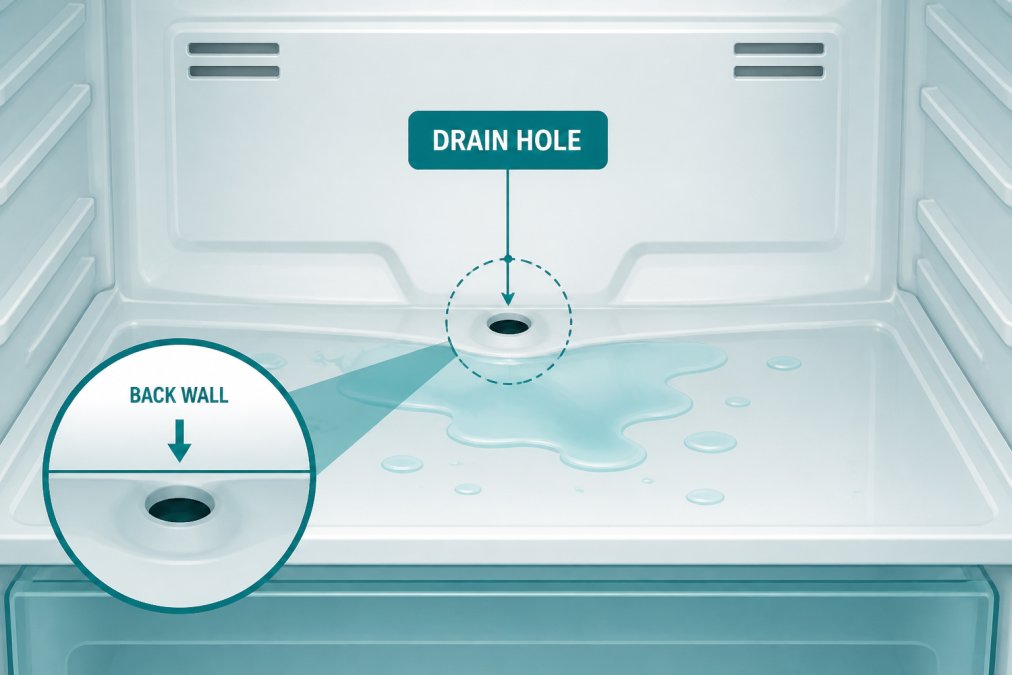
Check for visible blockage, ice buildup around the opening is a dead giveaway. Some refrigerators have a removable drain cover or plug that you can gently unscrew or pop off. The drain pan sits below the refrigerator, usually accessible from underneath or behind the kickplate. If your drain hole is clear but water is still pooling inside the fridge, the blockage might be in the drain pan or drain line.
Step-by-Step Flushing Process to Defrost Your Drain
Fill your turkey baster or syringe with warm water mixed with a small amount of baking soda, about one tablespoon per cup of warm water.
Step 1: Position your collection bucket directly under the defrost drain hole.
Step 2: Insert the turkey baster gently into the drain hole without forcing it.
Step 3: Flush with steady pressure. Squeeze the baster slowly to push warm water into the drain hole. If water backs up, stop and wait a few seconds before continuing.
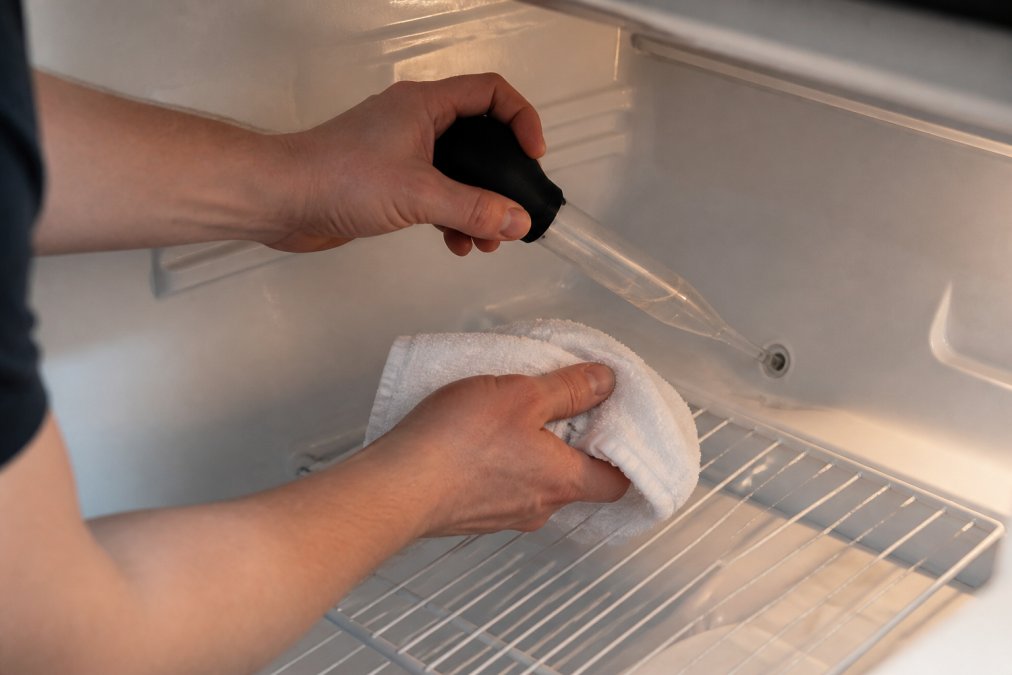
Step 4: Repeat the process 5-10 times. Each pass helps break up the blockage and push debris further down the line.
Step 5: Check for water flow under your refrigerator or in the drain pan. If water is coming out, you're making progress.
Step 6: Flush the drain line from below if flushing from above doesn't work. Remove the kickplate at the bottom front of your refrigerator. If the drain line is kinked or clogged, straighten it gently and try flushing again from above.
Step 7: Clean the drain pan. Remove it and rinse thoroughly with warm water and a mild baking soda solution to prevent future blockages and odors.
Step 8: Reassemble and test. Replace the drain pan and kickplate, plug your refrigerator back in, and let it run for 24 hours. Check that water is draining properly.
Why Does My Fridge Drain Hole Keep Freezing and How to Stop It
Your defrost drain hole freezes because water from the defrost cycle isn't draining fast enough and the interior temperature freezes standing water. This creates a cycle: ice blocks the drain, water backs up, more ice forms, and the blockage worsens.
Common causes include mineral buildup from hard water, food particles, mold growth inside the drain line, and ice crystals that form when warm defrost water meets cold air. In Phoenix's dry climate, mineral deposits are especially common.
To prevent freezing, flush the drain hole monthly with warm water and baking soda, even if you don't see blockage signs. Check your defrost heater, if it's failing, the evaporator coils won't defrost properly. Ensure your refrigerator is level; if it tilts, water won't flow toward the drain hole and will pool and freeze instead.
Refrigerator Leaking Water Inside: Diagnosis and Prevention
Water leaking inside your refrigerator points to a clogged defrost drain, frozen drain line, or damaged drain pan. Start by checking the drain hole and drain pan. If both are clear and the pan is intact, the problem is likely a frozen drain line. Thaw it by flushing with warm water.
If the drain hole is clogged and flushing doesn't work, the blockage might be deeper in the line. Some refrigerators have drain lines that run along the back or side and can kink, crack, or clog. If flushing doesn't work, the line may need replacement.
Inspect the drain pan for cracks. If damaged, water will leak through the bottom. Drain pans are inexpensive and easy to replace, a 10-minute job that prevents water damage to your flooring.
Establish a maintenance routine: clean the drain pan monthly, flush the drain hole every month or two, and check that the refrigerator is level. If water continues to leak after clearing the drain and cleaning the pan, the problem might be with the water supply line or failing internal seals, which require professional diagnosis.
Choosing the Right Refrigerator Drain Hole Cleaning Tool
The turkey baster is the gold standard for drain flushing, it's gentle, affordable, and gives precise control over water pressure. A good turkey baster costs under ten dollars.
Syringes are another excellent option, especially large ones from a pharmacy. A 60ml or 100ml syringe applies water with steady pressure and is less likely to splash.
Plastic pipe cleaners or flexible tubing can help if you need to reach a drain line that's not directly accessible. Use them gently to push water through, not to scrape or poke at blockages.
Avoid metal tools, high-pressure water sprays, or chemical drain cleaners. Metal tools can puncture plastic drain lines. High-pressure sprays can damage seals. Chemical cleaners leave residue and harm plastic components.
Some manufacturers sell specialized drain cleaning kits for their models. These are usually under twenty dollars and designed for your specific refrigerator. For stubborn blockages, a professional drain snake or flexible brush designed for appliance drain lines can help.
A clogged defrost drain hole doesn't have to become a crisis. Regular maintenance prevents most problems, and when blockages occur, a turkey baster and warm water solve them quickly in about 30 minutes.
If you've flushed the drain, cleaned the pan, and water still leaks, the problem is likely deeper in the drainage system or involves a component like the defrost heater that requires professional service. At Home Tech, we diagnose and repair refrigerator drainage issues on all major brands, GE, Whirlpool, LG, Samsung, Bosch, and others, with same-day appointments available throughout the Phoenix metro area. Our EPA 608-certified technicians understand sealed-system components that affect drainage, and we back every repair with a 100% satisfaction guarantee. Call (602) 486-1901 or visit hometechappliancerepair.com to schedule your appointment today.
Frequently Asked Questions
How do I know if my refrigerator defrost drain is clogged?
Look for water pooling on the refrigerator floor, especially near the back wall where the defrost drain hole is located. You may also notice water leaking inside the fridge onto your food or shelves. A clogged drain line prevents proper drainage from the evaporator coils, causing water accumulation. If you see ice buildup on the freezer floor or smell musty odors, these are also signs of a blocked defrost drain that needs attention.
What can I pour down the drain to unfreeze it?
Warm water is the safest and most effective option, use it with a turkey baster or syringe to flush the drain hole gently. A baking soda solution (1 tablespoon baking soda mixed with 1 cup warm water) can help dissolve minor debris and ice blockages. Avoid harsh chemical cleaners, which can damage refrigerator seals and drainage components. Never use boiling water, as extreme heat can crack plastic drain tubes. Always flush slowly and allow water to drain completely before repeating.
How often should you clean your refrigerator drain line?
Most homeowners should check and clean their refrigerator drain line every 3 to 6 months, depending on usage and water quality. Homes with hard water or those running their fridge frequently may need more frequent maintenance. Regular preventative flushing with warm water takes just a few minutes and stops ice blockages and water leakage before they become problems. If you notice recurring clogs, increase cleaning frequency to monthly.
Can a clogged drain hole cause a refrigerator to stop cooling?
A clogged defrost drain doesn't directly stop cooling, but it can lead to ice buildup on the evaporator coils, which restricts airflow and reduces cooling efficiency. Water pooling inside the fridge can also freeze around the coils, blocking proper heat exchange. Over time, this forces the compressor to work harder and may trigger the appliance to cycle off as a safety measure. Clearing the drain line restores normal drainage and helps your refrigerator maintain proper temperature.