 how-to
How to Clear HVAC Drain Line: Step-by-Step
Table of Contents
- Why Your HVAC Drain Line Matters
- Signs of a Clogged AC Drain Line
- Safety Precautions Before You Start
- Best Tools for Clearing HVAC Drain Lines
- Step-by-Step Instructions to Clear Your Drain Line
- Step 1: Power Off Your Air Conditioning Unit
- Step 2: Locate the Condensate Drain Line and Access Point
- Step 3: Remove the Drain Cap and Inspect for Blockage
- Step 4: Use a Wet/Dry Vacuum for Suction
- Step 5: Flush the Line with Diluted Vinegar
- Step 6: Check the Drain Pan for Debris
- Step 7: Verify the Drain is Working Properly
- Preventing Algae Growth in HVAC Drain Lines
- Common Mistakes to Avoid When Clearing Your Drain
- When to Call a Professional
- Frequently Asked Questions
Last Updated: August 26, 2026
Why Your HVAC Drain Line Matters
Your air conditioning system produces condensation as it cools your home. That water flows through a condensate drain line designed to safely carry it away from your unit and outside. When this line clogs, water backs up into your air handler, creating serious problems that can cost thousands in repairs.
A clogged condensate drain line causes excess moisture inside your air handler, creating ideal conditions for mold and mildew growth. Water can damage the evaporator coil, overflow into your home, and trigger your system's safety shutoff switch. Many homeowners don't realize their AC problems stem from a blocked drain until the system stops working entirely.
The good news: clearing an HVAC drain line is something you can often handle yourself. This guide walks you through the process step by step, from safety precautions to verification. If you're dealing with a persistent clog or aren't comfortable working on your system, Home Tech's EPA 608-certified HVAC technicians can handle it for you with same-day service in the Phoenix metro area.
Signs of a Clogged AC Drain Line
Water pooling around your indoor air handler unit is the most obvious sign of trouble. You might notice it near your furnace closet, basement, or attic depending on your system's location. If water appears on ceilings or walls near your AC equipment, the backup has progressed significantly.
Your air conditioning unit may shut off on its own. Most modern systems have an overflow switch that triggers when water accumulates in the drain pan, preventing water damage but also stopping your AC until the blockage is cleared (ashrae.org).
Reduced cooling performance can indicate drainage problems. When moisture builds up in the air handler, it reduces efficiency and causes the system to cycle on and off more frequently. You might notice your home isn't reaching the temperature you set on the thermostat.
Musty odors near your air handler indicate mold and mildew growth. These smells often signal algae has already begun growing inside the condensate drain line or drain pan. Gurgling or bubbling noises from your indoor unit suggest water is trapped and moving abnormally through the system.
Safety Precautions Before You Start
Power off your air conditioning unit at the thermostat before you begin any work. Locate the breaker that controls your AC system and switch it to the off position. This protects you from electrical hazards and prevents the system from running while you work on it.
Never use bleach to clear a condensate drain line (the EPA). Bleach damages PVC pipes, corrodes metal fittings, and creates toxic fumes when mixed with other cleaning solutions. Diluted vinegar and hot water are far safer and equally effective.
Wear gloves and eye protection when working with potentially dirty water, algae, and debris. Keep a bucket or towel handy to catch water when you remove the drain cap. Work in a well-ventilated area, especially if using a wet/dry vacuum indoors.
Best Tools for Clearing HVAC Drain Lines
A wet/dry vacuum is your most important tool for this job. This type of vacuum handles both liquid and solid debris, making it ideal for removing blockages. A standard household vacuum will be damaged by moisture. Wet/dry vacuums are inexpensive to rent or borrow if you don't own one.
Diluted vinegar works as your primary cleaning solution. Mix equal parts white vinegar and hot water in a bucket. Vinegar dissolves algae buildup and mineral deposits without damaging PVC pipes or metal components.
A plumbing snake or flexible drain auger can help dislodge stubborn clogs if suction alone doesn't work. A 25-foot snake is adequate for most residential HVAC systems (ashrae.org). You'll also need a bucket to catch water, a small cup or funnel to pour cleaning solution, a flashlight to see inside the drain line, and towels to absorb spilled water.
Step-by-Step Instructions to Clear Your Drain Line
Step 1: Power Off Your Air Conditioning Unit
Switch off your thermostat first, then locate your AC system's breaker in your home's electrical panel and switch it to off. Wait at least five minutes before proceeding to ensure the system has fully powered down. Working on a live electrical system risks shock or injury.
Step 2: Locate the Condensate Drain Line and Access Point
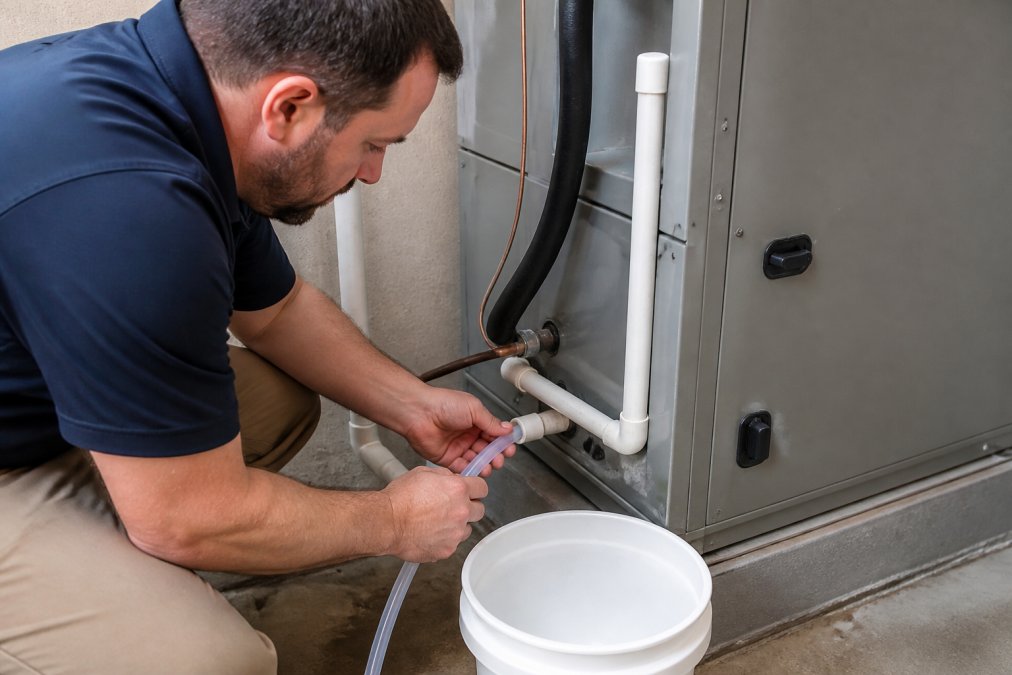
Your condensate drain line is a PVC pipe, typically three-quarter inch in diameter, connected to your air handler. Trace it from the air handler unit to see where it runs. Most systems have a horizontal section near the air handler with an access point where you can connect a vacuum or pour cleaning solution.
The access point is usually marked by a drain cap or a small PVC tee fitting. Look for the drain pan beneath the air handler as well. This shallow pan catches condensation if the primary drain line clogs. Debris in the drain pan often indicates blockage further down the line.
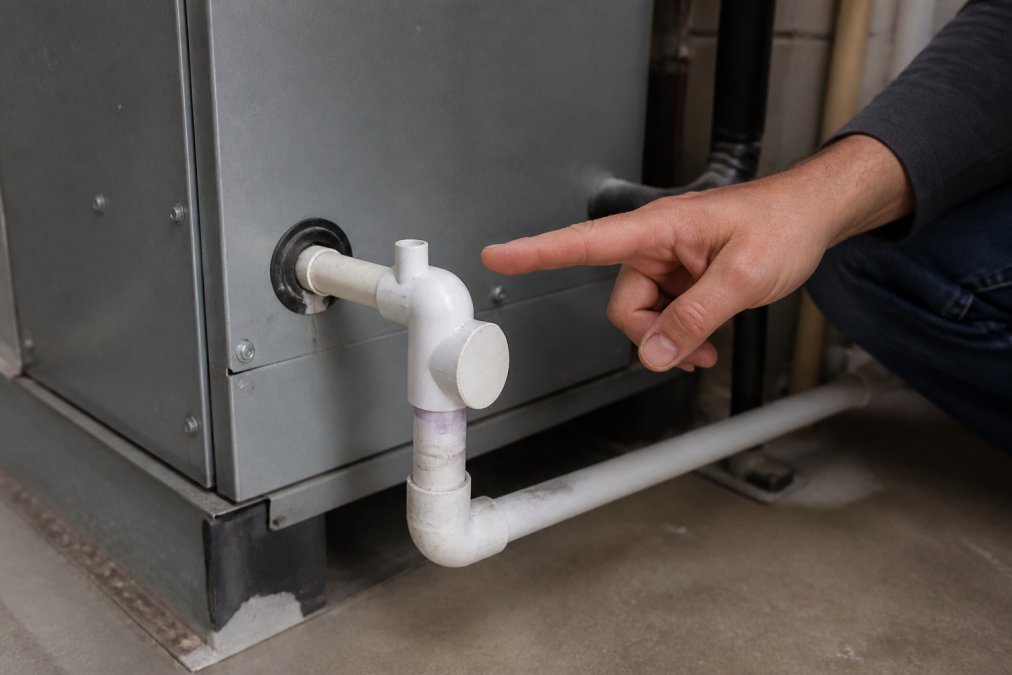
Step 3: Remove the Drain Cap and Inspect for Blockage
Carefully remove the drain cap at the access point and set it aside. Look inside the opening with your flashlight. You may see standing water, algae buildup, or visible debris. If you see dark slime or green growth, algae has colonized the drain line. Pour a small amount of water into the opening. If it drains immediately, the blockage may be minor. If water backs up or drains very slowly, you have a significant clog that needs clearing.
Step 4: Use a Wet/Dry Vacuum for Suction
Attach the wet/dry vacuum hose to the drain line opening. Create as tight a seal as possible by wrapping a cloth around the hose connection if needed. Turn on the vacuum to full suction for 30 to 60 seconds. You may hear a change in sound as the clog breaks free. Stop the vacuum and check if water drains from the opening. Repeat if the clog persists.
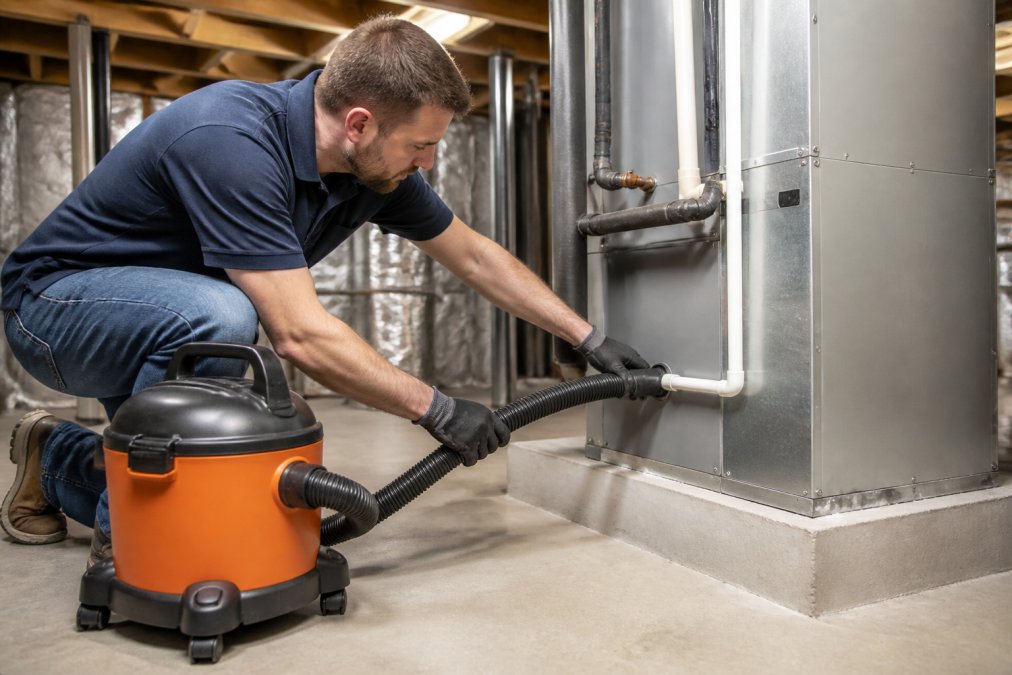
Step 5: Flush the Line with Diluted Vinegar
Pour your diluted vinegar solution slowly into the drain line opening using a small cup or funnel. Pour about one cup of solution and let it sit for 15 minutes. The vinegar dissolves algae and mineral deposits. After 15 minutes, pour hot water slowly into the line to flush away the dissolved material. You should see dirty water coming out of the drain line exit outside your home. Repeat the vinegar and hot water flush if needed until water flows freely.
Step 6: Check the Drain Pan for Debris
Inspect the drain pan beneath the air handler. If it's dirty or contains sludge, empty it and rinse it thoroughly with clean water. Debris in the drain pan can migrate into the drain line and cause future clogs. Use a small brush or cloth to scrub away any algae or mineral buildup.
Step 7: Verify the Drain is Working Properly
Reinstall the drain cap securely. Turn your thermostat back on and let the system run for 15 to 20 minutes. Go outside and check the drain line exit. You should see water dripping or flowing from the opening. On a hot, humid day, you should see steady dripping within a few minutes of the AC running. The system should run smoothly without cycling on and off due to water backup.
Preventing Algae Growth in HVAC Drain Lines
Algae thrives in the warm, moist environment inside a condensate drain line. Prevention is far easier than clearing a heavily clogged line.
Pour a small amount of diluted vinegar down the drain line every month during cooling season. Use about one-quarter cup of vinegar mixed with one-quarter cup of water. Pour it down the drain opening and let it sit for 15 minutes before flushing with hot water. Some homeowners add a commercial algae inhibitor designed for HVAC drain lines. Follow the product instructions for application frequency and amount.
Ensure your air handler is in a well-ventilated area with good air circulation. Poor ventilation increases humidity levels around the unit, creating conditions that favor algae growth. Check your drain line regularly for signs of blockage and address problems immediately before they cause water damage or system failure.
Common Mistakes to Avoid When Clearing Your Drain
Using bleach is the most common and dangerous mistake. Bleach damages PVC pipes and corrodes metal fittings. Diluted vinegar is safer and equally effective.
Ignoring the secondary drain line is another frequent oversight. Many systems have a backup drain line that activates if the primary line clogs. Check for and clear both drain lines. Forcing a plumbing snake too aggressively can puncture PVC pipes. Push gently and let the snake do the work.
Failing to verify the drain works after clearing is a missed opportunity for confirmation. Running your system briefly and checking for water flow at the drain exit tells you whether your work was successful. Skipping the drain pan inspection leaves a potential source of future clogs.
When to Call a Professional
If your drain line has a severe clog that doesn't respond to suction and vinegar flushing, professional equipment can handle it. HVAC technicians have high-pressure flushing systems and specialized tools for stubborn blockages.
If you're uncomfortable working on your system or don't have access to a wet/dry vacuum, calling a professional is the right choice. If your drain line is cracked or damaged, you need professional repair or replacement. If water damage has already occurred in your home, professional assessment ensures no hidden moisture problems develop. For commercial HVAC systems or complex residential setups, professional maintenance is essential. Home Tech provides same-day emergency response for commercial HVAC issues, which is critical when equipment downtime costs you money.
Clearing your HVAC drain line step by step is manageable for most homeowners when you follow proper safety procedures and use the right tools. Regular maintenance prevents algae growth and keeps your system running efficiently. If you encounter a clog you can't clear yourself, or if you prefer to have a professional handle it, Home Tech's EPA 608-certified technicians provide expert HVAC service throughout the Phoenix metro area. We offer same-day appointments, no hidden fees, and a 100% satisfaction guarantee on every repair. Call (602) 486-1901 to schedule your appointment today.
Frequently Asked Questions
How do I tell if my AC drain line is clogged?
Watch for water pooling near your air handler, condensation backing up into your home, musty odors, or your overflow switch triggering. If water isn't draining from the drain pan during normal operation, your condensate drain line is likely blocked. You may also notice reduced cooling performance or hear gurgling sounds from the drain area.
Is it safe to pour bleach down my AC drain line?
No. Bleach can damage PVC pipes, corrode metal components, and create toxic fumes when mixed with other substances. Instead, use diluted vinegar or hydrogen peroxide to prevent mold and algae growth. These solutions are safe for your HVAC system and effective at preventing algae growth in HVAC drain lines without harming the equipment.
What should I use to flush my HVAC drain line?
Diluted white vinegar (one part vinegar to one part hot water) is the safest option for flushing your condensate drain line. Pour it slowly down the line after clearing debris. This mixture kills algae and mold without damaging pipes. Alternatively, a commercial drain cleaner designed for HVAC systems works, but always follow manufacturer instructions and avoid bleach-based products.
How often should I clean my AC condensate drain line?
Clean your drain line at least once per cooling season, ideally before summer starts. If you live in a humid climate or notice frequent clogs, increase maintenance to every 2-3 months. Regular preventative maintenance stops sludge and algae buildup before they cause water damage or overflow switch activation, saving you from costly repairs.