 how-to
How to Clean Samsung Ice Maker Mold: 2026 Guide
Table of Contents
- How to Clean Samsung Ice Maker Mold: What You'll Need First
- Step-by-Step: How to Remove Mold From Refrigerator Ice Maker
- How to Clean Samsung Ice Dispenser and Chute
- Safe Cleaning Products: Vinegar, Tablets, and What Samsung Allows
- How to Prevent Mold in Refrigerator Ice Maker: Maintenance and Recurrence
- Troubleshooting: When Cleaning Doesn't Fix Samsung Ice Maker Mold
- Conclusion: Keep Your Ice Clean and Your Fridge Healthy
- Frequently Asked Questions
Last Updated: October 7, 2026
How to Clean Samsung Ice Maker Mold: What You'll Need First
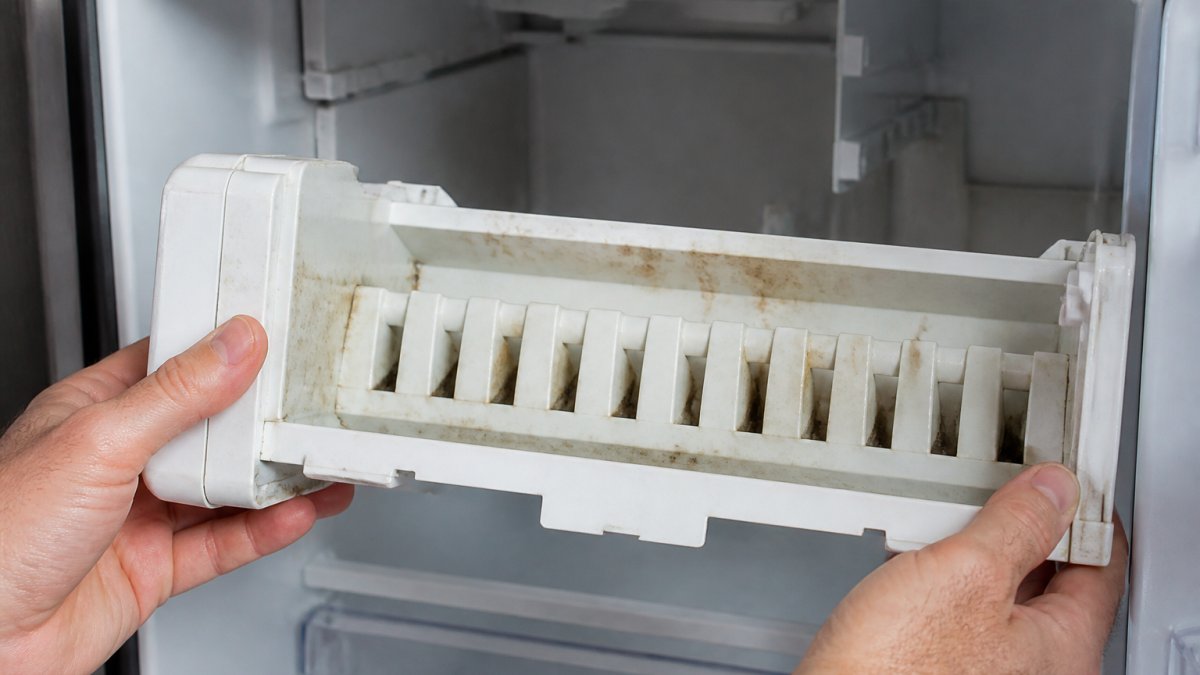
Mold in a Samsung ice maker shows up as dark specks, a musty smell, or slime on the ice bucket and chute. Learning how to clean samsung ice maker mold safely means using food-safe cleaners, reaching the hidden parts, and drying everything completely. At Home Tech, we repair Samsung refrigerators across the Phoenix metro area.
The good news: most mold problems are a cleaning and airflow issue, not a broken part. The bad news: skipping a step lets it come back within weeks.
Below, we'll walk through the full process, from supplies to prevention, plus what to do when cleaning alone doesn't fix it.
Tools and Supplies for the Job
Gather everything before you start. You don't want to leave the ice maker half-cleaned while you hunt for a brush.
- Soft toothbrush or bottle brush
- Clean microfiber cloths
- Warm water
- White vinegar or a food-safe cleaning solution
- Mild dish soap
- Ice maker cleaning tablets (if your model supports them)
- A small bowl for mixing
- Rubber gloves
Skip abrasive scrubbers and harsh chemicals. They scratch plastic and leave residue behind.
Safety and Food-Safety Basics
Unplug the refrigerator before you touch anything inside the ice maker. This protects you and the machine.
Throw out every cube in the bucket. Mold spores spread fast, so don't try to salvage ice that touched a contaminated surface.
Wash your hands and wear gloves. If you see heavy mold growth or smell a strong musty odor, clean the whole ice pathway, not just the visible bucket.
Step-by-Step: How to Remove Mold From Refrigerator Ice Maker
Removing mold from a refrigerator ice maker takes time. The key is reaching every surface that touches water or ice, not just the parts you can see.
- Unplug the fridge and empty the ice bucket completely.
- Remove the bucket, ice tray, and any detachable bins.
- Wash those parts in warm water with mild dish soap.
- Scrub visible mold with a soft toothbrush.
- Rinse everything with clean warm water.
- Wipe down the ice maker housing and motor module area with a vinegar-dampened cloth.
- Let all parts air-dry fully before reassembling.
- Run two or three empty cycles and discard the first batches of ice.
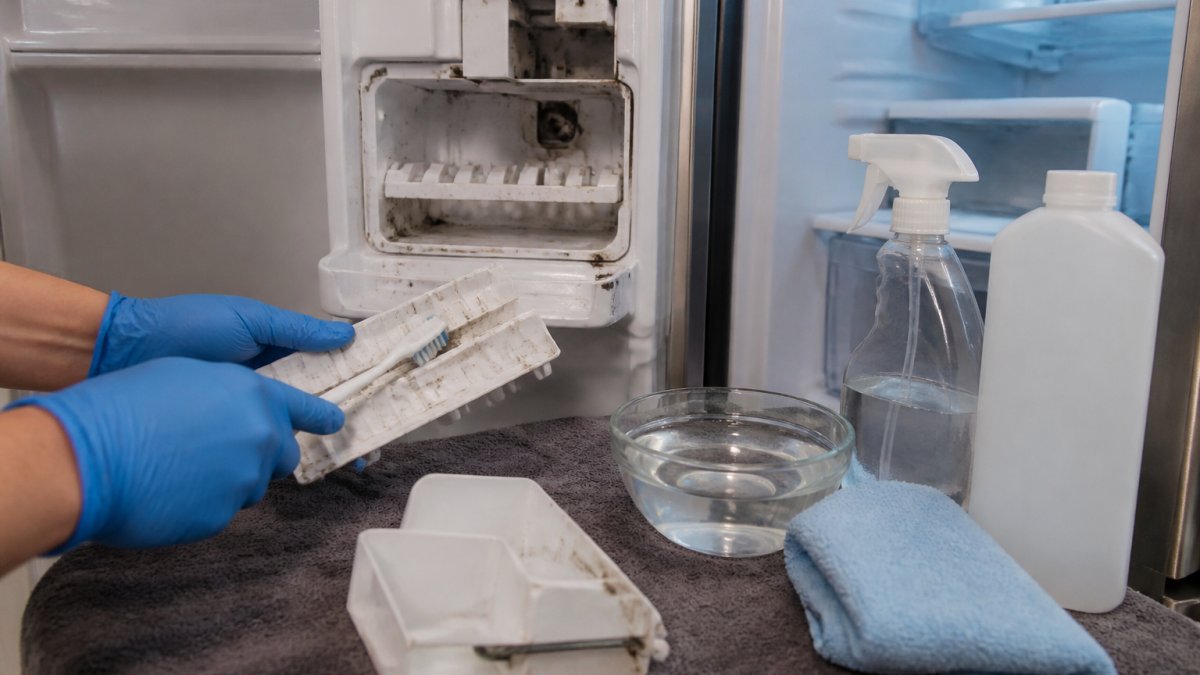
Accessing Hidden Ice Maker Components
Most mold hides where you can't see it. The dispenser chute, water line, and the space behind the ice bucket are common trouble spots.
On many Samsung models, you can slide the ice bucket straight out after lifting the release tab. Behind it sits the auger and motor module. Wipe these down carefully, and don't soak them in water.
If your model has a removable ice tray or a foldable shelf above the maker, pull those out too. Mold loves the damp gap between parts that never get airflow.
How to Clean Samsung Ice Dispenser and Chute
Cleaning the Samsung ice dispenser means treating the chute like the ice maker itself. It's the last stop before ice hits your glass, so it collects moisture and residue constantly.
Use a damp cloth wrapped around a butter knife or a bottle brush to reach inside the chute. Wipe from the top down, then dry with a clean cloth.
Cleaning the Dispenser Chute and Ice Bucket
- Remove the ice bucket and wash it with warm water and mild soap.
- Scrub the chute opening with a soft brush.
- Wipe the dispenser paddle and surrounding trim.
- Dry every surface with a microfiber cloth.
- Leave the door open for 10 minutes to air out.
If the chute still smells after cleaning, the mold has likely spread into the water line or the ice maker housing itself.
Safe Cleaning Products: Vinegar, Tablets, and What Samsung Allows
Samsung does not publish a single approved cleaner for every ice maker, but the owner's manual for your model lists what is safe and what voids coverage. The pattern across Samsung refrigerator manuals is consistent: mild dish soap, white vinegar, and baking soda are acceptable for removable parts; bleach, ammonia, abrasive powders, and citrus-oil cleaners are not.
What is safe on Samsung ice maker parts
| Cleaner | Use it on | Avoid it on |
|---|---|---|
| White vinegar + warm water (1:1) | Ice bucket, chute, gasket, auger exterior | Ice mold, motor, control board |
| Mild dish soap + warm water | Ice bucket, tray, removable bins | Any electrical part |
| Baking soda paste (3 parts water to 1 part soda) | Stubborn residue on plastic | Metal surfaces (can scratch) |
| Samsung-approved ice maker cleaning tablets | Models with a self-clean cycle only | Models without that cycle |
What to avoid
- Bleach: leaves residue that can transfer to ice and is not food-safe on ice-contact surfaces.
- Ammonia-based glass cleaners: crack plastic and leave a film that traps spores.
- Abrasive scrubbers and steel wool: scratch the bucket and chute, creating grooves where mold regrows faster.
- Citrus-oil cleaners: degrade the rubber ice room gasket over time.
- Any cleaner not labeled food-safe: if you would not use it on a cutting board, do not use it on an ice surface.
How to rinse residue out
Residue is the most common cause of mold returning after a clean. Rinse every removable part twice in clean warm water, then wipe every non-removable surface with a cloth dampened in plain water and dry it with a separate microfiber cloth. Do not reassemble while any surface feels slick or smells like cleaner.
Do Samsung ice makers have a self-clean cycle?
Some Samsung models with an Ice Max or dual ice maker feature include a self-clean cycle that runs the ice maker through a rinse and freeze sequence. Check your manual under 'Ice Maker Care.' If your model does not list this cycle, do not run one manually by pouring water into the ice room; that is the single most common way owners damage the unit.
Water filter and water quality
Replace the Samsung water filter (most models use an HAF-QIN or HAF-CIN cartridge) every six months, or sooner if your water is hard. A clogged filter slows the fill and leaves standing water in the ice mold, which is the leading condition for mold regrowth. If your home has hard water, a whole-house softener reduces mineral scale that gives mold a surface to cling to.
For manufacturer-specific guidance, check the Samsung support and product manuals for your exact model. If your manual is missing, the model number on the sticker inside the refrigerator compartment will pull up the correct PDF.
How to Prevent Mold in Refrigerator Ice Maker: Maintenance and Recurrence
Preventing mold in a refrigerator ice maker comes down to three habits: clean often, keep air moving, and replace filters on time.
Clean the ice bucket and chute every two to three months. In humid climates or busy kitchens, monthly is safer.
Replace your water filter as the manual recommends. A clogged filter slows water flow, and standing water invites growth.
Watch for these warning signs:
- Musty smell when you open the freezer
- Dark specks on the bucket or chute
- Ice that tastes off
- Slime on the auger or tray
If you see any of these, clean right away rather than waiting for your next scheduled session.
Troubleshooting: When Cleaning Doesn't Fix Samsung Ice Maker Mold
Sometimes cleaning isn't enough. If mold returns within days, the problem is deeper than the surfaces you can reach.
Common causes include a blocked water line, a failing water inlet valve, or a clogged drain that keeps the ice maker damp. A damaged door seal lets warm, humid air in, which feeds growth.
Signs you need a technician:
- Mold returns within a week of cleaning
- Ice production drops or stops
- Water leaks inside the freezer
- The dispenser motor or auger won't turn
- Error codes appear on the panel
For guidance on safe food storage while you sort out a repair, the USDA FoodSafety.gov guidance is a solid reference.
At Home Tech, our EPA 608-certified technicians handle sealed-system and refrigerant work on Samsung refrigerators, including Bespoke models and ice maker repairs. We offer same-day and next-day appointments across the Phoenix metro area, and we clean up after every job.
| Problem | Likely Cause | What to Do |
|---|---|---|
| Mold returns fast | Clogged drain or water line | Flush the line or call a tech |
| No ice production | Faulty inlet valve | Book a diagnostic visit |
| Musty smell only | Dirty chute or filter | Clean and replace filter |
| Leaks in freezer | Blocked drain | Clear the drain or repair |
| Error codes | Control or sensor fault | Professional diagnosis |
Conclusion: Keep Your Ice Clean and Your Fridge Healthy
Mold in a Samsung ice maker is annoying, but it's rarely permanent. Clean the parts you can reach, dry everything fully, and stay on a regular schedule. If mold keeps coming back, that's your signal to call a pro before the problem spreads through the water pathway.
Home Tech repairs Samsung and all major refrigerator brands with same-day service, no hidden fees, and a 100% satisfaction guarantee. Book an appointment with Home Tech and get your ice maker running clean again.
Frequently Asked Questions
How do I remove black mold from my refrigerator ice dispenser?
Unplug the refrigerator first. Remove the ice bucket and dispenser chute, then wash them with warm water and mild dish soap. For black mold, use a diluted white vinegar solution (equal parts vinegar and water) or a Samsung-approved cleaning tablet. Scrub hidden areas with a soft toothbrush, rinse thoroughly, and dry completely before reassembling. If mold returns within weeks, the water line or internal components may need professional cleaning.
Can I use vinegar to clean a Samsung ice maker?
Yes, white vinegar is safe for most Samsung ice maker parts when diluted with water. Mix equal parts white vinegar and warm water, then wipe or soak removable components like the ice bucket and chute. Avoid pouring undiluted vinegar into the water reservoir or internal lines unless your manual specifically allows it. Always rinse with clean water afterward to prevent vinegar residue from affecting ice taste.
How can I prevent mold from returning in my Samsung ice maker?
Prevention focuses on moisture control and regular cleaning. Empty and dry the ice bucket weekly if you notice condensation. Replace the water filter every six months, and run a cleaning cycle monthly using a Samsung-approved tablet or diluted vinegar. Keep the refrigerator at or below 40°F and ensure the door seals properly. If your home is humid, consider a dehumidifier near the fridge.
When should I call a technician about mold in a Samsung ice maker?
Call a technician if mold returns within a few weeks of cleaning, if you see mold in the water line or internal dispenser components you cannot access, or if the ice maker leaks or produces low ice. Persistent mold often indicates a clogged drain or faulty seal that requires professional repair. A certified technician can safely clean hidden parts and check for refrigerant or water supply issues.