 how-to
How to Clean Front Load Washer Seal: Step-by-Step Guide
Table of Contents
- Why Your Front Load Washer Seal Needs Regular Cleaning
- What You'll Need: Preparation and Safety Gear
- Best Cleaner for Washer Gasket: Solutions That Work
- Step-by-Step Process to Clean Your Front Load Washer Seal
- How to Prevent Mold in Front Load Washer Between Cleanings
- How Often to Clean Front Load Washer Gaskets
- Advanced Mold Remediation for Stubborn Biofilm
- Common Mistakes to Avoid When Cleaning Your Washer Seal
- Frequently Asked Questions
Last Updated: August 10, 2026
Why Your Front Load Washer Seal Needs Regular Cleaning
Front load washers are efficient, but their design traps moisture, lint, and detergent residue in the rubber gasket folds, creating a breeding ground for mold and mildew. This problem affects all major brands: GE, Whirlpool, LG, Samsung, and others. If you've noticed musty odors or dark spots on the gasket, you're dealing with what many homeowners face.
Regular maintenance prevents expensive repairs. A neglected gasket can fail, requiring professional replacement and potentially transferring mold to your clothes. This guide walks you through the complete cleaning process and prevention strategies to keep your seal in top condition.
What You'll Need: Preparation and Safety Gear
Gather these supplies before starting:
Essential supplies:
- White vinegar (natural antimicrobial)
- Dish soap
- Soft-bristle scrub brush or old toothbrush
- Clean damp cloth or microfiber cloths
- Rubber gloves
- Small bowl for mixing solutions
- Flashlight (to see deep into gasket folds)
Optional: Soft sponge, vacuum with hose attachment, baking soda for stubborn odors.
Safety: Wear gloves throughout. Ensure basic ventilation in your laundry room. Never use bleach on rubber gaskets, it degrades the seal over time. Stick with vinegar, dish soap, and water.
Best Cleaner for Washer Gasket: Solutions That Work
White vinegar is your most reliable option because it's antimicrobial, breaks down detergent buildup, and won't damage the seal.
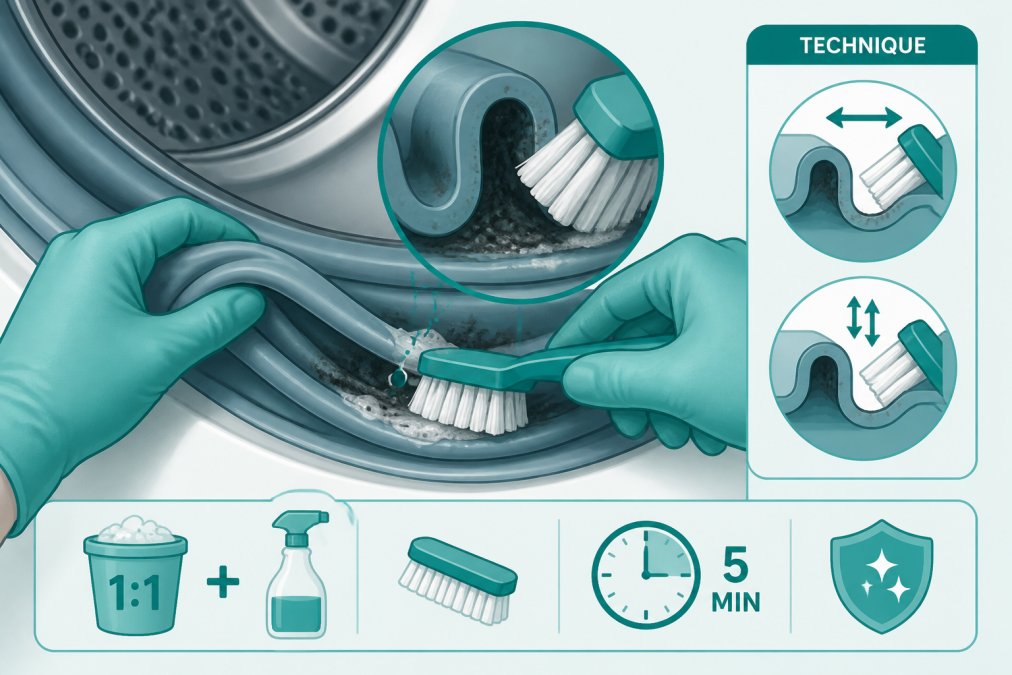
How to prepare: Mix equal parts white vinegar and water. For stubborn biofilm, use 2 parts vinegar to 1 part water. Add a few drops of dish soap to help lift debris and residue. For advanced cases, make a paste with baking soda and water and apply directly to affected areas for 15 minutes before scrubbing.
What not to use: Avoid bleach, high-concentration hydrogen peroxide, commercial mold killers, abrasive scrubbing powders, and steel wool, all damage rubber gaskets.
Step-by-Step Process to Clean Your Front Load Washer Seal
Cleaning takes 20 to 30 minutes and requires no special skills.
Step 1: Remove Visible Debris and Foreign Objects
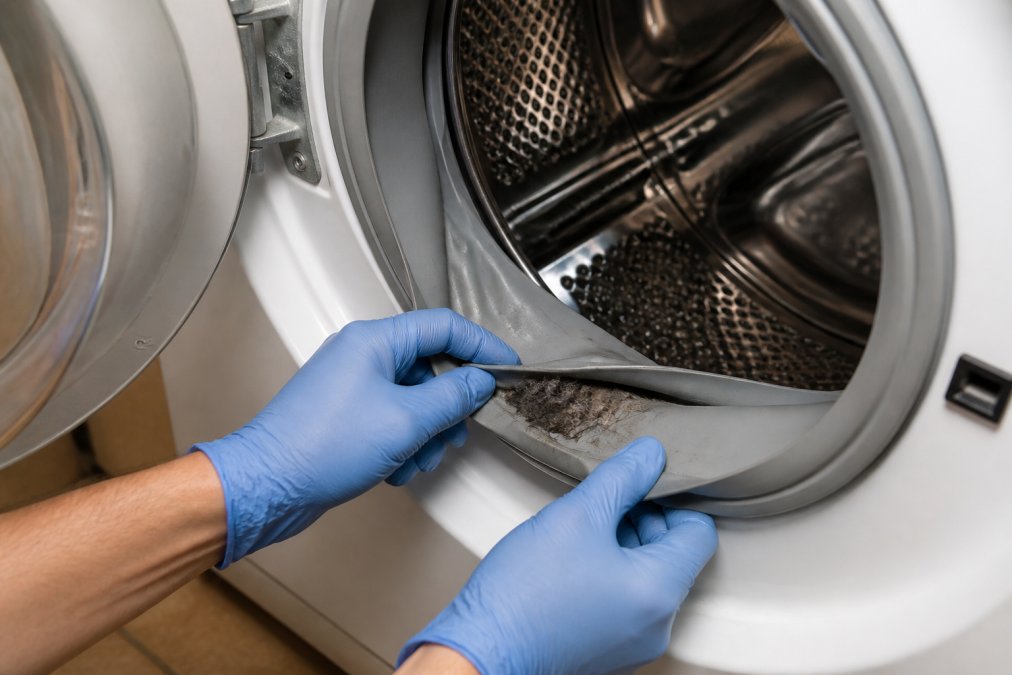
Pull the gasket away from the drum and inspect thoroughly. Use your fingers or tweezers to remove lint, hair, coins, buttons, and other trapped objects. Check the drain hole at the bottom of the gasket area and wipe out any visible moisture or lint.
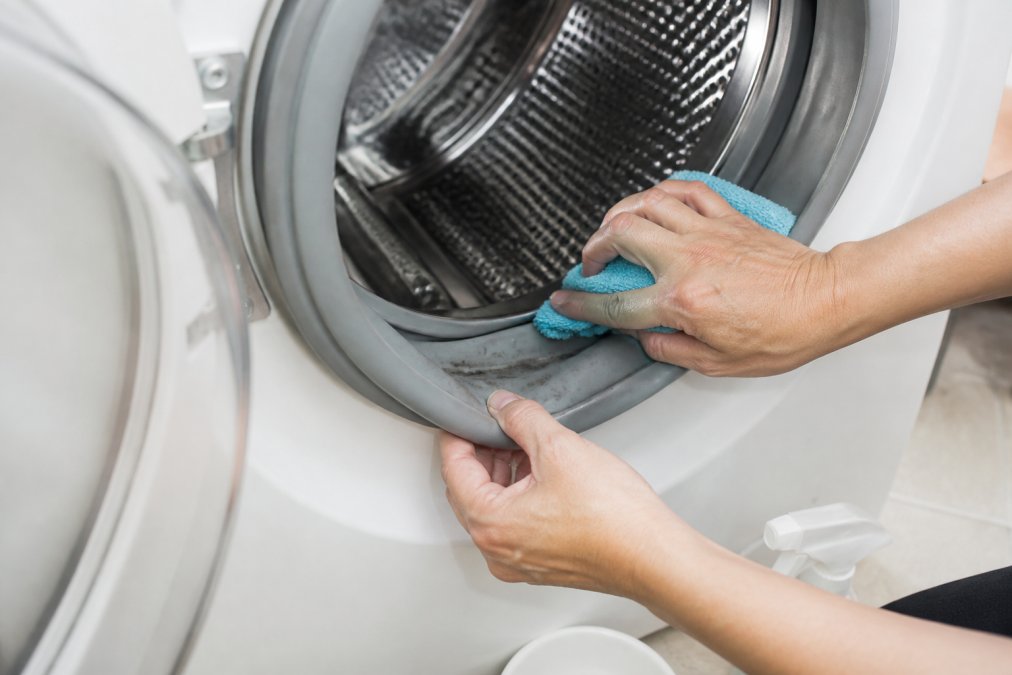
Step 2: Scrub the Gasket Folds and Door Seal
Dip your soft-bristle brush into your vinegar and dish soap solution. Work methodically through each fold of the gasket using circular motions rather than aggressive strokes. Pay special attention to the deepest folds where moisture accumulates. For mold or dark spots, let the solution sit for 30 seconds before scrubbing. Work your way around the entire gasket perimeter, which typically takes 5 to 10 minutes.
Step 3: Wipe Down the Drum and Drain Hole
Use a clean damp cloth to wipe the inside of the drum where it meets the seal. Pay attention to the drain hole at the bottom, use a cloth to clean around it gently. Never insert anything rigid into the drain hole itself.
Step 4: Run a Sanitization Rinse Cycle
Run an empty wash cycle with hot water and one cup of white vinegar. Use your washer's hottest water setting. Do not add detergent. This cycle sanitizes the entire drum and seal while rinsing away remaining vinegar solution.
Step 5: Dry the Seal Thoroughly
After the cycle completes, use a clean, dry cloth to wipe the entire gasket, pulling it gently away from the drum to access the deepest folds. Leave the washer door open for at least two hours to ensure complete drying. Air circulation is critical for preventing mold regrowth.
How to Prevent Mold in Front Load Washer Between Cleanings
Leave the door open after each load. This is the single most effective prevention strategy. Air circulation prevents mold from thriving in damp environments.
Wipe the gasket weekly. Spend 60 seconds after your last load wiping the gasket with a dry cloth to remove surface moisture.
Use the correct amount of detergent. Excess detergent leaves residue that feeds mold. Follow manufacturer recommendations or use slightly less.
Run a monthly maintenance cycle. Once per month, run an empty hot water cycle with one cup of white vinegar to prevent biofilm establishment.
Check the drain hole monthly. A quick visual inspection and gentle cleaning prevents water pooling that breeds mold.
Ensure proper ventilation. Run a bathroom exhaust fan during and for 30 minutes after laundry loads. Open windows on dry days if possible.
How Often to Clean Front Load Washer Gaskets
Most households benefit from a full gasket cleaning every two to three months. If you're diligent about prevention, you may only need deep cleaning twice per year. If mold returns quickly, clean monthly.
Signs it's time to clean: Musty smell is the most obvious indicator. Visible dark spots or discoloration on the gasket also signal cleaning is needed. Hard water areas may require cleaning every 4 to 6 weeks due to mineral deposits that accelerate mold growth.
Advanced Mold Remediation for Stubborn Biofilm
The baking soda paste method: Apply a thick paste of baking soda and water directly to affected areas. Let it sit for 20 to 30 minutes, then scrub gently with a soft brush using circular motions. Rinse thoroughly and repeat if necessary.
The vinegar soak method: For stubborn cases, soak affected areas in full-strength white vinegar for 30 minutes before scrubbing. Saturate a cloth with vinegar and tuck it into the problem fold.
Combining methods: For severe biofilm, apply baking soda paste first, scrub and rinse, then follow with a vinegar soak.
When to call a professional: If mold returns within two weeks despite prevention efforts, the problem may indicate a drainage issue, internal mold growth, or seal damage requiring professional diagnosis. Home Tech can inspect your washer and recommend whether cleaning, repair, or replacement is appropriate.
Common Mistakes to Avoid When Cleaning Your Washer Seal
Using bleach on the gasket. Bleach degrades rubber over time, causing cracks and eventual failure. Use vinegar and baking soda instead.
Scrubbing too aggressively. Use soft-bristle brushes and gentle circular motions. Aggressive scrubbing damages the rubber and shortens its lifespan.
Leaving moisture in the folds. Mold returns within days if you don't dry the gasket thoroughly. Take time to wipe carefully into each fold.
Neglecting prevention between cleanings. Deep cleaning is only half the solution. Prevention habits keep your seal healthy long-term.
Using too much vinegar solution. Excessive liquid can seep into the door frame and internal mechanisms. Use a damp cloth and solution-soaked brush, not a soaking approach.
Ignoring the drain hole. Clogged drains lead to standing water, which accelerates mold growth. Check monthly.
Skipping the rinse cycle. The empty hot water and vinegar cycle removes soap residue, sanitizes the drum, and ensures no cleaning solution remains.
Keeping your front load washer seal clean protects your clothes, eliminates odors, and extends your washer's lifespan. The process is straightforward and requires only household items. If mold keeps returning or you notice water leaking around the door, your seal may need professional inspection. Home Tech's EPA 608-certified technicians service all major washer brands, including GE, Whirlpool, LG, and Samsung. Call (602) 486-1901 or visit hometechappliancerepair.com to schedule same-day or next-day service in the Phoenix metro area.
| Prevention Strategy | Frequency | Time Required | Impact |
|---|---|---|---|
| Leave door open after laundry | After every load | 0 minutes | Prevents 70% of mold growth |
| Wipe gasket dry | Weekly | 1 minute | Removes surface moisture |
| Run vinegar rinse cycle | Monthly | 45 minutes (passive) | Maintains sanitation |
| Check drain hole | Monthly | 2 minutes | Prevents water pooling |
| Deep clean gasket | Every 2-3 months | 20-30 minutes | Removes established biofilm |
Frequently Asked Questions
Can you use bleach to clean a front load washer gasket?
Bleach can damage rubber gaskets over time, causing cracks and deterioration. White vinegar diluted with water is safer and equally effective at killing mold and mildew. If you prefer a commercial cleaner, choose one specifically formulated for rubber seals. Always test any solution on a hidden area first, and rinse thoroughly after cleaning to prevent residue buildup.
How often should you clean the rubber seal on a front load washer?
Most manufacturers recommend cleaning your front load washer seal every 1-2 months for standard household use. If you live in a humid climate like Phoenix, or if you notice odors or visible mold, clean it monthly. Heavy usage (larger families, frequent washing) may require more frequent cleaning. Regular maintenance prevents stubborn biofilm from forming and keeps your washer smelling fresh.
What is the best cleaner for a washer gasket?
White vinegar diluted 1:1 with water is the most effective and appliance-safe option for cleaning washer gaskets. For stubborn mold, a mixture of baking soda and water works well. Dish soap mixed with warm water handles general grime. Avoid bleach, which degrades rubber. For commercial cleaners, look for products labeled safe for rubber seals. Always dilute solutions properly and rinse the gasket thoroughly after cleaning.
How do I clean the sludge and biofilm out of my washer seal?
Sludge and biofilm require a combination approach: first, pull back the gasket and remove visible debris by hand. Then scrub the folds with a soft-bristle brush and diluted white vinegar or a baking soda paste. For stubborn buildup, let the solution sit for 15-20 minutes before scrubbing. Rinse with a damp cloth multiple times to remove all residue. Run a hot water rinse cycle with vinegar afterward to sanitize the drum and drain hole.