 how-to
Energy Efficient HVAC Upgrades for Phoenix Residents
Table of Contents
- Step 1: Decide When to Upgrade an HVAC System
- Step 2: Heat Pump vs. Air Conditioner for Desert Heat
- Step 3: Get a Load Calculation and Size the System Right
- Step 4: Duct Sealing and HVAC Efficiency
- Step 5: Claim HVAC Energy Rebates and Tax Credits
- Step 6: Cut Cooling Costs with Smart Thermostats and Maintenance
- Step 7: Verify Performance After Installation
- Frequently Asked Questions
Last Updated: October 17, 2026
Step 1: Decide When to Upgrade an HVAC System
Energy efficient HVAC upgrades for Phoenix residents start with one honest question: is your current system worth keeping? Homeowners should weigh three things first: age, repair history, and refrigerant type. Most central air systems last 10 to 15 years. Once yours passes that mark, repairs tend to stack up fast.
Age, Repair History, and Refrigerant Phase-Outs
Older systems often run on R-22, a refrigerant the EPA has phased out under the Montreal Protocol. Recharging an R-22 system costs more each year as supplies shrink. If your unit needs R-22 and a major part fails, replacement usually beats repair.
A simple rule to consider: when one repair costs more than a third of a new system, and the unit is over 12 years old, start planning a replacement.
Signs Your System Is Failing in Extreme Heat
Desert heat punishes weak systems. Watch for these warning signs:
- Rooms stay warm even when the thermostat is low
- The system runs all day and never shuts off
- Energy bills climb with no change in use
- Strange noises, or ice on the refrigerant lines
- Humidity feels sticky indoors
Any two of these together point to a system near the end of its life.
Step 2: Heat Pump vs. Air Conditioner for Desert Heat
For many homes, a heat pump offers advantages over a standard air conditioner. Modern heat pumps cool as well as an AC unit and also heat your home in winter, all from one system. That means one install, one maintenance schedule, and no separate furnace.
SEER2 Ratings and Cooling Capacity
SEER2 is the updated efficiency rating for cooling equipment, measured under stricter test conditions than the old SEER scale. A higher SEER2 means lower energy consumption for the same cooling output.
Cooling capacity matters just as much. An oversized unit cools too fast, cycles on and off, and leaves rooms clammy. An undersized unit runs nonstop and wears out early. The right size comes from a load calculation, which is a crucial step.
| System Type | Best For | Watch Out For |
|---|---|---|
| Heat pump | Year-round comfort, one system | Needs correct sizing for cold snaps |
| Central AC + furnace | Homes with existing ducted heat | Two systems to maintain |
| Ductless mini-split | Room-by-room upgrades, add-ons | Higher cost per room |
Step 3: Get a Load Calculation and Size the System Right
A load calculation, often called a Manual J, measures your home's actual heating and cooling needs. It factors in square footage, window area and orientation, insulation levels, air leakage, ceiling height, appliance heat gain, and local design temperatures. Skip this step and you are guessing.
What a Proper Manual J Includes
A room-by-room Manual J should account for:
- Window and door area, glazing type, and shading, west-facing glass in a desert climate adds a large cooling load in late afternoon.
- Insulation and air sealing levels in walls, ceilings, and floors.
- Duct location and condition, ducts in a 140°F attic lose cooling capacity before the air reaches the room.
- Occupancy and appliance loads, kitchens, laundry rooms, and home offices run warmer than the rest of the house.
- Design temperatures for the local climate, not a national average.
Ask every contractor for a room-by-room load calculation before they quote equipment. A quick "rule of thumb" based on square footage alone is a red flag. Proper system sizing protects your investment and keeps home comfort steady.
Sizing Is Not the Same as Load Calculation
A load calculation tells you how much cooling the house needs. Sizing is choosing equipment that matches that load at the design conditions. An oversized unit cools too fast, cycles on and off, and leaves rooms clammy because it never runs long enough to remove humidity. An undersized unit runs nonstop and wears out early. The right size comes from the load calculation, not from a square-footage chart.
Duct Leakage and Airflow Balancing
Even a correctly sized system underperforms if the ducts leak or the airflow is unbalanced. In older homes, duct leakage commonly sends a meaningful share of conditioned air into the attic or crawlspace before it reaches the rooms. Two tests matter:
- Duct leakage test, measures how much air escapes the duct system. Ask for a before-and-after number if you seal the ducts.
- Airflow balancing, adjusts dampers so each room gets the air the load calculation called for. Rooms that stay hot while others are comfortable usually point to a balancing problem, not an equipment problem.
Commissioning: The Step Most Homeowners Skip
Commissioning is the process of verifying that the installed system actually performs to its rating. A commissioning report should show:
- Measured airflow (CFM) at the air handler and at each register
- Refrigerant charge verified against the manufacturer's specification
- Static pressure readings to confirm the duct system is not choking airflow
- Thermostat configuration, including fan settings and staging
A high-SEER2 system with leaky ducts, a rushed charge, or a misconfigured thermostat still performs poorly. The equipment rating is a laboratory number; commissioning is how you find out what the system does in your house.
Step 4: Duct Sealing and HVAC Efficiency
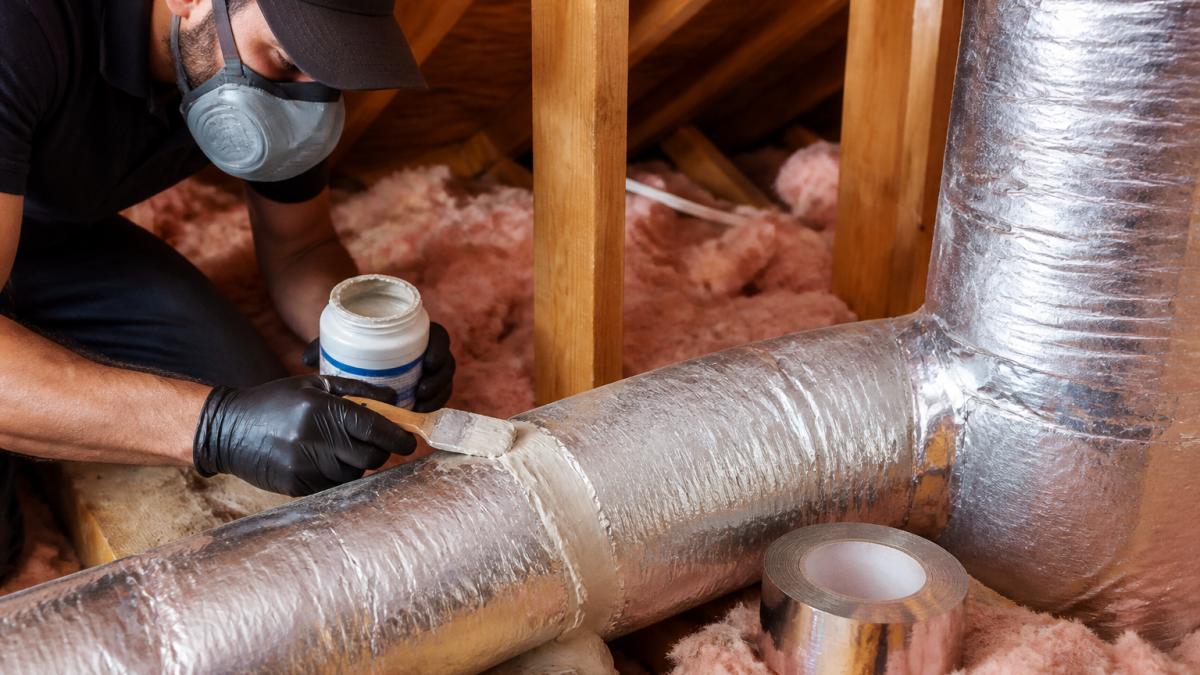
Duct sealing and HVAC efficiency go hand in hand. Leaky ducts dump cooled air into attics that hit 60°C (140°F) and higher in summer. That wasted air is money out the door. Sealing joints with mastic and foil tape, then testing airflow, often delivers the biggest gain per dollar of any upgrade.
Insulation and Air Sealing in Older Homes
Older homes leak air through gaps around windows, doors, and attic hatches. Adding insulation and sealing those gaps reduces how hard your system has to work. In practice, this means the same equipment cools the house with less runtime and lower energy bills.
Step 5: Claim HVAC Energy Rebates and Tax Credits
HVAC energy rebates and tax credits can offset a large share of upgrade costs, but the rules change and the paperwork is unforgiving. The federal Inflation Reduction Act created the HEAR rebate program and improved tax credits for efficient equipment. HEAR rebates are administered by states, so eligibility and application steps vary. Treat this section as a checklist, not a promise, confirm every number with the program before you buy.
Federal Tax Credits vs. State Rebates
These are two different pots of money with different rules:
- Federal tax credits are claimed on your federal return for qualifying equipment installed in the tax year. The credit amount depends on the equipment type and efficiency tier, and there are annual and lifetime caps. You claim it; the contractor does not.
- State-administered rebates (including HEAR) are point-of-sale or post-purchase rebates with their own eligibility rules, income limits, and application windows. The state program, not the contractor, decides whether you qualify.
Eligibility Rules to Check Before You Buy
Before you sign a quote, confirm each of these with the program itself:
- Qualifying equipment thresholds, the model must meet the program's efficiency tier, and the model number must appear on the qualifying list. A similar-looking unit that misses the threshold by a fraction does not qualify.
- Income limits, HEAR-style rebates often tier benefits by household income. Higher-income households may qualify for a smaller rebate or none at all.
- Contractor requirements, some programs require the installer to be enrolled or licensed in a specific way. A contractor who is not enrolled can cost you the rebate.
- Application timing, many rebates must be reserved or applied for before installation, not after. Installing first and applying later is a common way to lose the money.
- Stacking rules, some rebates can be combined with federal tax credits and utility rebates; others cannot. Confirm stacking before you count on both.
Documents to Keep
Keep every invoice, the equipment model and serial numbers, the load calculation, and the commissioning report. You will need them to apply, and you may need them if the program audits the claim.
Check the U.S. Department of Energy rebate programs and the ENERGY STAR federal tax credit guidance for current amounts and rules. Program details change, so verify the current year's rules rather than relying on last year's amounts.
Step 6: Cut Cooling Costs with Smart Thermostats and Maintenance
A smart thermostat or programmable thermostat cuts cooling costs by scheduling setbacks when the house is empty. Set higher temperatures for work hours and lower them before you get home. Pair that with routine HVAC maintenance: fresh filters, a clean condenser coil, and a spring tune-up.
These habits reduce energy use and help you maximize efficiency from day one.
Step 7: Verify Performance After Installation
Measure results after the install. Compare runtime, room temperatures, and energy bills against your old baseline. Ask for the commissioning report showing airflow and refrigerant charge.
If your aging system needs refrigerant work or a diagnostic before you decide, our EPA 608-certified technicians at Home Tech handle sealed-system repairs, refrigerant recharge, and full system checks across the metro.
Frequently Asked Questions
How long should an AC unit last in a hot, dry climate?
Most central air conditioners and heat pumps last 10 to 15 years in a hot, dry climate, and the upper end of that range usually requires regular maintenance and correct sizing. Systems that run oversized, leaky ducts or skip tune-ups often fail closer to the 10-year mark. Once a unit passes 12 years and needs a major repair such as a compressor or coil, replacing it is often more cost-effective than another fix. A technician can check refrigerant charge and airflow to tell you whether the system still has useful life left.
Which HVAC upgrades can help lower cooling energy use?
The biggest gains usually come from duct sealing and insulation first, because leaky ducts in an attic can lose a large share of cooled air before it reaches a room. After that, a correctly sized high-SEER2 system, a smart thermostat with temperature scheduling, and regular maintenance keep energy consumption down. In older homes, adding attic insulation and sealing air gaps around doors and windows supports the equipment upgrade. Ask for a load calculation so the new system matches your home rather than guessing by square footage.
Is a heat pump a good choice for a home with high cooling demand?
Yes. Modern heat pumps handle peak cooling demand well in desert climates and also provide efficient heating in winter, which is why many Arizona homeowners choose them over a straight air conditioner. Compare SEER2 and HSPF2 ratings, confirm the unit is rated for high outdoor temperatures, and check that the installer sizes it with a load calculation. Rebate eligibility often favors heat pumps, so review current program rules before you buy. A mini-split heat pump can also work for room-by-room upgrades where ductwork is limited.
Can duct sealing or insulation improve HVAC efficiency enough to notice?
Duct sealing and insulation often deliver noticeable improvements because conditioned air that leaks into an attic never reaches your rooms, so the system runs longer to hit the thermostat setting. Sealing joints with mastic and adding duct insulation reduce that loss. Adding attic insulation and air sealing around penetrations further reduces heat gain. Have a contractor test duct leakage before and after the work so you have measured results, and combine the upgrade with a maintenance visit to confirm airflow and refrigerant charge are correct.
Deciding when to upgrade an HVAC system is stressful, especially when summer heat won't wait. Home Tech offers same-day and next-day appointments, honest diagnostics, and a 100% satisfaction guarantee on every repair. Our team services all major brands and helps you plan a cost-effective path forward. Call (602) 486-1901 or visit hometechappliancerepair.com to book your appointment.