 how-to
How Dryer Vent Maintenance Boosts Energy Efficiency
Last Updated: November 8, 2026
Quick Summary
Dryer vent maintenance keeps the exhaust path clear so hot, moist air leaves the dryer freely, and a restricted vent forces the machine to run longer cycles that use more electricity or gas. Cleaning the full vent duct at least once a year, and every six months for heavy use, pets, or long runs, restores airflow and cuts energy waste.
- Clean the lint filter after every load and the full vent duct at least once a year.
- Households with pets or long duct runs should clean the vent every six months.
- A dryer taking two cycles to dry a normal load signals restricted airflow.
- In the electric example, cutting a cycle from 90 to 60 minutes saves about $83 per year.
- Call a professional when the duct runs through walls, the roof, or clogs keep returning.
Table of Contents
- How Lint Buildup Restricts Airflow and Raises Energy Use
- Signs of a Clogged Dryer Vent You Should Not Ignore
- How Often to Clean a Dryer Vent for Peak Efficiency
- How to Clean a Dryer Vent: A Step-by-Step Homeowner Guide
- Dryer Vent Length and Airflow: Design Factors That Affect Energy Costs
- Estimating Your Energy Savings and Payback from Vent Cleaning
- DIY Cleaning vs. Professional Service: Which Is Right for You
- Schedule a Dryer Vent Inspection with Home Tech
- Frequently Asked Questions
How Lint Buildup Restricts Airflow and Raises Energy Use
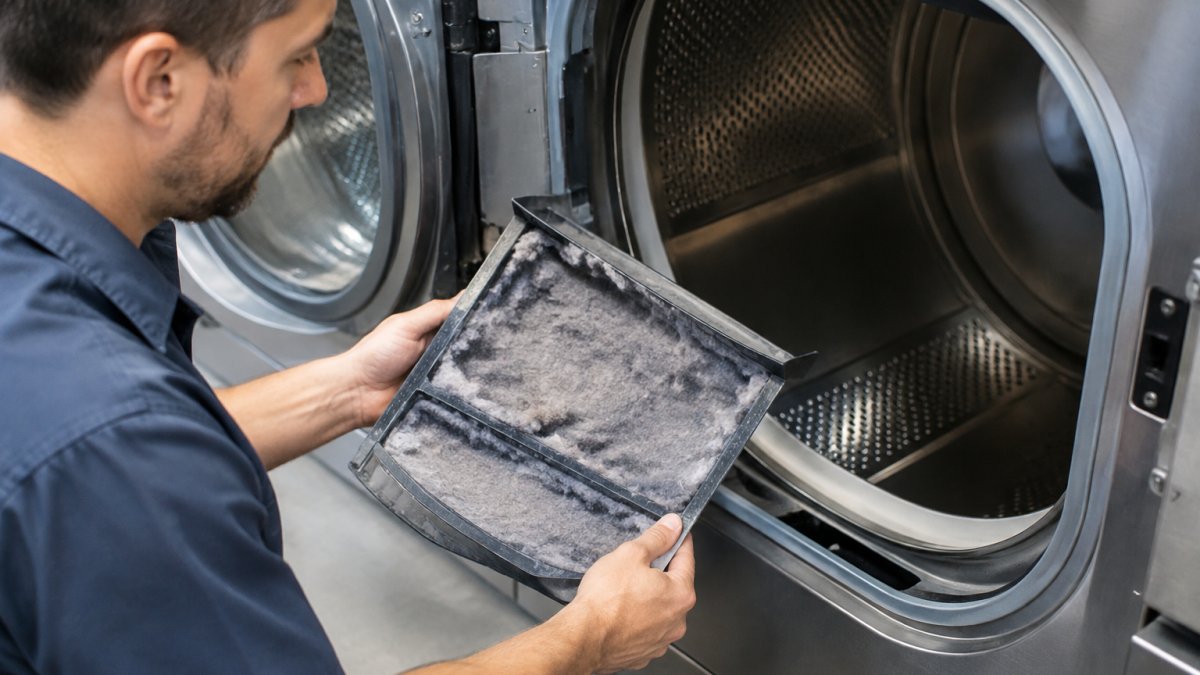
Skipping dryer vent maintenance is one of the most common causes of slow drying and higher power bills. When lint packs into the vent duct, it narrows the path for hot, moist air leaving the dryer. The machine has to run longer to remove the same amount of water from your clothes.
Dryer vent maintenance is the routine work of clearing that path so air moves freely. A dryer that once finished in one cycle can end up needing two or three when lint restricts the vent.
Here is what happens inside a restricted vent:
- Lint coats the inside walls of the exhaust duct.
- The coating thickens with every load and blocks airflow.
- Trapped heat and moisture build up in the drum and duct.
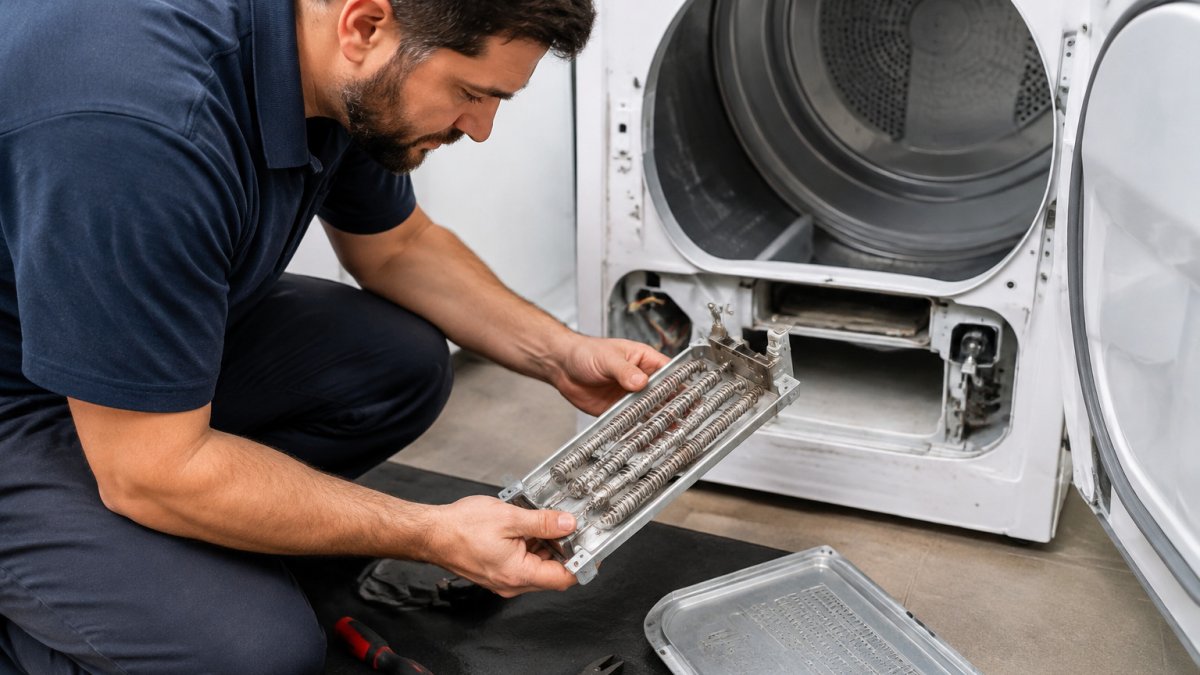
- The dryer runs longer, cycling the heating element or burner more often.
Longer cycles mean more electricity use on an electric dryer and more gas consumption on a gas dryer. The same load of laundry quietly costs more every month.
Signs of a Clogged Dryer Vent You Should Not Ignore
Watch for these warning signs of a clogged dryer vent. Catching them early protects your appliance and your wallet.
- Clothes feel damp or hot after a full cycle.
- The dryer takes two cycles to dry a normal load.
- The top of the dryer feels hot to the touch.
- The outside vent flap barely moves, or no warm air comes out.
- A burning or musty smell shows up during drying.
- Lint collects around the door or behind the machine faster than usual.
Any one of these points to restricted airflow. Two or more means stop and inspect the vent before the next load.
A blocked vent also raises fire risk. Lint is highly flammable, and trapped heat can ignite it. The U.S. Fire Administration guidance on clothes dryer fires stresses cleaning the lint filter and vent regularly for this reason.
How Often to Clean a Dryer Vent for Peak Efficiency
Most homes need the lint filter cleaned after every load and the full vent duct cleaned at least once a year. Households with heavy laundry use, long vent runs, or pets should clean closer to every six months.
A simple rule of thumb:
| Household Situation | Vent Cleaning Frequency |
|---|---|
| Average family, short vent run | Once a year |
| Large family or daily laundry | Every 6-9 months |
| Pets in the home or long duct | Every 6 months |
| Commercial or laundromat use | Quarterly or per manufacturer guidance |
The right maintenance schedule for your home depends on load size, vent length, and how much lint you find each time you check. If you pull out a thick mat of lint after a few months, shorten the interval.
How to Clean a Dryer Vent: A Step-by-Step Homeowner Guide
Cleaning a dryer vent yourself is doable for most short, straight vent runs. The process below covers the tools you need, the safety checks that matter, and the points where a DIY job can go wrong.
Tools and materials:
- A dryer vent cleaning brush kit with flexible rods (often sold in lengths up to 12 feet)
- A shop vacuum with a crevice tool and a brush attachment
- A screwdriver or nut driver for loosening duct clamps
- A flashlight or headlamp
- Work gloves and a dust mask
Step-by-step process:
- Unplug the dryer or shut off the gas supply valve before you start. If you have a gas dryer, turn the gas valve to the off position and confirm the line is not leaking before you reconnect.
- Pull the dryer away from the wall far enough to reach the vent connection. Protect the floor with a moving blanket or cardboard to avoid scratches.
- Disconnect the vent duct from the back of the dryer. Loosen the clamp or foil tape, then gently work the duct free. Inspect the duct for crushed sections or tears.
- Vacuum the duct opening and the back of the dryer with a crevice tool. Remove lint from the blower housing area and around the heating element or burner access panel, but do not reach inside the cabinet.
- Run a vent brush through the duct to loosen packed lint. Feed the brush in short strokes and let the vacuum catch the debris as it falls. Work from both ends when possible.
- Clear the outside vent and check that the flap opens freely. Remove any lint or debris from the hood and the immediate duct run. Confirm the flap swings open when the dryer runs.
- Reconnect everything and run an empty cycle on air-only or low heat to confirm strong airflow at the outside vent. Check for leaks at the joints.
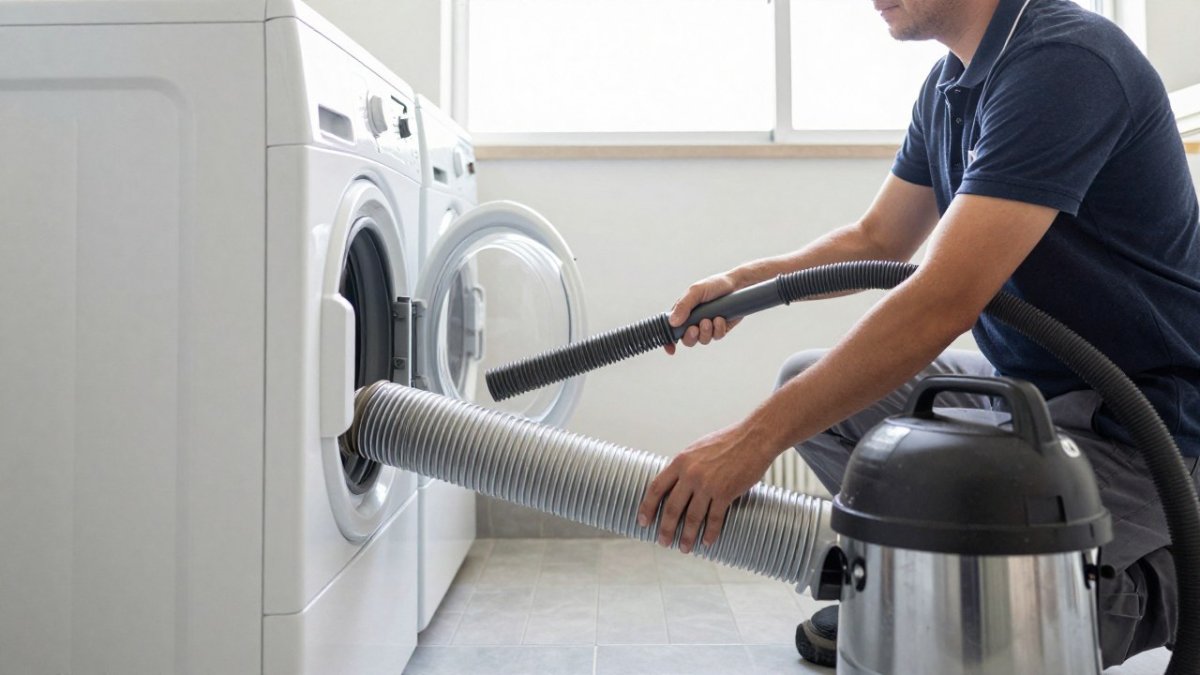
Watch out: pushing a brush too hard can crack flexible foil duct or disconnect a joint inside the wall. If the duct runs long, turns sharply, or is hidden behind drywall, stop and call a professional.
When to stop and call a pro:
- The duct runs through walls, the roof, or tight spaces you cannot safely reach.
- You find crushed or disconnected duct behind the wall.
- The clog returns within a few weeks.
- You notice overheating, burning smells, or a dryer that will not dry even after cleaning.
A professional can also check airflow with a manometer or anemometer and confirm the vent meets the manufacturer's installation requirements. The U.S. Fire Administration guidance on clothes dryer fires recommends cleaning the lint filter before and after each load and inspecting the vent regularly to reduce fire risk.
Dryer Vent Length and Airflow: Design Factors That Affect Energy Costs
Dryer vent length and airflow are tightly linked. A short, straight vent duct moves air easily. A long, winding one chokes it.
Design factors that affect energy costs:
- Duct length. Longer runs create more resistance and slow exhaust airflow.
- Number of bends. Each elbow cuts airflow and traps lint.
- Duct material. Smooth rigid metal beats flexible foil for airflow.
- Duct diameter. Undersized duct restricts airflow from day one.
- Installation quality. Crushed or sagging duct blocks the path.
The U.S. Department of Energy guidance on laundry energy use notes that efficient venting helps a dryer run closer to its rated performance. If your vent design is poor, cleaning helps, but a reroute may save more over time.
Estimating Your Energy Savings and Payback from Vent Cleaning
You can estimate your savings without guesswork by measuring cycle time before and after cleaning and applying your local utility rate.
What you need:
- The length of one full drying cycle before cleaning (in minutes)
- The same measurement after cleaning
- Your dryer's power draw in watts (electric) or burner input in BTUs per hour (gas)
- Your utility rate per kilowatt-hour (electric) or per therm (gas)
Worked example (electric dryer):
Suppose a normal load takes 90 minutes before cleaning and 60 minutes after. The dryer draws 5,000 watts (5 kW) during the heating phase. At a utility rate of $0.16 per kWh:
- Energy before cleaning: 1.5 hours × 5 kW = 7.5 kWh per load
- Energy after cleaning: 1.0 hour × 5 kW = 5.0 kWh per load
- Savings per load: 2.5 kWh
- Savings per load in dollars: 2.5 kWh × $0.16 = $0.40
If you run four loads per week, that is about $1.60 per week, or roughly $83 per year.
Worked example (gas dryer):
A gas dryer with a 22,000 BTU/hr burner running 90 minutes before cleaning and 60 minutes after uses about 33,000 BTUs before and 22,000 BTUs after per load.
Adjusting for your situation:
- Cycle frequency: More loads per week increase annual savings proportionally.
- Utility rates: Check your latest bill for the actual rate per kWh or therm, including supply and delivery charges.
- Dryer type: Heat-pump dryers use less energy per cycle, so the dollar savings from vent cleaning are smaller but still real.
- Cleaning cost: DIY cleaning costs only your time and tool purchase; professional cleaning adds a service fee.
Payback calculation:
Divide the cleaning cost by the annual savings to get payback in years. Use your own cleaning cost and annual savings to calculate payback.
The ENERGY STAR guidance on clothes dryers explains how moisture removal and cycle length affect overall energy consumption.
DIY Cleaning vs. Professional Service: Which Is Right for You
DIY cleaning works for short, straight vents. Professional service makes sense for long runs, roof vents, or repeat clogs.
Choose DIY if:
- Your vent run is short and mostly straight.
- You can reach the outside vent safely from the ground.
- Lint clears easily with a brush and vacuum.
Choose a pro if:
- The duct runs through walls, the roof, or tight spaces.
- Clogs keep coming back.
- You notice overheating, burning smells, or a dryer that will not dry.
Our washer and dryer repair services cover vent and appliance issues a homeowner cannot safely reach. You can also review our washer and dryer repair solutions to see what professional service includes.
Schedule a Dryer Vent Inspection with Home Tech
A blocked vent wastes energy and shortens your dryer's life. A quick inspection catches the problem before it costs you a repair or a higher bill.
Home Tech is a family-owned, Google Guaranteed company with over 10 years serving the Phoenix metro area. We offer same-day and next-day appointments, no hidden fees, and a 100% satisfaction guarantee. Our techs clean up after themselves and focus on cost-effective repair over replacement.
If you are ready to book, visit our professional washer and dryer repair services page to schedule a visit. We service all major brands, including GE, Whirlpool, LG, Samsung, and Maytag.
A dryer that takes two cycles to finish is telling you something. Let Home Tech inspect your vent and get airflow back to full strength. We offer same-day service, honest pricing, and a satisfaction guarantee on every job.
Frequently Asked Questions
How does a clogged dryer vent affect energy use?
A clogged vent forces your dryer to work harder because restricted airflow traps heat and moisture inside the drum. The dryer runs longer to dry each load, which increases electricity or gas consumption. Over time, this added workload can raise your monthly utility bill and speed up wear on the appliance. Keeping the vent clear helps the dryer exhaust heat efficiently and finish cycles closer to their rated time.
How often should I clean my dryer vent?
The U.S. Fire Administration recommends cleaning the vent annually, but households that run many loads per week may need it every six to twelve months. If you notice longer drying times or a hot dryer top, check sooner. Homes with long vent runs or multiple elbows should follow a tighter schedule. A professional inspection can confirm whether lint has built up beyond what a DIY brush reaches.
Can cleaning a dryer vent make clothes dry faster?
Yes. When lint blocks the exhaust path, moisture cannot escape efficiently, so clothes stay damp longer. After a thorough cleaning, most dryers return to normal cycle times. You may see a noticeable drop in drying time on heavy items like towels and jeans. Faster cycles mean less energy per load and fewer repeat cycles, which adds up on your utility bill.
Can I clean a dryer vent myself or should I hire a professional?
Short, straight vent runs are manageable with a brush kit and vacuum. But long ducts, multiple bends, or roof-terminated vents often trap lint where DIY tools cannot reach. A professional uses rotary brushes and inspection cameras to clear the full run and check for crushed ducting. If your vent is hard to access or you have not cleaned it in over a year, professional service is the safer choice.