 how-to
DIY Guide to Cleaning Washing Machine Filters
Table of Contents
- Why Cleaning Your Washing Machine Filter Matters
- Clogged Washing Machine Filter Symptoms to Watch For
- Where Is the Washing Machine Filter?
- Washing Machine Filter Cleaning Tools You'll Need
- Step-by-Step: How to Clean a Washing Machine Filter
- How Often to Clean a Washer Filter
- Troubleshooting Stuck, Damaged, or Leaking Filters
- Frequently Asked Questions
Last Updated: October 21, 2026
Why Cleaning Your Washing Machine Filter Matters
A clogged filter is the most common cause of a washer that stops draining, and cleaning washing machine filters is the cheapest repair you will ever do.
Washing machine filters catch what should never reach the drain pump. Lint, fabric fibers, hair, coins, and detergent residue all collect in the housing. When that debris builds up, water drainage slows to a crawl.
The fix takes about fifteen minutes. No tools beyond a towel and a shallow tray. No technician required.
Clogged Washing Machine Filter Symptoms to Watch For
If your washer drains slowly or leaves standing water, a blocked filter is the likely culprit. Watch for these clogged washing machine filter symptoms before they turn into a repair bill:
- Slow draining during or after the spin cycle
- Standing water left in the drum at the end of a cycle
- Unpleasant odor that lingers after you wipe down the drum
- Suds that will not rinse away, even on a second rinse
- A humming drain pump that runs longer than usual
- Error codes tied to drainage on the display
One symptom alone is a hint. Two or more together almost always point to the filter housing. Catch it early and you avoid a burned-out pump.
Where Is the Washing Machine Filter?
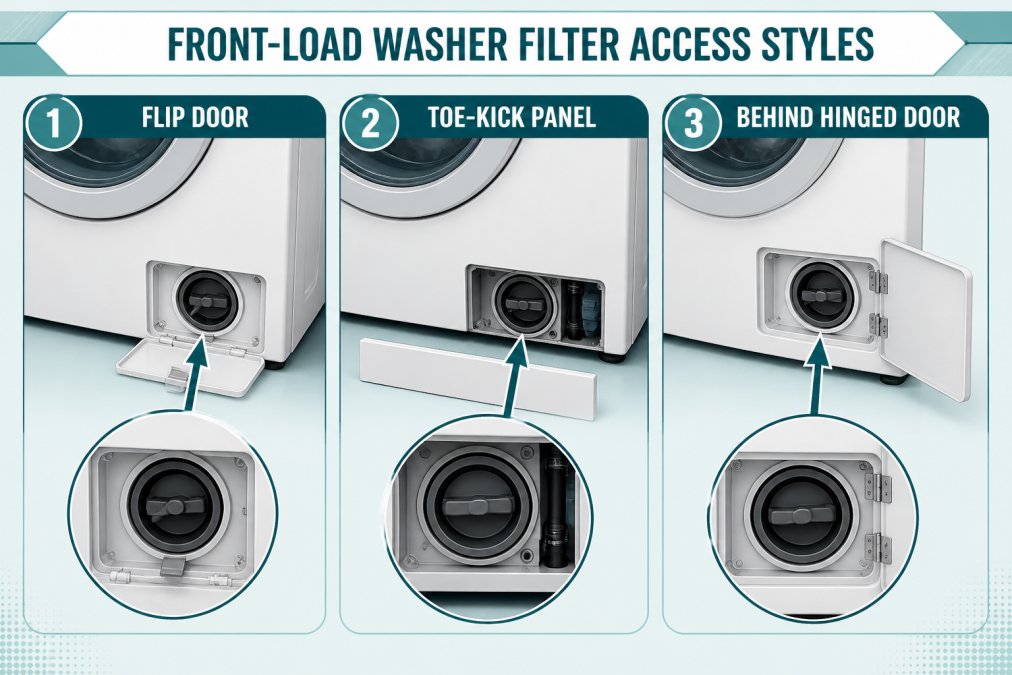
On most front-load washers, the filter sits behind a small access panel at the bottom front of the machine. The panel is usually on the lower right or lower left corner, close to the floor. Behind that panel you will find a round cap, often with a short drain hose clipped beside it.
Finding it takes a minute. Open the panel door, shine a light inside, and look for the round knob. If you see a small drain hose clipped beside it, you are in the right spot.
Front-Load Washer Filter Locations by Brand
Front-load washers from GE, Whirlpool, LG, Samsung, Bosch, and Maytag follow the same general layout, but the access method varies enough that a brand-level lookup saves time:
- LG and Samsung models often put the panel behind a small flip door on the lower right. On some LG models the door is a press-to-release tab; on Samsung models it is usually a hinged flap.
- Bosch machines sometimes hide the filter behind a removable toe-kick panel that pulls straight off. Look for two friction clips at the top edge of the toe kick.
- Whirlpool and Maytag units usually use a round cap behind a hinged door on the lower right or lower left.
- GE front-loaders typically place the access door on the lower right, with the drain hose clipped to the inside of the panel.
If the panel is not obvious, check the manufacturer instructions. Every manual shows a diagram of the filter location for that model, and most brands publish a PDF manual lookup by model number on their support site.
Top-Load Washers and Models Without an Accessible Filter
Not every washer has a user-accessible filter, and that surprises people. Many top-load washers do not use a removable pump filter at all.
If you own a top-load washer with no bottom panel, do not go hunting for a filter that is not there. Check the manual first.
When there is no accessible filter, the job shifts to prevention. Run a tub clean cycle monthly, use the right amount of detergent, and empty pockets before washing.
Washing Machine Filter Cleaning Tools You'll Need
You need very little for this task, and you probably own all of it already. Here is the full list of washing machine filter cleaning tools:
- A shallow tray or baking pan to catch residual water
- Two or three absorbent towels for spills
- A soft brush (an old toothbrush works well)
- A pair of gloves for handling debris
- A flashlight to see inside the housing
- A small bowl for soaking the filter
Skip the screwdriver unless your manual says otherwise. Most access panels open by hand.
Step-by-Step: How to Clean a Washing Machine Filter
Cleaning a washer filter takes about fifteen minutes from start to finish. Work through the steps in order, and keep towels down the whole time. Residual water always comes out faster than expected.
Safety Steps Before You Start
Unplug the washer before you touch anything. Then shut off the water supply valves behind the machine. These two steps take thirty seconds and prevent shock, flooding, and accidental starts.
Wait a few minutes after unplugging. Some machines hold a charge in the control board, and the drain pump can still kick on. Move anything fragile away from the front of the washer. You will be working on the floor with water, and a clear space makes the job faster.
Set Up Safe Water Containment and Emergency Draining
Before you open anything, build a containment zone. This is the step most guides skip, and it is the difference between a clean floor and a puddle that reaches the baseboard.
- Lay down two or three absorbent towels folded flat under the access panel, extending a few inches past the panel edges.
- Place a shallow tray or baking pan directly under the filter cap. A rimmed tray holds more than a flat pan and is easier to slide out when full.
- Keep a small bowl nearby to empty the tray without carrying a full tray across the floor.
- Have a second dry towel ready for your hands and the cap.
Open the access panel and locate the small drain hose beside the filter cap. Pull the hose out, aim it into your shallow tray, and remove its plug. Water will flow out.
If your model has no drain hose, skip straight to the filter cap and unscrew it slowly. Water will trickle out around the threads.
Remove, Rinse, and Inspect the Filter and Housing
Unscrew the round filter cap counterclockwise. Pull the filter straight out. Rinse it under warm water and scrub away lint, hair, and detergent residue with the soft brush. Hold it up to the light. You should see clean openings through the mesh.
While the filter soaks, inspect beyond lint and debris. Shine the flashlight into the housing and check for:
- Coins, hair pins, and buttons lodged against the housing walls or the impeller behind the filter.
- Hair wrapped around the impeller, the small paddle wheel behind the filter. If the impeller will not spin freely by hand, debris is binding it, and that is a common cause of slow draining even after a clean filter.
- Detergent residue or mineral scale on the cap threads and the O-ring. Hard water leaves scale that can stop the cap from sealing; a vinegar soak clears it.
- A cracked or flattened O-ring on the cap. A worn O-ring is a frequent cause of drips after reinstall.
Wipe inside the housing with a damp cloth and pull out anything you find. Do not use a screwdriver or pick inside the housing, the impeller and housing walls are plastic and easy to scratch.
Reinstall and Check for Leaks
Screw the filter back in clockwise until it seats firmly. Do not overtighten. Close the access panel, reconnect the hoses, and turn the water back on.
Run a short rinse cycle and watch the panel for leaks. A slow drip means the cap is not seated right. Tighten it a quarter turn and check again. If water still pools under the machine after a correct reinstall, the problem is likely beyond the filter, check the drain hose connection and the pump housing before calling a technician.
How Often to Clean a Washer Filter
Clean the filter once a month for a typical household. That is the baseline for how often to clean a washer filter, and it prevents most drainage problems before they start.
Adjust the schedule based on your situation:
| Household Situation | Cleaning Frequency |
|---|---|
| Two or fewer people, light use | Every 2-3 months |
| Family of four or more | Monthly |
| Pet hair on clothes or bedding | Every 2 weeks |
| Frequent heavily soiled loads | Monthly, plus a tub clean |
| Any drainage symptom | Immediately |
Laundromat operators should treat this as a weekly task. Commercial machines run dozens of cycles a day, and a blocked filter on a coin-operated unit means a line of unhappy customers. Home Tech services commercial laundry equipment across the metro area, and filter neglect is one of the most common causes of downtime we see.
Troubleshooting Stuck, Damaged, or Leaking Filters
A filter that will not budge usually has debris jammed behind the cap threads. Try this sequence before you apply more force:
- Soak a cloth in warm water and wrap it around the cap for five minutes.
- Press inward while turning counterclockwise to reseat the threads.
- Tap the cap gently with the handle of a soft brush.
- If it still will not move, stop. A cracked housing is a real repair.
A damaged filter mesh lets debris through to the pump. Replace it rather than rinsing and reinstalling.
If water still pools under the machine after a correct reinstall, the problem is likely beyond the filter. That is the point to call a technician.
Beyond lint and debris, inspect the O-ring for cracks and the housing for mineral buildup.
A washer that will not drain is frustrating, and it usually starts with a filter nobody checked.
Frequently Asked Questions
Do all washing machines have a removable filter?
No. Front-load washers almost always have a user-accessible pump filter behind a small panel at the bottom front. Many top-load washers, especially models with an agitator, rely on a self-cleaning filter built into the drum or drain system that you cannot remove. Check your manufacturer instructions before prying at any panel. If you cannot locate an access door, your model likely has no user-serviceable filter, and cleaning should be handled by a technician.
How do I know if my washing machine filter is blocked?
Common clogged washing machine filter symptoms include slow draining, standing water left in the drum after a cycle, musty or unpleasant odors, and error codes telling you to clean the filter. You may also notice lint, hair, or detergent residue on clothes after a wash. If the washer pauses mid-cycle or refuses to spin out, a blocked pump filter is one of the first things to inspect before calling for repair.
What should I do if the washer filter is stuck or leaking?
Unplug the washer and shut off the water supply first. If the filter cap will not turn, do not force it with pliers, since cracked housings cause leaks. Place towels and a shallow tray underneath, then try twisting gently with a coin. If water keeps leaking after reinstall, check that the cap is fully tightened and the rubber gasket is seated. A damaged housing or stripped cap usually needs a replacement part or a service call.
How often should you clean a washing machine filter?
Most manufacturers recommend cleaning the washer filter every one to three months for a typical household running several loads a week. Homes with pets, heavy lint, or frequent towel and blanket washing should clean monthly. If you notice slow draining or odor before the next scheduled cleaning, check the filter right away. Pairing filter cleaning with a monthly tub clean cycle keeps detergent residue and fabric fibers from building up.