 how-to
Commercial Ice Maker Leaking Water: Causes & Fixes
Table of Contents
- Why Your Commercial Ice Maker Is Leaking Water
- Water Supply Line and Inlet Valve Issues
- Commercial Ice Machine Drain Line Cleaning and Blockages
- Ice Bin, Chute, and Dump Valve Problems
- Scale Buildup, Defrost Cycles, and Fill Tube Misalignment
- When to Call an EPA 608 Certified Repair Technician
- Preventative Maintenance to Stop Future Leaks
- Frequently Asked Questions
Last Updated: September 26, 2026
Why Your Commercial Ice Maker Is Leaking Water
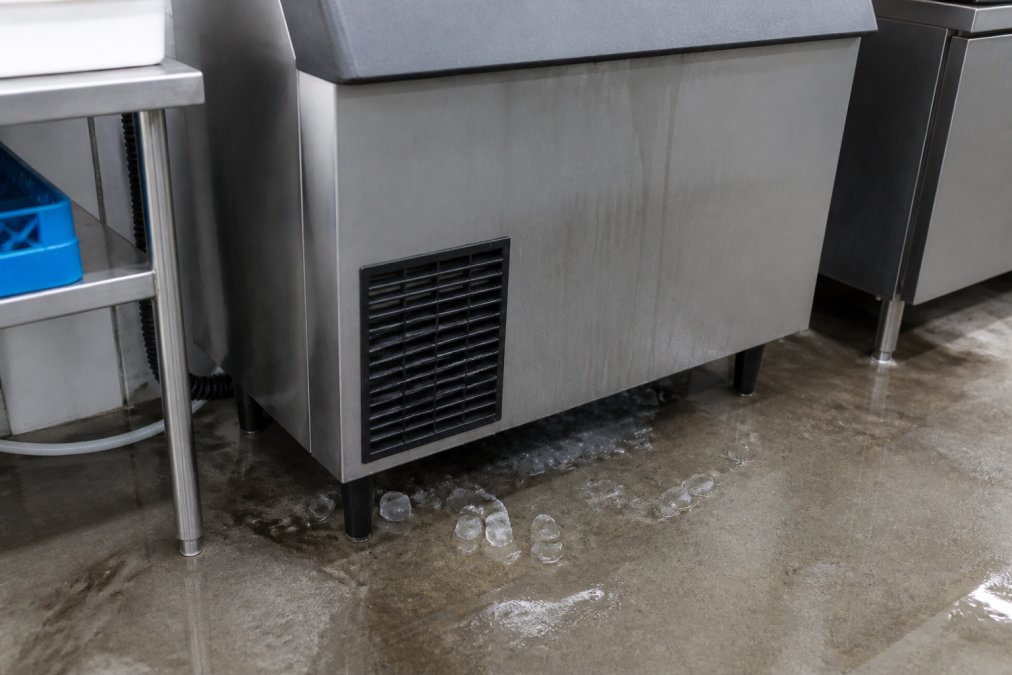
A commercial ice maker leaking water is a costly problem. Food service operations, grocery stores, and restaurants lose revenue every hour the equipment sits idle. At Home Tech, we've diagnosed many of these leaks across the Phoenix metro area, and most stem from just a handful of issues.
Water leaks originate from the supply line, drain line, ice bin, or internal components like the fill tube or dump valve. Some are minor; others require immediate attention.
Water Supply Line and Inlet Valve Issues
The water supply line and inlet valve fail more often than any other part and are the first places to check.
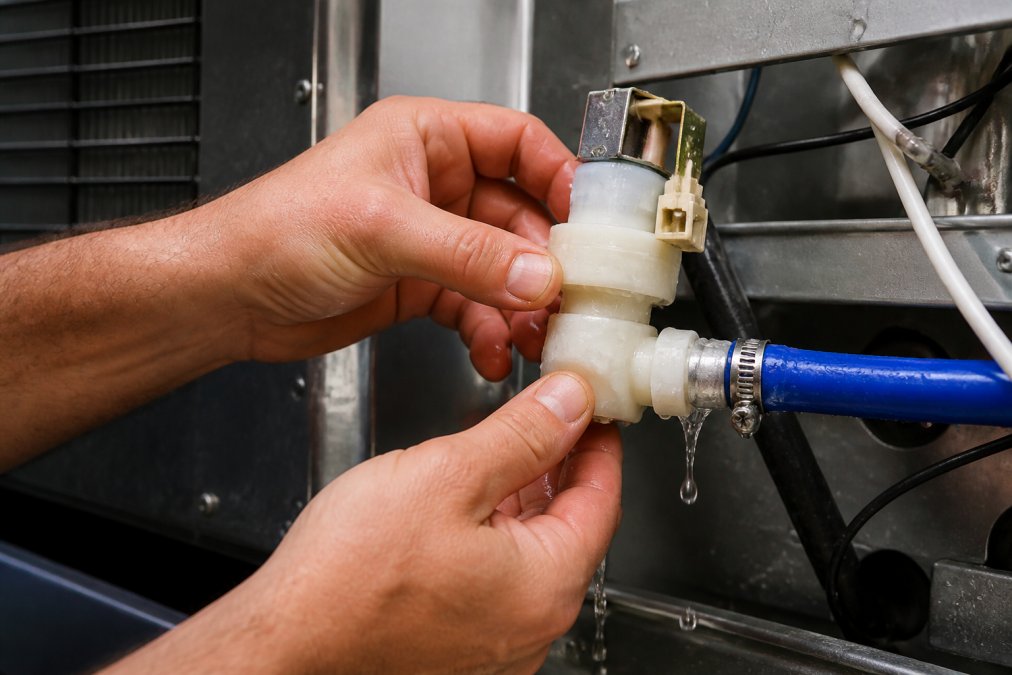
Check the supply line connection. Look where the water line connects to the back of your machine. A loose fitting is the simplest fix: turn off water, tighten the connection clockwise with a wrench, turn water back on, and watch for 30 seconds.
Inspect the water inlet valve itself. If it sticks open, water flows continuously. If partially clogged, water pressure builds and forces leaks at weak points.
Signs the inlet valve is failing:
- Water runs even when the machine isn't making ice
- Hissing sounds near the valve
- Water pooling directly under the valve assembly
- Ice production is inconsistent or stops entirely
Scale buildup blocks water flow. Hard water deposits accumulate inside the valve over time, increasing pressure and forcing leaks. Install a water filter cartridge ahead of the machine to prevent this and extend equipment life.
When the inlet valve is damaged, replacement is necessary. The valve connects to refrigerant lines on some models, and improper work can compromise the sealed system, call an EPA 608 certified technician.
Commercial Ice Machine Drain Line Cleaning and Blockages
The drain line removes water that doesn't freeze into ice. A clogged drain line backs up water into the ice bin and creates overflow leaks. This is one of the most common reasons for water pooling under commercial ice makers.
Locate your drain line. It's usually a small tube running from the ice bin area downward and out the back or bottom of the machine. Follow it to where it connects to your facility's drain system.
Check for visible blockages. Disconnect the drain line at both ends if you can access it safely. Look inside. You might see mineral deposits, slime buildup, or debris. These obstruct water flow.
Flush the drain line. Use warm water and a brush to clear debris. For stubborn scale, use equal parts white vinegar and warm water, let sit 30 minutes, then flush.
Verify the drain connection. Water must flow downward by gravity. If the line sags or kinks, reposition it to slope toward the drain.
Check the air gap. Most commercial ice makers include an air gap in the drain line to prevent backflow. Water should drip from it into a drain, not flow continuously. If water isn't dripping, something is blocking the line downstream.
A properly maintained drain line prevents most overflow leaks. Schedule drain line cleaning every three months in hard water areas.
Ice Bin, Chute, and Dump Valve Problems
Water pooling inside the ice bin or leaking from the ice chute points to different issues. The dump valve controls when ice falls from the mold into the bin. If it sticks or fails, water leaks instead of ice.
Inspect the ice bin for cracks. Plastic bins can crack from impact or age. A small crack allows water to seep out slowly. A larger crack produces obvious pooling. If the bin is cracked, it must be replaced.
Check the dump valve operation. This valve opens to drop frozen ice into the bin. If it stays partially open, water drips continuously. Listen for a clicking sound when the machine cycles. No click? The valve may be stuck.
Look for ice chute misalignment. If loose or misaligned, water bypasses it and leaks outside the bin. Tighten any bolts holding it in place.
Examine ice mold contact. If water isn't freezing properly, excess liquid accumulates, suggesting a defrost cycle problem or low refrigerant, both require professional diagnosis.
Scale Buildup, Defrost Cycles, and Fill Tube Misalignment
Scale buildup inside your commercial ice maker reduces efficiency and causes leaks. Hard water minerals deposit on internal surfaces, including the fill tube and water distribution system. Over time, these deposits restrict water flow and create pressure that forces leaks at connection points.
How defrost cycles work and why they fail. Commercial ice makers operate in freeze-and-defrost cycles. During freeze, water circulates and freezes. During defrost, heating elements warm the mold to release ice, and water drains out. If the defrost cycle malfunctions, water backs up into the bin, overflows the chute, or leaks from internal seals because the cycle timing is wrong.
Common defrost cycle failures in commercial machines:
- Defrost timer stuck or failed. The timer controls when the machine switches from freeze to defrost. If it fails, the machine either stays in freeze mode (no defrost, ice won't drop) or stays in defrost mode (continuous water flow, constant leaking). You'll notice either no ice production or water running non-stop.
- Solenoid valve malfunction. This valve directs hot gas or water to the mold during defrost. If it sticks open, hot gas flows continuously and water leaks. If it sticks closed, defrost never happens and ice won't release.
- Defrost water not draining. The defrost cycle produces more water volume than normal operation. If the drain line is undersized, partially blocked, or lacks proper slope, defrost water overwhelms the system and leaks out the sides of the bin or from internal connections.
- Thermostat failure. The thermostat tells the machine when the mold is cold enough to defrost. If it fails, defrost happens at the wrong time or not at all, causing ice to stick or water to accumulate.
Signs of defrost cycle problems:
- Ice production stops or slows dramatically
- Water leaks during specific times of day (often during the defrost window)
- The machine cycles on and off rapidly or gets stuck in one mode
- Frost buildup visible on external refrigerant lines
- Water pooling inside the bin even when the machine isn't actively making ice
- Ice cubes that are stuck together or won't drop into the bin
Diagnosing defrost issues yourself. Observe a full cycle (20-30 minutes). Does water flow at predictable intervals or constantly? Does ice drop into the bin or stick? Listen for clicking (defrost timer) or humming (solenoid). Silence during defrost phase suggests timer or solenoid failure.
When to Call an EPA 608 Certified Repair Technician
Some leaks require professional expertise. Knowing when to call saves time, prevents costly mistakes, and protects your business from liability and regulatory violations.
Safety protocols before opening a commercial ice maker:
- Turn off power at the circuit breaker (not the machine's switch).
- Turn off the water supply.
- Allow the machine to sit 15 minutes for pressure to equalize.
- Do not open the sealed refrigeration system (copper tubing, compressor, welded connections). Only an EPA 608 certified technician should touch these.
- Wear safety glasses and nitrile gloves.
What you can safely troubleshoot yourself:
- Tightening external water supply line connections
- Cleaning or flushing the drain line
- Inspecting the ice bin for visible cracks
- Checking that the machine is level
- Replacing the water filter cartridge
- Verifying the air gap in the drain line
- Repositioning a misaligned fill tube (external mounting only)
What requires professional service:
- The leak involves refrigerant lines or the sealed system (any copper tubing, compressor, or welded connections)
- The dump valve, inlet valve, or solenoid valve is suspected of failing
- You've tried basic fixes and the leak persists after 24 hours
- Water is leaking from inside the machine body, not just external connections
- The defrost cycle isn't working (machine won't make ice or runs continuously)
- The machine is making unusual sounds (clicking, hissing, grinding)
- You're unsure which component is failing
- Ice production has stopped or dropped significantly
Preventative Maintenance to Stop Future Leaks
Regular maintenance prevents most commercial ice maker leaks before they start. A simple routine keeps your equipment running and protects your food supply.
Frequently Asked Questions
Can a clogged drain line cause a commercial ice maker to leak?
Yes. A blocked drain line is one of the most common causes of ice maker leaks. Water that should exit through the drain backs up and pools inside the bin or beneath the machine. Check the drain line for mineral deposits, food debris, or ice blockages. Flushing the drain with warm water or using a plumbing snake can often clear the obstruction. If the line is severely scaled or damaged, professional drain line cleaning may be necessary.
Why is my commercial ice maker leaking water on the floor?
Floor leaks usually come from a cracked water supply line, a faulty water inlet valve, a misaligned fill tube, or a blocked drain line that forces water to overflow. Start by checking the supply line for visible cracks or loose connections. If the line looks intact, inspect the inlet valve for corrosion or mineral buildup. A leaking dump valve or a full ice bin that isn't draining properly can also cause water to spill onto the floor. Professional diagnosis is recommended if the source isn't obvious.
How do I stop my ice maker water line from leaking?
First, locate the leak: check the water inlet valve, supply line connections, and fill tube for cracks or loose fittings. Tighten any loose compression fittings by hand or with a wrench, but do not over-tighten. If the line itself is cracked, it must be replaced. For mineral-related leaks, flush the system with white vinegar or a commercial descaler. If the leak persists after these steps, the inlet valve solenoid or gasket may be failing and require replacement by an EPA 608 certified technician.
When should I call a professional for an ice machine leak?
Contact a professional immediately if water is pooling under the machine, if the leak is coming from inside the sealed refrigeration system, if you cannot locate the source after a visual inspection, or if the machine is in a commercial kitchen where downtime costs money. Do not attempt to repair sealed-system components yourself, only EPA 608 certified technicians can safely handle refrigerant and pressurized lines. Same-day emergency service is critical for restaurants and food service operations to prevent food loss.