 how-to
Commercial Freezer Icing Up: 7 Causes & How to Fix
Table of Contents
- Why Is My Commercial Freezer Icing Up? Common Causes Explained
- Commercial Freezer Door Seal Repair: Moisture Infiltration Prevention
- Evaporator Coil Icing in Commercial Freezers: Frost Accumulation Issues
- Commercial Freezer Defrost Problems: Cycle Malfunctions
- Drain Line Blockages and Condensate Drainage
- Temperature Fluctuations and Control Board Sensor Issues
- Commercial Freezer Maintenance: Prevention and Best Practices
- Troubleshooting Flowchart: Diagnosing Your Freezer's Ice Problem
- Frequently Asked Questions
Last Updated: July 28, 2026
Why Is My Commercial Freezer Icing Up? Common Causes Explained
If you're asking why is my commercial freezer icing up, you're likely facing one of the most common refrigeration problems affecting food service operations. At Home Tech, we've diagnosed thousands of freezer failures across Arizona's restaurant and grocery sectors, and ice accumulation ranks among the top three issues operators encounter. Ice buildup typically signals mechanical failures ranging from simple maintenance oversights to serious system malfunctions requiring immediate repair. Most causes are preventable, and many can be addressed before requiring expensive downtime.
Below, we'll walk you through the seven most common reasons commercial freezers ice up, how to identify each one, and when to call a technician versus handling maintenance yourself.
When to Call a Technician vs. DIY Troubleshooting
Call a technician immediately if:
- The compressor runs constantly without cycling off
- Refrigerant is visibly leaking (oily residue around fittings)
- The evaporator coil is completely frozen solid
- Temperature won't hold despite adjustments
- You hear unusual grinding, clicking, or hissing sounds
- The control board displays error codes
Safe DIY tasks include:
- Cleaning the door gasket and checking for visible damage
- Clearing drain pan debris and flushing condensate lines
- Inspecting airflow vents for obstruction
- Checking door seals for gaps or warping
- Cleaning condenser coils (if accessible safely)
Home Tech recommends treating any uncertainty as a reason to call. Commercial refrigeration systems operate under high pressure and contain specialized refrigerants. Misdiagnosis leads to costly repairs and potential safety hazards. Our EPA 608-certified technicians arrive same-day for emergency calls across the Phoenix metro area, Chandler, Tempe, Scottsdale, and beyond.
Commercial Freezer Door Seal Repair: Moisture Infiltration Prevention
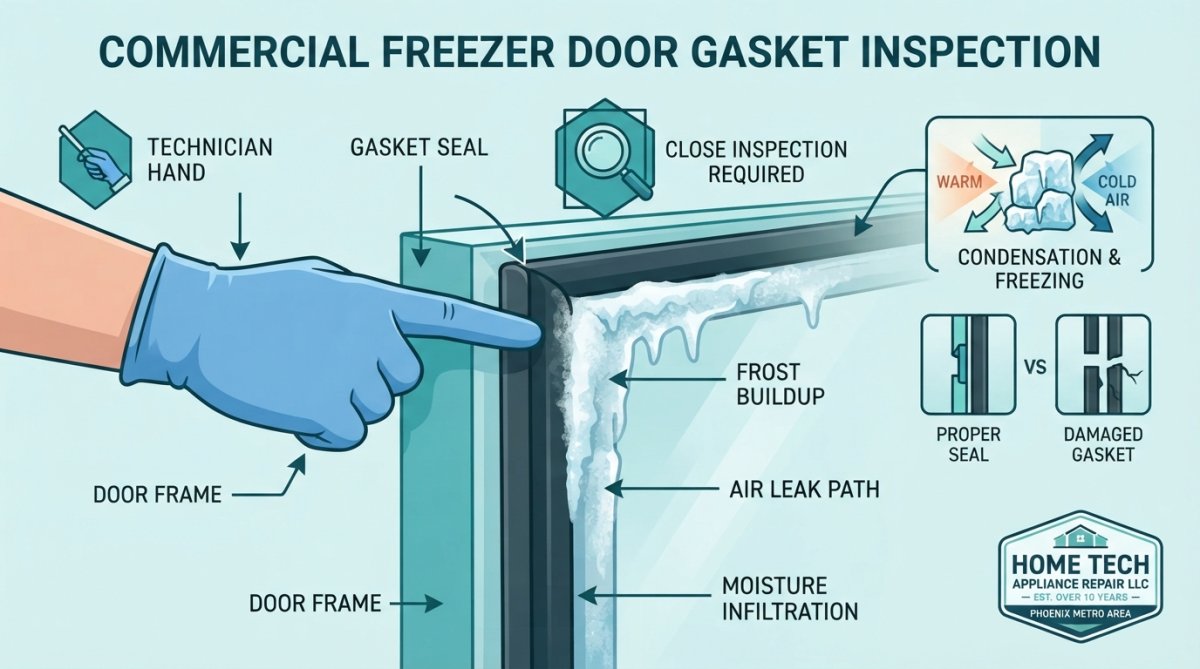
The door gasket is your freezer's first line of defense against moisture infiltration. When seals fail, warm ambient air enters the cabinet continuously, forcing the refrigeration system to work harder. This excess moisture condenses on the evaporator coil and freezes, creating ice buildup.
How to Inspect and Clean Your Door Gasket
Open the freezer door and inspect the rubber gasket running around the frame. It should be firm and flexible, not cracked, hardened, or deformed.
Step 1: Clean the gasket thoroughly (10 minutes) Mix warm water with mild detergent and wipe the gasket completely, paying special attention to corners and crevices where food particles accumulate.
Step 2: Perform the dollar bill test (2 minutes) Close the door on a dollar bill positioned at various points around the seal. If you can pull the bill out easily without resistance, the seal isn't creating proper contact. Repeat at the top, bottom, left, and right edges.
Step 3: Check for visible damage (3 minutes) Look for cracks, splits, or sections where the rubber has pulled away from the frame. Deep splits or separation require replacement.
Step 4: Test the door's closing force (2 minutes) The door should close with moderate resistance. If it swings open on its own, the seal is compromised.
When to Replace the Door Seal
Replace the door gasket if the dollar bill pulls out with no resistance at multiple points, visible cracks extend more than 1 inch, the rubber has hardened and no longer flexes, separation from the frame is visible, or the gasket is missing sections. Most commercial freezer doors use standard gasket profiles that snap into grooves. Home Tech's technicians carry replacement gaskets for all major brands including Turbo Air, True, Traulsen, and Nor-Lake, and install them with precision alignment.
Evaporator Coil Icing in Commercial Freezers: Frost Accumulation Issues
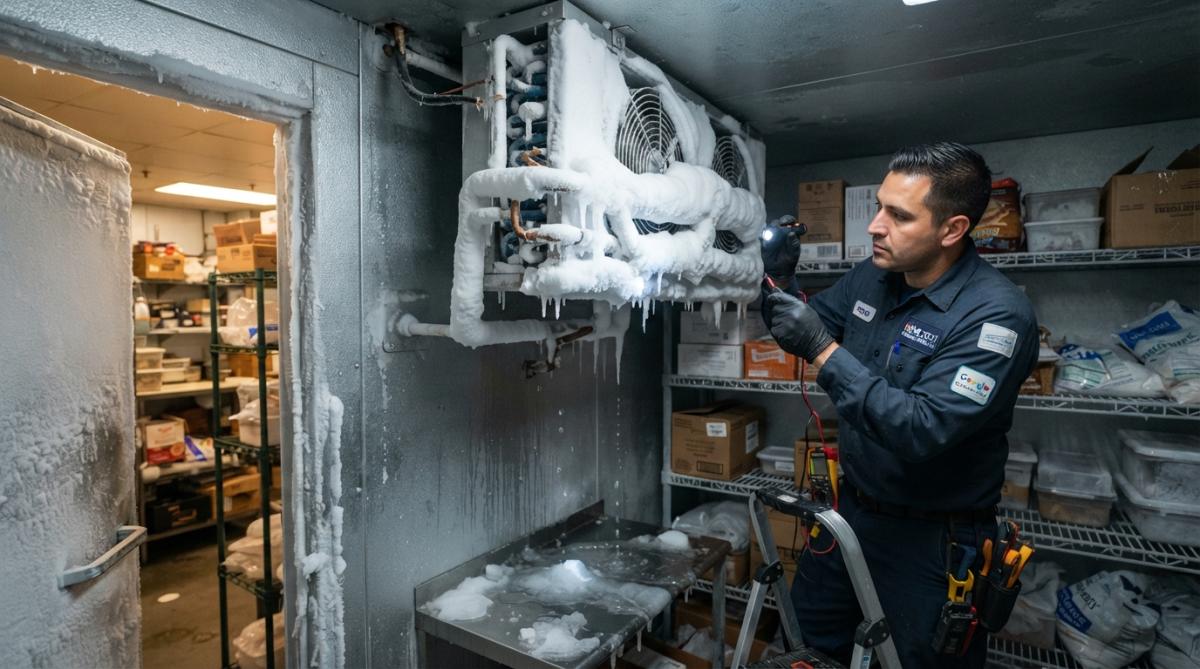
The evaporator coil is where refrigerant circulates, absorbing heat from the cabinet interior. When moisture-laden air passes over the cold coil, condensation forms and freezes. Under normal conditions, the defrost cycle melts this frost regularly. When something goes wrong, ice accumulates until it blocks airflow entirely.
Why Evaporator Coils Frost Over
Frost formation on evaporator coils is natural and expected. The coil operates at temperatures well below freezing, typically -20°F to -10°F. Problems emerge when frost doesn't melt away due to defrost cycle failure or excess moisture entering the cabinet. Ice accumulation then blocks the coil completely, restricting airflow and cooling performance.
Airflow Obstruction and Ice Buildup
Once frost accumulates on the evaporator coil, it acts as an insulator, preventing cold air from flowing into the cabinet and blocking the evaporator fan. This creates a vicious cycle: poor airflow means less cooling, which means the compressor works harder, which means more frost accumulation. Clearing ice manually is temporary; you must fix the root problem to prevent recurrence.
Commercial Freezer Defrost Problems: Cycle Malfunctions
The defrost cycle is your freezer's built-in maintenance system. It periodically stops the refrigeration process, heats the evaporator coil to melt frost, and drains the water away. When this cycle fails, frost accumulates indefinitely. Most commercial freezers run a defrost cycle multiple times daily, typically every 6-8 hours for 20-30 minutes.
How the Defrost Cycle Works
Step 1: Timer initiates the cycle. A defrost timer signals the system to begin.
Step 2: Compressor shuts down. The refrigeration cycle stops, and the evaporator coil is no longer actively cooled.
Step 3: Defrost heater energizes. An electric heating element mounted near the evaporator coil turns on, warming it above 32°F to melt accumulated frost.
Step 4: Condensate drains. Melted water runs into a drain pan and flows out through a drain line.
Step 5: Cycle ends and cooling resumes. Once the coil reaches a set temperature, the heater shuts off and the compressor restarts.
Signs Your Defrost Cycle Is Failing
- Visible frost or ice on the evaporator coil
- Rising cabinet temperature despite compressor running
- Water pooling inside the cabinet
- Compressor running constantly without cycling off
- Unusual odors from the cabinet
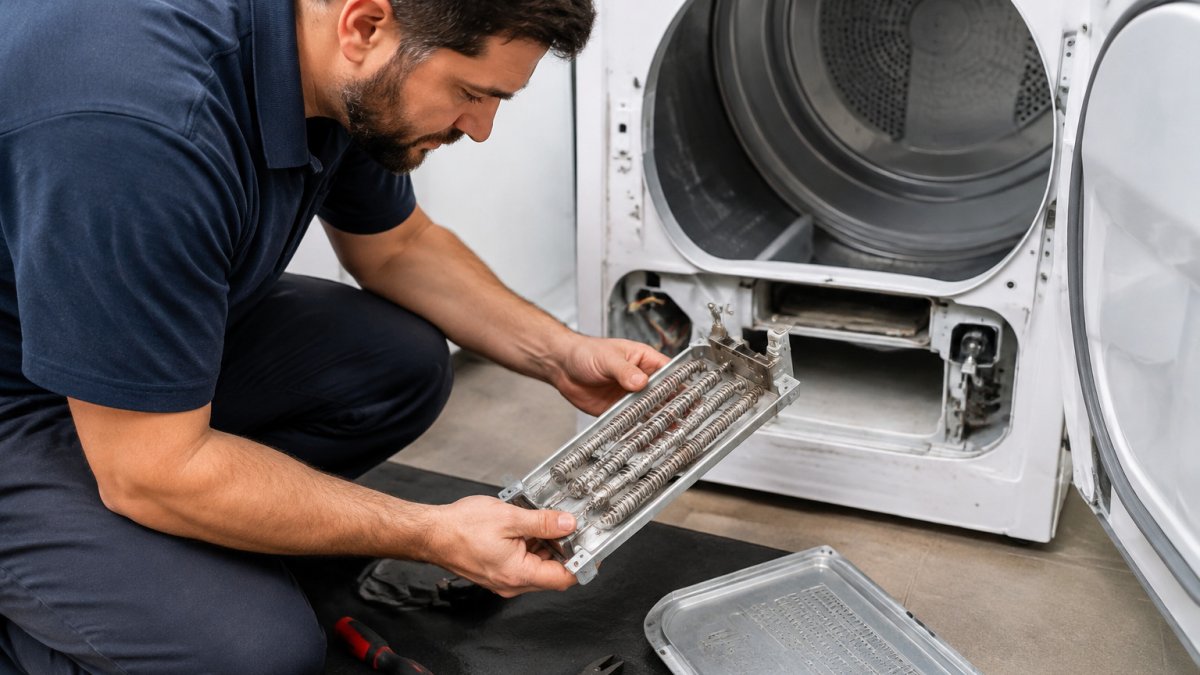
Defrost cycle failures typically stem from a faulty defrost timer, burned-out heating element, or thermal sensor that won't trigger cycle end. These require professional diagnosis and replacement.
Drain Line Blockages and Condensate Drainage
When frost melts on the evaporator coil during the defrost cycle, that water drains into a pan and flows out through a condensate line. If this line clogs, water backs up into the cabinet or pools in the drain pan, creating moisture problems and encouraging mold growth.
How to Clear a Frozen or Clogged Drain
For frozen blockages: Locate the drain line exit point (usually at the rear or bottom of the freezer). Feel the line; if it's solid ice, warm it gently using a heat gun or warm towels. Do NOT use a blowtorch or direct flame. Once thawed, flush the line with warm water to clear remaining debris.
For debris clogs: Disconnect the drain line from the drain pan. Use a plumbing snake or flexible wire to push debris through the line. Flush the line with warm water mixed with a small amount of bleach (1 part bleach to 10 parts water) to clear mold. Reconnect the line and verify water flows.
Prevention is essential. Make drain pan cleaning part of your monthly maintenance routine: remove the drain pan, empty standing water, scrub with a brush and mild detergent, flush the drain line opening with water, and reinstall the pan. This 10-minute task prevents most drain-related freezer icing problems.
Temperature Fluctuations and Control Board Sensor Issues
Temperature control depends on accurate sensing. The thermal sensor tells the system whether the cabinet has reached setpoint. If this sensor fails, the compressor either runs constantly or cycles off prematurely, leaving food partially thawed.
Thermal Sensor Malfunctions and Ice Buildup
The thermal sensor (also called a temperature probe or thermistor) sits inside the cabinet and measures air temperature. It sends this reading to the control board, which adjusts compressor operation accordingly. When a thermal sensor malfunctions, false temperature readings cause the compressor to shut down prematurely, cabinet temperature rises, and ice on the evaporator coil begins to melt into the cabinet. Sensor drift gradually makes readings less accurate, causing the system to over-cool or under-cool.
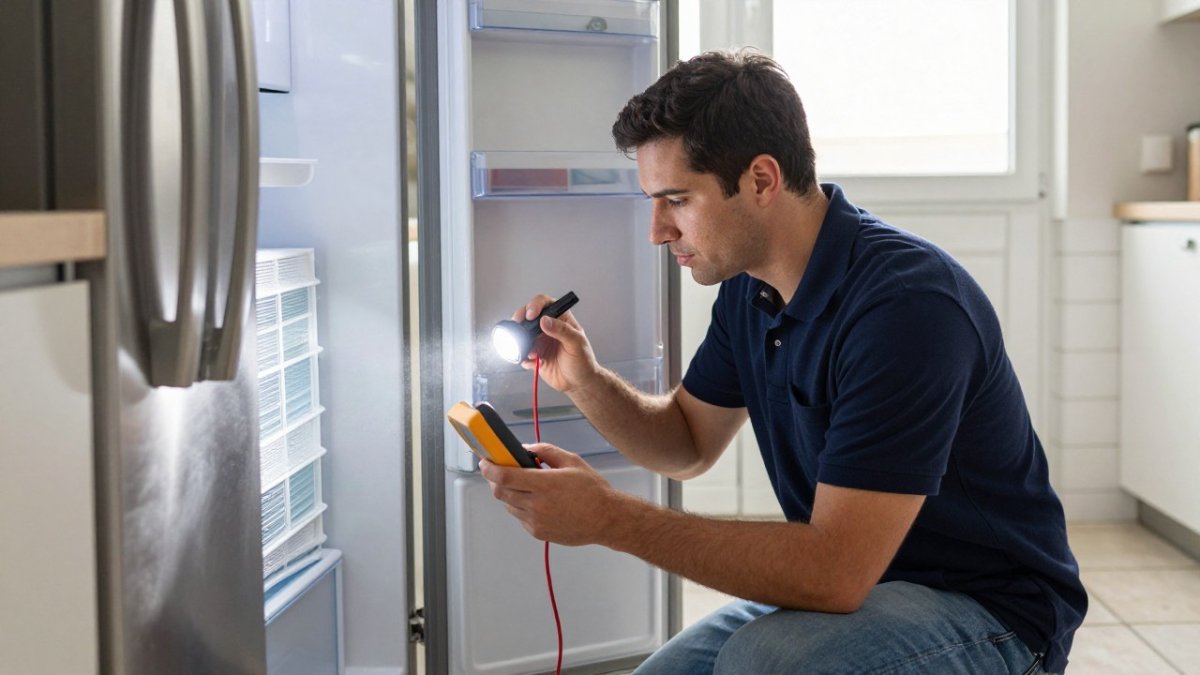
Testing a thermal sensor requires a multimeter and knowledge of your specific freezer model. Home Tech technicians carry replacement sensors for all major brands and test existing sensors as part of our diagnostic process. A new sensor typically costs a fraction of what food spoilage costs over a single day of malfunction.
Commercial Freezer Maintenance: Prevention and Best Practices
Prevention is always cheaper than repair. A structured maintenance program catches small problems before they become expensive failures and extends your freezer's operational life by years. Most commercial freezer failures trace back to deferred maintenance. Operators who clean regularly, monitor temperatures, and address small issues immediately experience far fewer breakdowns.
Monthly Maintenance Checklist
Make this checklist part of your routine. These tasks take 30-45 minutes monthly and prevent the vast majority of common freezer problems.
| Task | Frequency | Time | What to Check |
|---|---|---|---|
| Clean door gasket | Monthly | 10 min | Debris, cracks, hardening |
| Empty and clean drain pan | Monthly | 10 min | Standing water, mold, scale |
| Flush drain line | Monthly | 5 min | Water flows freely |
| Inspect door seals | Monthly | 5 min | Gaps, warping, separation |
| Check cabinet temperature | Daily | 2 min | Setpoint matches display |
| Verify compressor cycles | Weekly | 3 min | Runs then stops normally |
| Clean condenser coils | Quarterly | 20 min | Dust buildup, airflow |
| Check evaporator fan operation | Monthly | 3 min | Spins freely, no grinding |
Daily temperature checks are critical. Write down the cabinet temperature each morning. If you notice a 3-5°F rise over a few days, that's your early warning sign. A 10-15°F rise means immediate action is needed.
Condenser coil cleaning deserves special attention. The condenser coil sits outside the insulated cabinet and releases heat to the surrounding air. If dust accumulates, it can't reject heat efficiently, forcing the compressor to work harder and run longer. This accelerates wear and increases energy consumption. A well-maintained freezer uses significantly less energy than one running with partial ice blockages and sensor problems. Over a year, this difference translates into hundreds of dollars in wasted energy costs. Beyond energy savings, preventative maintenance protects your inventory. Food spoilage from temperature fluctuations costs far more than the maintenance itself.
Troubleshooting Flowchart: Diagnosing Your Freezer's Ice Problem
When your commercial freezer icing problem emerges, use this decision tree to narrow down the likely cause.
START: You notice ice accumulation or rising temperature
Question 1: Can you see frost or ice on the evaporator coil?
- YES → Go to Question 2
- NO → Go to Question 5
Question 2: Does the door seal close tightly? (Use the dollar bill test)
- NO, seal is loose → DIAGNOSIS: Door gasket failure. Clean and test the gasket. If it still fails the dollar bill test, replace it.
- YES, seal is tight → Go to Question 3
Question 3: Is water pooling in the cabinet or drain pan?
- YES → DIAGNOSIS: Blocked drain line. Locate the drain line exit and check for ice or debris blockage. Clear it using the methods described above.
- NO → Go to Question 4
Question 4: Is the compressor running constantly without cycling off?
- YES → DIAGNOSIS: Defrost cycle failure. The system can't reach setpoint because the iced coil is blocking airflow. This requires professional diagnosis, likely a faulty defrost timer, burned heating element, or thermal sensor issue.
- NO → DIAGNOSIS: Evaporator coil frost accumulation from high ambient humidity. Increase defrost frequency if your control board allows it, or improve cabinet ventilation.
Question 5: Cabinet temperature is rising but you don't see visible ice on the coil
- Is the compressor running constantly? → DIAGNOSIS: Possible thermal sensor malfunction. Have a technician test and replace the sensor if needed.
- Is the compressor cycling normally? → DIAGNOSIS: Check ambient temperature. If your freezer is in a very warm environment (above 85°F), it may struggle to maintain setpoint. Improve ventilation around the unit and verify the condenser coil is clean.
When your commercial freezer icing problem won't resolve with basic maintenance, professional help is essential. Food service downtime costs money every hour, and equipment failure can spoil an entire inventory. Home Tech provides same-day emergency service across the Phoenix metro area, including Chandler, Tempe, Scottsdale, and Gilbert. Our EPA 608-certified technicians diagnose and repair all commercial refrigeration systems, from reach-in freezers to walk-in coolers. We service all major brands including Turbo Air, True, Traulsen, and Nor-Lake, and we guarantee 100% satisfaction on every repair. Call (602) 486-1901 or visit hometechappliancerepair.com to book your appointment today.
Frequently Asked Questions
What causes excessive ice buildup in a commercial freezer?
Ice buildup typically results from moisture infiltration through a failing door gasket, defrost cycle malfunctions, or airflow obstructions around the evaporator coil. When warm, humid air enters and contacts cold evaporator coils, condensation freezes into frost. Blocked drain lines prevent water from escaping the drain pan, which refreezes and compounds the problem. Refrigerant leaks or thermal sensor failures can also prevent proper defrosting cycles.
How do I know if my commercial freezer door seal needs repair?
Inspect the door gasket for visible cracks, hardening, or separation from the frame. Place a dollar bill halfway in the closed door, if it slides out easily, the seal isn't tight. Look for frost or ice buildup around the door edges, which signals moisture infiltration. If you notice temperature fluctuations or excessive ice accumulation only near the door, seal replacement is likely needed. Most commercial door gaskets should be cleaned monthly and replaced every 2-3 years with regular use.
Why is there ice on my commercial freezer's evaporator coil?
Evaporator coil frost accumulation occurs when the defrost cycle fails to melt ice regularly or when airflow is obstructed by debris. During normal operation, the refrigeration system cools the coil below freezing. Moisture from warm air condenses and freezes on the coil surface. If the defrost heater malfunctions or the control board doesn't trigger defrosting cycles, ice builds up faster than it melts. Poor air circulation from blocked vents or dirty filters also prevents proper thawing and increases frost formation.
When should I call a professional HVAC technician for commercial freezer icing?
Contact a technician immediately if ice buildup persists after cleaning drain lines and checking door seals, if temperature setpoints fluctuate unexpectedly, or if you suspect refrigerant leaks (indicated by hissing sounds or oil stains). For food service operations, downtime is costly, same-day emergency service prevents inventory loss. Sealed-system repairs, thermal sensor replacement, and defrost cycle diagnostics require EPA 608-certified technicians. If your freezer is under warranty or uses uncommon refrigerants like R404a or R290a, professional service ensures compliance.
[EXTERNAL_LINK: EPA 608 Certification Requirements for Commercial Refrigeration | epa.gov]
[EXTERNAL_LINK: Commercial Refrigeration Best Practices Guide | ashrae.org]
[EXTERNAL_LINK: Food Safety Standards for Cold Storage Equipment | fsis.usda.gov]