 how-to
Signs Your AC Needs a Refrigerant Recharge
Table of Contents
- Signs Your AC Needs a Refrigerant Recharge
- What Is an AC Refrigerant Recharge?
- Recharge vs. Leak Repair: What's the Difference?
- DIY AC Recharge Risks and Why Professional Service Matters
- AC Refrigerant Leak Symptoms and Detection
- Cost of AC Refrigerant Recharge and Repair Options
- When to Recharge vs. When to Replace Your AC System
- Preventative Maintenance to Avoid Future Recharges
- Frequently Asked Questions
Last Updated: August 17, 2026
Signs Your AC Needs a Refrigerant Recharge
Your air conditioning system relies on refrigerant to absorb heat from inside your home and release it outside. When refrigerant levels drop below the manufacturer's specification, your AC cannot cool effectively. Recognizing these signs early can prevent costly damage to your compressor and condenser.
Low refrigerant typically results from a leak in the suction line, evaporator coil, or condenser, though some systems lose refrigerant over time due to age and seal degradation. Your AC will signal the problem through performance changes you can spot before the system fails completely.
Warm Air Blowing From Vents
When your thermostat is set to cool but warm or room-temperature air flows from your vents, low refrigerant is often the cause. The evaporator coil cannot absorb enough heat from the air passing through it because there isn't enough coolant circulating through the system.
This symptom typically develops gradually. You might notice the air starts cool and becomes progressively warmer over days or weeks. A professional HVAC technician can measure the system pressure and confirm whether refrigerant loss is the issue. Home Tech's EPA 608-certified technicians diagnose this problem quickly and can determine whether a simple recharge will restore cooling or if a leak repair is needed first.
Ice Buildup on the Evaporator Coil
When refrigerant levels drop, the pressure inside the evaporator coil decreases, causing the coil temperature to drop below the freezing point of water. Condensation on the coil freezes solid, restricting airflow and reducing cooling capacity further. The system works harder to pull air through the frozen coil, straining the blower motor and compressor.
You might see ice visible on refrigerant lines or the outdoor condenser unit. In severe cases, water leaks inside the home as the ice melts. Continuing to run the system risks compressor failure, which is expensive to repair or replace.
Hissing or Bubbling Noises
A hissing sound near your outdoor AC unit or indoor air handler typically indicates refrigerant escaping from a leak. The high-pressure refrigerant gas rushing through a crack creates an audible hiss. Bubbling noises suggest refrigerant boiling inside the suction line due to low pressure.
Professional leak detection equipment uses ultrasonic sensors or fluorescent dye to pinpoint the exact location of the leak. Once found, a technician can repair the leak, recover the remaining refrigerant, and recharge the system with fresh coolant.
Weak Airflow From Vents
Low refrigerant can cause ice to form on the evaporator coil, blocking airflow. Even without visible ice, reduced refrigerant circulation means the coil operates at abnormal temperatures and pressures, which can trigger the system's safety shutoff. When the coil gets too cold, a thermostat inside the air handler shuts down the compressor to prevent damage.
Check your air filter first. A clogged filter restricts airflow independent of refrigerant levels. If the filter is clean and airflow is still weak, low refrigerant or a system pressure problem is likely. Home Tech technicians measure both airflow and system pressure to diagnose the exact issue.
Longer Cooling Cycles
Your AC should reach your thermostat's target temperature in a reasonable time. When refrigerant is low, the system runs continuously for extended periods without reaching the set point. The compressor cycles on and off more frequently because the evaporator coil cannot absorb heat efficiently without adequate refrigerant.
Extended cooling cycles also increase energy consumption. A system that normally cycles 3-4 times per hour might cycle 6-8 times when refrigerant is low, wasting electricity and wearing down components faster.
Higher Energy Bills
One of the earliest signs homeowners notice is a spike in their cooling costs. When your AC operates with low refrigerant, the compressor and condenser work harder to move less coolant through the system. A 10-15% increase in your electric bill during cooling season warrants investigation.
The longer the system runs with low refrigerant, the more energy it wastes. Additionally, the extra strain on the compressor accelerates wear, which eventually leads to compressor failure, a repair that costs significantly more than a timely recharge.
What Is an AC Refrigerant Recharge?
An AC refrigerant recharge is the process of adding coolant to your air conditioning system to restore it to the manufacturer's specified pressure and volume. The refrigerant circulates through the evaporator coil, condenser, compressor, and thermal expansion valve in a continuous cycle, absorbing heat inside and releasing it outside.
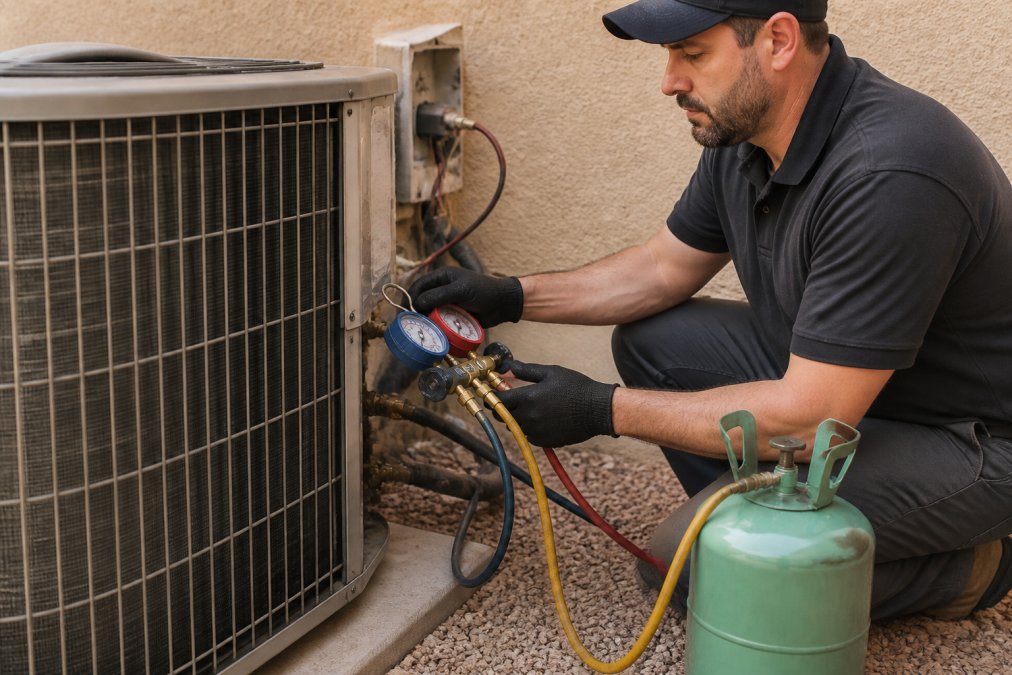
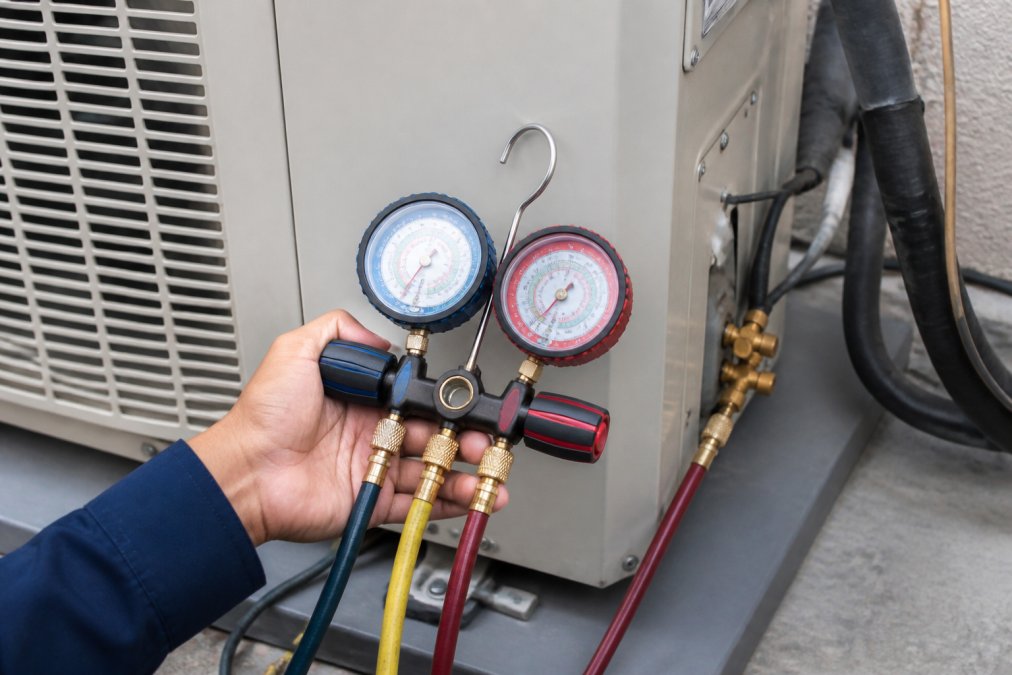
When a technician performs a recharge, they first measure the current refrigerant level using a manifold gauge set connected to the service ports. They then add refrigerant, typically R410A, R404a, R407a, R32a, or R454B for modern systems, until the pressure matches the specification for your outdoor temperature and system design.
The process requires EPA 608 certification because refrigerant is a controlled substance under the Clean Air Act. Professional technicians recover old refrigerant, dispose of it safely, and use calibrated equipment to charge the system accurately.
A recharge alone does not fix a leak. If your system has a refrigerant leak, the recharge is temporary, and the refrigerant will escape again within weeks or months. That's why leak detection and repair are critical parts of the diagnosis process.
Recharge vs. Leak Repair: What's the Difference?
This distinction is crucial because many homeowners confuse the two. A recharge adds refrigerant; a leak repair stops the loss of refrigerant. You need both if your system has a leak.
A refrigerant recharge restores coolant levels to normal. It's appropriate when refrigerant has naturally leaked out over time due to age or a small, slow leak.
A leak repair locates and fixes the source of refrigerant loss. Leaks occur in the suction line, discharge line, evaporator coil, condenser, or at solder joints and valve connections. A technician uses ultrasonic detection equipment or fluorescent dye to find the leak, then repairs it by soldering, replacing the component, or tightening a connection.
If you recharge a system without fixing the leak, the refrigerant escapes again. A proper diagnosis identifies whether you have a leak and where it is located. Home Tech technicians use EPA-approved leak detection methods to determine the source before recommending repair or recharge.
DIY AC Recharge Risks and Why Professional Service Matters
DIY recharge kits are available at auto parts stores and online retailers. Many homeowners are tempted to try recharging their own systems to save money. This approach carries serious risks.
Overcharging is the most common mistake. Adding too much refrigerant increases system pressure, which can rupture lines, damage the compressor, and reduce cooling efficiency. The gauge on a DIY kit is often inaccurate and doesn't account for ambient temperature, system load, or the type of refrigerant your system uses.
Mixing refrigerant types is dangerous. Older systems use R12 or R22; newer systems use R410A, R404a, or R454B. Mixing incompatible refrigerants can cause chemical reactions inside the system and damage the compressor.
Refrigerant exposure is a health and environmental hazard. Improper handling releases refrigerant into the atmosphere, violating the Clean Air Act. EPA 608 certification requires training in safe handling, recovery, and disposal. DIY kits don't include recovery equipment.
Undiagnosed leaks persist. If your system has a leak, a DIY recharge masks the problem temporarily. The refrigerant escapes again within weeks, and you've spent money without solving the problem.
Professional HVAC technicians use calibrated manifold gauges, refrigerant recovery equipment, and leak detection tools. Home Tech's EPA 608-certified technicians handle all refrigerant types and guarantee the work.
AC Refrigerant Leak Symptoms and Detection
A refrigerant leak is not always obvious. Some leaks are small and slow, allowing the system to lose refrigerant gradually over months. Detecting a leak early prevents compressor damage and reduces repair costs.
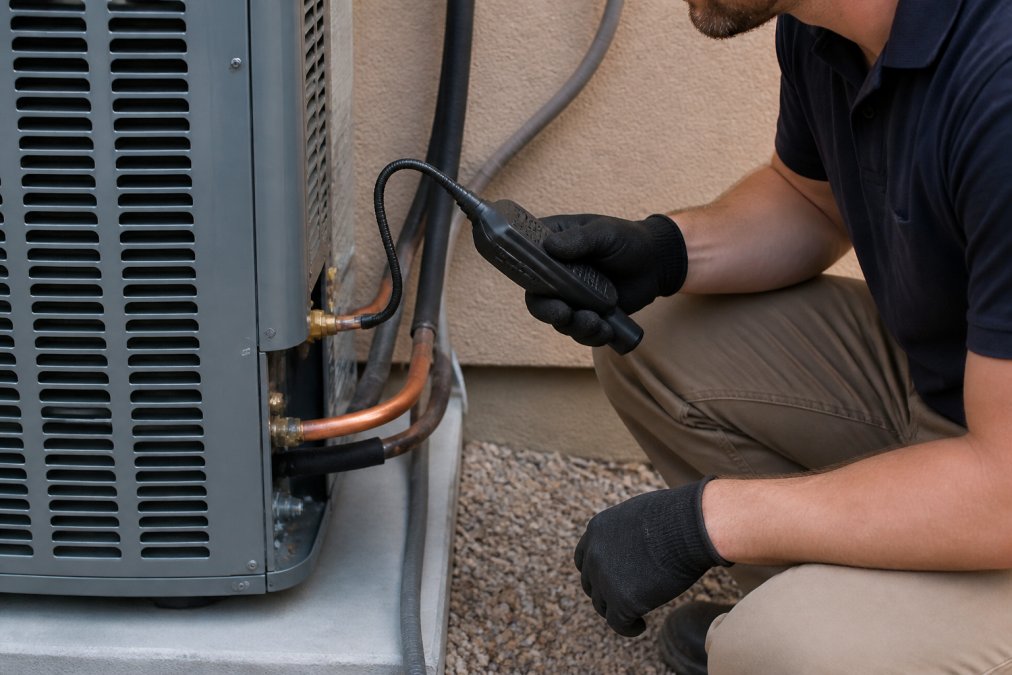
The most reliable detection method is electronic ultrasonic or corona detection. These tools sense the sound or electrical signature of escaping refrigerant gas. A technician passes the probe over refrigerant lines, connections, coils, and valves. When the probe nears a leak, it alerts the technician to the location.
Fluorescent dye is another method. A technician adds UV-fluorescent dye to the refrigerant. The dye circulates through the system and escapes at the leak location. Under UV light, the dye glows, revealing the exact spot.
Once a leak is found, the repair depends on location. A leak at a solder joint requires resoldering. A leak in a line might require line replacement. A leak in the evaporator coil or condenser often requires component replacement.
Cost of AC Refrigerant Recharge and Repair Options
The cost of addressing low refrigerant depends on whether you need a recharge, a leak repair, or both. Several factors influence the final price: the type of refrigerant, the location of any leak, the extent of the repair, and your local service market.
A straightforward refrigerant recharge typically costs less than a leak repair because it requires less labor and no parts replacement. A leak repair cost varies widely depending on location and complexity.
For pricing on your specific situation, contact Home Tech at (602) 486-1901 or visit hometechappliancerepair.com. A technician can diagnose the issue, identify any leaks, and provide a detailed estimate before starting work. Home Tech offers same-day service in the greater Phoenix area and guarantees 100% satisfaction on every repair.
When to Recharge vs. When to Replace Your AC System
Not every low-refrigerant situation warrants a recharge. If your system is old, has suffered multiple leaks, or requires expensive repairs, replacement might be more cost-effective.
Recharge is the right choice if:
- Your system is less than 10 years old
- The leak is small and easily repaired
- The recharge restores full cooling performance
- The system has no history of repeated leaks
Replacement is worth considering if:
- Your system is older than 15 years
- The evaporator coil or condenser has a leak
- The system has leaked multiple times
- Repair costs exceed 50% of a new system's price
- Your system uses R22 refrigerant, which is being phased out
A technician can help you evaluate this decision. Home Tech's team discusses repair versus replacement options based on your system's age, condition, and the extent of needed work.
Preventative Maintenance to Avoid Future Recharges
Regular maintenance reduces the risk of refrigerant leaks and extends your AC system's lifespan.
Annual professional inspection: A technician checks refrigerant pressure, inspects refrigerant lines for corrosion or damage, and verifies that connections are tight.
Clean condenser coils: Dirt and debris on the outdoor condenser reduce heat transfer and increase system pressure. Cleaning the coils annually improves efficiency.
Replace air filters regularly: A clogged filter restricts airflow and can lead to ice formation. Changing filters every 1-3 months keeps airflow unrestricted.
Seal ductwork: Leaky ducts reduce cooling efficiency. Sealing ducts with mastic or foil tape improves performance and reduces energy consumption.
Keep the outdoor unit clear: Ensure at least 2-3 feet of clearance around the outdoor condenser. Vegetation and debris block airflow and reduce cooling capacity.
Monitor system performance: If you notice warm air, weak airflow, longer cooling cycles, or unusual noises, call a technician promptly.
Home Tech provides routine maintenance visits that include pressure checks, coil cleaning, and system diagnostics. Call (602) 486-1901 to schedule your annual AC maintenance.
Recognizing the signs your ac needs refrigerant recharge, warm air, ice buildup, hissing sounds, and higher energy bills, puts you in control of your cooling system's health. The key is acting quickly when symptoms appear. A prompt diagnosis determines whether you need a simple recharge, a leak repair, or both. Home Tech's EPA 608-certified technicians diagnose refrigerant problems accurately, repair leaks properly, and recharge your system to manufacturer specification. With same-day service availability across the Phoenix metro area, we ensure your AC is back to full cooling capacity fast. Call (602) 486-1901 or visit hometechappliancerepair.com to book your appointment today.
Frequently Asked Questions
How do I know if my AC just needs a recharge versus a leak repair?
If your AC suddenly loses cooling performance, it likely needs a recharge. However, if it repeatedly loses refrigerant within weeks or months after recharging, you have a leak. A leak requires repair to the system itself, typically at the suction line, condenser, or evaporator coil, before refrigerant is added back. A professional HVAC technician can perform leak detection to identify the source and recommend the right fix.
What are the main AC refrigerant leak symptoms I should watch for?
AC refrigerant leak symptoms include hissing or bubbling sounds from the unit, ice buildup on the evaporator coil or suction line, warm air from vents despite the system running, and unusually high energy bills. You may also notice the compressor cycling on and off more frequently. If you see oily residue around connection points on the condenser or indoor unit, that's a sign of an active leak. Have a technician inspect the system to confirm and locate the leak.
Is it safe to use a DIY AC recharge kit?
DIY AC recharge kits carry serious risks. Without proper training and equipment like a manifold gauge, you can overcharge the system, damaging the compressor and voiding warranties. You also risk improper handling of refrigerant, which is regulated by the EPA and requires certification. Additionally, if you have an underlying leak, adding refrigerant yourself masks the problem temporarily while the leak continues. A licensed, EPA 608-certified technician diagnoses the real issue and ensures the system is recharged correctly and safely.
How often should my AC system be recharged?
A properly sealed AC system should not need regular recharges. Refrigerant is not consumed like fuel; it cycles through the system indefinitely. If your system needs frequent recharges, more than once every few years, you almost certainly have a leak that must be repaired. Once the leak is fixed and the system is recharged, it should maintain its refrigerant level for the life of the unit with proper preventative maintenance.