 ultimate-guide
24-Hour Refrigerator Repair: Emergency Service Guide
Table of Contents
- When to Call for 24-Hour Refrigerator Repair
- Refrigerator Troubleshooting Guide: DIY Checks Before Calling
- How to Prevent Refrigerator Food Spoilage During Outages
- Emergency Refrigerator Repair Cost: What to Expect
- Common Refrigerator Issues That Need Same-Day Service
- How to Schedule Same-Day Repair and What to Expect
- Why Professional Repair Beats DIY for Major Appliance Issues
- Frequently Asked Questions
Last Updated: September 23, 2026
When to Call for 24-Hour Refrigerator Repair
A broken refrigerator is a food safety emergency, which is why 24 hour refrigerator repair is critical. Your fridge keeps perishables safe by maintaining temperatures below 40°F. Once it fails, bacteria begins multiplying on dairy, meat, and prepared foods within two hours. That's why 24-hour refrigerator repair near me matters, you can't wait until Monday morning when your compressor fails on a Friday night.
Common signs that demand immediate attention include warm temperatures inside the cabinet, unusual noises from the compressor, water pooling on your kitchen floor, or frost buildup that won't defrost. These require a licensed technician with EPA 608 certification to handle sealed-system refrigerant work safely (the EPA).
Refrigerator Troubleshooting Guide: DIY Checks Before Calling
Before calling for same-day repair, run through these basic checks. Many issues can be resolved without a service visit.
Check the Power and Temperature Settings
Is the refrigerator plugged in? Test the outlet with another appliance. If the outlet is dead, check your circuit breaker, a tripped breaker is a two-minute fix.
Verify the temperature dial. The ideal setting is between 35°F and 38°F for the fridge and 0°F for the freezer. If the dial is set too warm, adjust it to the middle range and wait 4-6 hours for the temperature to stabilize.
Some models cycle into defrost mode automatically, temporarily stopping cooling. If the fridge returns to normal temperature after a few hours, defrost mode was the issue.
Inspect Door Seals and Condenser Coils
A loose or damaged door seal lets cold air escape. Run your hand along the rubber gasket, it should feel pliable and create a tight seal. If it feels hard, cracked, or doesn't press evenly, warm air is leaking in and your compressor is working overtime.
Look at the condenser coils, usually at the bottom rear or underneath. Dust and pet hair clog them quickly, forcing the compressor to work harder. Use a vacuum with a brush attachment to clean the coils, this prevents many cooling failures.
Ensure nothing blocks the vents inside the fridge. Rearrange items to allow air circulation.
Listen for Compressor Sounds
A functioning compressor hums when it cycles on. Listen for grinding, rattling, or clicking noises, these suggest mechanical failure, loose components, or a failing thermostat.
If you hear these sounds, call for professional diagnosis. A compressor failure requires sealed-system refrigerant expertise that only EPA 608-certified technicians can provide.
How to Prevent Refrigerator Food Spoilage During Outages
If your fridge has stopped cooling while waiting for repair, minimize food loss with these steps.
Keep the door closed. A full fridge stays cold longer because food mass holds temperature better. Place ice packs or frozen water bottles inside to help maintain cold.
Transfer perishables, dairy, eggs, meat, seafood, and prepared foods, into a cooler with ice. Condiments, butter, and vegetables tolerate warmer temperatures longer.
If the outage lasts more than two hours, assume perishables are at risk. When in doubt, throw it out.
Emergency Refrigerator Repair Cost: What to Expect
Repair costs vary based on the problem, brand, age, and whether you need same-day service. Understanding the cost structure helps you decide whether to repair or replace.
Typical Repair Cost Ranges
A door gasket replacement usually runs $150-$300. A thermostat replacement falls in the $200-$400 range. These straightforward fixes don't require EPA 608 certification.
Compressor replacement typically costs $800-$1,500. A sealed-system refrigerant leak repair ranges from $600-$1,200.
Ice maker repairs run $250-$600 for valve replacement or $400-$800 for module failure. Condenser coil cleaning costs $100-$200.
Emergency Service Fees and Same-Day Premiums
Many repair companies charge an emergency service fee of $75-$150 on top of the repair cost. When you call for a quote, ask whether the estimate includes this fee.
Night and weekend calls often trigger the premium. A $400 repair during business hours might cost $475-$550 with the emergency surcharge.
Age-Based Repair vs. Replacement Decision
If your refrigerator is 10-12 years old or older and repair costs exceed $1,000, replacement often makes financial sense. A technician can help you evaluate this trade-off.
Older refrigerators consume 20-30% more energy than modern ENERGY STAR models (Refrigerators). Energy savings from a new unit can offset replacement cost over 5-10 years.
What's Included in the Estimate
A transparent estimate should itemize parts cost, labor cost, refrigerant recovery and recharge (if applicable), emergency service fee (if applicable), and warranty details.
Confirm that the estimate is binding and no additional charges will appear without your approval.
Warranty and Guarantees
Most shops warranty parts for 1 year and labor for 30-90 days. Ask what's covered, some warranties exclude damage from power surges or user error.
A satisfaction guarantee means if the repair doesn't solve the problem, the company returns at no additional charge.
Common Refrigerator Issues That Need Same-Day Service
Understanding the difference between minor issues and critical failures helps you decide whether to call immediately or schedule a regular appointment.
Compressor Failure and Sealed-System Leaks
The compressor circulates refrigerant through the sealed system to remove heat. When it fails, the entire cooling process stops.
What you'll observe: The fridge runs but interior temperature climbs above 50°F within hours. You might hear grinding, clicking, or rattling sounds, or the compressor cycles on and off rapidly without cooling.
Why it's urgent: A non-cooling fridge is a food safety emergency requiring same-day diagnosis and repair.
The repair: A technician tests refrigerant pressure and electrical connections to confirm compressor failure or refrigerant leak. Compressor replacement requires evacuating old refrigerant, installing a new compressor, and recharging with the correct type. Only EPA 608-certified technicians can perform this sealed-system work legally.
A sealed-system refrigerant leak requires the system to be evacuated, the leak located and repaired, and new refrigerant installed. Small leaks at connection points cost $600-$900; leaks in coils cost $1,000-$1,500.
Thermostat Calibration and Temperature Fluctuations
The thermostat senses interior temperature and signals the compressor to cycle on and off. A faulty thermostat causes erratic temperature swings.
What you'll observe: Ice cream freezes solid one day and turns soft the next. Fresh food stays too cold (below 35°F) or the fridge runs warm (above 40°F). The compressor may run constantly or cycle every few minutes instead of 15-20 minute intervals.
Why it matters: Temperature fluctuations spoil food faster and stress the compressor, shortening its lifespan.
The repair: A technician tests the thermostat's electrical continuity and measures actual versus set temperature. Thermostat replacement costs $200-$400. Some models have a separate temperature sensor; replacing it costs $150-$250.
Temperature fluctuations can also result from a stuck damper control, the flap that regulates airflow between freezer and fridge. Replacement costs $300-$500.
Ice Maker and Water Supply Line Failures
Ice makers depend on a water supply line running from your home's water line to the fridge, a solenoid valve that opens to let water through, and a freezing module that turns water into ice.
What you'll observe: No ice is produced, or ice production slows dramatically.
Door Seal Failures
The rubber gasket around the door frame creates an airtight seal. When it fails, warm air leaks in continuously, forcing the compressor to work overtime.
When to Call Immediately vs. Schedule a Regular Appointment
Call for same-day emergency service if:
- The fridge is not cooling at all and interior temperature is above 50°F
- You see water pooling under or inside the fridge (potential leak)
- The compressor is making grinding or rattling sounds
- The fridge has been without power for more than 2 hours and food is at risk
Schedule a regular appointment if:
- The fridge is cooling but temperature fluctuates slightly
- The door seal is cracked but the fridge still maintains temperature
- The ice maker has stopped working but the fridge is cooling normally
- You hear unusual sounds but the fridge is still cooling
When you call, describe what you're observing (temperature, sounds, leaks, age of the unit). The dispatcher can often determine urgency and schedule accordingly.
How to Schedule Same-Day Repair and What to Expect
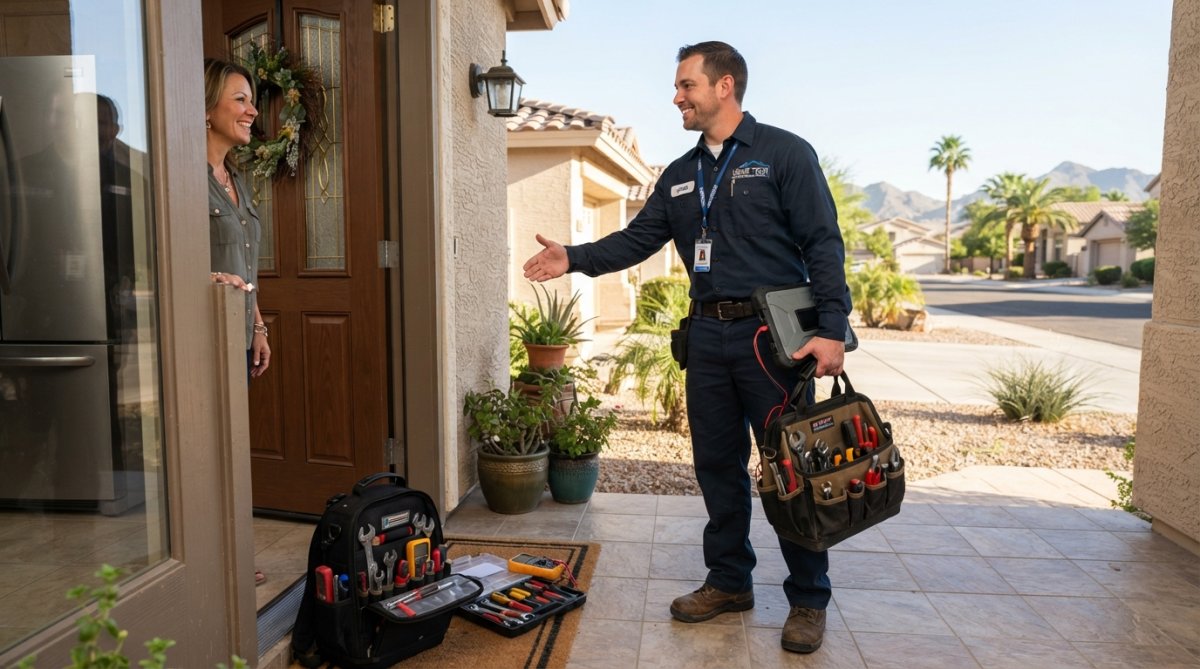
When you call Home Tech for 24 hour refrigerator repair, here's what happens. You'll describe the problem over the phone. The dispatcher asks about your fridge model, what symptoms you're seeing, and your location. Based on that information, they schedule a same-day or next-day appointment.
Why Professional Repair Beats DIY for Major Appliance Issues
Refrigerators are complex sealed systems. The compressor, condenser, evaporator, and expansion valve work together under precise pressure and temperature conditions. A single mistake, introducing air into the system, using the wrong refrigerant type, or misdiagnosing the compressor, can cause permanent damage.
Frequently Asked Questions
What should I do to save my food during a refrigerator breakdown?
Keep the door closed as much as possible, a sealed refrigerator stays cold for 4-6 hours without power. Move perishables like meat, dairy, and prepared foods to a cooler with ice if the outage lasts longer. Discard anything that has been above 40°F for more than 2 hours. Call for emergency refrigerator repair immediately to minimize food loss and prevent spoilage.
How can I tell if my refrigerator needs professional repair?
Professional repair is needed if the fridge isn't cooling, the compressor makes grinding noises, refrigerant is leaking, the thermostat won't adjust temperature, or the ice maker stops working. If you've checked the power, temperature settings, and door seals and the problem persists, contact a licensed appliance technician for on-site diagnosis.
Are 24-hour appliance repair services more expensive?
Emergency refrigerator repair cost depends on the issue, parts needed, and your location. Rather than assume higher pricing, ask about diagnostic fees upfront and get a repair estimate before work begins. Many companies offer transparent pricing with no hidden fees, confirm this when you call for same-day service.
How do I verify if an appliance repair company is licensed and insured?
Ask for proof of licensing and insurance before scheduling. Licensed technicians are trained on sealed-system work and refrigerant handling; EPA 608 certification is required for refrigerant service. Check the company's website for credentials, and confirm they service your specific brand and model.
A broken refrigerator demands fast action. The longer it sits, the more food spoils and the greater the risk of compressor damage from running without proper cooling. Home Tech provides same-day emergency refrigerator repair with EPA 608-certified technicians, transparent pricing, and a 100% satisfaction guarantee. Call (602) 486-1901 or visit hometechappliancerepair.com to schedule your appointment today. Don't let a broken fridge cost you hundreds in lost groceries and a new appliance.